Heart Failure Awareness Week: May 3-9

As the impact of heart failure (HF) continues to grow across Canada and throughout the world, it is becoming increasingly important in raising awareness among patients and their families. With the aim to improve the quality of life for people living with HF, this year’s campaign will focus on self-management and self-care in a virtual world. Thunder Bay Regional Health Sciences Centre (TBRHSC) hosts programs that support heart failure patients including the Telehomecare Congestive Heart Failure Program and Cardiac Rehabilitation.

What is heart failure?

Heart failure is a complex syndrome which occurs when the heart is unable to pump enough blood to meet the needs of the body. Common symptoms include shortness of breath, leg swelling and fatigue. There are many reasons why someone may develop heart failure. The most common causes of heart failure include coronary artery disease and high blood pressure.

Self-care in a virtual world: What you need to know about self-managing heart failure

Did you know that heart failure is on the rise? In Canada there are over 600,000 people living with heart failure which affects people of all ages. Over 90,000 people are diagnosed with heart failure each year in Canada. Surprisingly, many people do not understand heart failure. More than 1 in 4 Canadians do not know what heart failure is, and almost half incorrectly think it can be cured. It is more important then ever to be responsible for your own care. There is a lot you can do to live well with heart failure.

What you can do to promote self-care and self-management

  • Monitor your symptoms and report any change to your health care provider
  • Reduce salt in your diet
  • Increase your daily activity
  • Seek peer support
  • Keep your blood pressure low
  • Follow up with your physician
  • Stop smoking
  • Take your medications as prescribed

Work with your health care team to learn if you are at risk of heart failure. Ask what you can do to help prevent this condition from worsening.

Self-management is team effort

Even though heart failure cannot be cured, there are treatments that can help people feel better and live longer. They often need help from a number of health care providers, family members, and they also need to be active partners in their care. Together you can build a plan that supports your needs and goals.

Become an active partner in your virtual care

  • People living with heart failure need to pay extra attention to their salt and fluid intake, eat a healthy diet, stay active, take their medication as prescribed, and be smoke free.
  • Learn about your symptoms of heart failure – they may not be the same as someone else with heart failure. Ask your health care team what you can do to help prevent your heart failure symptoms from getting worse.
  • Be patient with yourself – learning to live with heart failure takes time. Share your feelings and talk about your concerns with your health care team.
  • Join support groups and share your experience. Talking with your peers can help relieve some of the stress, pressure, and anxiety.

For more information and a guide to virtual health care sessions visit: heartandstroke.ca

For more information on TBRHSC programs, visit: https://tbrhsc.net/programs-services/chronic-disease-prevention-and-management-program/telehomecare-heart-failure-program/


and https://tbrhsc.net/programs-services/cardiovascular-sciences-program/cardiovascular-rehabilitation-program/

Preparing for What’s Next

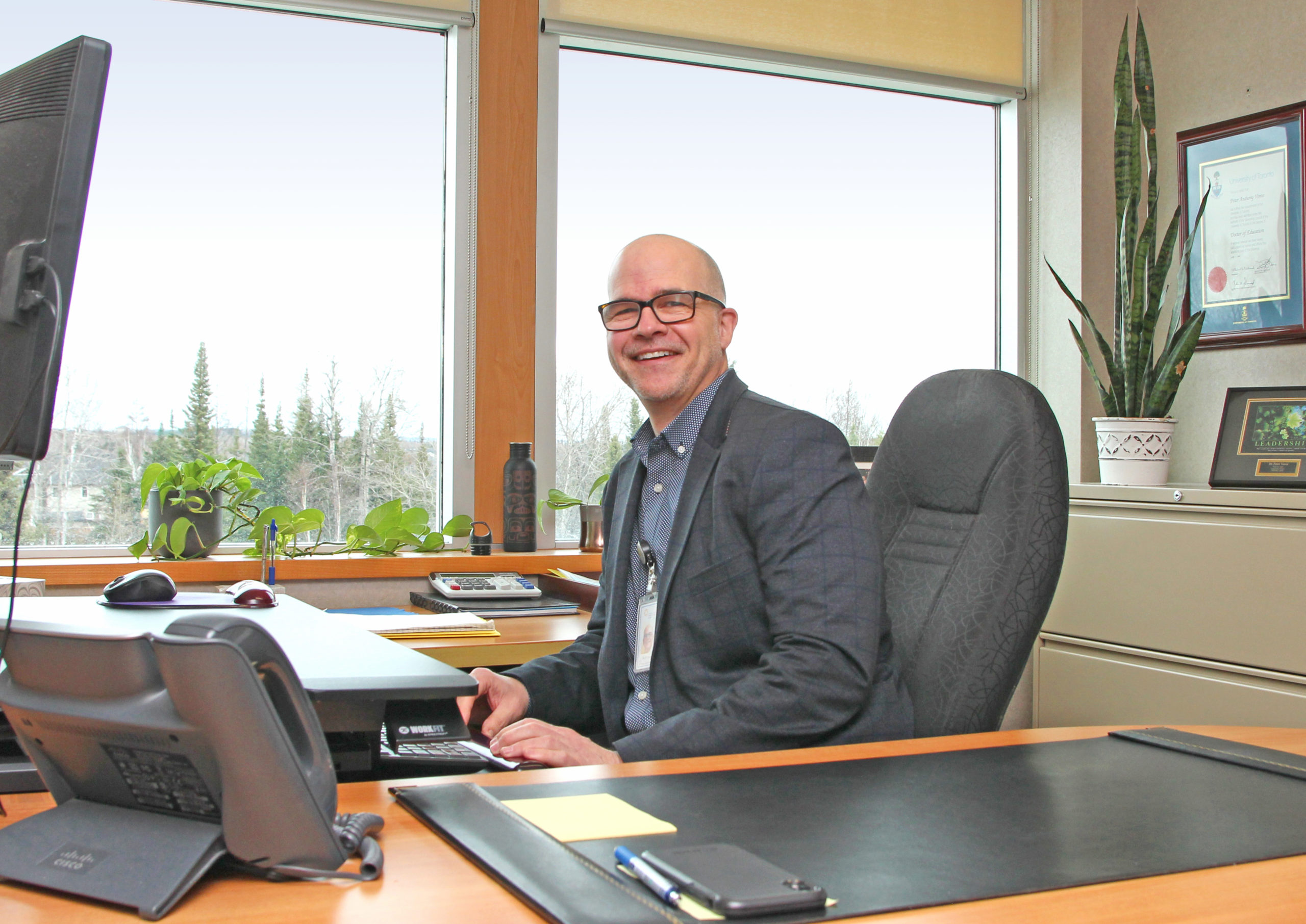
Q&A with Thunder Bay Regional Health Sciences Centre’s Dr. Peter Voros

(Originally published in the May 2021 edition of The Walleye Magazine. Story by Matt Prokopchuk.)

As of this mid-April writing, the active number of COVID-19 cases in the Thunder Bay district continues to drop (although, as we’ve already seen, that can change quickly), while areas in southern Ontario are again seeing numbers spike as the pandemic’s third wave takes hold. The city saw its own surge in cases—and deaths—as part of a second wave in March. It’s those circumstances that Dr. Peter Voros is ultimately in charge of navigating at the Thunder Bay Regional Health Sciences Centre. Voros is an executive vice president at the hospital, and was recently tapped to replace Dr. Stewart Kennedy as the incident manager for the hospital’s COVID-19 incident management team—effectively the one in charge of how the hospital responds to the pandemic. We spoke with Voros about what his top priorities are, how patients were transferred out of the local intensive care unit during the second wave, and how the hospital has had to keep flexibility in mind in all decision-making.

The Walleye: What are your top priorities in your current role?

Peter Voros: We’ve come through wave two, we’ve managed that well. The key pieces through wave two for us at the hospital were the increasing requirements in our intensive care unit [ICU] and the number of COVID-positive patients that we had to manage in the building, so we had to re-create our COVID unit and expand it much larger than we did during wave one. Things have fortunately improved in our community and our hospital, so we’re really focused on ensuring we have ramped some surgeries back up to make sure we’re starting to clear that backlog, and also preparing for wave three. We are aware that throughout wave one and two, Thunder Bay was several weeks behind southern Ontario, and we’re seeing full wave three occurring in southern Ontario, so part of what the team is focusing on is what does that mean for us, or what could it mean and being prepared for whatever might come our way.

TW: During wave two, were patients transferred from TBRHSC to other hospitals?

PV: ICU patients being either diverted (which means they’re in a regional hospital and they’re supposed to come here, but instead they send them somewhere else) or patients who are in the ICU being transferred to another ICU—those decisions are actually made provincially at the critical care command centre. They monitor ICUs throughout the province, and move patients accordingly to ensure that no one ICU becomes overwhelmed. So that’s going on in southern Ontario right now, because, as we’ve seen in the media, there are a lot of patients in the ICUs in the province. We were in that position in March. We’re not in that position right now, but should our numbers in ICU and our COVID numbers, particularly, increase, we would take direction through the critical command centre to determine which patients needed to move, and where they need to go.

TW: The region saw a relatively large number of deaths during wave two. What was dealing with that like for your staff?

PV: We absolutely did have people die of COVID-19 in the hospital while we were caring for them. Death in a hospital is always a tough situation, but it is extremely tough during a pandemic. We saw staff have to deal with that situation and it’s not easy. You know they’re watching people becoming very, very sick. This is a serious illness and […] and with each one of them, we see staff really struggling to manage and accept what’s going on, and we try our best to support the staff through that. Unfortunately, throughout the world right now, as health-care providers, this is what the world is dealing with. Many patients come through it and they get well again, but there are those that die.

TW: How important has flexibility been for the hospital in terms of managing COVID?

PV: The hospital being able to be nimble and flexible has probably been our saving grace throughout the past 13 months—whether it was in wave one, when the province would give direction on things that needed to change and we would have to change those things (sometimes between morning and afternoon), or dealing with very serious situations like the numbers of COVID-positive people in our community and our hospital in wave two. The real heroes through all this for me are the staff, because when we talk about flexibility, it’s one thing for me to sit from my office and say ‘okay, open a COVID unit in 36 hours’; it’s a whole other [thing] to actually do it. And that’s the flexibility and the dedication of the staff, right from your front-line healthcare staff—your doctors, your nurses, your social workers—to the housekeepers, to the maintenance people, to the IT people who have to get on to that unit and prepare it to open and change it. And they do it, literally in 24 to 36 hours.

This interview has been edited for length and clarity.

Dentistry and COVID-19: Suited Up and Ready for the Next Patient

(Originally published in the May 2021 edition of The Walleye Magazine. Story by Caitlund Davidson)

Visiting the dentist might not be at the top of one’s to-do list, especially during a pandemic, but oral health is an integral part of overall health and well-being. Thunder Bay Regional Health Sciences Centre’s Department of Dentistry wants to assure patients that infection prevention and control has always been a priority in dental practices and protective measures have been enhanced due to the COVID-19 pandemic.

“Many people may have delayed their oral care and treatment due to the pandemic,” explains Dr. Bruce Pynn, Chief of Dentistry & Oral Maxillofacial Surgery at our Hospital, and Associate Professor at the Northern Ontario School of Medicine. “We want our patients to be confident in the safety of our Hospital and dental office settings. Our staff are following safety and screening protocols and dentists, along with their teams, have received their COVID-19 vaccines.”

While there is no physical dental clinic within our Hospital, the Department of Dentistry consists of 10 dentists and 7 dental specialists including 3 oral and maxillofacial surgeons, 2 pediatric dentists, 1 periodontist and 1 dental anesthetist. The department provides specialized dentistry services for those who require dental procedures that can only take place in an acute care setting. Most consultations, which involve a medical history, x-rays, and clinical examination, take place offsite at the dentist or specialist’s office.

As one of the busiest services in the province, the oral and maxillofacial surgeons at our Hospital treat almost all facial traumas in the region, ranging from the Manitoba border to as far east as Timmins, with between 2-10 cases arising each week. In addition, the department has operating room (OR) time each week where they continue to treat extensive pediatric cases to replace missing or damaged teeth, cancer and medically compromised patients, and other urgent cases. Other health care professionals in our Hospital also call on the department frequently for consultations.

“Under normal circumstances, dentists and dental specialists treat approximately 800 patients per year,” explains Pynn. “During the pandemic, that number has been cut in half due to reduced available OR time and patient anxiety about receiving treatment at the hospital.”

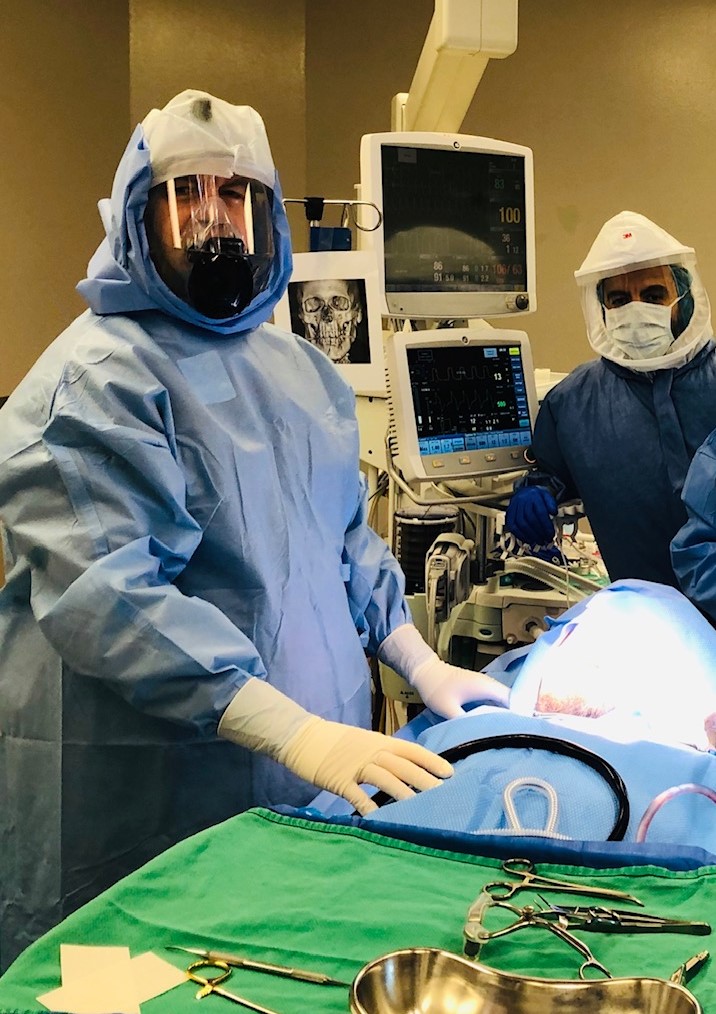
Dental procedures carried out in our Hospital are done in specialized negative pressure suites within the OR department. These suites ensure that any airborne contaminants are contained within the room and prevent spread to other areas. The department also has specialized powered air-purifying respirator (PAPR) suits (pictured) to wear in the OR if treating a suspected COVID-19 positive or confirmed COVID-19 positive case. The PAPR is a type of respirator used to safeguard workers against contaminated air by using a fan to deliver filtered air into the hood-like headwear. The PAPR is especially important when using a dental drill and performing aerosol-generating procedures.

With added COVID-19 guidelines, dentists are doing everything they can to put additional levels of protection in place to create the safest environment for their patients and the dental team throughout the pandemic and beyond.

Appointments for these specialized dentistry services can be booked by the staff dentist, pediatric dentist, periodontist, or oral surgeon through their respective offices. If there is a dental emergency, you can contact the Nurses’ Registry at (807) 623-7451 to reach the dentist on-call. If the situation is urgent, please visit the Emergency Department at our Hospital.

Dr. Bruce Pynn (left) and Dr. Yasser Labib, Anesthesiologist, preparing to perform a dental procedure in an operating room at
Thunder Bay Regional Health Sciences Centre.

Celebrating National Physicians’ Day (May 1st)

Sent on behalf of Dr. Rhonda Crocker Ellacott, President & CEO, TBRHSC, CEO, TBRHRI and Dr. S. Zaki Ahmed, Chief of Staff, TBRHSC


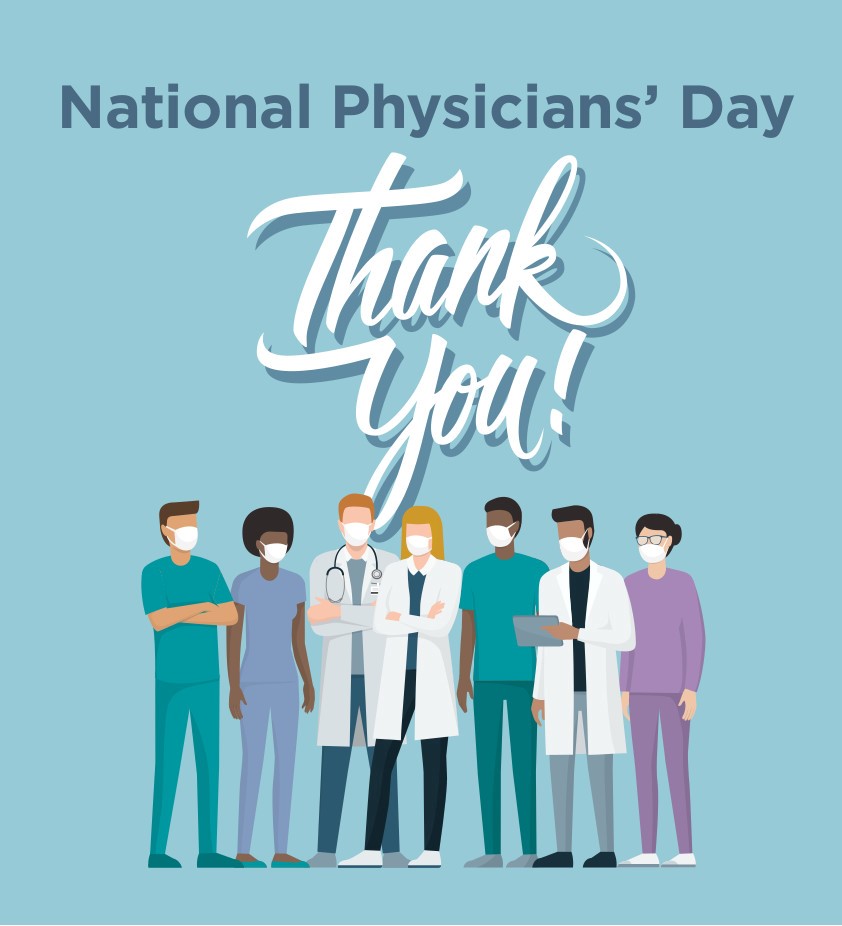
Every day, physicians go above and beyond to care for their patients and build a healthier community. In recognition of their commitment to patients and the entire health care system, National Physicians’ Day is celebrated on May 1st. A designated day for physicians provides an opportunity to appreciate the dedicated and compassionate care that physicians provide, often putting patients ahead of themselves, their families and other commitments.

This year on National Physicians’ Day, we reflect on the work and sacrifices made by physicians and, most importantly, express our most sincere appreciation for the care they provide in normal and in extraordinary times. Amidst the uncertainty and anxiety brought on by the ongoing COVID-19 pandemic, you have demonstrated exceptional skill and endless compassion towards others.

Thank you for your professionalism, perseverance and bravery during these demanding times. Thank you for your unwavering commitment to our patients, and your practice. Thank you for saving lives in our community and region; you are truly making a difference every day.

As we navigate the turbulent times brought on by the COVID-19 pandemic, now more than ever, Thunder Bay Regional Health Sciences Centre would like to sincerely thank every physician for all that they do and for helping us become Healthy Together.

>