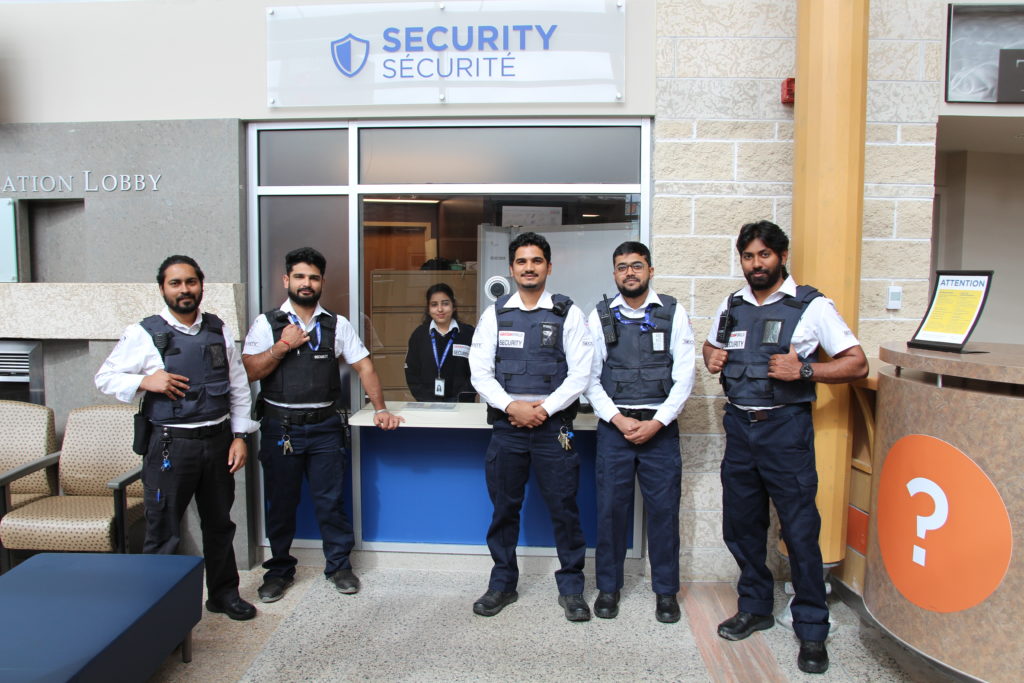
More Spaces to Lock Your Bikes

We’re excited to share that five new bike racks have been installed at the Cafeteria entrance.

We hope this makes it easier for staff to choose active commuting options like biking. Whether you’re arriving for a shift or heading out for a quick break, there’s now more spaces to securely park your bike. More bike racks will be added soon – stay tuned!

Reminder – Staff Parking Options

Shared on behalf of Nicole Moffett, Manager, Emergency Preparedness, Switchboard, and Security


We understand that the ongoing construction has affected parking on our campus. Thank you for your continued efforts in supporting our shared goal of bringing cardiovascular care closer to home. Please see below general parking reminders.

Patient and Visitor Parking

  • A1 Eagle (some exceptions apply for staff, i.e. afterhours and weekends)
  • A3 Fish,
  • B1 Bear (temporarily closed),
  • B2 Moose,
  • C1 Squirrel,
  • C2 Coyote, and
  • D Deer
  • Staff are not authorized to park in the above lots. Staff found parking in these lots will be subject to ticketing, and/or loss of parking privileges, and/or Policy HR-t-04 – Discipline.

Staff Parking

  • All staff members are required to park in their assigned staff parking lots. Lots are assigned on a departmental basis.
  • If your parking lot is full, please park in Lot I –Turtle (the designated alternate lot for all staff).
  • If you have circumstances where you park on site very rarely, i.e. you bike to work most days and would like to purchase a daily rate pass ($7/day) instead of registering for a parking account and pre-purchasing exits ($3/exit), you are to park in I (Turtle) lot only.
  • If there has been a change to your vehicle information (e.g. license plate number) you must update Security by submitting an SC-38 Parking Application-Change Form.
  • Park within the lines so that we can ensure we utilize our full parking capacity.

 Staff have two options to pay for parking:

  1. Payroll deducted, unlimited parking ($49-$52/month, based on lot assignment).
  2. Purchase and apply exit credits directly to your ID card at one of the five ‘pay on foot’ terminals located across the Hospital campus ($3/exit, existing lot assignments still apply). Exit credits do not expire, and can be purchased in any quantity (up to $300, 100 exits maximum purchased at one time).

Pay on Foot terminals are found in the following locations: main (west) entry; emergency department entry; 1040 Oliver Rd (Health Services Centre) entry; 984 Oliver Rd (Medical Centre) entry.  

Please visit the Parking page on the intranet (https://informed.tbrhsc.net/departments/emergency-preparedness-and-security/parking) for Parking Application-Change and Parking Cancellation forms, FAQs, and visual instructions on how to use the Pay on Foot terminals to purchase parking credits. 

If you have any questions about your account, please connect with Ashley Hindman, Assistant, Security and Parking, by email at Ashley.hindman@tbh.net or by phone at extension 6534.

Week 3 Winners – HSO Global Workforce Survey

Thank you to those who have completed the HSO Global Workforce Survey and congratulations to this week’s prize winners:

  • Kyla, Adult Mental Health – $50 Gift Card to Gear Up for Outdoors
  • Cynthia, Financial Services – $50 Gift Card to Waterfront District
  • Danielle, Endoscopy – $50 Gift Card to Cheese Encounter 

Don’t miss your chance to win one of our weekly prizes, including 6 months free parking

To complete the survey click here.   

Once you have completed the survey, use the following link: https://www.surveymonkey.com/r/HSO to enter into the prize draws. Once entered, your name will stay in for the remaining draws. 

A reminder that the survey closes July 18, 2025 or until a minimum response rate of 50% is achieved.

Pride Month Trivia: Week 4

A big thank you to all those who participated in Pride Month Trivia this year. We hope that this was a fun and engaging opportunity to learn more about the 2SLBGTQQIA+ community. Below you will find the answers the final week’s questions.

Question 1: Which Canadian Physician and their husband won The Amazing Race Canada! in season 7?

Answer: Dr. James A. Makokis. Dr. James A. Makokis and his husband Anthony Johnston formed the team “Team Ahkameyimok,” which means “Never give up” in the Plains Cree language, for the seventh season of The Amazing Race Canada! Dr. Makokis is a Nehiyô (Plains Cree), and Two-Spirit Family Physician, from Saddle Lake Cree Nation in Alberta. Dr. Makokis’ practice focuses on Trans health. You can learn more about Dr. Makokis on his website at:  https://www.drjamesmakokis.com/  

Question 2: Which Canadian city was the first in North America to host WorldPride?

Answer: Toronto. Toronto hosted WorldPride in 2014, becoming the first city in North America to do so. WorldPride was developed by the InterPride organization, to generate visibility and awareness of the 2SLGBTQQIA+ community.

Question 3: What are some ways that you can be an ally to the 2SLGBTQQIA+ community? (Check all that apply).

Answer: There are many ways to demonstrate allyship with the 2SLGBTQQIA+ community. You can:

  1. Access education opportunities by attending workshops and local events, including Thunder Pride
  2. Advocate on behalf of the 2SLGBTQQIA+ community, for example, by intervening when you witness discriminatory behavior
  3. Respect the lived and living experiences of 2SLGBTQQIA+ individuals by listening to their stories and perspectives
  4. Use inclusive language, for example, by addressing a group of people with “Hello, everyone!” instead of “Hello, ladies and gentlemen,” and using gender-neutral terms such as “firefighters” instead of “firemen”

CEO’s Blog (June 27, 2025)

Rhonda

Hello, Boozhoo, Bonjour.

As summer approaches, I thought I’d reach out with a very quick blog.

This past month has reminded me — again — just how resilient and dedicated our team is.

We are deep into renovations, navigating construction impacts, and balancing summer staffing, all while continuing to deliver safe, quality care to patients who count on us. It hasn’t been easy for you. I know many of you are feeling stretched, and I want to begin by simply saying thank you. You continue to show up, adapt, and find ways to make it work. That doesn’t go unnoticed.

Despite the pressure, we’ve made real progress. Patient flow improvements are taking hold. New technologies and equipment are being introduced. And even as we manage the day-to-day demands, we’re still moving forward, enhancing care and strengthening the foundation for the future.

This month also gave us a chance to welcome Ontario Health Leadership to our Hospital. Their visit was an opportunity to demonstrate the depth of our work and our commitment to serving Northwestern Ontario. The credit for that belongs entirely to you, the teams who prepared, hosted, and continued delivering care through the visit, all while construction and upgrades were happening around you. I also want to recognize that this progress hasn’t come without disruption. Construction zones, workflow changes, and higher-than-normal workloads have added stress across the organization. If it’s felt like a lot lately, it’s because it has been. And yet, you continue to support patients, families, and each other in ways big and small, often behind the scenes. Those efforts matter.

Thank you for being part of this team, whether you work in a clinical role, research, support services, or administration. Your work is essential to everything we’re building, and it’s noticed more than you may realize.

As summer begins, I hope you get a chance to rest and recharge. For those covering shifts while others take time off, thank you. For those stepping away for a bit, enjoy it. Rest is necessary, for you and for the patients who rely on us to be at our best.

That is all for now. As always, I am always available and welcome your feedback about this blog or anything else on your mind. You can reach me at rhonda.ellacott@tbh.net. I appreciate hearing from you.

Code Stroke Team Spotlight: Emergency Department

It’s Stroke Awareness Month, and Thunder Bay Regional Health Sciences Centre (TBRHSC) is proud to celebrate 10 years of Code Stroke. This milestone highlights the dedicated professionals who work tirelessly to deliver timely, life-saving care for stroke patients in our region. Today, on the final day of Stroke Awareness Month, we’re honoured to spotlight Peter Hayes, Clinical Nurse Specialist in Emergency and Trauma Services and the Emergency Department. Peter’s expertise, compassion, and commitment have played an invaluable role in advancing stroke care at TBRHSC and improving outcomes for patients and families in our community..


What role do you/your team play in Code Stroke?
I’m part of the implementation and education of stroke best practice and processes within the Emergency Department at TBRHSC.

What is unique about your role/team’s role? 
We are the front door to acute stroke care and life saving interventions. 

How does your role/team impact stroke patient care?
Our team responds to the emergent needs of the acute stoke patient and their family at a life threatening/life altering time to provide immediate assessment and intervention to minimize the risk of patient morality and functional disability. 

What is the most rewarding aspect of your profession as it relates to Code Stroke/stroke care?
The reward comes from seeing the Emergency team provide effective and time-sensitive, efficient care required to promote the best possible patient outcomes.

Code Stroke Team Spotlight: Information Technology

It’s Stroke Awareness Month, and Thunder Bay Regional Health Sciences Centre (TBRHSC) is celebrating 10 years of Code Stroke. As we mark this milestone, we’re highlighting the dedicated professionals who work tirelessly to deliver timely, effective care for stroke patients. Meet Michelle Richardson, RN and Clinical Informatics Specialist. On this final day of Stroke Awareness Month, we recognize Michelle’s invaluable contributions and her commitment to enhancing stroke care in our community.


What role do you/your team play in Code Stroke? 

I create/manage changes to PCS interventions and order sets in Order Entry to align with documentation requirements and updates to PPDOs and MDs.

What is unique about your role/team’s role? 

I work behind the scenes building and updating what frontline workers use to document and order for code stroke patients.

How does your role/team impact stroke patient care? 

Staff are able to document and enter orders in a concise and timely fashion.  

What is the most rewarding aspect of your profession as it relates to Code Stroke/stroke care? 

It is rewarding to know that I have made it easier for staff to enter their Code Stroke orders and documentation. Staff are very busy and being able to save them a few minutes is great. It gives them more time to care for their patients.

3rd Annual OR vs. X-Ray Softball Game: A Home Run for Team Spirit!

The 3rd Annual Operating Room (OR) vs. Diagnostic Imaging (DI/X-Ray) softball game was a smashing success on June 25th! With energy high and the friendly rivalry stronger than ever, staff from both departments at Thunder Bay Regional Health Sciences Centre came together for an exciting afternoon of competition, camaraderie, and a whole lot of laughs.

This year’s game was especially anticipated, with the series tied 1-1 — the OR took the win in year one, and DI came back strong in year two. With bragging rights on the line, the OR team clinched a hard-fought victory, 25–19, in a game full of great plays and great company.

But beyond the score, it’s the friendly banter, team spirit, and hallway chatter before and after the game that truly makes this event a highlight of the year.

Both teams can’t wait for the next rematch — and with the series now 2–1 in OR’s favor, you can bet DI will be training hard for a comeback.

Emergency Planning & Response to External Buildings (EMER-200) Update

Shared on behalf of Ryan Sears, Director, Capital & Facility Services


The Hospital’s Emergency Planning & Response to External Buildings policy has been revised.

Actions required:

  1. Read this memo and review the updated Emergency Planning & Response to External Buildings (EMER-200) policy to familiarize yourself with important process changes.
  2. Managers who are responsible for departments located in an external building must update their Emergency Response Guides (see templates attached) by July 25, 2025 (ensure you recycle previous versions of the policy/Guide). Please submit a copy to TBRHSC.EmergencyPreparedness@tbh.net
  3. Managers to ensure that the updated policy is added to their area’s emergency binder and that all workers review the policy, as well as the Emergency Response Guide and posters (attached), for applicable departments.

Policy changes:

  • Minor edits such as a title change to VP, Facilities, Capital Planning, Support Services & CFO, updated contact numbers, etc.
  • Added reference to the departmental Emergency Response Guides under Sec. 5.1.1
  • Added instruction for Switchboard to email their Manager and Supervisor with the date/time of any notification from APEX Security regarding alarms at 290 Munro St. under Sec. 5.1.1

Process Reminders:

  • Contacting 9-1-1 is the primary response action for the majority of emergencies occurring in an external building (e.g., confirmed fire, violent person, medical emergency, missing child, etc.)
  • Response areas in external buildings are required to maintain a sister unit partnership with a department inside the Hospital (980 Oliver Rd), in order to communicate emergency information between their respective sites and provide support to each other as needed.
  • Emergency colour code policies, as well as Lockdown Alert and Alert-99/Alert 99 Trauma, are specifically designed for emergencies occurring at the Hospital (980 Oliver Rd) and contain instructions specific to hospital operations, and do not apply to external buildings.

If you have any questions, please reach out to Mēsha Richard, Lead, Emergency Preparedness (ext. 6552 or mesha.richard@tbh.net)

Thank you,

Ryan Sears, Director, Capital & Facility Services (Executive Sponsor)

Code Stroke Team Spotlight: CT Technologists

It’s Stroke Awareness Month and Thunder Bay Regional Health Sciences Centre (TBRHSC) is celebrating 10 years of Code Stroke. We are highlighting the dedicated professionals who work tirelessly to provide timely and effective care for stroke patients. Meet Carolyn Rubin, Charge Technologist of CT and the CT Technologist team.


(L to R): Adria, Katelyn, Nolan, Amy, Kevin, Debbie. Carolyn

What is your position at the hospital?

My name is Carolyn Rubin and I am the Charge Technologist of CT. I have been in this role for almost as long as the Code Stroke, and was an integral part of setting up the CT portion.

What role does your team play in Code Stroke?

The CT technologists are responsible for performing the Code Stroke CT imaging within 10 minutes of Code Stroke being called. We are regulated, trained professionals who are responsible for obtaining the CT images.

How does your team impact stroke patient care?

These images are vital in deciding the treatment for stroke patients. We perform a non-contrast brain scan to determine whether it is a hemorrhagic or embolic stroke; this contributes to treatment decision-making. We then perform a perfusion scan of the brain to assess blood flow, which helps identify areas with reduced blood supply. The last set of CT images is a carotid angiogram to look for occlusions (clots). This imaging is essential to determine whether or not the patient is a candidate for EVT. This imaging has a significant impact on deciding the stroke patient’s diagnosis and treatment.

What is the most rewarding aspect of your profession as it relates to Code Stroke/stroke care?

It is gratifying to know that we are an essential part of such an important team.

>