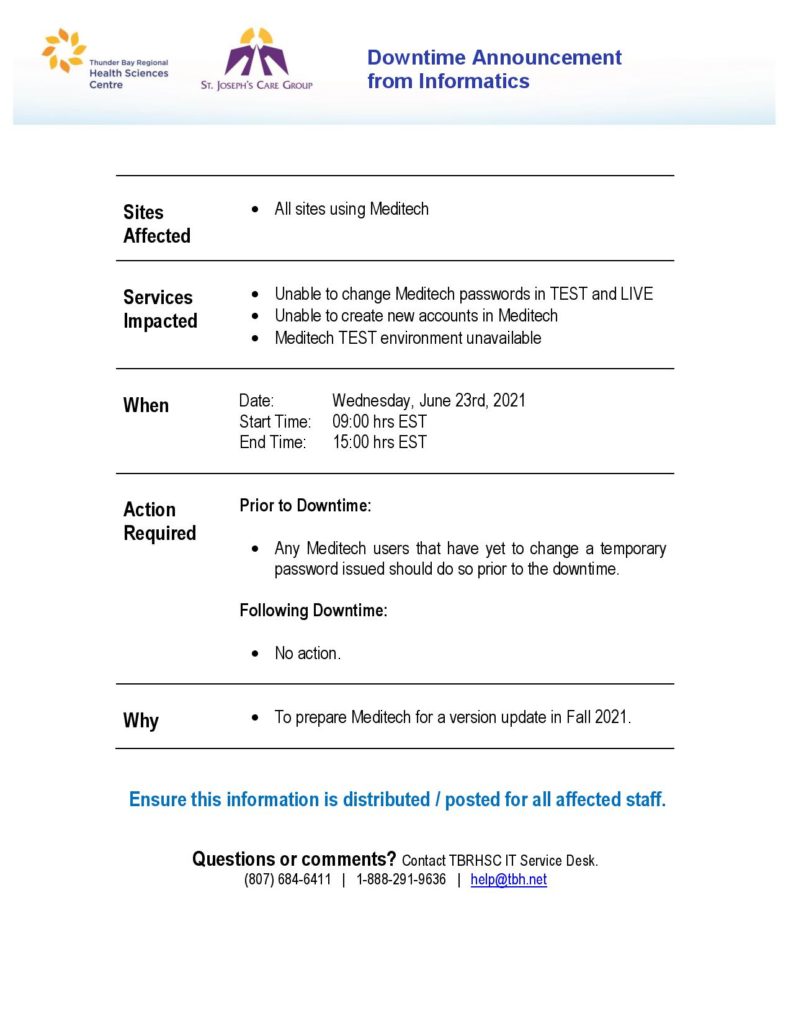
Lot Closures and Line Painting

Sent on behalf of Nicole Moffett, Manager, Emergency Preparedness and Security


On June 20, 2021, we will commence line painting in all of our parking lots. This process will take approximately one week to complete (weather dependent). To assist with this process, we will need to close entry to select lots each day in order to ensure that the lots are empty at the time of painting. On the day that your assigned lot is closed, we ask that you park in your alternate lot. As a reminder, all staff have access to I Lot (Turtle Lot) as an alternate lot. If you are parked in a lot at the time of its closure, you will still be permitted to exit at the end of your shift. The intent is to limit access and allow the lot to empty entirely. Once closed, anticipate closure to last for approximately 14 hours. Please refer to the schedule below.


Closure Schedule:

Lots2021Painting Time

Time that Lot will Close
Cross Walk Stop BarsWed. 16th6:30 pmNA
Cross Walk Stop BarsThurs. 17th6:30 pmNA
B1/A2Sun. 20th10:00 amSat. 19th, 10:00 pm
A1/B2Mon. 21st8:30 pmMon. 21 8:00 am
G North, FTues. 22nd8:30 pmTues. 22nd 8:00 am
G SouthWed. 23rd8:30 pmWed. 23rd 8:00 am
D, EThurs. 24th8:30 pmThurs. 24th 8:00 am
C1, C2Fri. 25th8:30 pmFri. 25th 8:00 am
I LotSat. 26th8:30 pmSat. 26th 8:00 am
HelipadSun. 4th10:00 amNA

Please also note that there is crosswalk painting scheduled during the evenings June 16 and June 17 (commencing at 6:30 pm). Although this will cause minimal disruption, please exercise caution when driving and walking on the property.

We apologize for any inconvenience and thank you for your understanding. Changes to the schedule will be posted on Informed. If you have any questions, please contact Christian Nielsen at nielsenc@tbh.net.

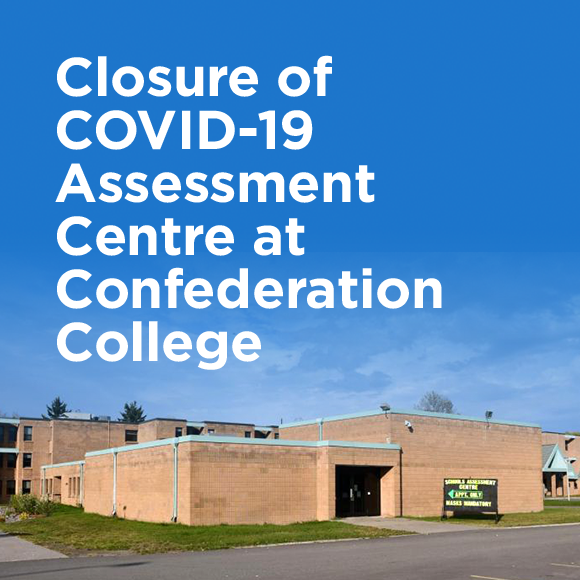
Closure of COVID-19 Assessment Centre at Confederation College

Sent on behalf of Jacqueline Park, Manager of Pandemic Community Collaboration, Assessment and Screening


The COVID-19 Assessment Centre located in the Sibley Hall Residence Activity Room at Confederation College will be closing, effective June 18, 2021 at 1700.

Moving forward, all swabbing will be performed at the Thunder Bay Regional Health Science Centre Assessment Centre located in the Medical Building at 984 Oliver Road. The hours of operation are 0800-2000. 

The process for booking a COVID-19 test remains unchanged, and staff should continue to follow current processes. Members of the community can schedule an appointment by visiting www.tbrhsc.com to book online or by calling (807) 935-8100.

The generosity of Confederation College has contributed immensely to the safety of our community and has enabled our Hospital’s COVID-19 Assessment Centre to meet the testing needs of the community safely and efficiently. Thank you to everyone that has contributed to the operations at Confederation College.

Any questions regarding the closure of the Confederation College location or testing at the Medical Building location can be directed to Jacqueline Park at parkj@tbh.net.

Lakehead University and TBRHRI scientists receiving more than $1.3 million for research

(Via Lakehead University)

Lakehead University and Thunder Bay Regional Health Research Institute (TBRHRI) researchers are receiving more than $1.3 million from the Natural Sciences and Engineering Research Council of Canada for 16 exciting research projects.

Dr. Sam Salem, Associate Professor in Civil Engineering at Lakehead University, is receiving a $130,000 Discovery grant to test the fire performance of Timber-Concrete Composite systems in mass timber buildings over five years.

“In this composite system, the advantageous mechanical properties of both materials, timber and concrete, are efficiently utilized and therefore several advantages can be achieved for a more robust floor system compared to timber floors,” Dr. Salem said.

Some advantages of utilizing timber-concrete composite floor systems include greater strength, durability, and much improved acoustics and vibration performance characteristics.

Dr. Amir Ameli, Assistant Professor in Electrical Engineering Department at Lakehead University, is receiving a total of $152,500 to facilitate a smooth transition to more-secure power grids by tackling cyber-security challenges faced by their protection systems. 

“The recent trend to expand the use of information technology in power networks has made them potentially vulnerable to cyber attacks,” Dr. Ameli said. 

“Protection systems are among the most critical cyber-vulnerable components in power grids, as they directly affect the integrity and stability of power systems.” 

Dr. Michael Campbell, Assistant Professor in Chemistry and Lakehead University – Thunder Bay Regional Health Research Institute Research Chair, is receiving a total of $132,500 to spend five years developing new methods for the cyclotron production of radionuclides and determining reactions and tools that will improve access to radionuclides for use in research, industry, and health care.

“When introducing a radionuclide into a small molecule or protein for labeling as an imaging probe, you are working against the clock,” Dr. Campbell said.

“The isotope is always decaying so time spent performing the synthesis and purifying the product will negatively impact the yield of the tracer.”  

Many of these reactions require some purification step to remove excess reagents and catalysts. Dr. Campbell’s research program will develop solid phase synthesis reagents and procedures to minimize reaction time and work to reduce the purification requirements.

“Dr. Campbell is a key contributor to our health research program that is vital to advancing our academic mission and even more importantly, to improving the health of the population,” said Dr. Rhonda Crocker Ellacott, President and CEO of the Thunder Bay Regional Health Sciences Centre and CEO of the Thunder Bay Regional Health Research Institute.

“I would like to thank NSERC for recognizing the potential of Dr. Campbell’s research. Their generous support is vital in allowing talented researchers like Dr. Campbell to make great strides forward with their research which can help us find better ways to care for patients.”

Dr. Andrew P. Dean, Lakehead University’s Vice-President, Research and Innovation, thanked NSERC for its continued support of the university’s scholars in the Natural Sciences and Engineering fields.  

“Discovery grants are exactly that, they provide multi-year funding for our scientists to explore fundamental research questions that lead to great discoveries.

“I would also like to acknowledge NSERC for their understanding of the impact on research productivity during this pandemic and NSERC’s willingness to provide current grant holders with time extensions with additional funding. This forward thinking approach has certainly been appreciated by the research community,” Dr. Dean said.

In 2020/21, Lakehead University received nearly $2 million in assistance from the Research Support Fund to support the indirect costs of research, which includes costs for supporting the management of intellectual property, research and administration, ethics and regulatory compliance, research resources, and research facilities.

New 2021 NSERC Discovery and Research Tools and Instruments Grants Awarded – Total: $1,328,053

Discovery Development Grants (two-year grants)                              

Dr. Mark Gallagher, Physics, “Scanning tunneling microscopy studies of the on-surface synthesis of molecular based nanomaterials”, $30,000.

Dr. Sabah Mohammed, Computer Science, “Containerization and Integration of Remote Patient Monitoring and e Consultation Systems”, $30,000.

Discovery Grant – Individual Operating Grants (five-year grants)                   

Dr. Amir Ameli, Electrical Engineering (Barrie), “Developing Cyber-Secure and Resilient Protection Schemes in Power Networks”, $140,000.

Dr. Ehsan Rezazadeh Azar, Civil Engineering, “Automated data collection and machine learning methods for civil infrastructure condition assessment in sparsely inhabited regions of Canada”, $130,000.

Dr. Michael Campbell, Chemistry and Lakehead-TBRHRI Research Chair, “Radiochemical methods for labeling and isotope production”, $120,000.

Dr. Dariush Ebrahimi, Computer Science, “Smart Iot-Based Systems: Deployment and Management”, $145,000.

Dr. Eltayeb Mohamedelhassan, Civil Engineering, “Electrokinetic-assisted phytoremediation of polluted sites”, $130,000.

Dr. Sam Salem, Civil Engineering, “Fire Performance of Timber Concrete Composite (TCC) Systems in Mass Timber Buildings”, $130,000.

Dr. Ali Tarokh, Mechanical Engineering, “Control of Complex Turbulent Flow”, $135,000.

Dr. Wilson Wang, Mechanical Engineering, “Intelligent Diagnostics and Prognostics of Electric Vehicle Powertrains”, $230,000.

Discovery Launch Supplements                                                           

Dr. Amir Ameli, Electrical Engineering (Barrie), “Developing Cyber-Secure and Resilient Protection Schemes in Power Networks”, $12,500.

Dr. Michael Campbell, Chemistry, Lakehead University-TBRHRI Research Chair “Radiochemical methods for labeling and isotope production”, $12,500.

Dr. Dariush Ebrahimi, Computer Science, “Smart Iot-Based Systems: Deployment and Management”, $12,500.

Dr. Ali Tarokh, Mechanical Engineering, “Control of Complex Turbulent Flow”, $12,500. 

Research Tools and Instruments (RTI) Grants (one-year grants)

Dr. Jinqiang Hou, Chemistry, Lakehead University-TBRHRI Research Chair “A Microwave System for Medicinal Chemistry and Radiochemistry Research”, $39,451.

  • Co-applicants

o   Dr. Michael Campbell, Chemistry, Lakehead University-TBRHRI Research Chair

o   Dr. Justin Jiang, Chemistry          

Dr. Baoqiang Liao, Chemical Engineering, “A Refrigerated High Speed Centrifuge for Water Science and Technology Research”, $18,602.      

Life After Stroke: Keeping Connected in the Community

Stroke is a sudden and life-altering event that may require an extended recovery period. More than 400,000 Canadians are living with the effects of stroke.  Additionally, many family members and caregivers are also impacted, often taking on supportive roles in the stroke survivor’s recovery.

Support is essential after stroke. Numerous programs are available throughout Northwestern Ontario to help keep people with stroke and their caregivers connected and engaged, even during a pandemic.

If you or someone you know has had a stroke, March of Dimes Canada’s newly expanded After Stroke program is a personalized recovery program that helps survivors and their families move forward after a stroke. After Stroke can help at every stage of the journey – from the early days in the hospital, to the adjustment of returning home, to the changes and challenges that can follow. It will help survivors set personal goals and guide them forward to get the support they need and deserve.

Some programs offered virtually at this time include:

  • Local Stroke Recovery Peer Support Group: Open to survivors of stroke, their family members, caregivers and friends. These groups help survivors connect with peers, exchange information and resources, learn new skills, explore the personal impact of stroke and build supportive relationships.
  • Community Conversation for Survivors and Caregivers: Every Tuesday, survivors and caregivers from all over Canada meet, share knowledge and resources.
  • Caregiver Connection-Virtual Group: Caregivers come together to talk about the challenges and rewards of caregiving. These guided discussions offer a chance to share experiences and information, or just talk, in a supportive space.
  • Aphasia Peer Connect program: People living with aphasia and other communication disorders come together for this virtual peer social group. An opportunity to meet new people and stay connected.
  • Hi, Tech!: Volunteers are matched with participants who have technology but need some extra help to become more comfortable with features of their devices such as using Zoom, Facetime, Google searches, email and more.
  • Connect and Share: Matching participants with volunteers who share common interests and meet with each other over the phone or virtually.  Some meet less or more frequently and calls include sharing interests, general conversation and even engaging activities (eg. card games, crafts, virtual tours and more).

How to access March of Dimes services? Visit the website at www.afterstroke.marchofdimes.ca or contact Todd Kennedy, Regional Development Manager by calling (807) 345-6595 extension 105 or by emailing tkennedy@marchofdimes.ca.

Todd Kennedy, Program Manager, March of Dimes Thunder Bay.

The Heart and Stroke Foundation of Canada knows about the power of keeping engaged in the community. Connecting with other people who know what you are going through can help the recovery journey.  They have developed an online peer support group where people can share experiences, as well as quality information and tips, while offering social and emotional support in a safe, inclusive and respectful community.  Separate groups for stroke survivors and caregivers are available. You can also sign up for a monthly Community Connect newsletter. Learn more at heartandstroke.ca/connect.

Another program supporting stroke survivors and their families in Northwestern Ontario is the Moving on After Stroke (MOST) program. MOST is a Self-Management group program delivered by St. Joseph’s Care Group.  It provides 18 sessions of exercise and education over nine weeks.  People with stroke who have completed active stroke rehabilitation as well as their caregivers are welcomed and encouraged to attend. MOST is available in-person in Thunder Bay or via telemedicine technology in Northwestern Ontario. 

For more information or to register for MOST, please call (807) 343-2431, extension 2537. Judy Mostow, who has 15 years lived experience with stroke and MOST Volunteer enthusiastically endorses the program. “I want to encourage stroke survivors to have HOPE. If you are willing to do the hard work, you can and will see improvements in your abilities to move forward. Also, be patient and when you stop and look back at where you were when the stroke first occurred compared to now, you’ll see that WOW those baby steps really paid off!”

For more information on stroke services in Northwestern Ontario, please contact the Northwestern Ontario Regional Stroke Network, located at Thunder Bay Regional Health Sciences Center, by emailing nwostroke@tbh.net or by calling (807) 684-6703.

Announcement – Performance Improvement Consultants

Shared on behalf of Jennifer Madahbee, Manager, Planning & Performance Improvement

I am pleased to announce the appointment of Sara Chow as a permanent Performance Improvement Consultant, and the extension of Angela Kutok who will continue as a Performance Improvement Consultant until June 30, 2022.

Sara has a Bachelor of Science in Biology and a Bachelor of Physical and Health Education, as well as a Master of Public Health, specializing in Health Care Management. She is certified in Lean Six Sigma and is a Certified Associate in Project Management. For the last eight years, Sara has worked as a Health Promotion and Communications Planner in Prevention and Screening Services. In this role, she led projects, needs assessments, staff engagement, and designed and reported on programs in the areas of smoke-free grounds, staff health and wellness programming, regional cancer screening promotion and patient education.

Angela Kutok is a Business Coaching Advantage Practitioner, is certified in Lean Healthcare, and has been a valuable member of our team since March 2020. Throughout this year, Angela has used her strong interpersonal and organizational skills, as well as her knowledge and understanding of the organization’s structure and leadership to develop successful project management and facilitation skills. She has most recently led the successful implementation of the Indigenous Self-Identification initiative.

Please join me in welcoming Sara to her new role, and congratulating Angela on her extension.

Behind the Mask: Our Pharmacy Team’s Response to the COVID-19 Pandemic

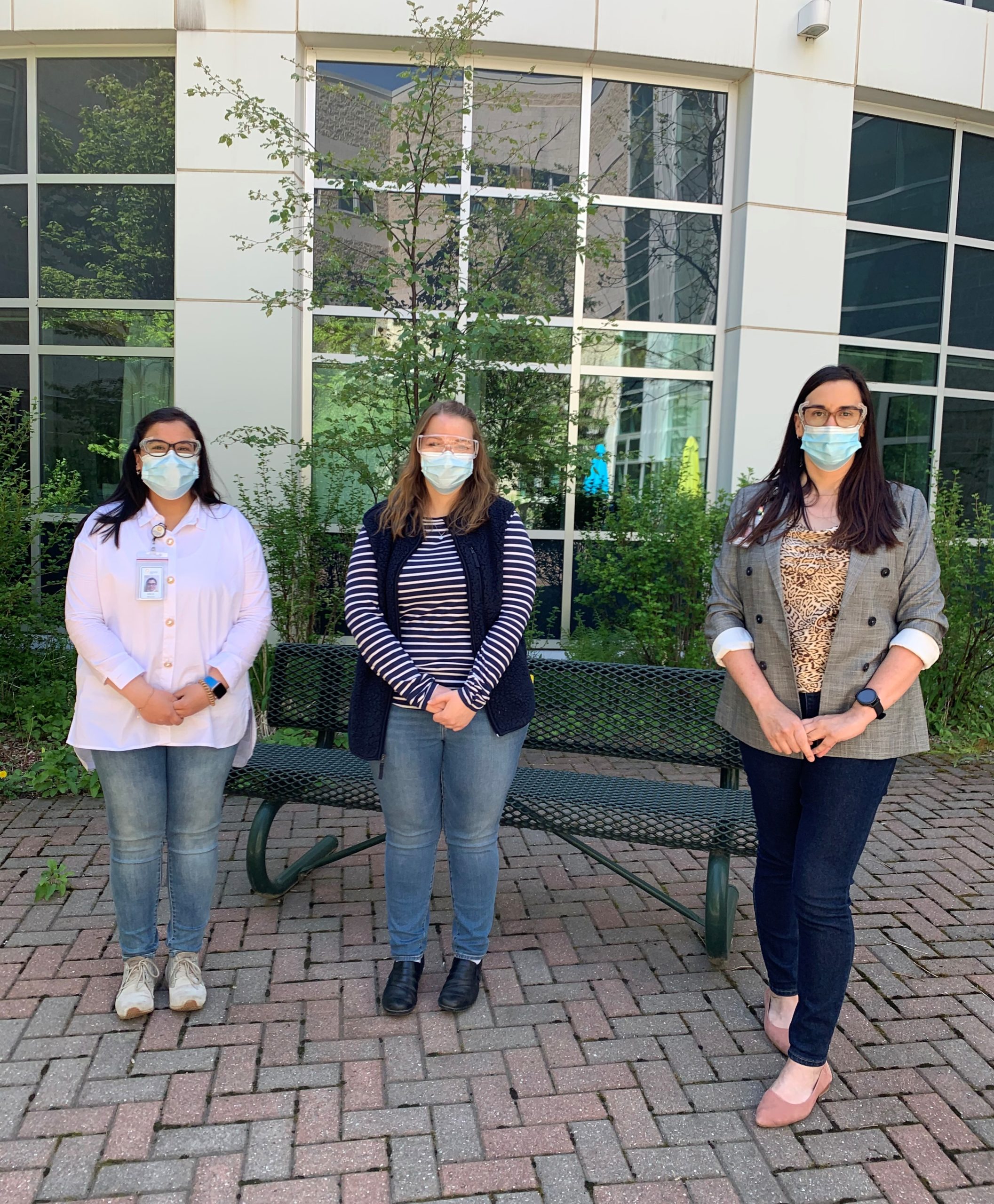
Left to right: Rifah Quadiri, Clinical Pharmacist 2C; Emma Koivu, Clinical Pharmacist 3A; and Angela Heintzman, Clinical Pharmacist, Emergency Department.

Pharmacists like Charlene Wilson have known for years that antibiotic resistance poses a serious threat to global health and our ability to treat infectious diseases.

Before the COVID-19 pandemic, Wilson worked with the Antimicrobial Stewardship Program (ASP), an interdisciplinary team of Clinical Pharmacists, Physicians, Nurses, Infection Control practitioners, and Microbiology practitioners at the Thunder Bay Regional Health Sciences Centre (TBRHSC).

“Our goal is to educate on appropriate antimicrobial treatment for patients while reducing side effects and antimicrobial resistance in order to preserve limited, and often costly, antimicrobials, so they will continue working for generations to come.”

Given their knowledge and expertise, it should come as no surprise that Wilson and the pharmacy team have had a vital role in our Hospital’s pandemic response.

First Wave

When the pandemic first hit, there was a lot of anxiety. TBRHSC’s pharmacy had to figure out quickly how to maintain pharmacy services to the Hospital while keeping staff safe. “We are a big department,” says Pharmacist Adrianne Shippam. “We were just learning about physical distancing, and we didn’t have Plexiglas or the appropriate cubicles.” They split into two teams and rotated staff, trying to limit the number of people in the department on-site to 50 per cent.

In addition to providing ongoing clinical support throughout the Hospital, the department had to take on a new role in ICU drug management. “Every hospital was and is still preparing for a surge of COVID-19 patients in their ICU’s,” says Shippam. “We need to ensure we will have ample supplies, working closely with purchasing and technicians.”

COVID-19 Vaccination Roll-out

In November 2020, the pharmacy team learned that they would have an essential role in the vaccination roll-out. Shippam was invited to be the Pharmacy Lead for the newly created Vaccination Task Force, allowing Department Manager, Carina Desramaux to continue to focus on managing stock and preparing our hospital for an ICU surge.

They had to rapidly adapt as the pandemic unfolded and as new research became available. “Initially, we didn’t know which vaccines we would receive,” says Shippam. “Some vaccines have rigid storage requirements, such as ultra low temperature freezers. We prepared for everything.”

Shippam collaborates with partners like the Thunder Bay District Health Unit under the Ministry of Health and Long Term Care to strategize how to rollout the vaccination locally, which was particularly challenging in the early days with limited supplies. Their goal was to vaccinate the highest risk individuals as quickly as possible.

Wilson works on logistics and operations on the task force, developing standards of practice, reviewing the rapidly evolving evidence, and making sure the vaccine gets where it needs to go while maintaining its integrity in storage and in transit. “Once we started the rollout, we realized how complex the vaccine is in terms of its fragility, and storage and security requirements. It takes a lot of organizing.”

Wilson says that while the COVID-19 pandemic has been challenging, it has also created new opportunities for Pharmacy staff to work closely with other staff and clinicians in the hospital and throughout the province.

“We have been resources on best practices for COVID-19 vaccines, not only for clinicians in this hospital, but also for hospitals, community clinics, and health units in other regions. Everyone is sharing information and helping each other, so that we can all distribute and administer the vaccines as quickly and effectively as possible.”

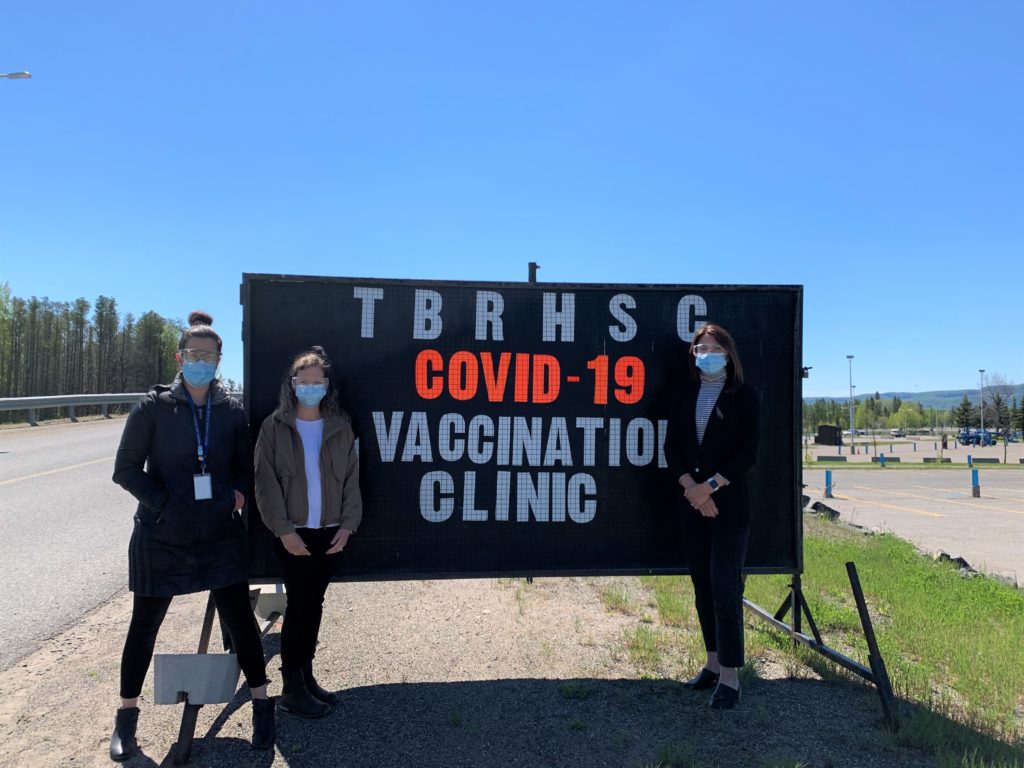
Left to right: Andrea Winters, Pharmacy Technician and leading Pharmacy Technician Vaccine team; Charlene Wilson, ASP Pharmacist, COVID-19 vaccine Pharmacy expert; and Adrianne Shippam, Pharmacy Lead for the Vaccination Task Force.

Working Together to Get Through the Pandemic

Before the pandemic, Andrea Winters, Pharmacy Technician, worked in the infusion clinic in the Cancer Centre and the TBRHSC Specialty Pharmacy. Because of her expertise in compounding IV and sterile handling, she was asked to be the lead technician for the vaccination clinic, which she says, “was both exciting and a bit intimidating.”

“We had five days to set up freezers, standards of practice, and get up and running. We were working with a fast-paced, constantly changing plan.”

Winters says it has been wonderful to be involved in the vaccination roll-out and is proud to see the hospital taking on this role and serving so many people. “Everyone involved can see the gratitude from patients for all the hard work we’re doing. This would not have worked without having a team.”

Wilson says she too is impressed with everyone on the pharmacy team, as they continue to have a major role in managing the COVID-19 vaccine rollout. “Everyone in the department adapted quickly and helped each other out. I feel grateful to be part of a strong pharmacy team that has stepped up to all of the challenges that have come our way.”

Shippam agrees. “It has been great to have the whole pharmacy team involved in this response and to showcase their skills and knowledge.”

“This pandemic has given our department the opportunity to collaborate with other departments in the hospital, allowing people to put a face to pharmacy and get to know each other and work together to get through this pandemic.”

Regional Stroke Units

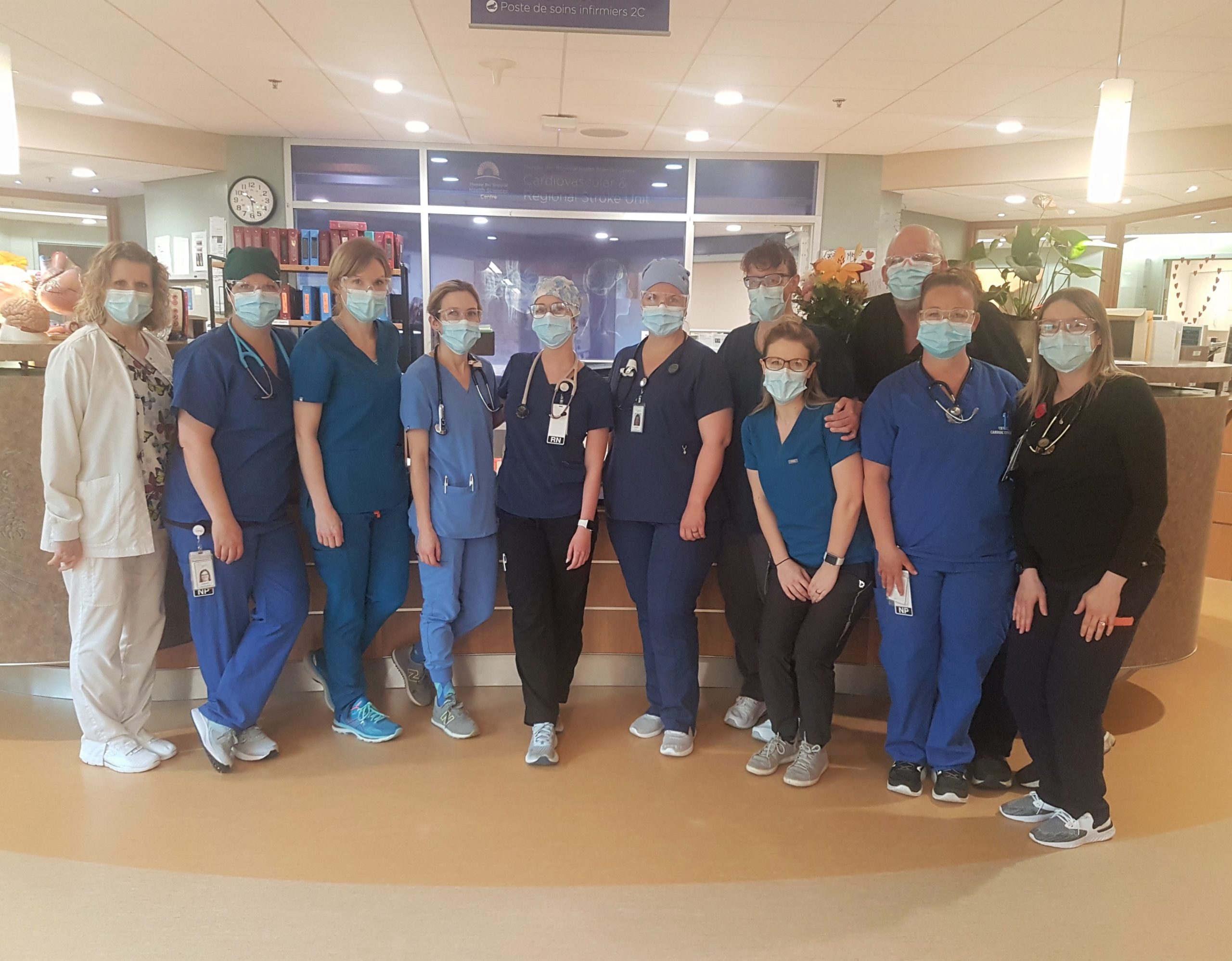
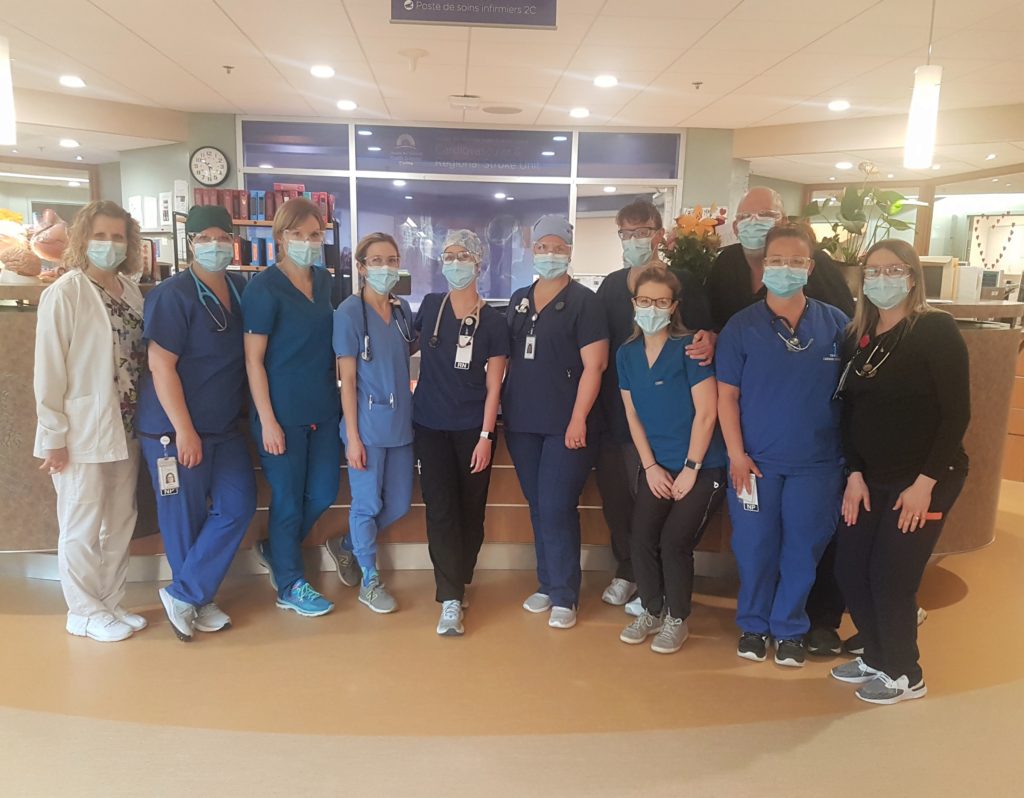
Regional Stroke Unit staff at Thunder Bay Regional Health Sciences Centre.

What is a Regional Stroke Unit?

Regional Stroke Units are defined areas in hospitals that are dedicated to the assessment, treatment, and management of stroke patients. Patients admitted to one of these units have support from a core interdisciplinary team on the unit that consists of physicians, nurses, occupational therapists, physiotherapists, speech-language pathologists, pharmacists, utilization coordinators, dietitians, and social workers.

Did you know? >> Thunder Bay Regional Health Sciences Centre (TBRHSC) houses a Regional Stroke Unit

TBRHSC is one of 11 hospitals in Ontario that has a Regional Stroke Unit. This serves all of the stroke patients living in Northwestern Ontario.

Did you know? >> Stroke Unit care is recognized as the gold standard of care

Studies show that patients who receive Stroke Unit care are more likely to survive, return home, and regain independence compared to patient who receive less organized care.

Did you know? >> Assessment and support can start quickly following a stroke

Canadian Stroke Best Practices states that the team members should assess patients within 48 hours of their admission to hospital and start to formulate a management plan with the patient and their family.

For more information, visit:

https://tbrhsc.net/programs-services/stroke-program/nwostroke/

http://bit.ly/Acute-Stroke-Unit-Care

http://bit.ly/Acute-Inpatient-Stroke-Care

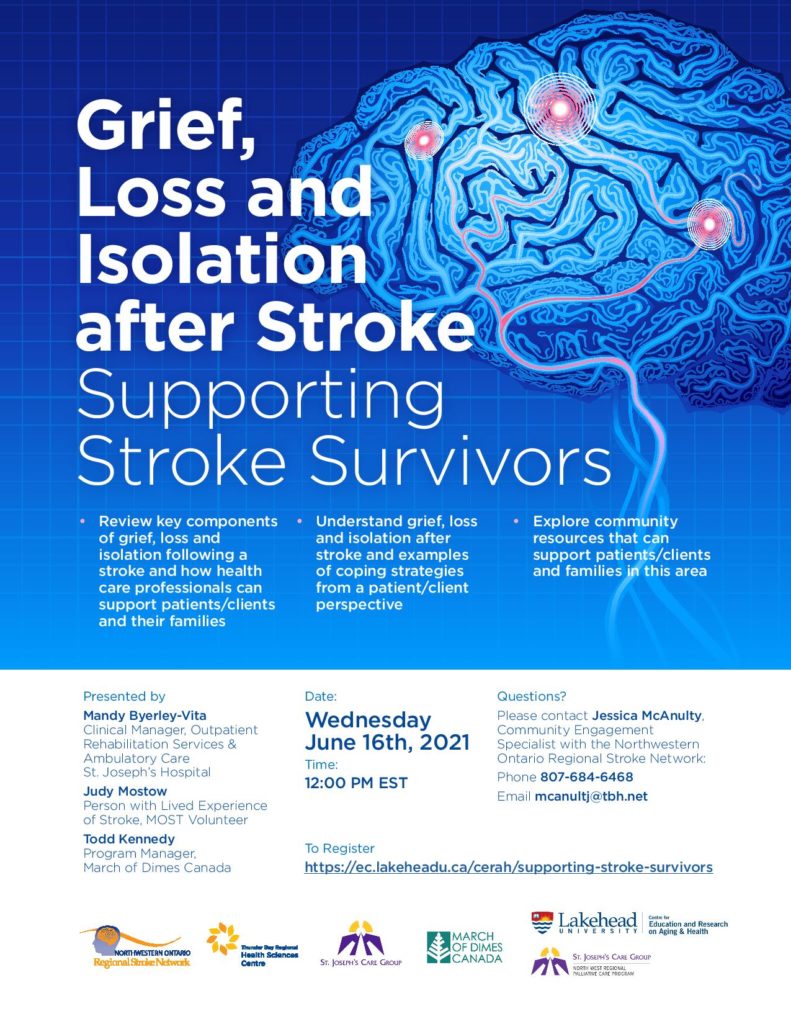
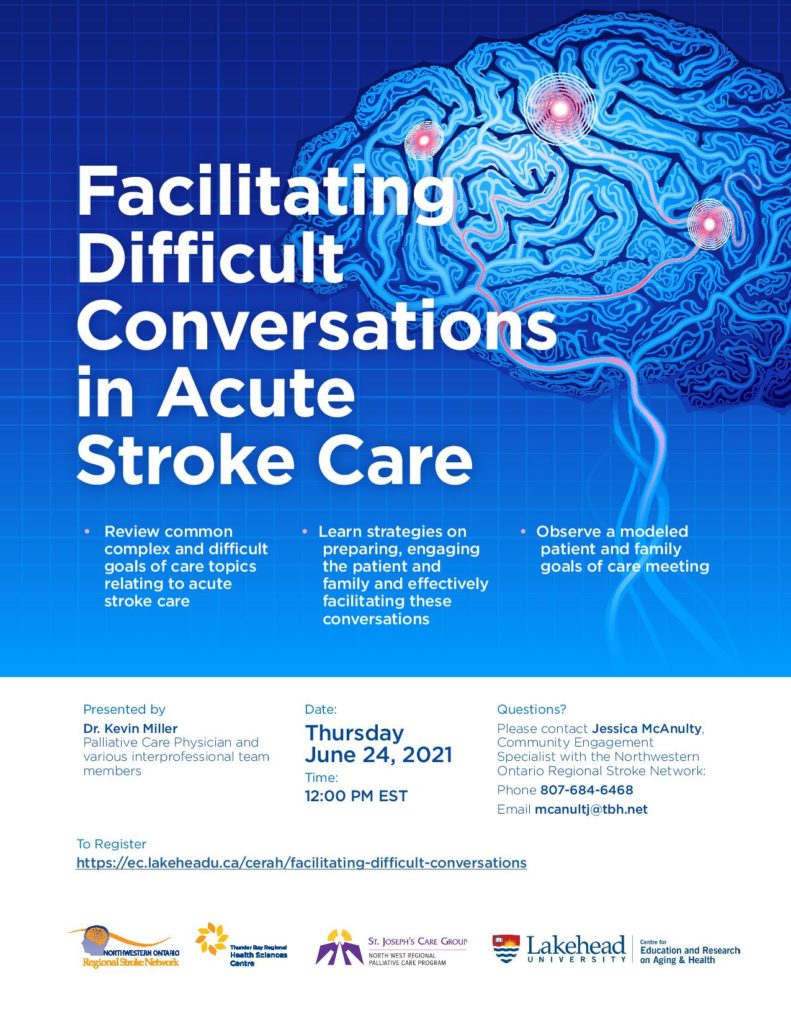
June is Stroke Month: Check out these virtual learning sessions

Sent on behalf of the Northwestern Ontario Regional Stroke Network


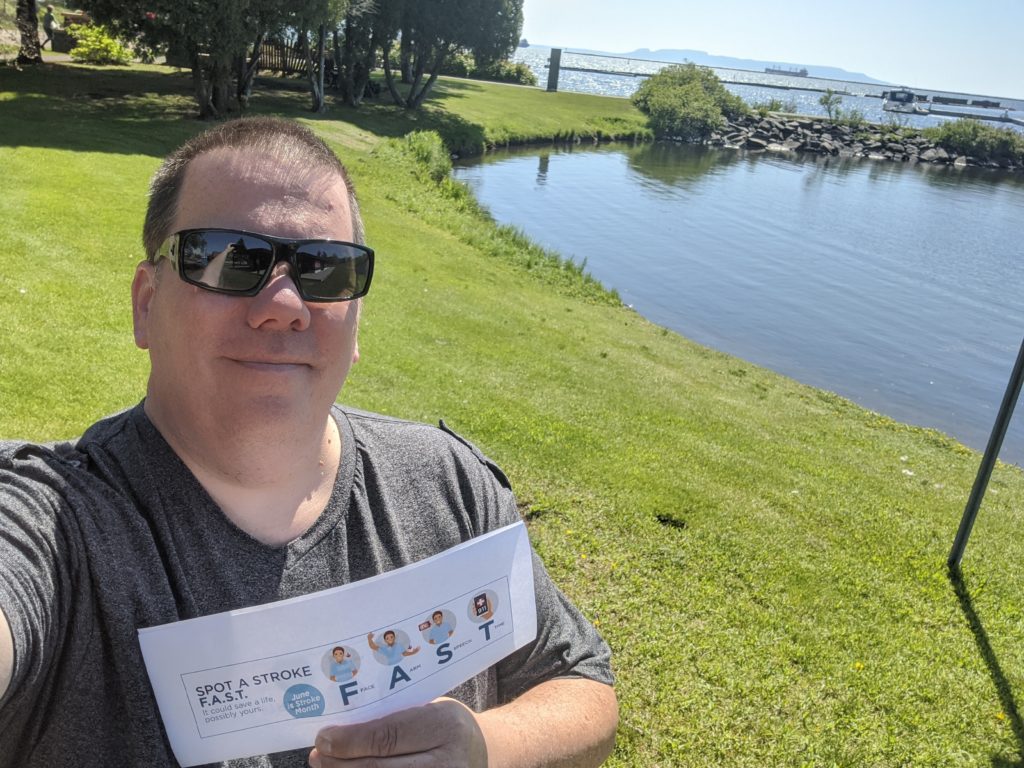
June is Stroke Month, and each of you play an essential role in our stroke patients and families journey.

We are excited to offer these virtual learning sessions which may be of interest to you.

See the attached posters for additional information. Pre-Registration Required.

Registration Link: https://ec.lakeheadu.ca/cerah/supporting-stroke-survivors

Registration Link: https://ec.lakeheadu.ca/cerah/facilitating-difficult-conversations

>