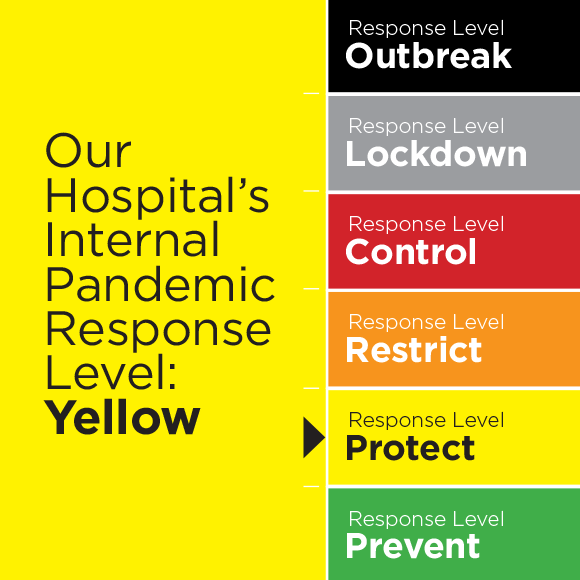
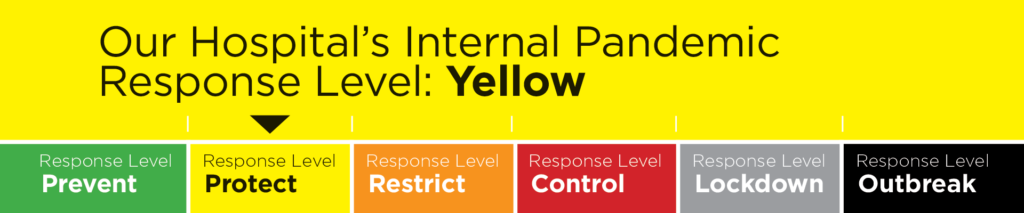
Effective immediately, our Hospital has moved its Internal Pandemic Responsive Level from Orange (Restrict) to Yellow (Protect). This is a result of the sharp decline in COVID-19 positive cases in Thunder Bay and across Northwestern Ontario, and the rising vaccination numbers in our community.
Please note that moving to Response Level Yellow does allow us to reduce restrictions on both learners and volunteers as well as some of our external partners. In particular, most volunteers will return gradually to all areas of the Hospital, during the next 2-4 weeks.
We must continue to be cautious with our COVID-19 pandemic response. The safety of patients, staff and the community remains our utmost priority. In the coming weeks, new guidelines from the Province and the Ministry of Health are expected that will allow us to reduce pandemic restrictions even further. Until then, it is imperative that we stay the course together. We appreciate everything you do.
Our Hospital is saddened to learn about the tragic news coming from the site of the former Marieval Residential School on Cowessess First Nation in Saskatchewan. Much like the discovery of the undocumented deaths in Kamloops earlier this month, it’s a reminder of the systemic racism, discrimination, and injustice that Indigenous people have faced, and continue to face, in this country. We share in the grief of residential school survivors, their families, and all Indigenous peoples and communities, including our colleagues, neighbours, and the 69 First Nations in Northwestern Ontario that we serve. Our Hospital is committed to actions to support the Truth and Reconciliation Commission’s 94 Calls to Action. Flags at our Hospital will be flown at half-mast starting today until July 26th, one hour for each of the 751 lives that were lost, and in memory of the thousands of children who were sent to residential schools, for those who never returned home, and in honour of the families whose lives were irreversibly changed.
Residential school survivors, their families, or anyone who needs emotional support can contact:
Thunder Bay Regional Health Research Institute (TBRHRI) held its Annual General Meeting (AGM) on Thursday, June 24th.
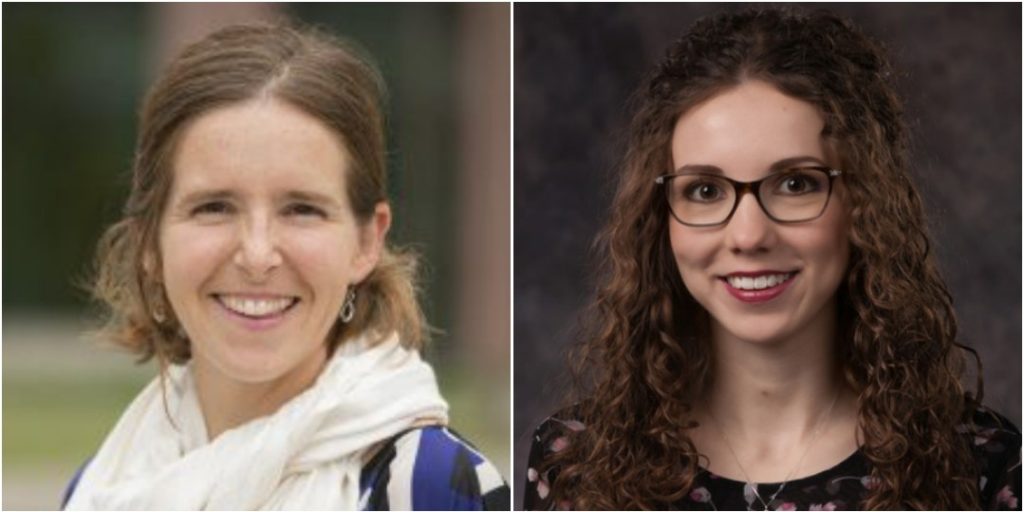
Board of Directors Chair Dr. Andrew Dean and Dr. Rhonda Crocker Ellacott, President and CEO of TBRHRI, welcomed Dr. Erin Cameron and Jocelyn Bel as new Board Directors serving 3-year terms. They will join Dr. Dean as well as James Peotto, Dr. Sheldon Tobe, Dr. Pam Wakewich, Andrew Ross, John Dixon, and Peter Bishop who are continuing with the Board.
“Our team is expanding the fields of research and breakthroughs in some amazing fields,” said Dr. Andrew Dean. “From detecting neurodegenerative diseases at the earliest of stages, advancements in mammography for those with breast cancer to smart home-based monitoring systems for patients – the research being conducted in Thunder Bay is ground-breaking and game changing.”
The meeting also say Dr. Pamela Wakewich elected as Vice-Chair as well as Chair of the Science & Research Committee, and James Peotto as Treasurer.
“The research taking place in Thunder Bay is not only going to help the lives of patients and families in our region, but on a global scale,” said Dr. Crocker Ellacott. “Our team is recognized internationally for their innovation, intelligence and dedication to science and medicine. Great things are happening in Northwestern Ontario.”
Dr. Crocker Ellacott will continue to serve as an ex-officio Director along with Dr. David Marsh, Associate Dean, Research, Innovation & International Relations, Northern Ontario School of Medicine, Kelly Meservia-Collins, Executive Vice President, Research, Quality & Academics, Thunder Bay Regional Health Sciences Centre, and Tim Larocque, Director, Applied Research & Innovation, Confederation College. The Health Research Institute’s Annual Report was also released and highlights some of the successes of the 2020/2021 fiscal year. To read it, please visit https://bit.ly/2020-2021-TBRHRI-AR.
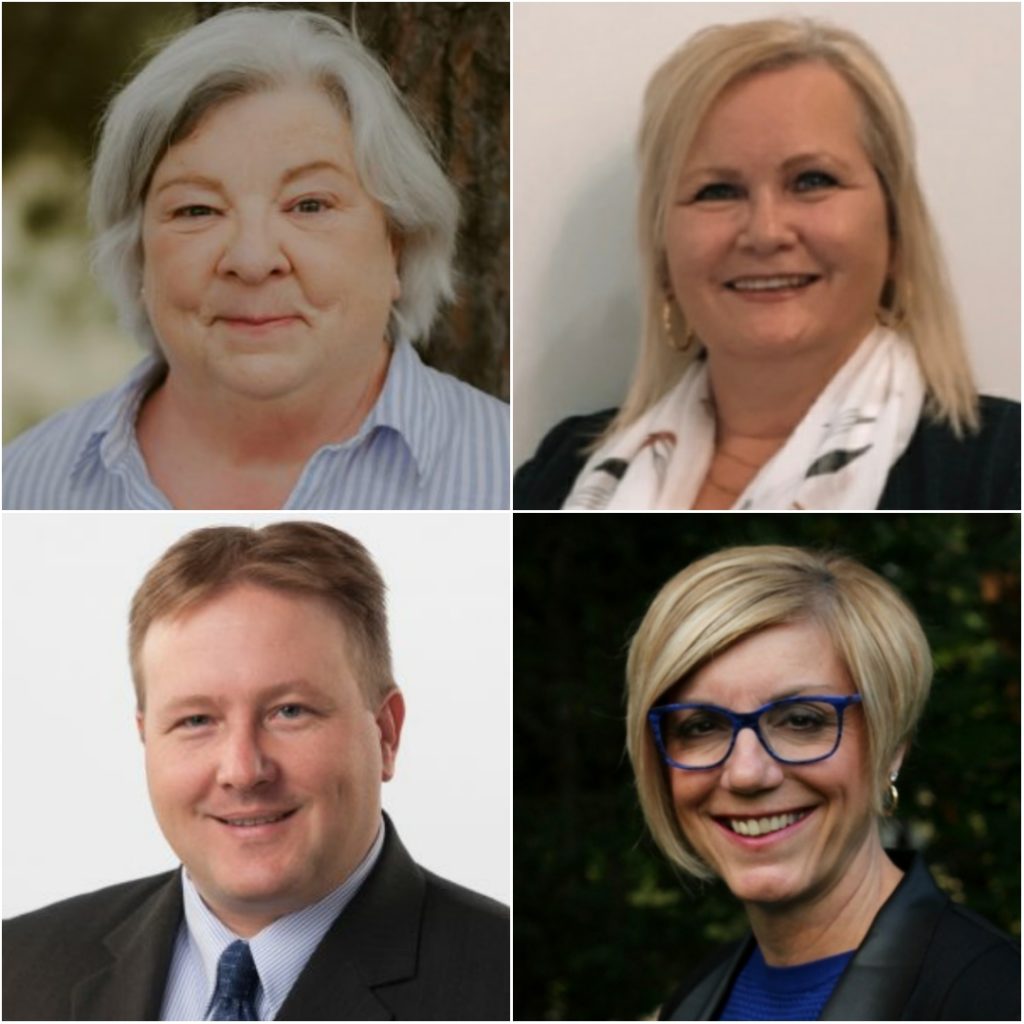
(Clockwise) Christine Bates, Bonnie Pelletier, Glen Currie, and Monique Rocheleau.
Thunder Bay Regional Health Sciences Centre (TBRHSC) announced four new Board members at its Annual General Meeting (AGM) on Thursday, June 24th.
Hospital Board Chair Matt Simeoni and President and CEO Dr. Rhonda Crocker Ellacott welcomed Christine Bates, Bonnie Pelletier, Glen Currie, and Monique Rocheleau as new Board Directors serving 3-year terms. The new Directors replace Anita Jean, Gary Whitney, and Nathalie Coppola who are ending their terms of office.
“We have some fantastic additions to the Board who will help provide guidance on behalf of the community moving forward,” said Mr. Simeoni. “I want to express our gratitude to those Directors who are ending their terms of office and to those who are continuing in the service to patients and families in our region. Their leadership has been invaluable.”
Continuing Board members are Mr. Simeoni, Gord Wickham, Michael Hardy, Joy Wakefield, John Friday, Pat Lang, John Hatton, Douglas Judson, Dr. Andrew Dean and Dr. Pamela Wakewich.
“This has been a challenging year on so many fronts, and under this Board’s guidance and leadership we persevered,” said Dr. Crocker Ellacott. “We are in a strong position as we begin to transition into recovery and roll out our strategic plan. Our Strategic Planning is under way – and I know the shared experiences, perspectives and wisdom we have all gained through COVID-19 will help us prepare for success as we plan for the future.”
Returning as Standing Committee Community Members are Kathleen Sawdo with Resource Planning and Michael Pelletier with Governance & Nominating. The Hospital also welcomed new Community Members Pauline Mickelson and Christina Brassard who were appointed by the Board to other Committees.
Also returning to the Board are ex-officio Directors Dr. Rhonda Crocker Ellacott, Interim Chjief Nursing Executive Meaghan Sharp, Chief of Staff Dr. S. Zaki Ahmed, Northern Ontario School of Medicine Dean, President and CEO Dr. Sarita Verma, and President of the Professional Staff Association Dr. Walid Shahrour.
At the Inaugural meeting of the Board of Directors, held immediately following the AGM, the new Officers of the Corporation were elected, including Gord Wickham as new Board Chair.
“Following Matt Simeoni’s strong leadership during the pandemic won’t be easy,” said Mr. Wickham. “Fortunately, we have a strong Board and Hospital leadership to help with the transition. We are at the end of what has been an unprecedented moment in health care, and it is inspiring to see that under pressure we have emerged stronger, in a solid financial position and united.
In addition at the Inaugural meeting of the new Board, Pat Lang was elected 1st Vice Chair with Matt Simeoni continuing as 2nd Vice Chair. John Hatton will serve as Board Treasurer. Meanwhile, Joy Wakefield was elected as Chair of the Patient Safety and Quality of Care Committee. The Hospital’s Annual Report was also released and highlights some of the successes of the 2020/2021 fiscal year. To read it, please visit https://bit.ly/2020-2021-TBRHSC-AnnualReport.
In this episode of the SeamlessMD Podcast, Dr. Joshua Liu, Co-founder & CEO at SeamlessMD, and marketing colleague, Alan Sardana, chat with Caroline Fanti, Director of the Regional Surgical Services at Thunder Bay Regional Health Sciences Centre, about Surgical Remote Monitoring to reduce ED visits and readmissions.
Please be advised that on July 5th we will be discontinuing the “LESS THAN 1g SODIUM diet order.
If your patient requires a sodium restricted diet please choose the primary diet required (ie. FULL, SOFT, CHOPPED). For the secondary diet please choose NO ADDED SALT or LESS THAN 2g SODIUM if indicated.
If you have any questions or concerns, please contact Nutrition and Food Services at 684-6725.
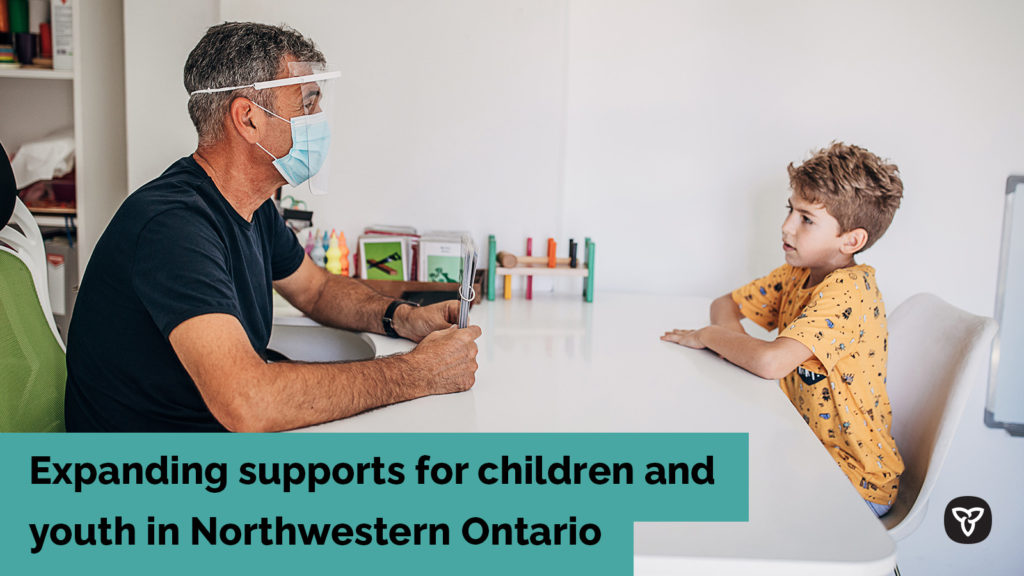
The Ontario government is providing more than $1 million in additional annual funding specifically targeted at improving access to core and specialized mental health and addictions services for children and youth in Northwestern Ontario. This funding will help the region reduce waitlists and address the extensive wait times for services across the region, especially during the COVID-19 pandemic.
This new child and youth mental health funding is part of the government’s commitment to invest $3.8 billion over 10 years to implement the Roadmap to Wellness, the government’s action-oriented plan to build a comprehensive, connected and fully integrated mental health and addictions system that works for Ontarians of all ages.
“Our government is building a modern, comprehensive and connected mental health and addictions system that works for all Ontarians,” said Associate Minister Tibollo. “This investment will help improve the mental health and addictions care provided to children and youth in Northwestern Ontario and will address the long-standing gaps in care and extensive wait lists that have existed for far too long.”
The government is making these much-needed investments to expand and enhance community-based mental health supports and services, including culturally appropriate services for Indigenous children and youth. Investments include:
$200,900 in annualized funding for Firefly to support a range of core services offered including brief services, counselling and therapy and specialized consultation.
$427,100 for community-based child, youth and family service agencies that provide core mental health and addictions services, including live-in treatment programs, as well as organizations that provide Indigenous core-like services.
$320,600 for Children’s Centre Thunder Bay to enhance services to support and strengthen parent/child relationships and improve the mental health of children and youth in need.
$61,600 to increase access to community-led services and expand the psychiatry program for children and youth at Sioux Lookout First Nations Health Authority.
These build on recent targeted investments focused on further enhancing critical supports including:
$1.5 million to expand and enhance access to specialized mental health and addictions services in Northwestern Ontario through the Child and Adolescent Multidisciplinary Psychiatry Services (CHAMPS) Program, operated by the Thunder Bay Regional Health Sciences Centre, in partnership with the St. Joseph’s Care Group. This funding is being used to hire six psychiatrists and will help develop a systemwide response to the complex mental health and addictions challenges in the region through a partnership with local community-based services, including culturally appropriate services for Indigenous children and youth.
$1 million to grow the Child and Adolescent Psychiatry Services (CAPS) program based in Thunder Bay, with satellite service locations across Northwestern Ontario. The CAPS program will compliment services through the Child and Adolescent Multidisciplinary Psychiatry Services (CHAMPS) Program.
“This investment is a continuation of our commitment to bring better services, shorter wait times and greater mental health and addictions supports to children and youth in Northwestern Ontario”, said Greg Rickford, Minister of Northern Development, Mines, Natural Resources and Forestry, Minister of Indigenous Affairs, MPP for Kenora-Rainy River. “All people in Ontario deserve equal access to mental health and addictions services and our government is ensuring rural and remote northern communities have the life-saving supports they need to keep children and youth safe.”
Quick Facts
In February 2020, the ministry also announced $800,000 to Sioux Lookout First Nation Health Authority to support a team of specialized mental health professionals to provide care to First Nations youth in northwestern Ontario with acute mental health needs.
Through the Roadmap to Wellness, Ontario has invested $525 million in annualized funding for mental health and addictions support since 2019-20. This includes an additional $175 million for more mental health and addictions services and supports this year, committed through the 2021 Budget. This builds on the $176 million invested in October 2020 and additional funding of $174 million invested in 2019-20.
In response to the COVID-19 outbreak, the province invested up to $194 million in one-time emergency funding for mental health and addictions services. Announced last year, this funding is helping Ontarians access the services they need during these difficult times. This includes high-quality virtual supports, which have been accessed by more than 82,000 Ontarians, including over 42,000 who have accessed online cognitive behavioural therapy.
As of mid June, over 8,100 health care workers have access mental health and addictions supports virtually, including peer group discussions, training and education, iCBT and support from clinicians.
Visit COVID-19: Support for People to find information about the many available, confidential and free mental health and addictions services and supports for Ontarians of all ages.
Visit Ontario’s website to learn more about how the province continues to protect Ontarians from COVID-19.
For people under 18, you can visit Resources Around Me to locate child and youth mental health services in your area. You can also visit Ontario’s website to find mental health supports for children and youth under the age of 18. Information is also available on our Health Care Options web portal.
For public inquiries call ServiceOntario, INFOline at 1-866-532-3161 (Toll-free in Ontario only)
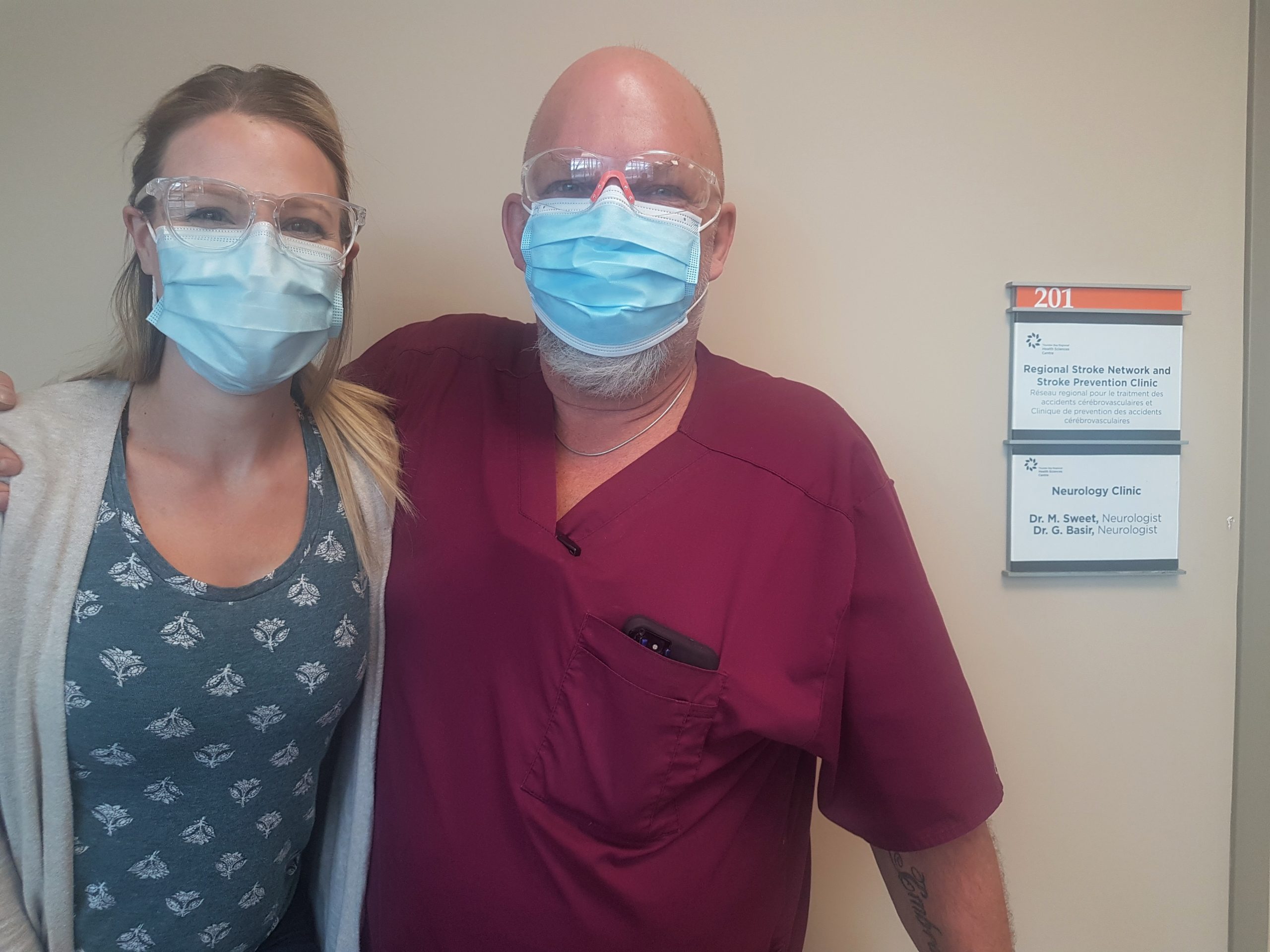
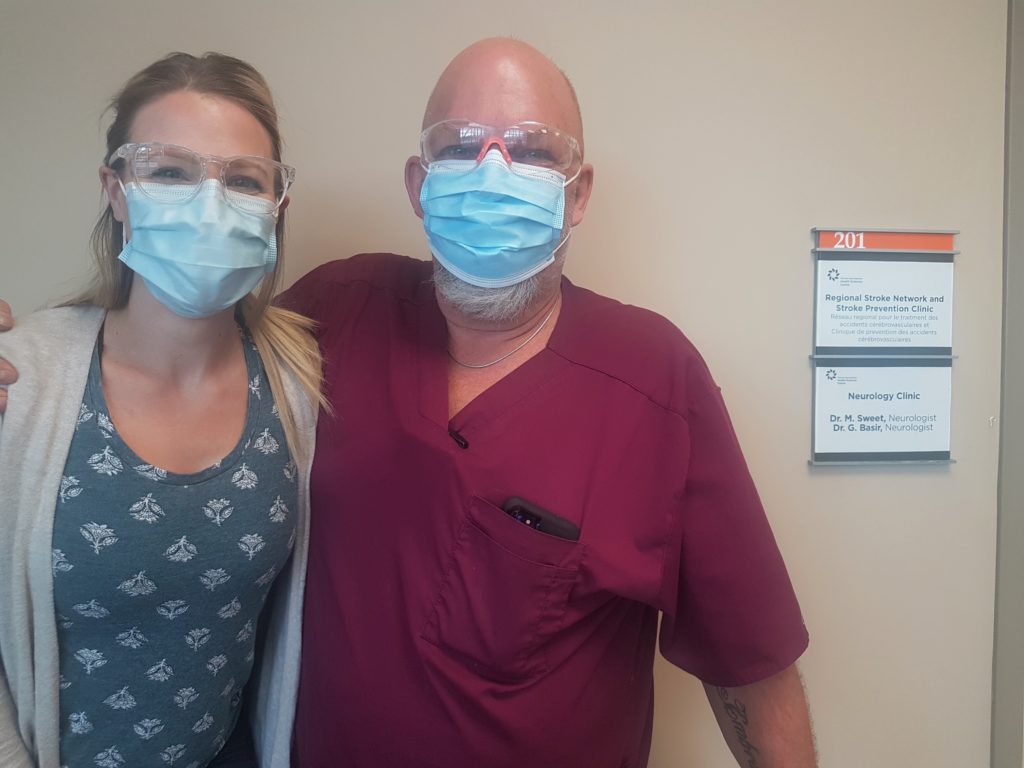
Mallory Karsten and Barry Ducharme, both Clinical Stroke Nurses at TBRHSC, are responsible for providing leadership and coordination through the acute stroke delivery.
What is the main role of the Clinical Stroke Nurse at Thunder Bay Regional Health Sciences Centre (TBRHSC)?
There are currently two Clinical Stroke Nurses at TBRHSC. Mallory Karsten and Barry Ducharme are responsible for providing leadership and coordination through the acute stroke delivery. One of their main roles is to attend Code Strokes called throughout the Hospital to provide support and to ensure timely and smooth transitions throughout the treatment process.
How do the Clinical Stroke Specialists support patients and families?
They provide support and education for patients and their family members throughout their entire hospital stay. They work with the interdisciplinary team to coordinate care along the stroke continuum and ensure seamless discharges and transfers. They advocate for their patients and families to ensure appropriate discharge plans and supports are in place.
How do the Clinical Stroke Specialists support quality improvement of stroke care at TBRHSC?
The Clinical Stroke Specialists are also key members of the Northwestern Ontario Regional Stroke Network (NWORSN). When working in this capacity they evaluate stroke services and work to improve processes of stroke care for all patients and families in Northwestern Ontario. They stay up to date on best practice recommendations and look for ways to integrate them into stroke care.
For more information on some of the ways the NWORSN are supporting Stroke Care please visit www.nwostroke.ca
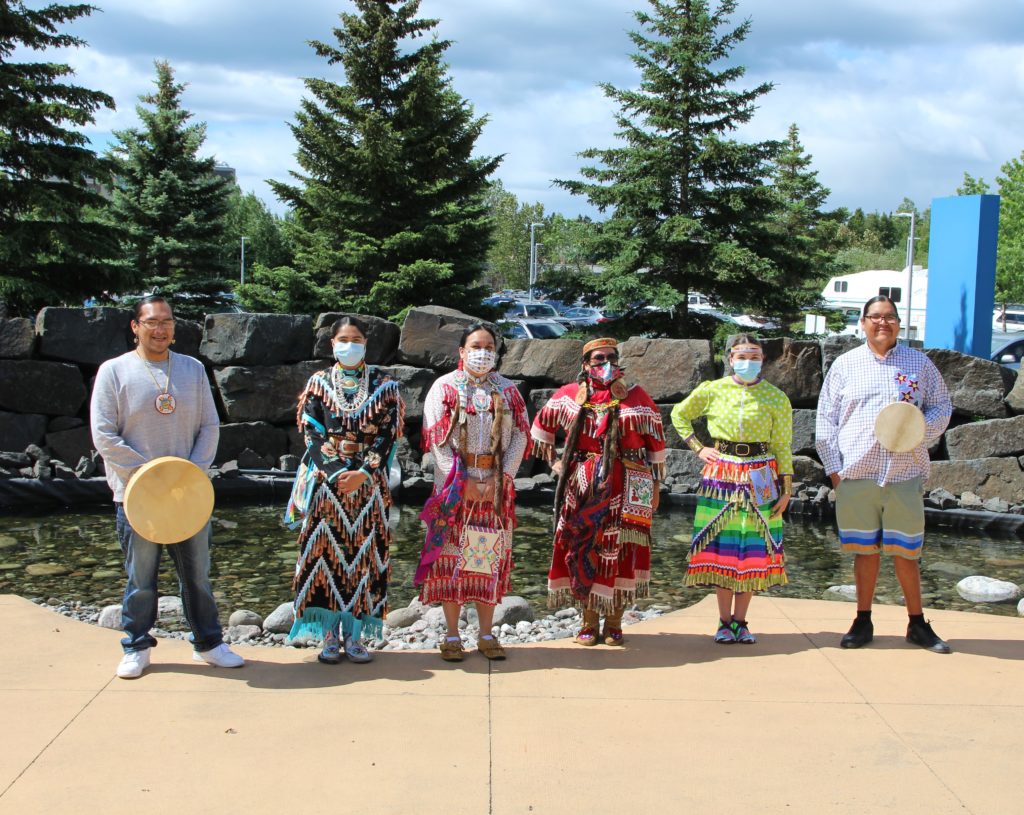
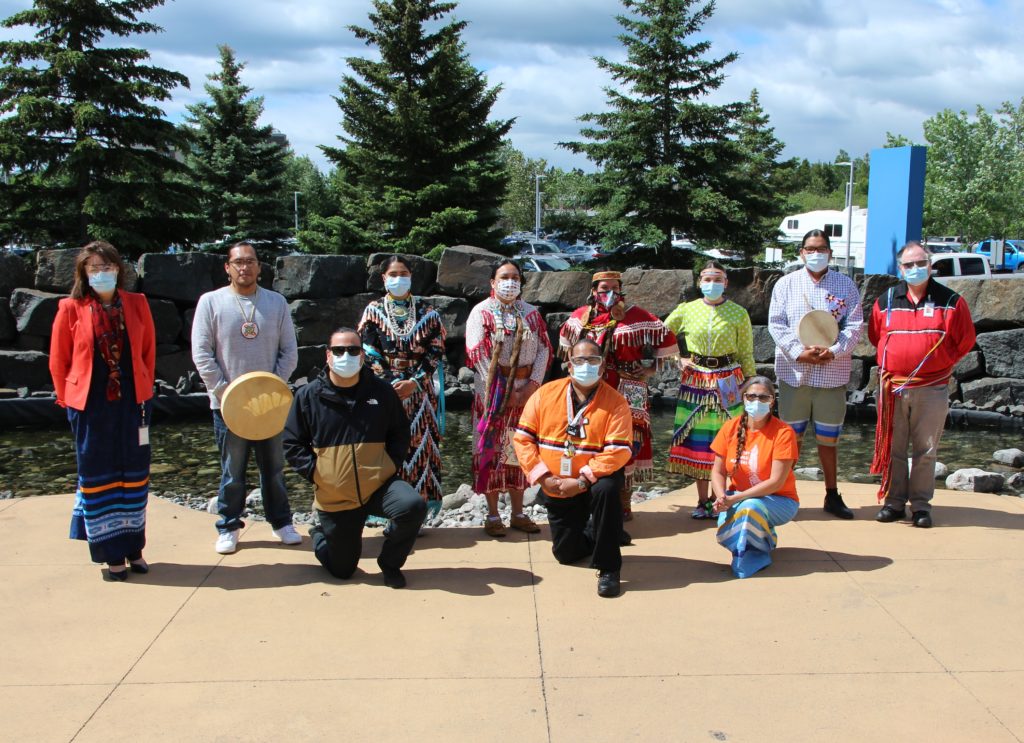
Thank you to Elder Kerry McLaughlin, Paul Francis (Director of Indigenous Relations at St. Joseph’s Care Care Group), Michael Robinson (Indigenous Spiritual Care Provider at TBRHSC), Crystal Pirie (Senior Director, Indigenous Collaboration at TBRHSC), Dr. Rhonda Crocker Ellacott, (President and CEO, TBRHSC, and CEO, TBRHRI) and the amazingly talented drummers and jingle dress dancers who all came together this morning to help us celebrate.
In honour of National Indigenous Peoples Day (June 21st), the Hospital hosted a ceremony near the water feature at the front entrance. The ceremony was live-streamed on the Hospital’s Facebook page for those who wanted to join virtually.
National Indigenous History MonthPrize Winners
The following are our prize winners for National Indigenous History Month Activities that took place the week of June 14th:
Aidan Brown
Nicole Moffet
Carrie Haugenes
Congratulations! Thank you to everyone that participated in the activities. Note: If you completed the Indigenous Culture Survey, please email creamerj@tbh.net.
National Indigenous History Month
National Indigenous History Month is a time for learning about, appreciating, and acknowledging the contributions of First Nations, Inuit and Métis people.
At the start of Indigenous History Month we learned of the discovery of the undocumented deaths of 215 children at the former Kamloops residential school site. Our hospital recognized this horrific event by lowering our flags for 215 hours, 1 hour for each child found.
We share in the anger and grief of residential school survivors, their families, and all Indigenous peoples and communities, including our colleagues, neighbors, and the 69 First Nations in Northwestern Ontario (NWO) that our Hospital serves. Our Hospital is committed to actions to support the Truth and Reconciliation Commission’s 94 Calls to Action.
Aboriginal Peoples Television Network (APTN) has developed lists of resources to learn more about Indigenous culture, which includes a recommended list of books. To learn more, please visit https://www.aptnnews.ca/ourstories/indigenoushistorymonth2021/. We encourage you to take the time to learn about the vibrant culture of Indigenous people of Canada.