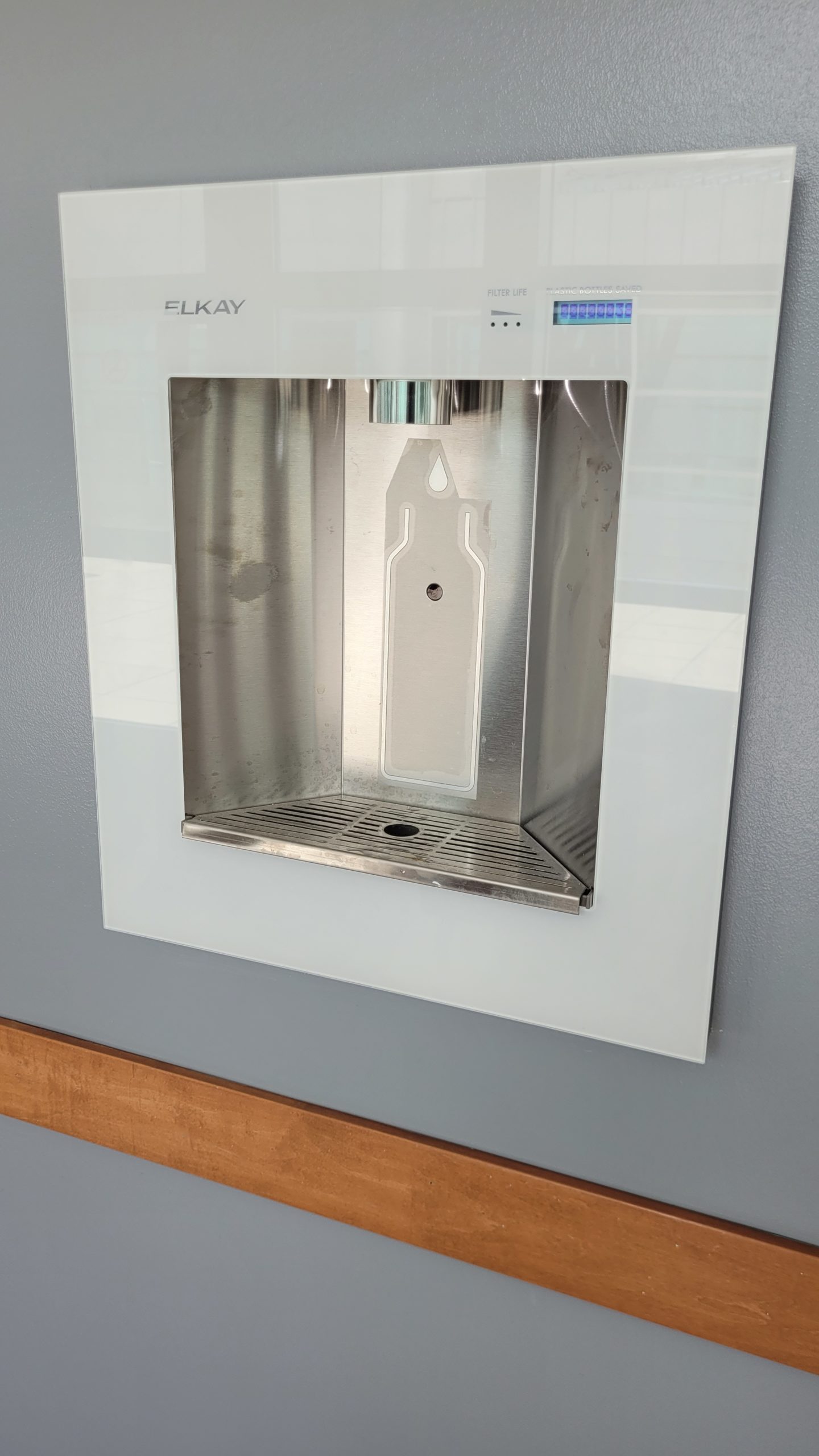
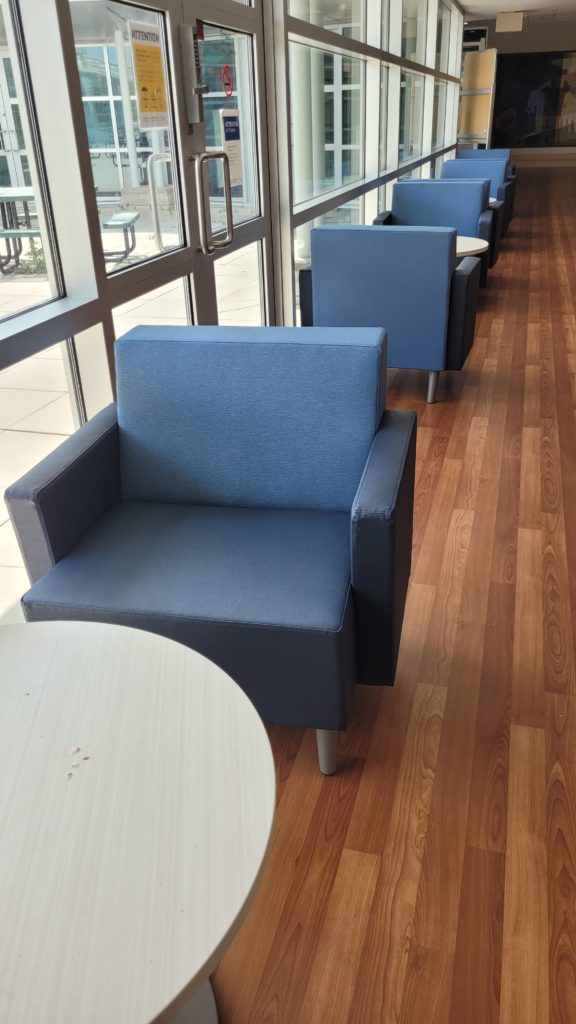
We’re happy to share that the 3rd Floor Staff Lounge has some fresh new additions. Additional lounge furniture has been added to enhance the space’s comfort, allowing staff to relax and recharge. Additionally, a brand-new water bottle filling station has been installed to help keep you hydrated throughout the day. Enjoy the space. You’ve earned it!
Prevention and Screening Clinical Services, in collaboration with Diagnostic Imaging, is proud to announce the Ontario Lung Cancer Screening Program (OLSP) has launched at Thunder Bay Regional Health Sciences Centre (TBRHSC). The program is aimed at improving early detection and outcomes for individuals at high risk of developing lung cancer.
Lung cancer is the leading cause of cancer death in Ontario, but when caught early through screening, it can be treated more effectively. This new program offers low-dose CT (LDCT) scans to eligible individuals who meet specific criteria, such as age and smoking history. The goal is to detect cancer at an earlier stage, often before symptoms appear, when treatment can be most successful.
The program is supported by Ontario Health – Cancer Care Ontario and is part of a provincial effort to improve cancer screening rates and reduce health inequities across the region. It also represents another step forward in TBRHSC’s commitment to providing high-quality, patient-centred care.
Thank you to everyone involved in making this important service available to our community.
For more information, contact Olivia Coy, Screening Navigator, at olivia.coy@tbh.net or visit the Prevention and Screening website.
Shared on behalf of the Occupational Health and Safety Department
Thunder Bay Regional Health Sciences Centre is committed to providing a healthy and safe work environment for all employees, physicians, undergraduates, post graduates, medical trainees, students, volunteers and contractors.
Employers and employees both have responsibilities and obligations with incident and injury reporting. The employer will be compliant with the reporting requirements as defined in the Workplace Safety and Insurance Act and the Occupational Health and Safety Act.
Incident and injury reports are required to be submitted immediately following as this will allow Occupational Health and Safety to support the employees efficiently and effectively with preventing a similar occurrence and a supported return to work.
Occupational Heath and Safety will provide and offer safe, suitable and transitional work to employees within their identified restrictions and limitations.
The employer supports WSIB’s rationale of the “Better at Work Principle “, which is a principle that guides the case management program. Strong evidence suggests that activity hastens optimal recovery while inactivity delays it and that remaining at or promptly returning to some form of productive work improves clinical outcomes as compared to passive medical rehabilitation programs.
When claiming a work related injury/illness, WSIB has requirements that must be met in order for an employee to be entitled to benefits.
Employees must report the injury/illness to the manager and complete an employee electronic incident report.
If an employee feels they are unable to perform the essential duties of their job, they must seek medical attention and Transitional Modified Work will be offered. If the injury/illness occurs after hours, the Administrative Coordinator must be notified.
Medical documentation must indicate clear restrictions. If no clear restrictions are provided, restrictions are based on the WSIB suggested standard restrictions that will be used to plan and offer a Transitional Modified Work Plan.
If the employee declines the Transitional Modified Work offer, Occupational Health and Safety will notify WSIB and WSIB is responsible for making all the decisions in the claim including approval or denial of the claim and payment of lost time in the claim.
Employees must maintain contact with Occupational Health and Safety regarding updates, changes in condition etc.
If you have any questions regarding the WSIB process or the Transitional Modified Work Program, please contact the Occupational Health and Safety Department.
Take part in the Global Workforce Survey, developed by Health Standards Organization (HSO) and Accreditation Canada, to provide your valuable input on patient safety, quality care, work environment, and well-being.
Complete the survey by June 16, 2025 to be eligible to win free parking.
Laptop Bookings
To provide dedicated space and equipment for staff to complete the survey, the following dates have been booked in Auditorium B (1:30 p.m. – 3:30 p.m.):
June 17 and 24
July 8 and 15
Once you have completed the survey, scan the QR code available on the poster for your chance to win great prizes. Draws will be held weekly. Once entered, your name will stay in for the remaining prize draws, so complete the survey early to increase your chances to win. Weekly winners will be posted on the Daily Informed Newsletter – stay tuned.
Thanks to everyone who joined us for the June edition of Town Hall, which featured a Year Three reviewofStrategic Plan 2026, including key updates and insights from staff and project leads.
For those that were unable to attend, a recording of the session and the presentation slides are available below.
Please note that this is also the final Town Hall of the season—we’ll be back in September. If you’d like to submit a question or suggest a topic for a future edition of Town Hall, please email us at TBHRSC.GroupNews@tbh.net.
Interested in viewing a past Town Hall? Recordings and presentation slides from each session can be found in the archive.
It is Stroke Awareness Month and Thunder Bay Regional Health Sciences Centre (TBRHSC) is celebrating 10 years of Code Stroke. We are highlighting the dedicated professionals who work tirelessly to provide timely and effective care for stroke patients. Meet Mallory Karsten, Clinical Stroke Nurse.
Mallory Karsten, Clinical Stroke Nurse.
What is your position at the Hospital?
I work as the Clinical Stroke Nurse. My role includes responding to Code Strokes, supporting acute stroke care on the unit, and providing education to patients and families about stroke, recovery, and risk factor management.
What role do you/your team play in Code Stroke?
During a Code Stroke, I respond to help coordinate care quickly and efficiently. I assist with order entry, communicate with the care team – including physicians, diagnostic imaging, lab, EMS, and patients and families – and ensure the process flows smoothly from arrival through to treatment.
What is unique about your role/team’s role?
I bridge multiple parts of the stroke response – from the initial emergency to ongoing care and education. I support not just the clinical side, but also guide patients and families in understanding the stroke, what it means for them, and how to prevent another one.
How does your role/team impact stroke patient care?
We help reduce delays in treatment, improve coordination, and support better outcomes through timely response and consistent communication. After the acute phase, I focus on education and helping patients understand how to reduce their risk factors.
What is the most rewarding aspect of your profession as it relates to Code Stroke/stroke care?
The most rewarding part is seeing the difference early intervention can make. Being part of a team that helps someone regain function – or even walk out of the hospital is incredibly meaningful. It’s also fulfilling to assist patients through recovery by helping them feel informed and empowered and supported through their stroke journey.
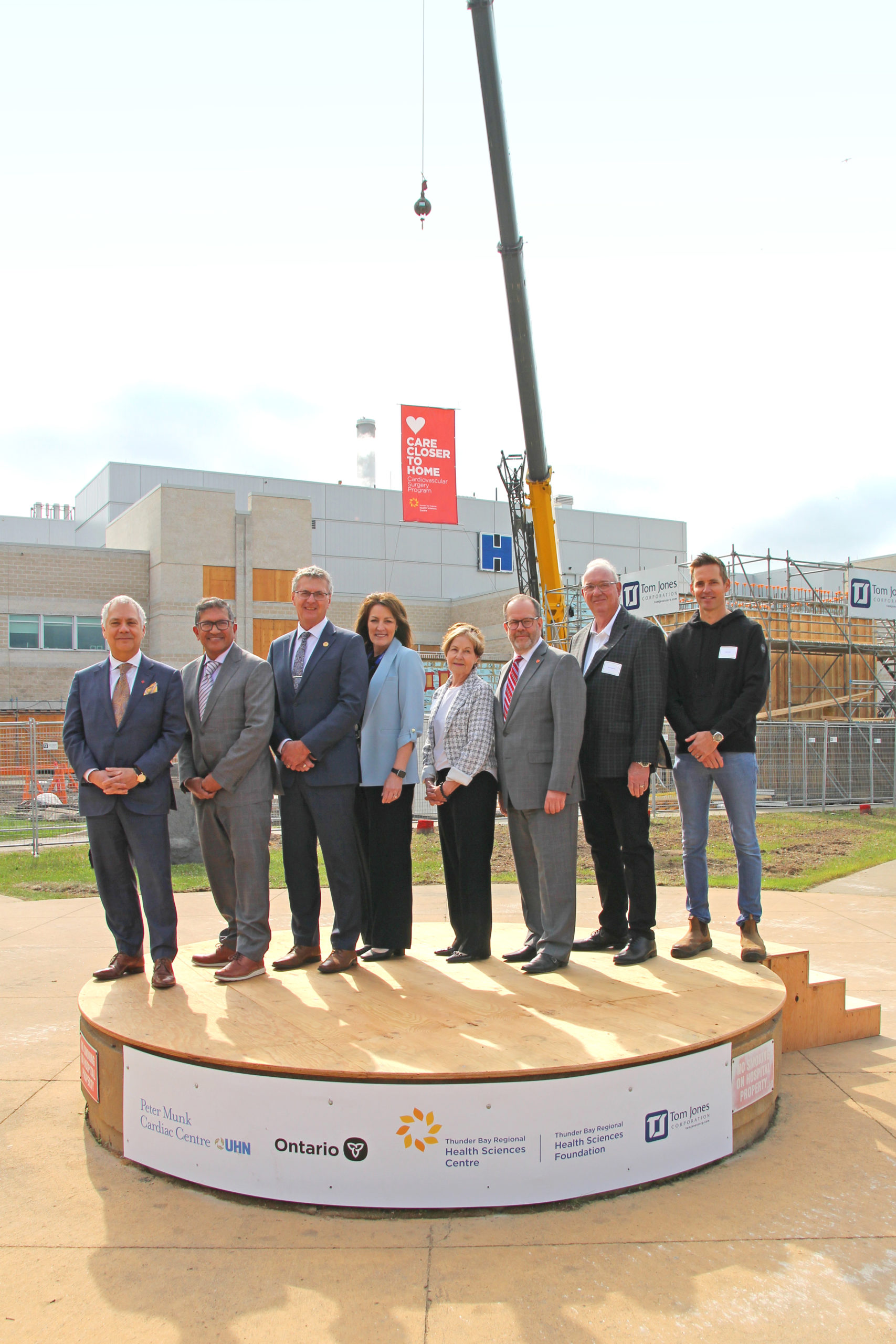
(L-R) Dr. Barry Rubin, Medical Director, UHN’s Peter Munk Cardiac Centre; Dr. Vivek Rao, Chief of Cardiovascular Surgery, UHN, Medical Lead, Cardiovascular Surgery Program Implementation, TBRHSC; The Honourable Kevin Holland, MPP for Thunder Bay–Atikokan; Dr. Rhonda Crocker-Ellacott, President and CEO of TBRHSC and CEO of Thunder Bay Regional Health Research Institute; Patricia Lang, Chair, TBRHSC Board of Directors; Glenn Craig, President and CEO, Thunder Bay Regional Health Sciences Foundation; Paul Fitzpatrick; Our Hearts at Home Campaign Cabinet Chair; Parker Jones, Tom Jones Construction.
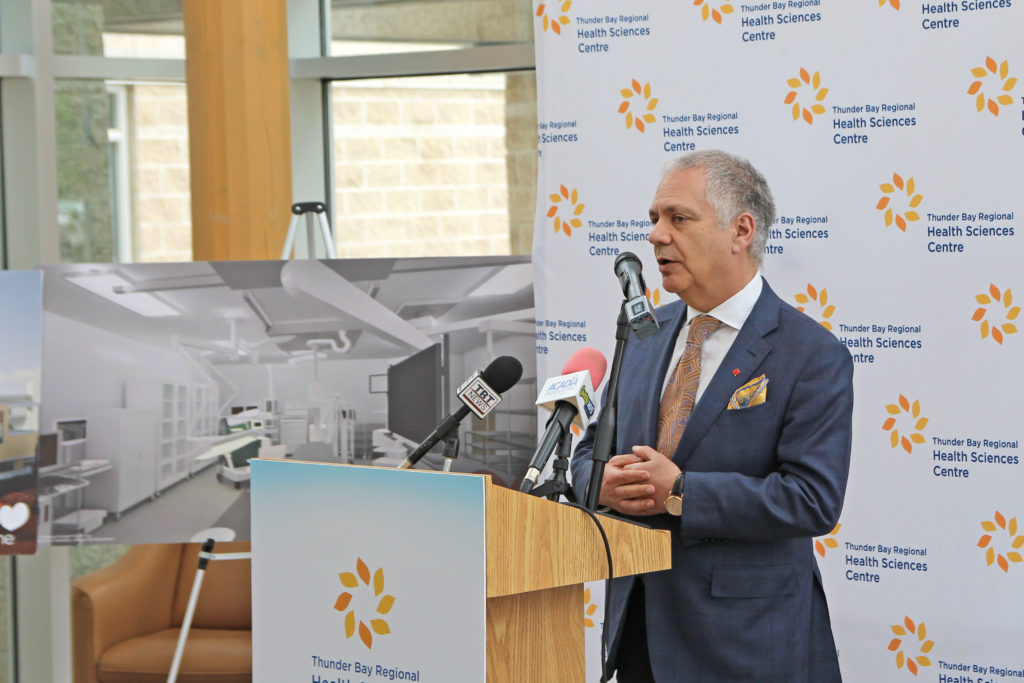
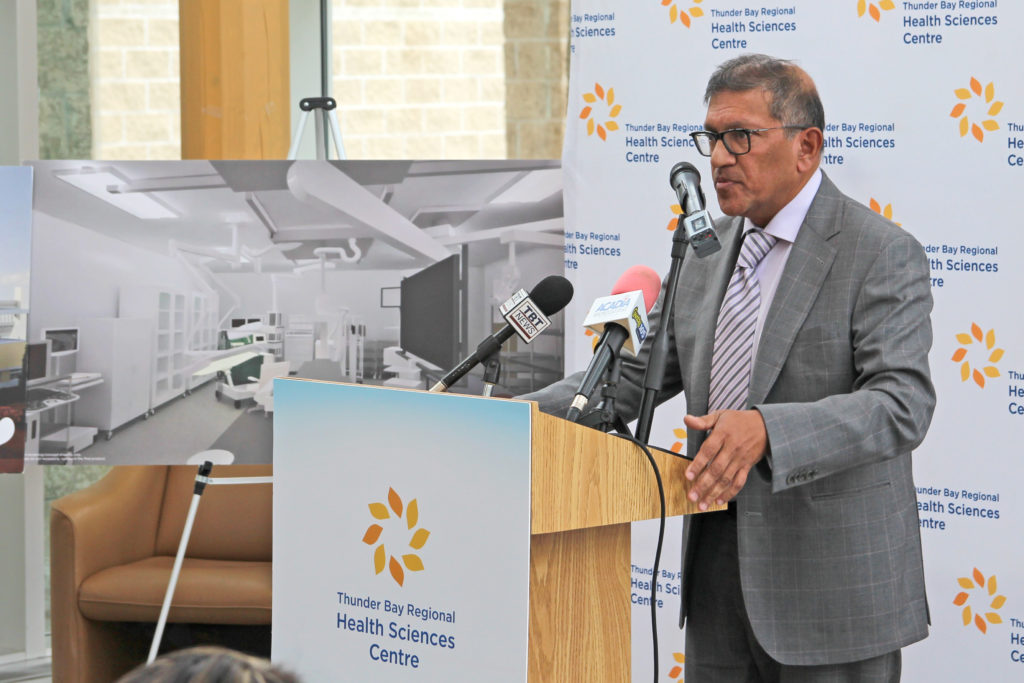
Thunder Bay Regional Health Sciences Centre (TBRHSC) officially broke ground today on its new Cardiovascular Surgery Program, the first of its kind in Northwestern Ontario. This marks a major step forward in access to life-saving care for people in the region.
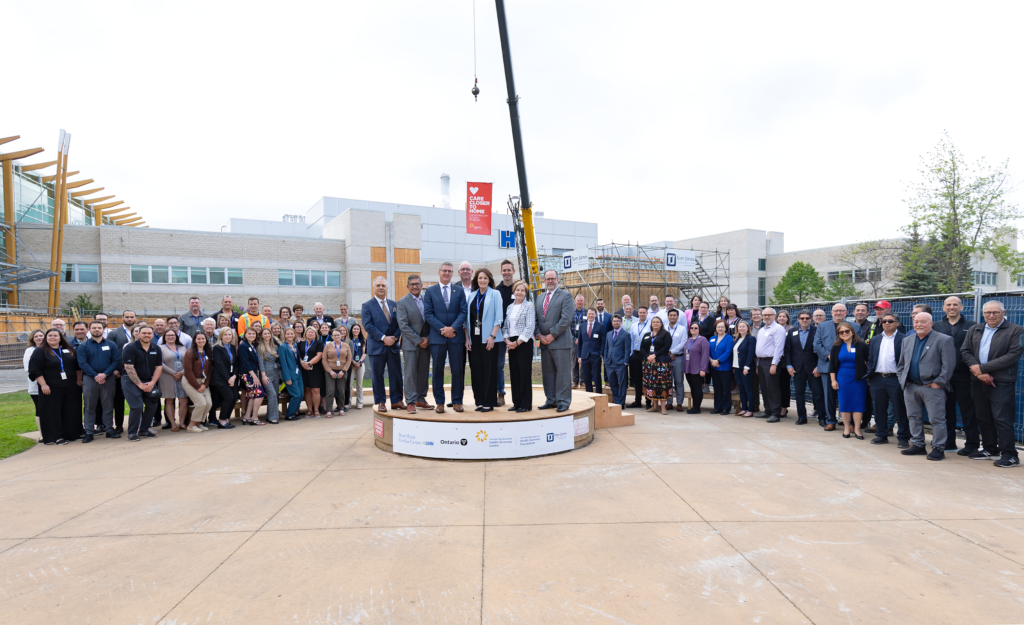
Leaders from the Hospital were joined by health care partners, community donors, and government representatives to recognize this long-anticipated moment and celebrate the beginning of construction on more than 76,000 square feet of new and renovated clinical space.
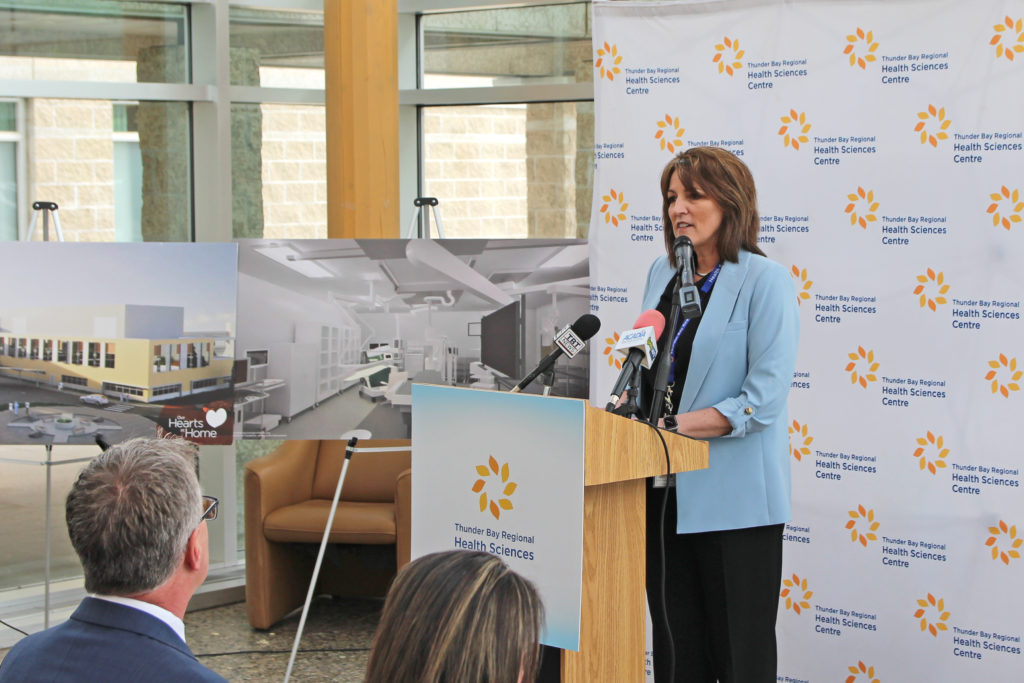
“This historic investment from the Government of Ontario will help us work toward establishing a cardiovascular surgery program at our Hospital,” said Dr. Rhonda Crocker-Ellacott, President and CEO of TBRHSC and CEO of the Thunder Bay Regional Health Research Institute. “It could not have happened without the advocacy of Minister Greg Rickford and MPP Kevin Holland. It also reflects the hard work of our dedicated staff who have worked tirelessly on this project, and the community donors who have supported it. This is what it looks like when a region pulls together for a common cause that benefits all.”
The Cardiovascular Surgery Program will allow patients to receive urgent and elective procedures in Northwestern Ontario. This will eliminate the need for long-distance travel to southern Ontario for approximately 300 patients every year. Once complete, the program will improve access to surgical care, reduce wait times, and lead to better outcomes for patients across the region. It is all made possible by funding from the Government of Ontario and contributions to the Our Hearts at Home campaign, led by the Thunder Bay Regional Health Sciences Foundation.
The Honourable Kevin Holland, MPP for Thunder Bay–Atikokan, was in attendance and called the announcement a game-changer for the North.
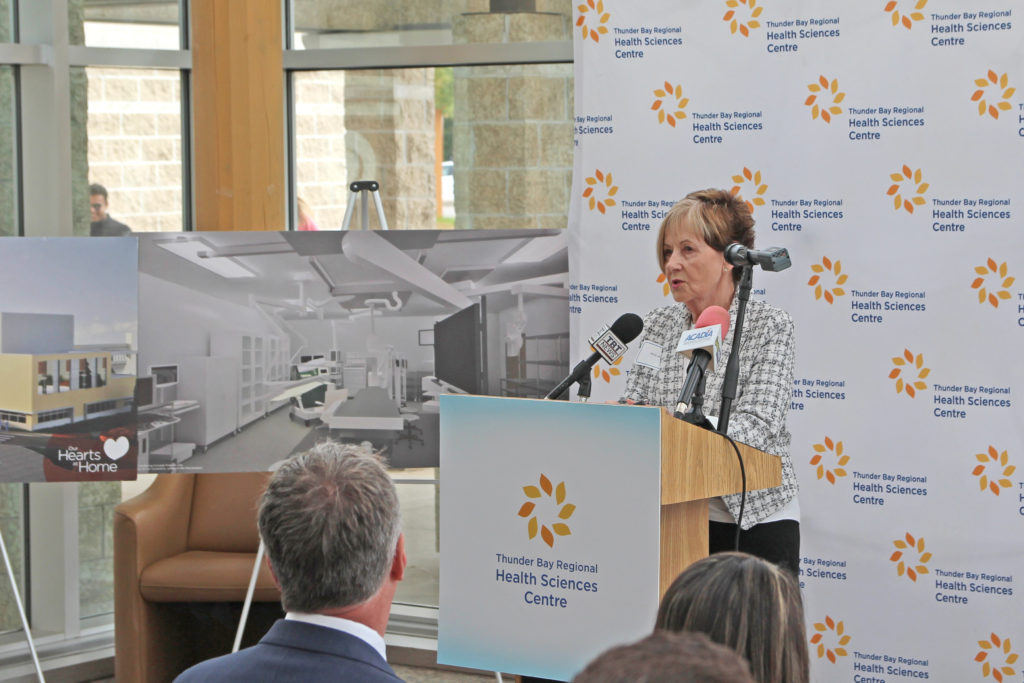
“This over $93 million investment marks a historic moment for Northwestern Ontario,” said the Hon. Kevin Holland, MPP for Thunder Bay–Atikokan. “For the first time, our region will have its own Cardiovascular Surgery Program bringing lifesaving care closer to home. This project reflects our government’s strong commitment to improving access to health care in the North and ensuring better outcomes for patients and families. It also builds on more than $200 million in health care investments our community has received since I was elected in 2022 including critical expansions, infrastructure upgrades, and frontline services that are improving care across Thunder Bay. I want to sincerely thank Minister Sylvia Jones for her leadership and express my deep gratitude to the entire team at the Thunder Bay Regional Health Sciences Centre for their dedication to this transformative initiative.”
The program is being developed in partnership with University Health Network’s Peter Munk Cardiac Centre to ensure the highest standards of care. Representative from UHN were also there for the announcement.
“We are proud to partner with Thunder Bay Regional Health Sciences Centre on this important step toward bringing comprehensive cardiovascular surgical care to Northwestern Ontario,” said Dr. Barry Rubin, Medical Director, UHN’s Peter Munk Cardiac Centre. “It is exciting to see construction begin, as it brings us closer to delivering the same standard of excellence in Thunder Bay that patients receive at the Peter Munk Cardiac
Centre. This partnership reflects our shared commitment to making world-leading cardiac care more accessible to people in Northwestern Ontario and other underserved regions across Canada through an integrated program.”
When complete, the program will include:
14 new cardiovascular surgery inpatient beds
Six coronary care unit beds
A state-of-the-art surgical suite with C-arm imaging and recovery space
An expanded ambulatory care and pre-admission clinic
A new vascular lab
Renovations to medical device reprocessing and biomedical departments
Construction is expected to be completed in 2027. Updates on progress, detours, and patient access will be shared regularly at www.tbrhsc.net.
Leaders from the Hospital were joined by health care partners, community donors, and government representatives to recognize this long-anticipated moment and celebrate the beginning of construction on more than 76,000 square feet of new and renovated clinical space.Dr. Rhonda Crocker-Ellacott, President and CEO of TBRHSC and CEO of Thunder Bay Regional Health Research Institute.Patricia Lang, Chair, TBRHSC Board of Directors.Paul Fitzpatrick, Our Hearts at Home Campaign Cabinet Chair.The Honourable Kevin Holland, MPP for Thunder Bay–Atikokan.Dr. Barry Rubin, Medical Director, UHN’s Peter Munk Cardiac Centre.Dr. Vivek Rao, Chief of Cardiovascular Surgery, UHN, Medical Lead, Cardiovascular Surgery Program Implementation, TBRHSC.
Here’s a look at the media coverage (via tbnewswatch.com) from yesterday’s official unveiling of construction for our Hospital’s new Cardiovascular Surgery Program.
The event was a great opportunity to reflect on the hard work and dedication of our staff, health care partners, and generous donors who made this long-standing dream a reality. Soon, patients and families across Northwestern Ontario will have access to life-saving cardiac surgery—closer to home.
Week 1 of the TBayOnTheMove Active Commute Challenge is complete, and our TBRHSC team is off to a fantastic start.
Thank you to everyone who registered and began tracking their sustainable commutes – whether you biked, walked, carpooled, or took transit, your efforts are helping to build a healthier, greener workplace.
Congratulations to our week 1 prize winners:
Emily Quarles
Paul Shewfelt
Justin Ross
It’s not too late to join – head to TBayOnTheMove.ca to register and start logging your trips. Each week brings more chances to win, and every commute counts toward our workplace leaderboard.