In the News: ‘New vaccination centre expects to immunize 500 people per day’

(Via TBNewswatch.com)

The new vaccination centre located in the Bora Laskin building on the Lakehead University campus will expect to immunize between 500 and 600 people per day by next week.
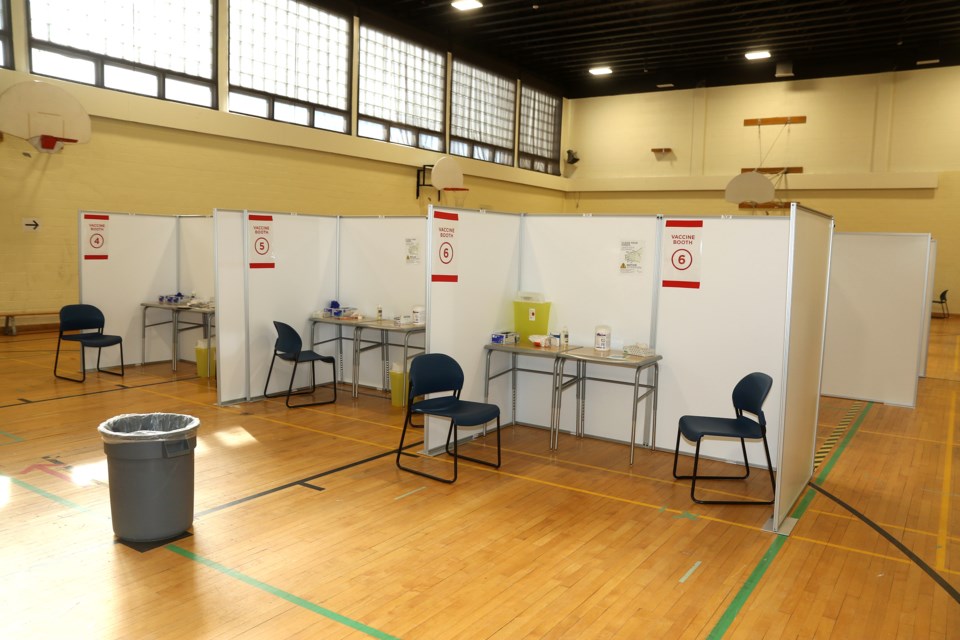
The Thunder Bay Regional Health Sciences Centre COVID-19 vaccination clinic will be housed at the Bora Laskin Education Building on the campus of Lakehead University.

As more COVID-19 vaccines arrive in the district, a new vaccination centre expects to significantly increase the number of daily immunizations by next week.

The Thunder Bay Regional Health Sciences Centre opened its vaccination centre in the Bora Laskin Building on the Lakehead University campus on Thursday.

“We are expecting to complete just over 200 doses today at the building,” said Rhonda Crocker Ellacott, president and CEO of the Thunder Bay Regional Health Sciences Centre. “We are working at continuing to do long-term care staff and essential care partners and some hospital staff as well.”

Previously, vaccinations were administered in a designated area of the TBRHSC, but Crocker Ellacott said the move to an off-site location will allow for many more daily immunizations.

“One of the reasons we moved our vaccination centre is we are able to do 168 vaccinations per day at our previous site,” she said. “By Monday we expect to do 500 to 600 vaccines per day. Right now the limiting factor is the number of vaccines available.”

The hospital received a new shipment of the Pfizer COVID-19 vaccine on Thursday and while it does not disclose how many vaccines it has, Crocker Ellacott said they are expecting to give more than 3,000 doses this week.

Crocker Ellacott added that by the end of the week on Sunday, 3,700 first doses will have been administered and 1,900 second doses.

“We do expect more vaccines coming on a weekly basis,” she said. “We are really looking forward to being able to vaccinate a high number of individuals on a daily basis.”

Those considered top priority for the vaccine includes front-line health care workers and hospital staff working in high-risk areas, such as the emergency department and the COVID-19 unit.

To date, 250 hospital staff have been immunized but Crocker Ellacott said between the TBRHSC and St. Joseph’s Care Group, there are more than 1,000 hospital staff members identified as working in the higher risk category.

Hospital staff are working with employers and the Thunder Bay District Health Unit to identify and validate health care workers most at risk and appointments are booked ahead of time.

Crocker Ellacott added the hospital usually receives several weeks’ notice before vaccine shipments arrive in order to prepare for allocation. The hospital has the capacity to store more than 80,000 vaccines.

“We are hopeful following the next couple of weeks that our vaccine shipments and supply will increase dramatically,” she said.

The ramping up of COVID-19 vaccinations comes as the hospital continues to see an increasing number of patients admitted with the virus.

There are 13 individuals currently in hospital with COVID-19, including four in the intensive care unit.

“We are considering expanding our COVID-19 unit depending on community demand,” Crocker Ellacott said.

“At this point in time, we looked at our surgical plans. We are looking to reduce some of the long-stay surgical procedure bookings and move to more short stay or same-day bookings in preparation of a potential expansion of the COVID-19 unit.”
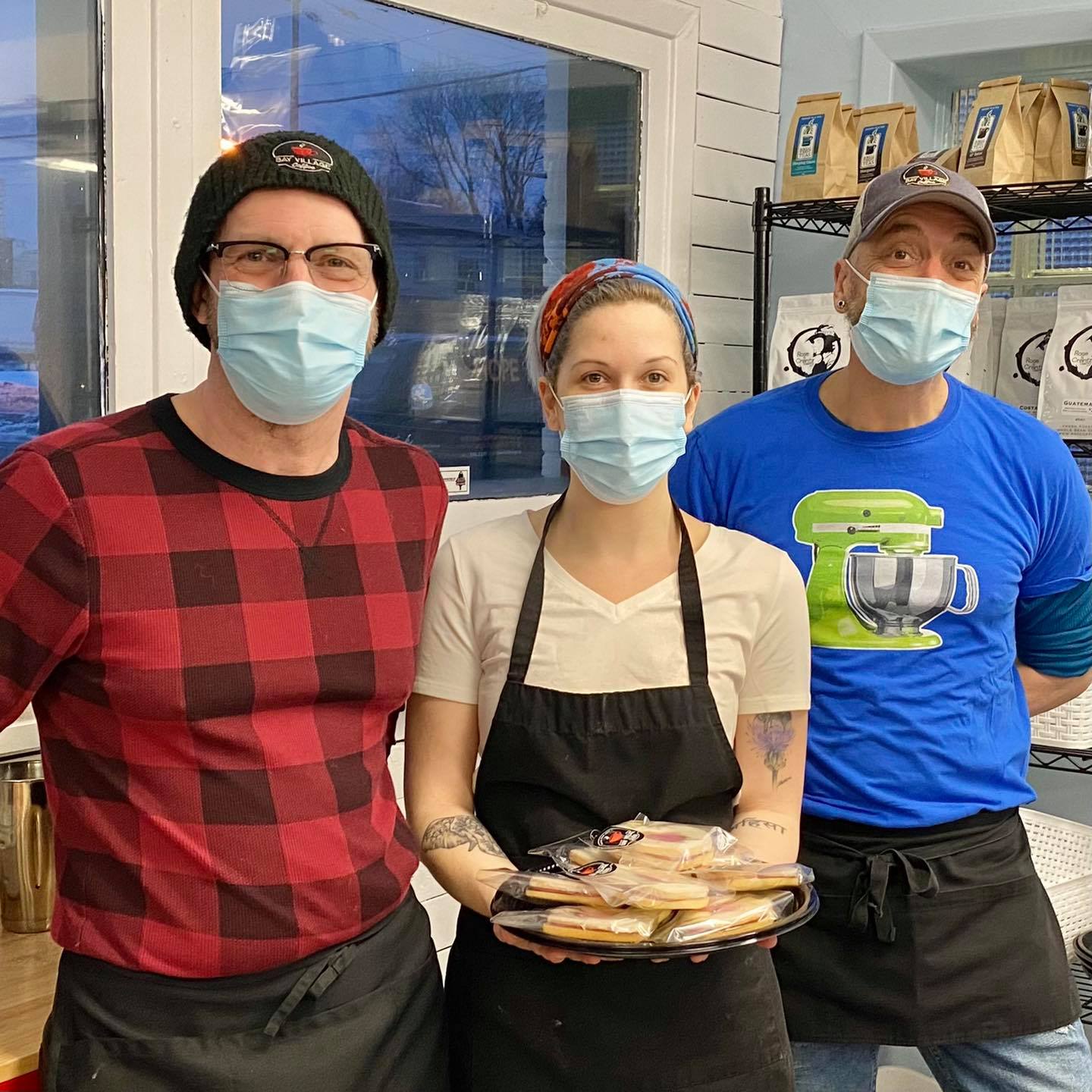
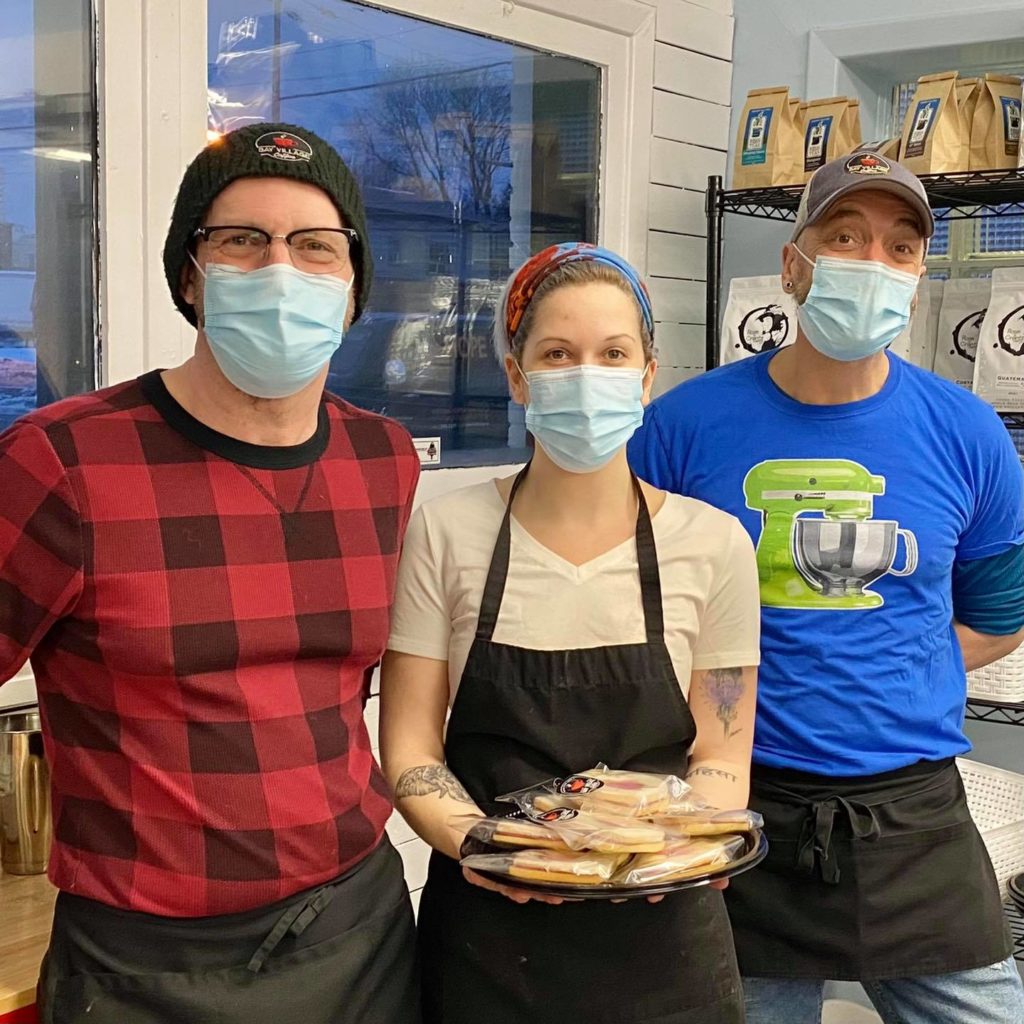
Bay Village Coffee: Heart Shaped Cookies, in memory of Patti Hobbs

Alan, Shannon and Gary, from Bay Village Coffee, proudly showcasing the heart cookies.

For Bay Village Coffee owners, Gary Mack and Alan Forbes, making unique heart shaped cookies is truly a labour of love as they are making them in memory of their dear friend, Patti (Patricia) Hobbs.

Her daughter Shannon is an integral team member at Bay Village Coffee and said, “My mother suffered a major heart attack in October. She didn’t present with any of the common symptoms. She didn’t even know she was having a heart attack. She spent a month in hospital before she sadly passed away. She was only 66 years old. My mother was an amazing woman and she was kind and generous and would give you the shirt off her back. She always took part in every fundraiser we did at Bay Village and was very eager to help out. We miss her a lot. We love her so much and we just feel like this is the perfect way to pay tribute to her memory.”

Gary and Alan said, “We so miss our friend Patti and we’re very grateful to be able to honour her in this way. Raising funds and helping others is very true to who Patti was as a person, so this is a very fitting tribute. Please help support Our Hearts At Home and cardiovascular care in the North.”

Cookies are $5 each with $2.50 going to Our Hearts at Home.

Tantalize your tastebuds with these delicious treats by ordering at www.bayvillagecoffee.com

Winter Sock Drive: February 22 – March 19

The Volunteer Association is having another Sock Drive for the Patient Clothing Cupboard. Any donations of *new* men’s or ladies’ socks and underwear (any size) are welcome. Please drop the donations off at Volunteer Services.

We also welcome any donations of new or used ladies’ pants, men’s pants, and men’s long-sleeved T-shirts.

Note: Please do not drop donations off directly in the Patient Clothing Cupboard, as we are now required to quarantine all donations for a period of 72 hours before making them available for patient use.

Thank you so much for supporting the Patient Clothing Cupboard!

Please contact Volunteer Services at extension 6266  if you have any questions.

Announcement: Director of Cyclotron Operations

Sent on behalf of Peter Myllymaa, Executive Vice President, Corporate Services and Operations


I am pleased to announce that Agha Hasan has accepted the position of Director of Cyclotron Operations. Agha is currently the Manager of Quality Assurance & Compliance with the Cyclotron, a position he has held since 2019. In order to meet stringent Health Canada requirements, Agha will continue in his current role until we successfully hire a new Manager of Quality Assurance & Compliance. In the interim, Amarjit Chahal will continue to act as the Interim Director of Cyclotron Operations.

As the Director of Cyclotron Operations, Agha will be responsible for overseeing the operations of the Cyclotron Facility and its role for production of radiopharmaceuticals for clinical use, research and commercial opportunities. Agha is a graduate of the Biotechnology PhD program at Lakehead University, specializing in Chemical Engineering. Agha is a quality assurance professional with a breadth of experience in the pharma & radio pharma industry. As the current Manager of Quality Assurance & Compliance with the Cyclotron, he has gained knowledge of various aspects of the facility, including experience with commissioning and Canadian Nuclear Safety Commission and Health Canada licensing, to oversight and implementation of a quality control program for 18FDG intended for clinical use. Agha will continue to work out of the Cyclotron Facility and can be reached at 684-7008 or hasana@tbh.net.

Please join me in congratulating Agha in his new role.

I would also like to extend a sincere thank you to Amarjit Chahal for his continued support with interim coverage and leadership to the Cyclotron Facility.

Your Heart is in Good Hands

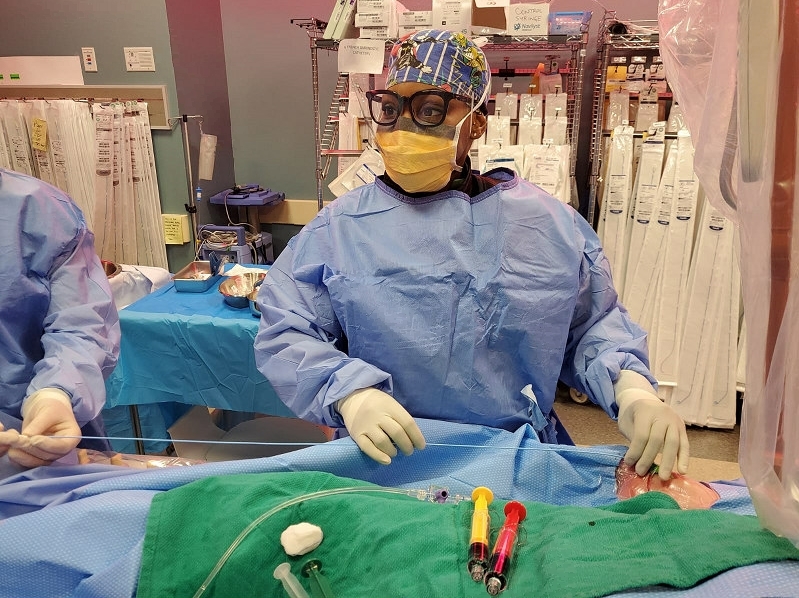
Dr. Alexandra Bastiany, Thunder Bay’s newest Interventional Cardiologist, provides world-class cardiac care to patients of Northwestern Ontario.

“I was supposed to come to Thunder Bay for a month,” laughed Dr. Alexandra Bastiany, the newest Interventional Cardiologist at the Thunder Bay Regional Health Sciences Centre. “However, the amazing team here convinced me that I needed to stay longer than initially planned.”

Originally from Montreal, Dr. Bastiany grew up in a family that valued science, with her mother and aunts working as Registered Nurses and her father as a Chemist. After finishing CEGEP*, with a focus on science and nature, Dr. Bastiany was accepted straight into medical school; a very difficult feat. She went on to complete her medical doctorate degree at the University of Montreal and pursued an Internal Medicine residency, followed by an Adult Cardiology Fellowship that culminated in her being selected as the Faculty of Medicine’s first female Black valedictorian. “It was such an honor to be chosen for that role,” she said. Her sights then turned west to Edmonton and the University of Alberta where she pursued a 2-year fellowship in Interventional Cardiology that she completed in June 2020.

“I’ve always loved the cardiovascular system,” commented Dr. Bastiany. “I like its complexity, but also its simplicity. When I was in medical school, I knew I wanted to do something that was very hands-on, and that changed people’s lives. That’s how I became interested in Interventional Cardiology, as it gave me the chance to do both.”

“When I first met the team from Thunder Bay, it was actually virtually, because of COVID-19. I could tell right away they were one-of-a-kind,” she recalled. “I had always envisioned my time in Edmonton as a ‘pit stop’ and had plans of returning to Montreal to be back with my family. However, the chance to build my practice here, with my own interests and with the opportunity to help patients in the Cath Lab up to 3 times a week was something I simply couldn’t turn down.”

Dr. Bastiany’s expertise has been welcomed as she has brought learnings and new techniques from her fellowship to share with her colleagues. She’s also brought a bit of notoriety; for she is, in fact, Canada’s first Black female Interventional Cardiologist.

Getting to that point was not always an easy path, however. She shared, “Interventional Cardiology is still a man’s world, and you have to learn to stand up for yourself. There were times in my training where I felt I didn’t even exist. My fellow male residents or fellows would talk over me, even while I was expressing the same points they were trying to make. I had to adapt to be seen and heard. And by that I mean I had to step up my game or I’d be swallowed. It took me talking back and saying ‘I will finish what I’m saying’.”

“You know,” she continued, “people may call you arrogant or angry for stating what you want, but, honestly, developing that ‘edge’, it’s made me stronger, and it’s made me a better doctor.”

It’s no secret that Interventional Cardiologists need to be strong – both mentally and physically. “It’s very demanding,” she said, “because you’re literally inside someone’s heart while you’re in the lab and you can save a life or you can end a life. It’s quite humbling. You’ve got to prepare your mind to always have absolute focus while you are with a patient. Plus, while you’re performing these delicate procedures, you need to wear a heavy lead apron to protect against radiation, you’re covered with a gown which makes you hot and you’re on your feet the entire time. Some procedures take hours so you need to be in good shape and ready to respond to whatever comes your way.”

There are times, sadly, when, despite the team’s best efforts in the lab, a patient will pass away. “I still recall a very difficult case from not-too-long ago where we were not able to save a patient and they passed while in the Cath Lab. Our whole team felt this shouldn’t have happened and I know we will never forget that patient. Afterwards, I messaged our team so we could meet virtually and discuss what went well and what did not. We needed a safe space to share our thoughts, our feelings and to be with each other as we did so. I think it’s incredibly important to recognize that we are a team up there in the Lab, and we all are affected by the good and the bad. Having these debrief sessions can bring peace and closure, and allows us to continue to perform life-saving work.”

When Dr. Bastiany is not in the Cath Lab or meeting with patients, she does find some time to recharge. “I like to run outside,” she said, “as well snowboard, but obviously not right now.” She also has finally found time to read for pleasure. “The past few years all I read were scholarly articles,” she laughed. “It’s nice to be able to have some time to read something else.”

She also loves to travel, and will be visiting her family in Montreal whenever possible. For the time being however, she’s found a beautiful view of the Sleeping Giant, and is excited to get to know more about her new home in Thunder Bay, all the while providing world-class cardiac care to residents of Northwestern Ontario.

*CEGEP is a publicly funded school that provides a step between secondary school and university in Quebec. Most students begin at age 17.

Your donation to the Northern Cardiac Fund provides Dr. Bastiany and her colleagues the equipment they need to provide world-class cardiac care here at home. Donations welcomed at healthsciencesfoundation.ca/cardiac-donate or by calling (807) 345-4673. Together we’re Healing Our Hearts at Home.

Time Equals Heart: Call 911

In Canada, there are an estimated 70,000 heart attacks each year. That’s one heart attack every seven minutes. Almost 16,000 Canadians die each year as the result of a heart attack, according to Statistics Canada (2012).

A heart attack is a medical emergency. Calling 9-1-1 and getting to the hospital by ambulance is the safest and most beneficial way for a person to arrive and receive cardiac care in a timely manner.

There are many reasons why a person does not call 9-1-1. These include thinking they could deal with the situation on their own, not actually realizing to call 9-1-1 when someone is experiencing a heart attack, not wanting to cause a scene or just deciding to drive themselves.

In Thunder Bay, more than 40 percent of patients experiencing a significant heart attack did not call 9-1-1 in 2020. Time equals heart, which means the longer a person experiencing a heart attack waits to receive care, the more damage is caused to their heart. In a medical emergency such as a heart attack, every minute counts.

People in Thunder Bay and across Northwestern Ontario need to be aware of the benefits of calling 9-1-1 and the expertise that paramedics bring to cardiac care, especially during the critical first hours. Paramedics are trained to recognize the signs of a heart attack and mobilize the patient quickly.

They start the time sensitive management of cardiac care including performing an electrocardiogram (ECG), which helps to determine the next critical and time-sensitive steps required, while still on route to the hospital. Paramedics pre-alert the hospital that a cardiac patient is on their way, which is critical in activating the process of cardiac care. Due to the large populated rural areas surrounding our cities and towns, there is a dedicated group of volunteers on call 24/7 known as First Response Teams. These Teams can assist heart attack patients with support, as they prepare to hand off to the Paramedics as they proceed to timely life-saving services. The First Response Teams are a vital link between the patient and Emergency Medical Services (EMS).

The most important message to remember is that a heart attack is a medical emergency. Everyone should recognize the following signs of a heart attack:

  • Chest Discomfort – Pressure, squeezing, fullness or pain, burning or heaviness
  • Sweating
  • Upper Body Discomfort – neck, jaw, shoulder, arms, back
  • Nausea
  • Shortness of Breath
  • Light-Headedness

CALL 911. Calling 9-1-1 for a heart attack helps to ensure the best possible outcome.

Heart Month Profile: Marlene Wandel, RN, Cardiovascular and Stroke Unit (2C)

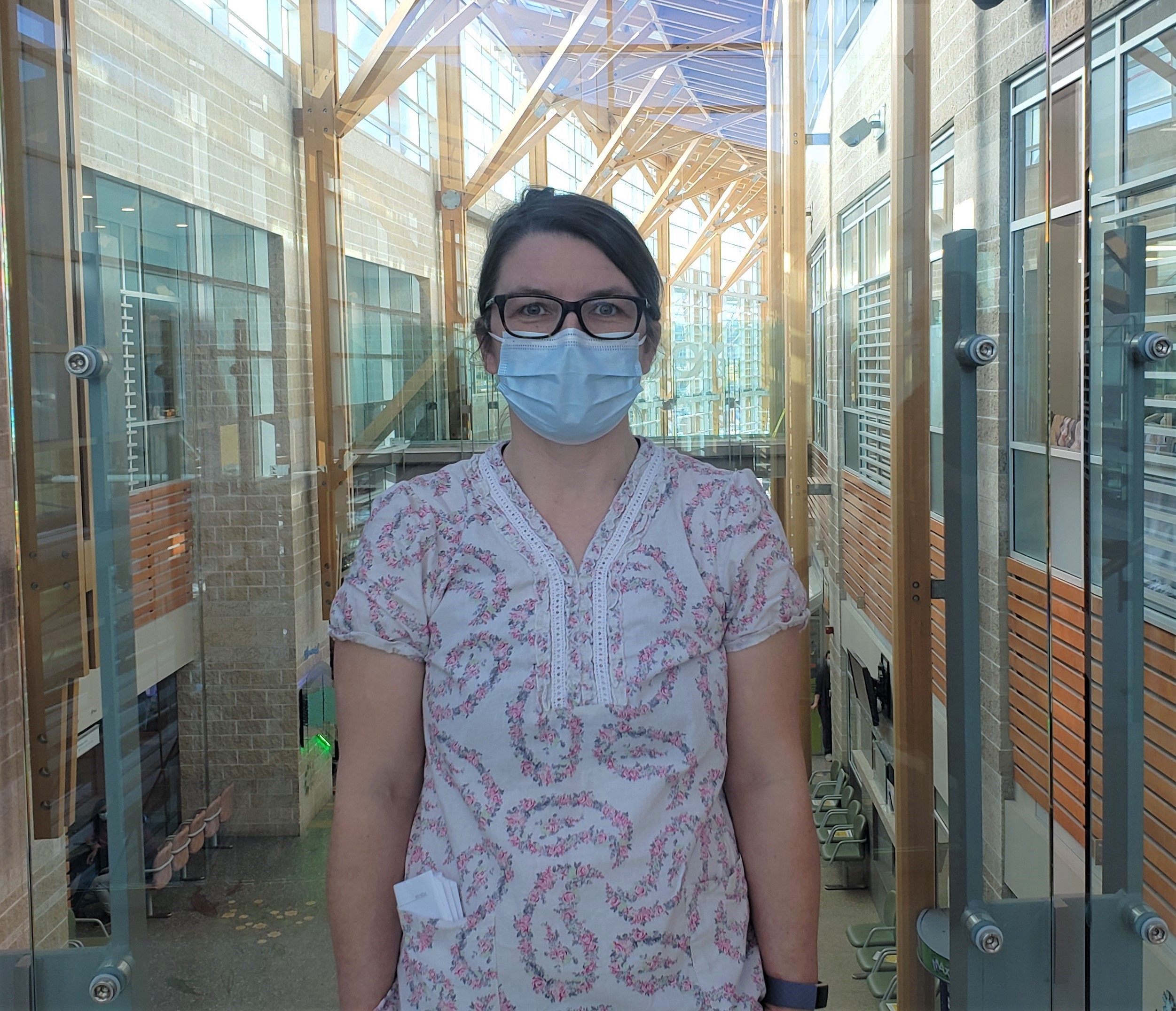
It’s Heart Month, and we’re highlighting staff and departments at Thunder Bay Regional Health Sciences Centre (TBRHSC) who play a vital role in cardiovascular care. Today, we’re sharing some Q&A with Marlene Wandel, a Registered Nurse on the Cardiovascular and Stroke Unit (2C).

What does it take to be a Registered Nurse on 2C?

Nurses on 2C look after patients admitted from the Emergency Department, directly from the region, or from physician’s offices. We also coordinate the nuts and bolts of transfers to larger centres for cardiac surgery, and receive patients coming back to TBRHSC after cardiac surgery. We monitor and assess patients as they go through cardiac investigations and treatment, and meet patients at all stages of heart disease. Working on 2C takes a knowledge of that process, the ability to navigate our patients through the course of their admission and treatment, and keep them and their and families informed. At a time when families are not able to be at the bedside, communication and reassurance have emerged as important skills.

What is unique about your role?

Cardiology is about collaboration. The physicians, Nurse Practitioners, Social Workers, Occupational and Physical Therapists, Pharmacists, Clinical Nurse Specialists, and discharge planners are all involved in most of our patient’s journeys. Nurses on 2C function as coordinators of care and patient navigators, as well as providing bedside care and ongoing clinical assessments. The team on 2C is particularly effective at working together, and using the unique strengths that each team member brings. It is not uncommon to find a group of nurses looking at a telemetry strip together or consulting each other on a challenging situation.

What inspired you to work on 2C and in cardiac care?

I started at TBRHSC on a different medical unit, and was always intrigued by the telemetry monitors. It was frustrating that someone up in the ICU could see what was going on with patients, while it was to some degree invisible to me. The additional training to care for a cardiac patient was also very welcome, and the ongoing learning eight years later, is still rewarding.  

How does your role impact patient care?

As a group, nurses represent the hospital experience to patients, as the majority of their interactions are with nurses. Personally, I try to bring a willingness to get to know every patient and to hear their unique story; empathy and compassion come much more easily when we know a person, not just a diagnosis. A sense of humour is important, both with patients (where appropriate), and with staff, to keep an often challenging job something that is fun to return to.

On the concept of practice what you preach, do you have any personal tips on how to stay heart healthy?

I use my commute to work as active time, mostly riding my bike or walking. Building activity into the day where we can is a way to get some exercise. 2C is quite far from the lobby, so volunteering to go pick up a wheelchair at the main entrance is a sneaky way to build some extra steps into the day. Wellness is a continuum and every little bit helps.

Any final thoughts?

Some days are hard at work, and you just want to walk away. What always pops into my head at those times is that we do get to go home at the end of the day, while the people we care for will still be in a hospital bed. The last nine months have been especially hard, and I have been so encouraged by the kindness I see all my colleagues demonstrating. COVID-19 might be infectious, but so is kindness!

Sandra Schmirler Foundation Provides $10,890 for Youngest Patients

With the City of Thunder Bay originally set to host the Scotties Tournament of Hearts this month, there was much excitement in the air for curling fans. Sadly, due to the COVID-19 pandemic, the event had to be rescheduled for February 2022. However, despite the lack of curling, there was still some ‘on-the-button’ news for Thunder Bay and Northwestern Ontario.

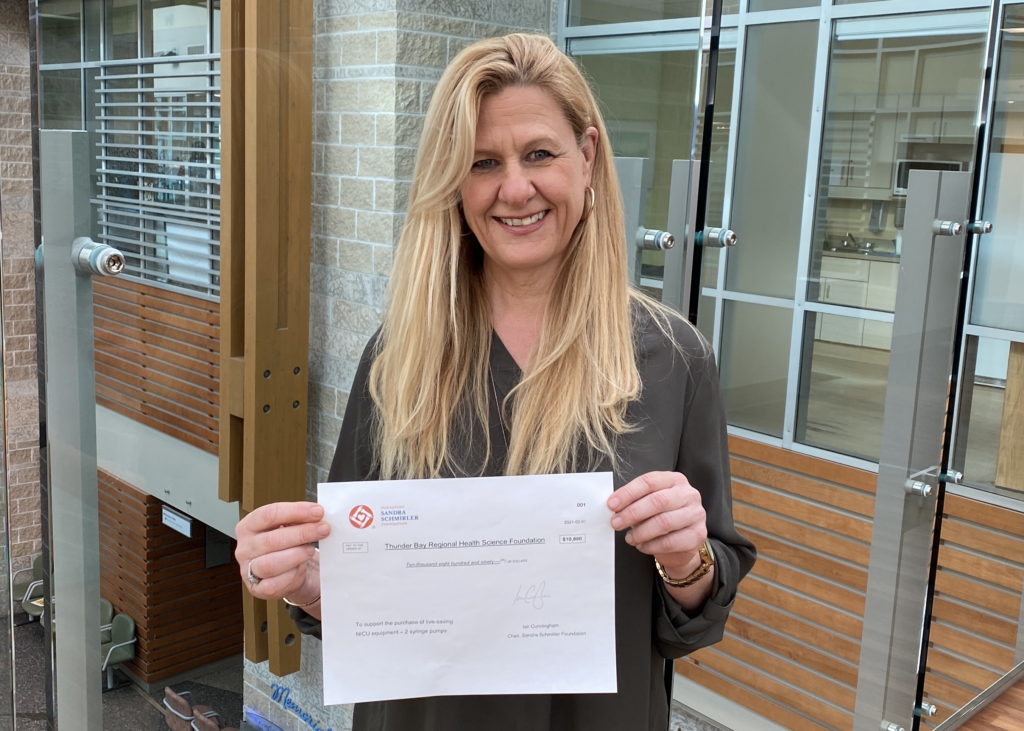
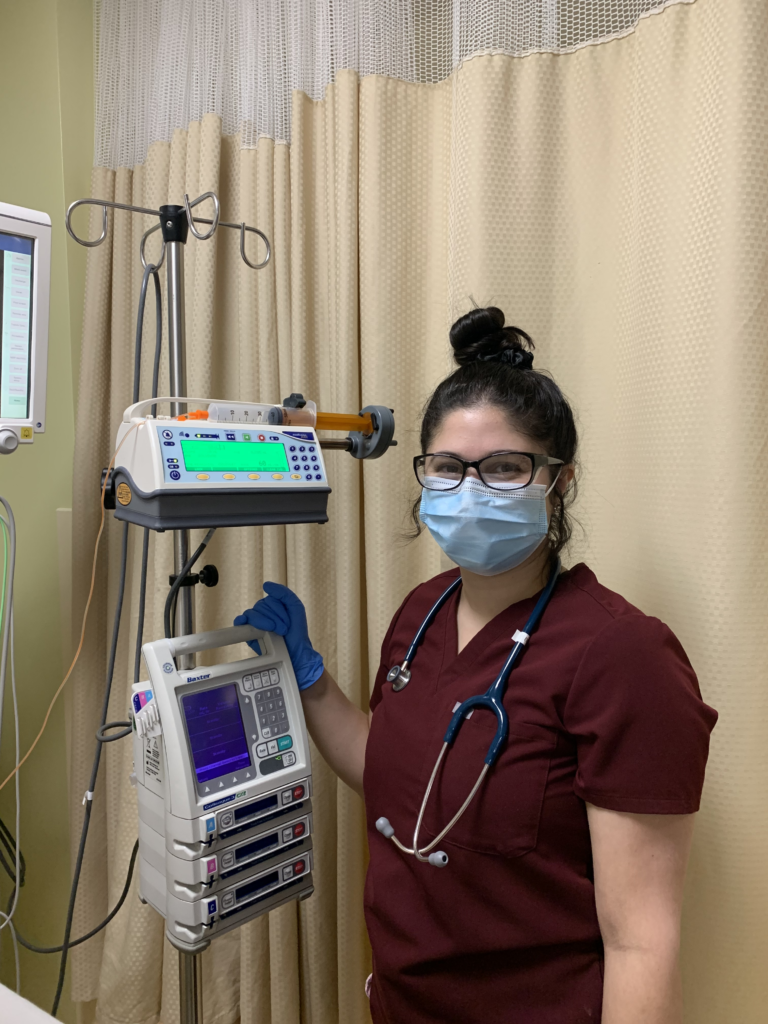
Thanks to the Sandra Schmirler Foundation, who provided a grant of $10,890, the youngest patients at the Thunder Bay Regional Health Sciences Centre will have access to two brand new syringe pumps in the Neonatal Intensive Care Unit. “Infants require very accurate monitoring and administration of fluids, and using syringe pumps will allow us to provide safe administration, especially for at-risk children and for high-risk medications,” said Giulia Pilato, Registered Nurse. “It’s about providing our patients with the safest environment possible.”

The Thunder Bay Regional Health Sciences Centre serves the entire region of Northwestern Ontario with a population of over 250,000 – the largest land mass with the most disbursed population in the province. Within it, the Neonatal Intensive Care Unit is a level 2C nursery with 14 critical care beds, providing care for newborns requiring intensive care immediately following birth, and critical care for infants up to the age of three months. “We are thrilled to be able to support the Thunder Bay Regional Health Science Centre Foundation again this year,” said Ian Cunningham, Chair, Sandra Schmirler Foundation Board of Directors. “These funds helped purchase equipment that is saving the lives of babies born premature and critically ill, giving them the chance to grow up and become a champion like Sandra.”

“Donations like this allow us to provide leading-edge equipment used in providing care and improving outcomes for patients all across the Hospital, including, in this case, infants in the Neonatal Intensive Care Unit. With the increasing health issues across Northwestern Ontario, our Hospital is always busy. As a result, our equipment receives a lot of wear and tear and needs to be replaced and upgraded frequently,” said Terri Hrkac, Senior Director, Philanthropy, Thunder Bay Regional Health Sciences Foundation. “We’re very grateful to the Sandra Schmirler Foundation for their generosity over the years, including their previous donations to the NICU in 2012 and in 2018, which provided additional syringe pumps and an EEG monitor. We’re looking forward to partnering with them again when the Scotties return in 2022.”

Terri Hrkac, Senior Director, Philanthropy for the Thunder Bay Regional Health Sciences Foundation, gratefully accepts a grant of $10,980 from the Sandra Schmirler Foundation to purchase syringe pumps for the NICU.
Giulia Pilato, Registered Nurse, showcases the new syringe pumps that will be purchased with the funds from the Sandra Schmirler Foundation. They will provide safe administration of fluids, especially for at-risk children and for high-risk medications.

Heart Month Profile: Cardiovascular and Stroke Unit (2C)

The Cardiovascular and Stroke Unit (2C) at Thunder Bay Regional Health Sciences Centre (TBRHSC) provides inpatient and some outpatient care to the cardiovascular and stroke patients in our region. The unit is made up of 36 inpatient beds, 24 of which are cardiovascular and medical care beds, and 12 of which are regional stroke care beds. In 2020, 2C was the busiest medical unit at TBRHSC with 2,023 admissions.

The regional stroke unit beds on 2C are cared for by a team of stroke specialists, which includes specially trained Registered Nurses (RN), Physiotherapists, Occupational Therapists, Speech Language Pathologists, and Neurologists. This team works together to provide excellent stroke care for patients at TBRHSC who are having a stroke, receiving treatment for a stroke, or are recovering from a stroke. This team also supports a network of hospitals in our region, optimizing care for our community.

2C’s cardiovascular and medicine beds are cared for by RNs who have undergone special training to care for cardiovascular patients. These patients include those who have had a cardiac event, require further tests and observation, or are waiting for or recovering from cardiovascular surgery, among other things. 2C works very closely with the Cardiac Catheterization Lab (or Cath Lab) which performs tests and interventions on many of their patients.

In addition to 2C’s 36 inpatient beds, there are an additional six beds in our angioplasty recovery unit. This unit is an outpatient care area where patients are cared for after having a stent inserted while in the Cath Lab. Patients from TBRHSC and our region will undergo extra monitoring after getting a stent until the following day when they will go home or fly back to their home hospital.

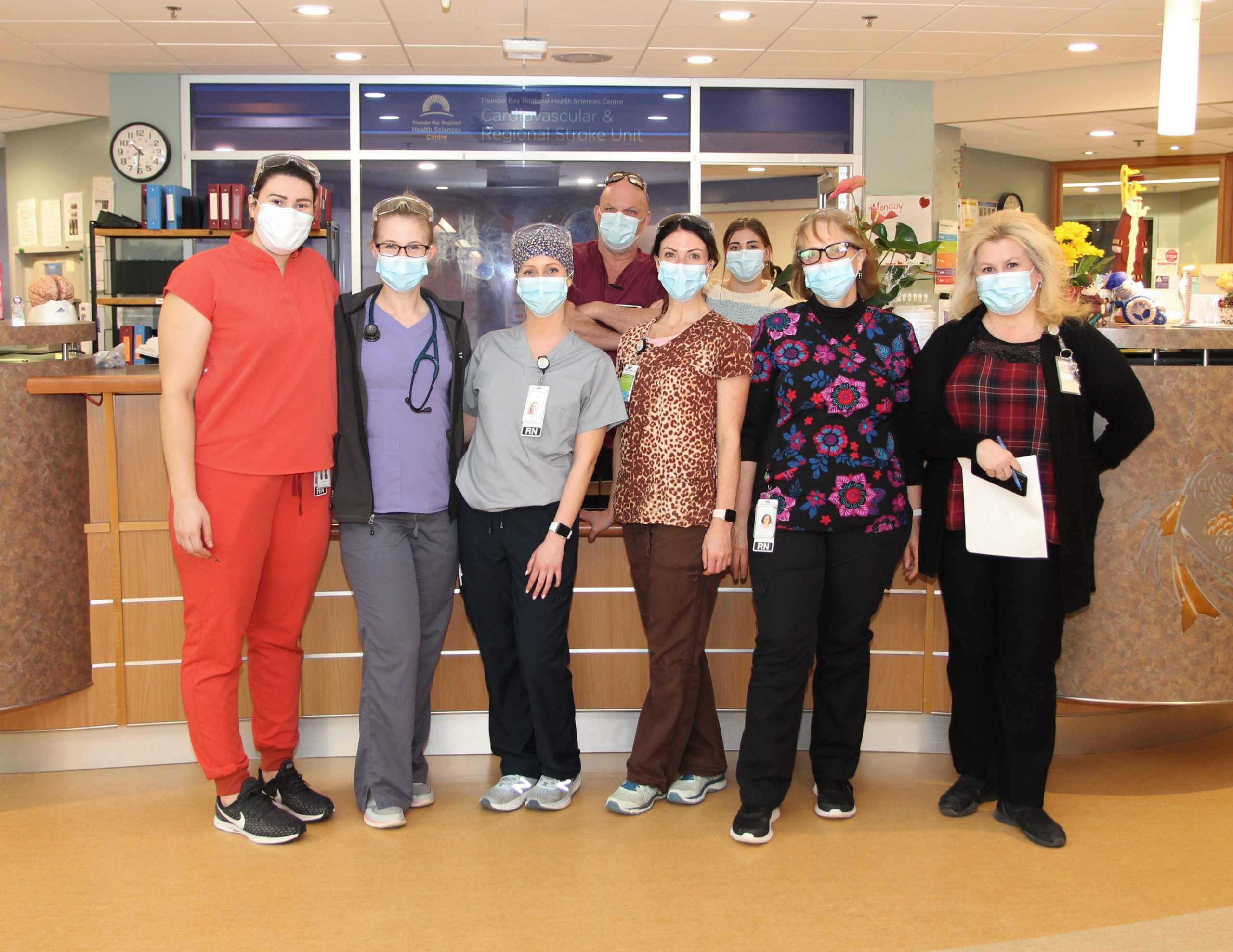
Thank you to the 2C team for helping us recognize Heart Month and for working tirelessly to provide care for our community and region.

>