Sent on behalf of Dr. Rhonda Crocker Ellacott, President and CEO, TBRHSC, and CEO, TBRHRI
As we communicated last week, there have been some organization changes focused on getting the lens and skill sets required for us to implement our next strategic plan within the fast-changing health care system we face moving forward — while also making management leaner and more efficient.
Below (and attached) is the updated organizational chart for TBRHSC.
Please share/post for staff who may not have regular access to a computer.
Although the annual Resolute Save a Heart Ball cannot happen in person this year, the Thunder Bay Regional Health Sciences Foundation has teamed up with the Victoria Inn to bring the event home to you in the form of a take-home dinner. On November 20, 21, 27 and 28, you can order ahead and enjoy a ball-quality meal to go. Plus, Resolute Forest Products has also generously agreed to match donations to the Our Hearts at Home Cardiovascular Campaign, up to $10,000.
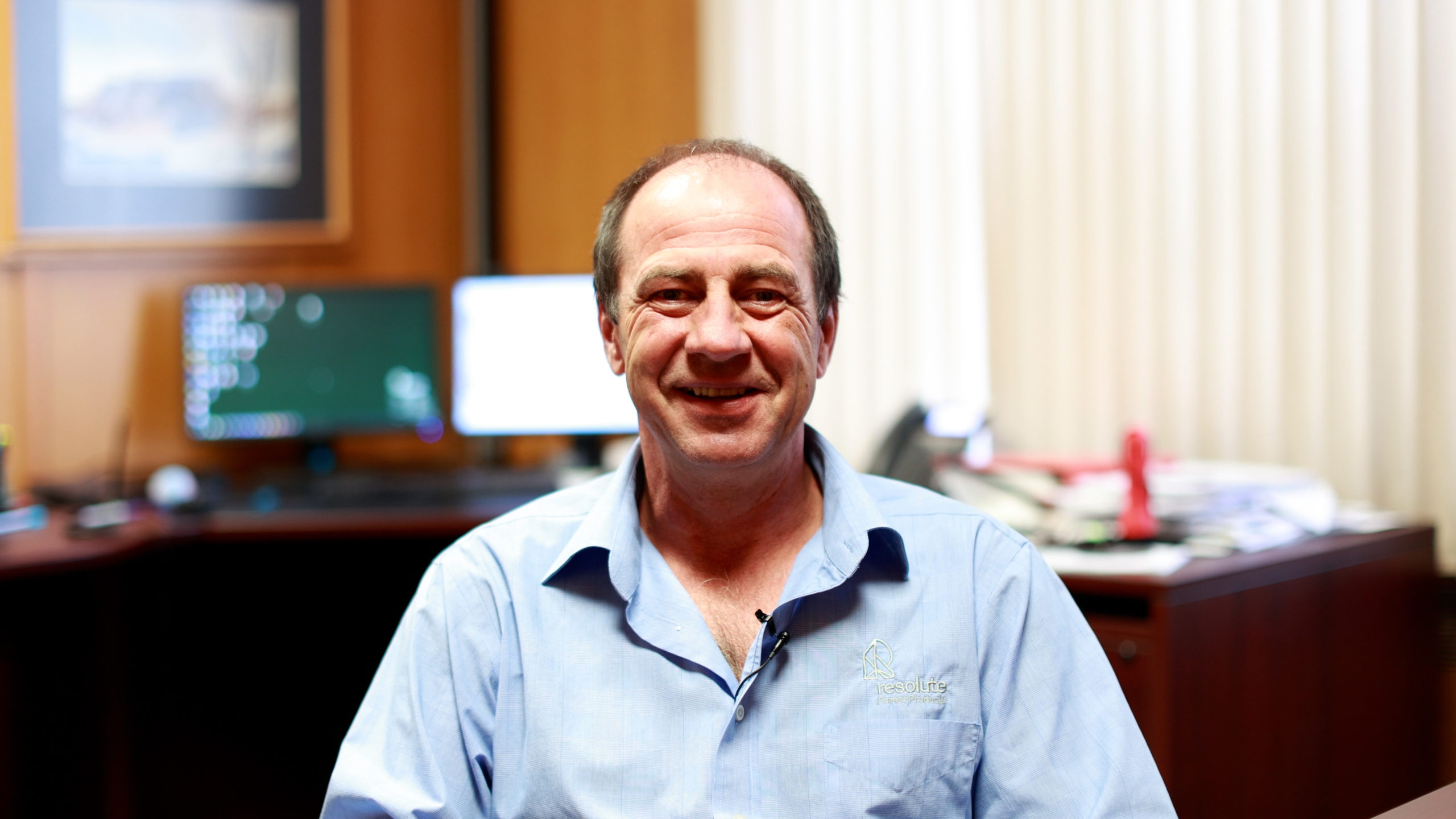
“We have been the title sponsor of the Save a Heart Ball since 2016, and while we can’t have an in-person event this year, we still know that our donation will help make a difference to local healthcare and help bring full cardiovascular surgery to Thunder Bay,” said Kent Ramsay, General Manager, Pulp & Paper Mill, Resolute Forest Products. “We are challenging the community to donate to the Our Hearts at Home campaign, and we will match donations up to $10,000!”
The take-home portion of the event is a special four-course menu that has been carefully curated by the Victoria Inn. A meal kit for two is $75, and includes everything you need to prep a gourmet meal in the comfort of your own home. On the menu includes a Roasted Pear Salad, House Rolled Ricotta Gnocchi, Stuffed Supreme Chicken and a Molten Chocolate Cake with Berry Coulis. You can reserve your meal at healthsciencesfoundation.ca/meal and choose from four pick up dates in November.
Kent Ramsay, General Manager, Pulp & Paper Mill, Resolute Forest Products. Resolute will be matching donations up to $10,000 to the Our Hearts at Home Cardiovascular Campaign.
November 14th was recognized as World Diabetes Day. This year’s theme is Access to Diabetes Care. People with diabetes require ongoing care and support to manage their condition and avoid complications, but sometimes gaining access to diabetes care is difficult.
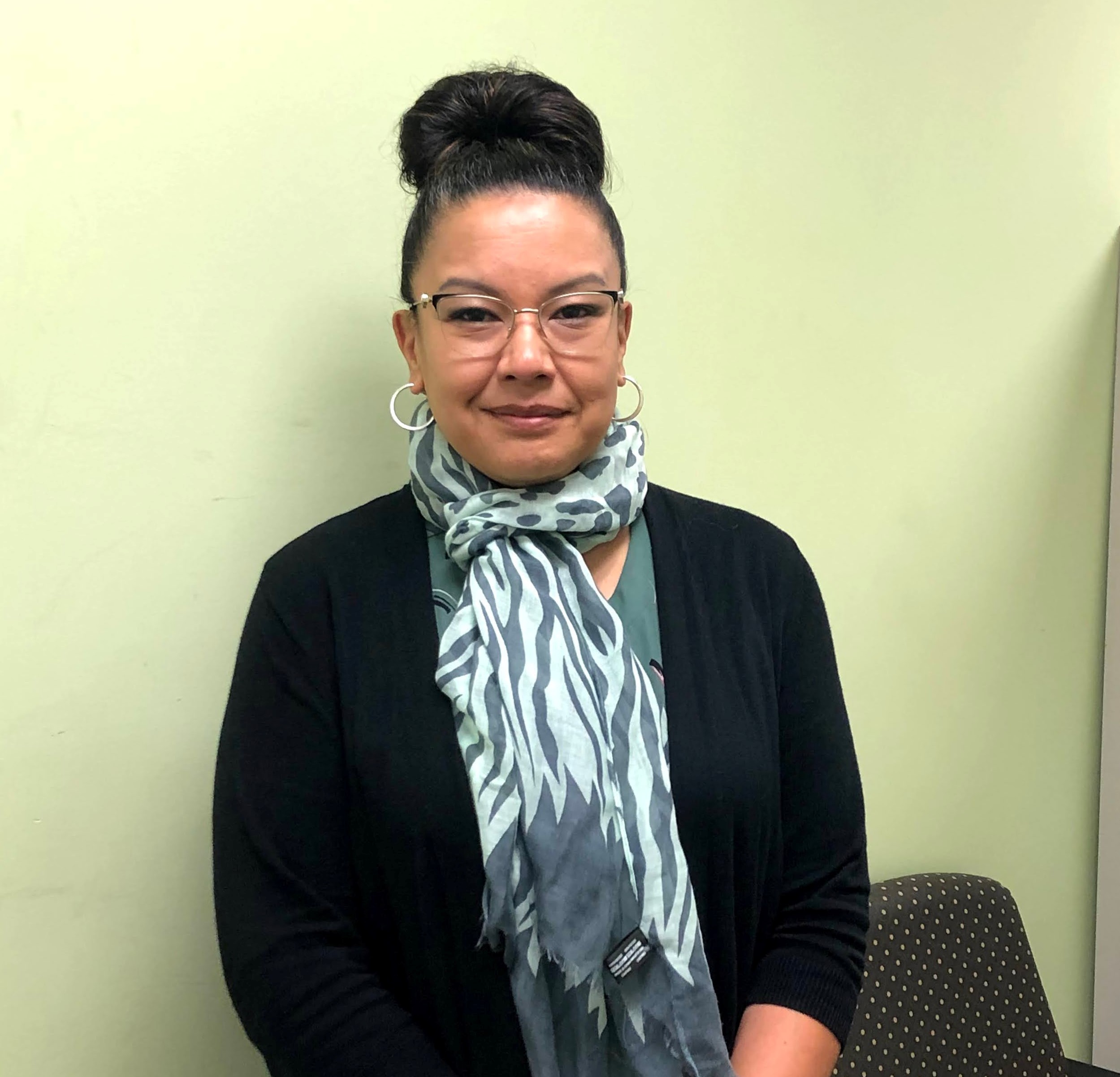
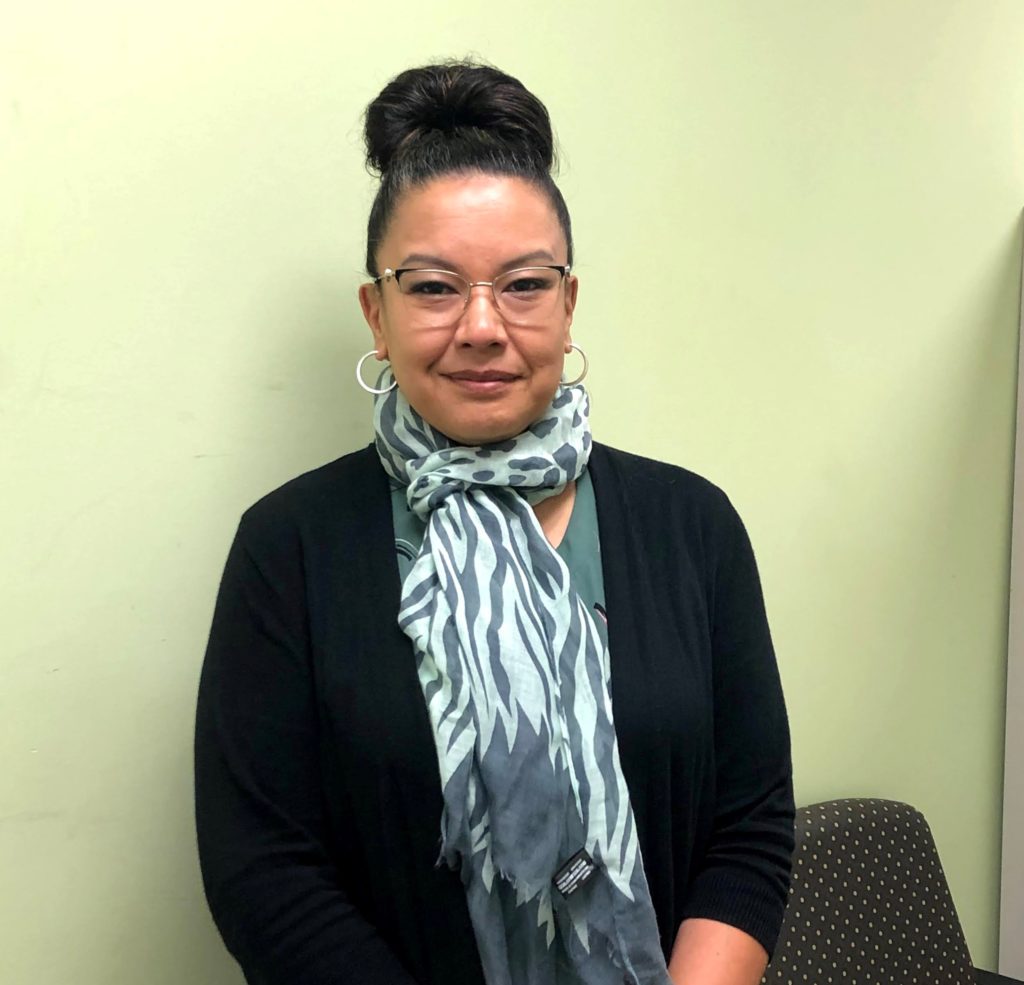
Many people living in First Nations communities across Northwestern Ontario may need to travel to Thunder Bay to access care. To help support patients when they visit the Centre for Complex Diabetes Care (CCDC) at TBRHSC, there is an Indigenous Liason Worker, Angela Kakepetum. Today, we’re sharing a Q & A from Angela to get to know her and understand her role.
What does it take to be an Indigenous liaison worker?
To be an Indigenous Liaison Worker you are required to have the skills and abilities to work as an interpreter. To better support Indigenous patients and their families, learning medical terminology and translating into Oji-Cree is helpful. This role requires professionalism, patience and excellent communication skills. You must be passionate while providing culturally sensitive care. I strive to understand the needs of patients and to communicate those needs efficiently to professional staff at the CCDC.
What inspired you to work in diabetes care?
I have worked as an Indigenous Interpreter Navigator at TBRHSC since April 2021. An opportunity arose for me to use my experience in a position with the CCDC. I was eager to continue to support professional staff in their engagement with Indigenous patients and families.
What is unique about your role?
What is unique about this role is having the ability to speak and understand Oji-Cree. I have the ability of understanding the cultural aspects of providing good patient care.
How does your role impact patient care?
This role helps patients feel reassured, less afraid and supported. I can help alleviate their apprehension and to help guide staff to be able to provide culturally sensitive care.
Promoting a healthy lifestyle is part of your daily messaging to patients. Do you have any personal tips on how to stay healthy?
My personal tip on how to stay healthy is to tend to your mind, body and heart. Walking has many benefits and has helped me improve my wellbeing.
Any final thoughts?
I am grateful for the opportunity to work in this role as Indigenous Liaison Worker. I look forward to being a part of the team here at the CCDC.
Health care workers (including staff, professional staff, learners and volunteers) at Thunder Bay Regional Health Sciences Centre who have received their second dose of the COVID-19 vaccine at least 168 days (24 months) ago are eligible to book an appointment for a third dose (or “booster shot”).
The quickest and easiest way to book an appointment is by using the e-health scheduling system at https://tbdhu.canadaehs.com/tbdhu/hospital/, with the first available time slots starting on Monday, November 15th. Health care workers who do not have regular access to a computer can use one in the Hospital’s library, access the scheduling system online via their smart phone, or call 684-6000 (extension 4585) to book their appointment by speaking with a clerk during regular clinic hours or by leaving a voicemail.
Drop-ins for a third dose will not be accepted. It is by appointment only. Time slots may fill up quickly during the first week, but health care workers are encouraged to check the online booking link regularly as more time slots will be added in the near future. Eligibility requirements will also be confirmed at the time of arrival to the clinic.
The vaccination clinic is located on the 3rd floor foyer, outside of the Ibn Sina Simulation Lab. The clinic will be open Monday to Friday, from 8:30 am to 4:00 pm for a duration of eight to ten weeks (with the exception of some holidays between Christmas and New Year’s).
The Pfizer vaccine will be administered to all recipients, regardless of which type of mRNA vaccine they received in their first series. We recommend that those who receive their third dose wait for 15 minutes immediately afterwards for safety monitoring, but must stay for a minimum of five minutes if you are remaining onsite for your scheduled shift. Please wear a mask and bring eye protection as physical distance can not be guaranteed in the recovery area.
Please note that our vaccination clinic is intended for the Hospital’s health care workers only. Other eligible groups in the community will be able to get a booster shot through their primary health care provider, local pharmacies and the Thunder Bay District Health Unit. All health care workers who receive their third dose from either the Hospital’s onsite clinic or an external source are asked to send their vaccination receipt to Occupational Health and Safety (ohs@tbh.net) as soon as possible. Unvaccinated health care workers at our Hospital are also encouraged to book an appointment for the COVID-19 vaccine using the above link.
As an academic and regional health sciences centre with considerably vulnerable and at-risk populations, together with a trending increase in COVID-19 cases provincially, a booster shot will provide fully-vaccinated health care workers with an extra layer of protection against other variants of COVID-19.
Dear Staff, Professional Staff, Learners, Volunteers, Researchers, and Board members — greetings, boozhoo, and bonjour.
If the past 19 months have taught us anything, it’s that the future of health care and the role our Hospital will play in the system is more unpredictable than we ever believed.
The old way of doing things simply won’t suffice moving forward.
We need to create a culture that allows you to be more creative in our problem solving and more conscientious in the way we deliver our services in a region with a great many health challenges and aging demographics. Quite simply, a cultural shift is essential for us right now.
You have heard me talking about our Strategic Plan 2026 that’s in development and slated to be rolled out next month. Although some of you may look at something like a strategic plan as simply health care bureaucracy, please know it is critical for TBRHSC moving forward. It is our aligned road map for the next four years – years that may be the most crucial in our Hospital’s history.
There is often debate about whether an organization should focus on strategy or culture… and which is truly more important. I tend to side with Peter Drucker, an American theorist and author who said, “culture eats strategy for breakfast”. No matter how well developed an organization’s strategy is, it will never be successful if it is not fully supported by the organizational culture.
As you know, culture is a key driver for organizational engagement – and strong staff engagement is a critical element of our strategic plan going forward – critical for retention, recruitment, better employee wellbeing and fewer errors and incidents.
To assist with this next phase in our Hospital’s evolution, we are moving forward with operational and structural changes to align the organization to ensure success into the future.
In the coming weeks, we will be communicating some new leadership positions with new roles and responsibilities focused on the implementation of our Strategic Plan 2026. When the re-organization is complete, the senior leadership team will be smaller and leaner – with the budget savings going toward better supporting front line services.
Key role changes will be centered around integrating and aligning all patient experience and clinical transformation leadership – while creating a research arm of the organization that focuses more on Research Science, Innovation and Discovery – enabling the organization to move the research mandate of our Academic Health Sciences Centre.
With that being said, the current positions of Executive Vice President of Patient Care Programs/Regional Vice President of Cancer Services, North West Regional Cancer Program, and, Executive Vice President of Research, Quality & Academics are being eliminated. I want to thank Dr. Peter Voros for his leadership and support to COVID-19 operations and overall patient care leadership, and Kelly Meservia-Collins for her work during COVID-19 and with research/quality operations. They both have contributed greatly to our organization at a very challenging time, and they both deserve our respect and admiration.
Again, in the coming weeks, watch for job postings for the new roles that better align with the direction our Hospital is going in the coming years as we roll out the new Strategic Plan.
As always, I welcome comments on this blog or any other matter. You can reach me at: crockerelr@tbh.net
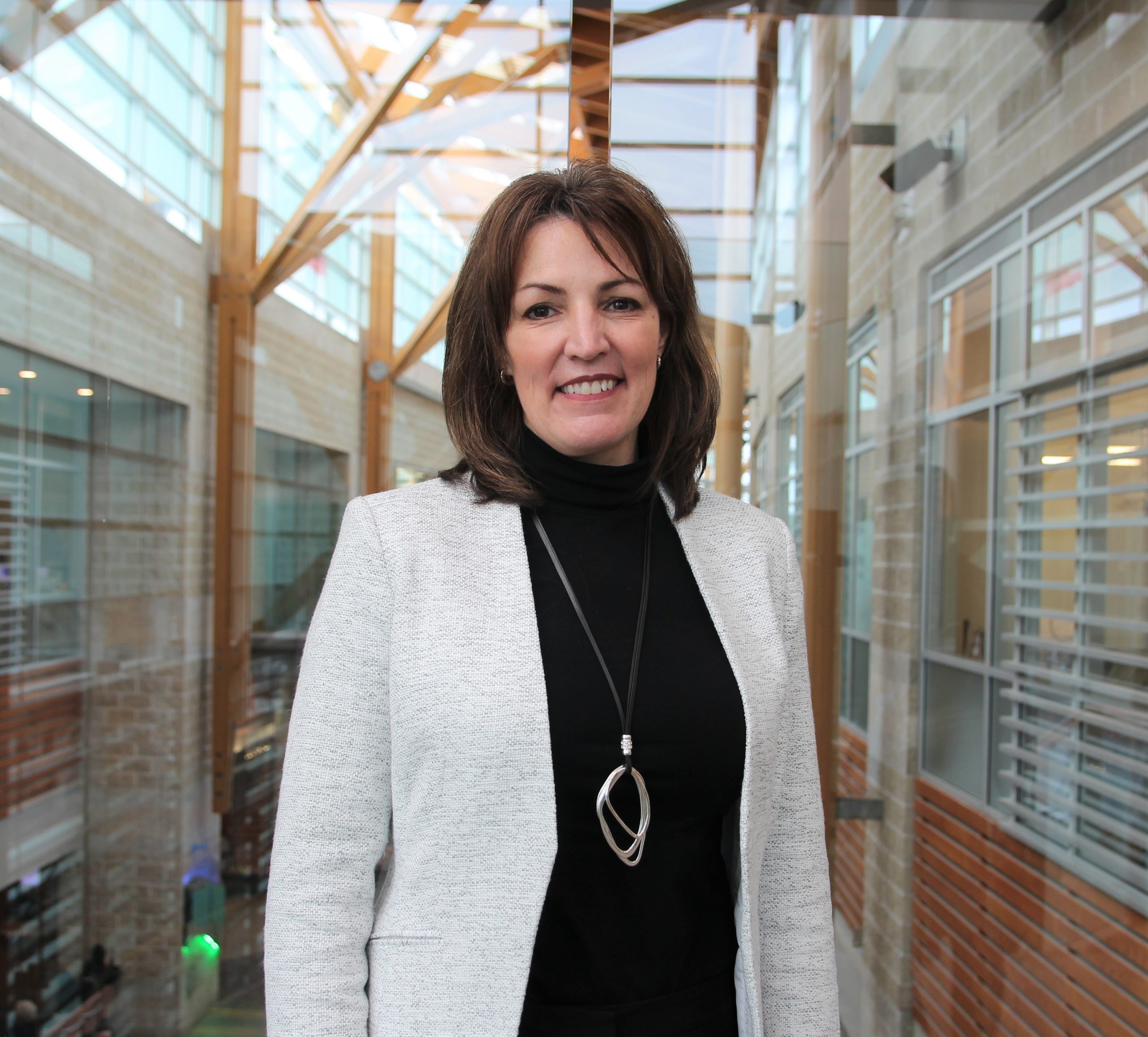
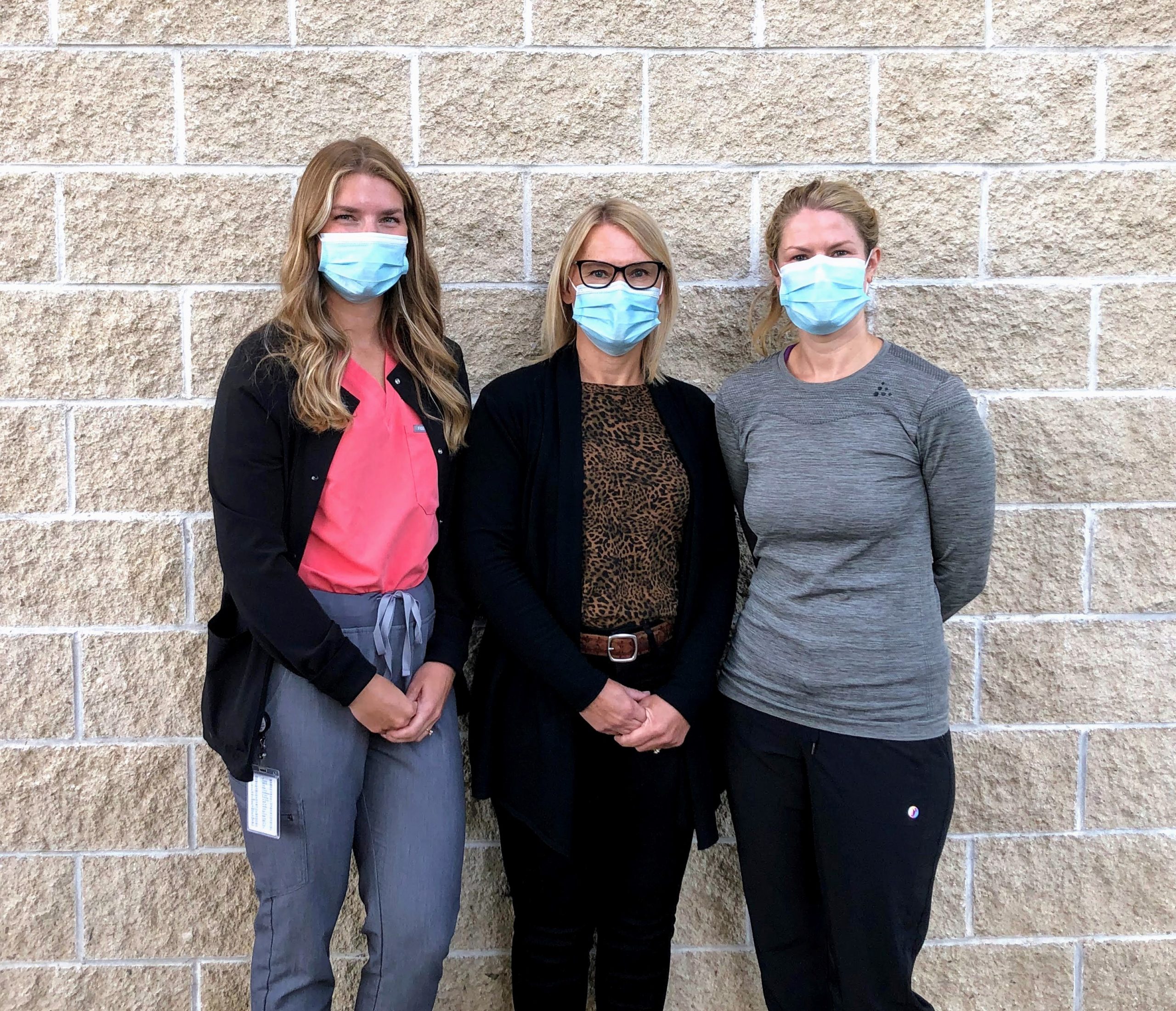
It’s Diabetes Awareness Month, and we’re highlighting staff at Thunder Bay Regional Health Sciences Centre who play a vital role in diabetes care. Today, we’re sharing a Q & A from Emma Ueffing, Michelle Gernat, and Lise Belliveau (left to right), members of the inpatient team at the Centre for Complex Diabetes Care (CCDC).
What does it take to be an inpatient diabetes educator?
Our inpatient team consists of Registered Nurses (RNs) and Registered Dietitians (RDs) who are Certified Diabetes Educators. It is valuable to have clinical experience and experience working in an acute care setting. Comprehensive knowledge of diabetes management is also important.
What inspired you to work as an inpatient diabetes educator?
Inpatient diabetes management is fast paced, dynamic and challenging. This type of environment allows for constant learning and the chance to improve our clinical skills.
What is unique about your role?
Every person living with diabetes is unique. We work with our patients to create customized care plans to keep them safe and healthy. As RNs and RDs we have a lot of autonomy in our role to make suggestions to physicians and guide health care teams to follow best practice guidelines. The CCDC in Thunder Bay is the only program in Ontario with an inpatient service which also makes us unique.
How does your role impact patient care?
High and low blood sugars can have both short and long term complications. We help keep patients safe while they are in our Hospital, and hope to get them home as soon as possible with the skills and knowledge to manage their own diabetes. We provide a variety of education to patients such as how to inject insulin, test blood sugars and what types of foods can help to manage blood sugars.
Promoting a healthy lifestyle is part of your daily messaging to patients. Do you have any personal tips on how to stay healthy?
Fit activity in whenever you can – we like to walk on our lunches. Did you know that healthy eating and exercise can lower your blood sugars as much, if not more, than some medications?
Any final thoughts?
Having a good understanding of diabetes management will help you no matter where you work in health care. Diabetes Canada is a great resource to use if you’re getting started.
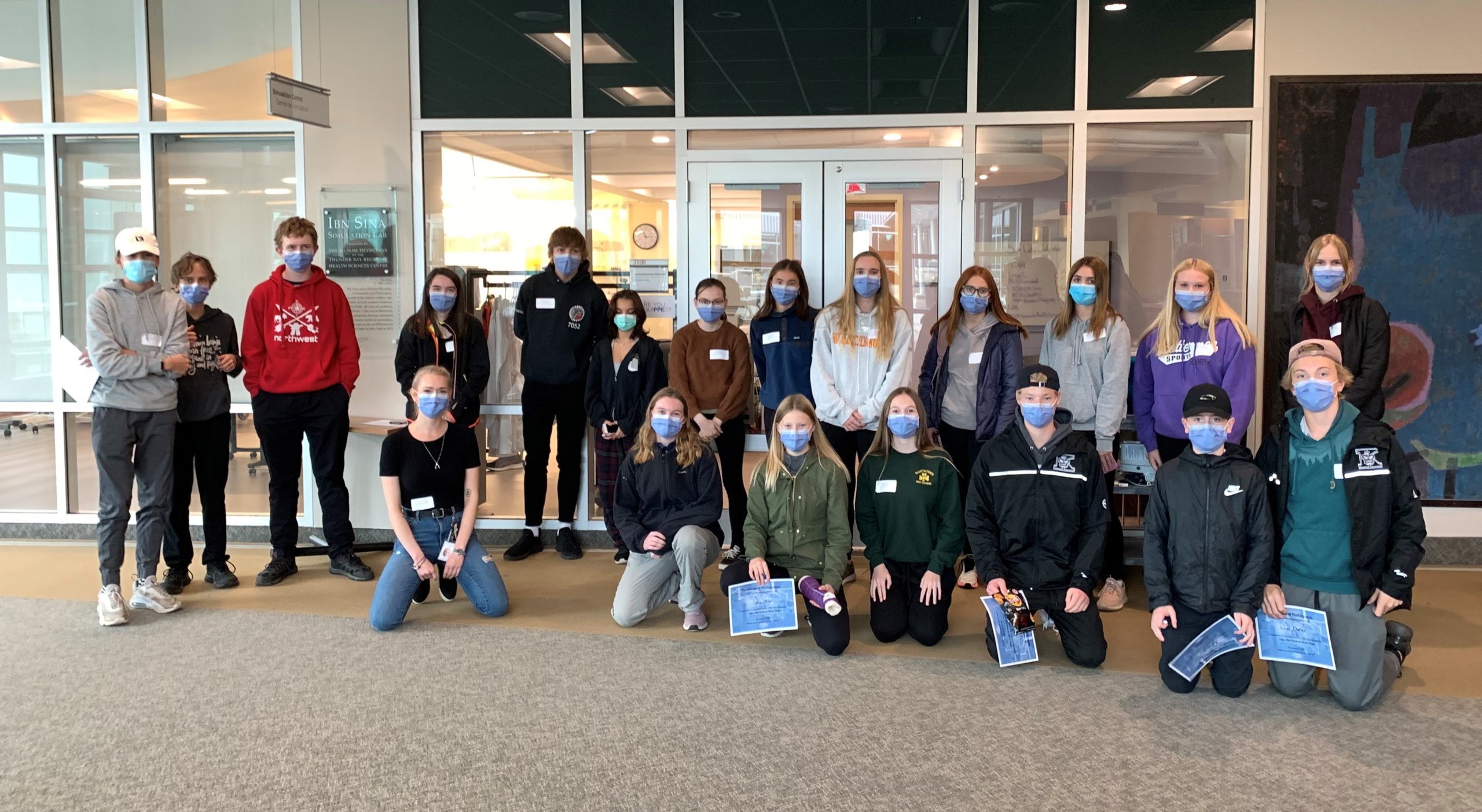
Take Our Kids to Work Day (TOKTWD) is an annual experiential learning opportunity for Grade 9 students across Ontario. On November 3rd, grade 9 students from local high schools toured various areas within the Hospital such as the Emergency Department, the Operating Room, MDRD, Radiation Therapy, Biomedical Engineering, Laboratory and Nutrition and Foods Services. By participating in TOKTWD, students were able to learn about the variety of careers available in the Hospital. We want to thank the staff members who took time out of their busy day to entertain and teach the students about their departments. This initiative would not be successful without you!
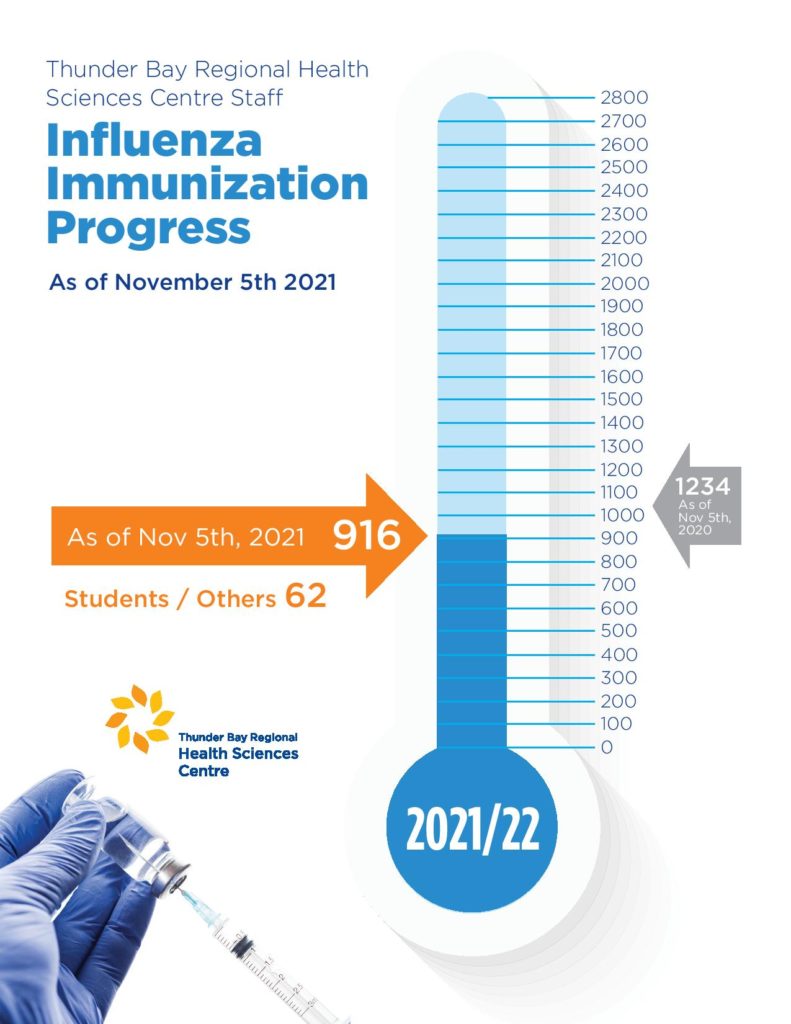
The roaming flu cart has begun and will be popping onto the units randomly. Staff are still able to come to the Occupational Health and Safety (OH&S) office to get their flu vaccine without an appointment although it is recommended to call 684-6212 ahead of time to check wait times.
Please note that even though the flu shot thermometer is showing that we are behind last year, we are actually on target based on the late start of influenza vaccine administration this year.
For more information on the flu shot please contact OH&S by calling 684-6212.