Shared on behalf of Adam Vinet, VP, Patient Experience, CNE & RVP, Regional Cancer Care
Our Hospital is currently experiencing an increase in the number of COVID-19 positive patients, and patients with other respiratory illnesses. We are expecting these numbers to climb based on provincial trends and other indicators; especially as children return to school and more inside activities occur. As a precautionary measure to mitigate against the spread of illness within our facility, we would like to remind everyone to diligently practice proper hand hygiene protocols and ensure that you follow proper PPE protocols.
As a reminder, our masking requirements are as follows:
All staff, professional staff, learners and volunteers are required to wear at minimum a Level 3 procedure mask where physical distancing standards cannot be maintained, 6 feet or greater. This includes any interaction for anyone, including providing care to patients, where the physical distance is less than 6 feet.
Examples:
a. Masking is required when:
Conducting an assessment on a patient or providing care
Transporting a patient to another area of the hospital
IPAC protocols deem a patient is in isolation which requires masking· Taking an x-ray or performing occupational/physio therapy
b. Masking is not required when:
Walking in the hallway (unless accompanying a patient)
In the cafeteria or Robin’s Donuts
On a clinical unit outside of a patient room and not in direct contact with a patient
Cleaning or filling supplies and not in direct contact with a patient
Entering our facilities to come to work
Essential Care Partners (ECPs) and Care Partners (CPs) are not required to wear a mask when entering the hospital. However, it is important to note that staff are able to require an ECP/CP to wear a mask if they are symptomatic but their presence is essential for a patient, or per IPAC protocols should there be an outbreak and/or based on the condition of the patient they are visiting. We ask that you stress the importance of wearing a mask and proper hand hygiene to ECPs and CPs when able.
Masks will continue to be supplied and made available at all public/staff entrances on the sanitizing stands, as well as at the unit/department level should you or a member of the public require a mask.
Further communication will occur should our Hospital require an increased level of mandatory masking with the continued spread of infection.
Thank you for your commitment to keeping our patients, staff and Hospital safe. If you have any questions then please ask your manager or reach out to IPAC (684-6094) for further details on best practices.
Shared on behalf of Infection Prevention and Control
Please be advised that the COVID-19 outbreak has been declared over TBRHSC’s 2B Medical Inpatient Unit as of September 8, 2023. All restrictions have been lifted.
Please share this information with the appropriate staff.
For more information, contact Infection Prevention and Control, 807-684-6094
Coming to the Emergency Department (ED) can be a stressful experience. At Thunder Bay Regional Health Sciences Centre (TBRHSC), we have a team of physicians, nurses, physician assistants, Indigenous Patient Navigators, medical learners, social workers, clerks and support workers dedicated to providing you and your family with safe, quality care while in our Hospital. In this series of videos, we want to introduce you to some team members you may encounter when you come into our ED.
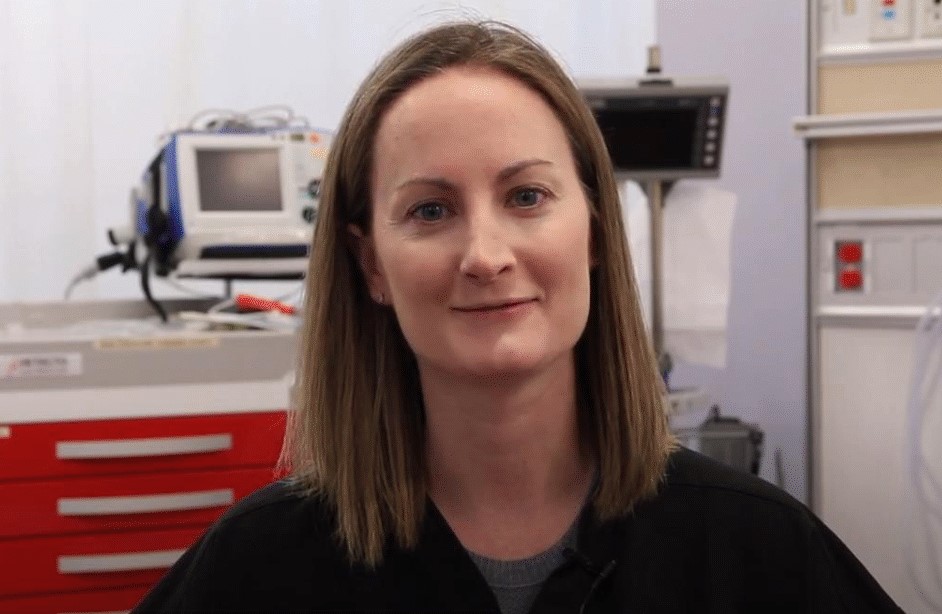
Meet Dr. Drew Spicer, and find out why she chooses to work in the ED at TBRHSC.
Lakehead University’s Office of Indigenous Initiatives invites you to join their Truth & Reconciliation Events throughout September 2023. Everyone is welcome to attend.
How one manager fosters positivity for staff and patients.
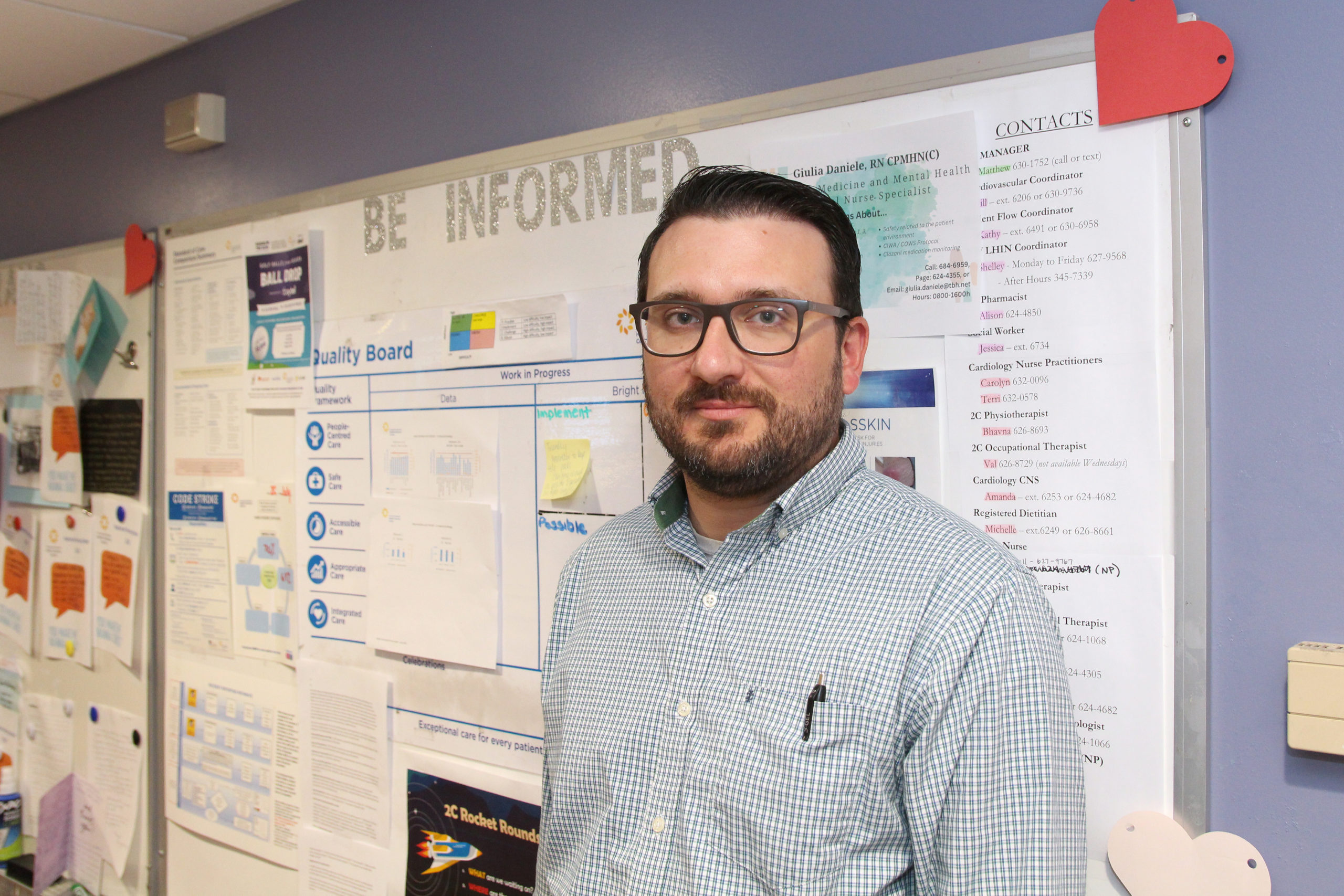
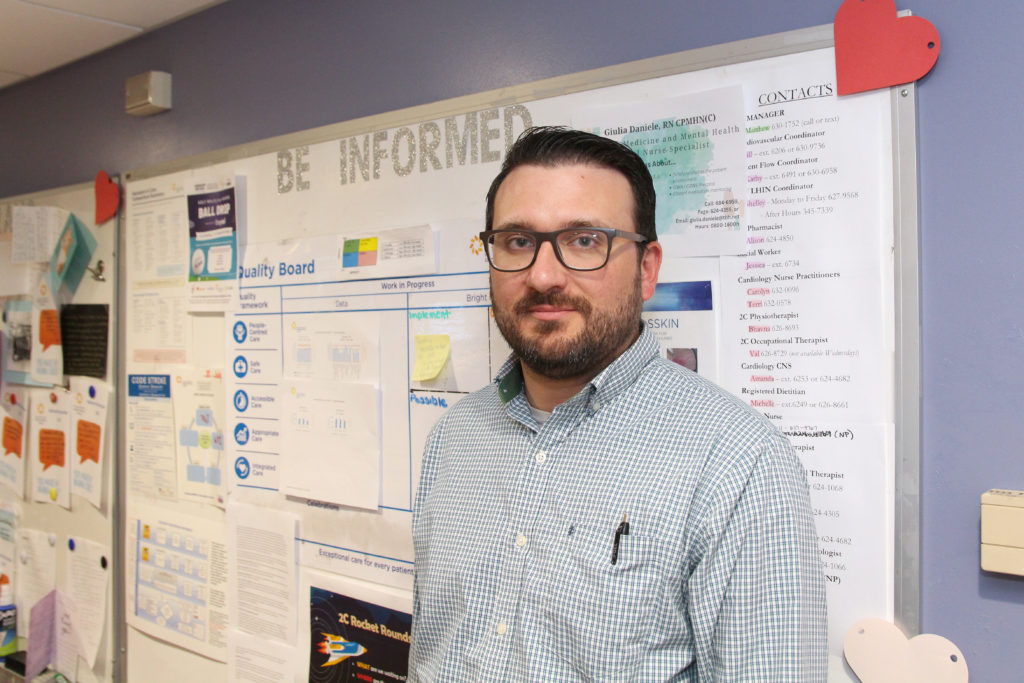
Matt Shonosky, Manager of 2C, Medical, Cardiology and Regional Stroke Unit and Manager of Vascular Services at TBRHSC, saw the effects of the pandemic on Hospital staff first-hand and wanted to make a change.
When you come to 2C at Thunder Bay Regional Health Sciences Centre (TBRHSC), you get the impression that the staff love what they do and are committed to their work.
That is how Paul’s friend Ron describes it.
Paul Carr, Co-chair of the Patient Family Advisory Committee, with Ron’s permission, shared Ron’s story as a patient on 2C to demonstrate how staff experience directly impacts patient experience.
“My friend Ron got up in the morning, felt tingling, numbness and weakness in his left arm,” Paul recounts.
“He came to the [TBRHSC] Emergency Department, and upon seeing the nurse he was triaged directly inside. It didn’t take long to determine he had a stroke and was treated right away.”
Ron was admitted to the Regional Stroke Unit on 2C where he stayed as an inpatient for a few days.
“Upon arrival to the 2C Unit, Ron said he was treated incredibly by his care team,” he adds. “The nurses who attended to him not only were clinically amazing in providing care, they demonstrated wholehearted caring. Ron’s impression was that every single person genuinely cared about him as a person, his outcomes, and how things were going for him.”
The other sense that Ron got, Paul explains, was that the staff on 2C enjoyed their work.
“The teamwork he observed, the support from their manager, everything made it evident they were working as a team to be able to provide the best care to the patients. They are committed to the work and they are happy.”
In this post-pandemic health care system, this is an incredible feat. The significant impact of the COVID-19 pandemic on the health care system and the challenges faced by staff, including extended work hours, shifting approaches in care delivery and decreased vacation time, left health care workers across the province feeling stressed and disengaged.
Matt Shonosky, Manager of 2C, Medical, Cardiology and Regional Stroke Unit and Manager of Vascular Services at TBRHSC, saw the effects of the pandemic on Hospital staff first-hand and wanted to make a change.
“This past February, morale was low on 2C with our staff still feeling the effects of the COVID-19 pandemic,” Matt says. “The Coordinator, Clinical Nurse Specialist and I made a commitment to transform the environment [on 2C]. The first idea we came up with was to facilitate colleagues celebrating each other.”
They used a whiteboard in the nursing bubble and set it up as a “bravo” board.
“We call it the “2C-tastic Board”,” smiles Matt. “Staff put up sticky notes with shout outs to their colleagues. It is also a place where I put up compliments or thank you cards that we receive from patients and families for all staff to see.”
“Staff have certainly taken to using the board and it has really helped to increase morale,” he adds.
This initiative coincided with the Hospital-wide recognition initiative “Thumbs Up”, where staff can recognize their colleagues and express their gratitude on an electronic bulletin board.
“A lot of my staff submit to that as well, so we print them out and post them to the 2C-tastic Board. It is a great way for staff to acknowledge each other’s hard work and dedication to the unit.”
Also during that time, the masking mandate was still in place, which made it difficult to recognize a new staff member.
“When new grads came into our department, we could only see their eyes and not their face, and I would get people confused,” explains Matt. “We created a “New Recruits Board”, where we post a picture of the new staff with a short biography, including where they are coming from and what their interests are, to welcome them to the department. I’ve received positive feedback and it makes them feel like part of the team.”
Matt also wanted staff to feel more engaged at work and inspire communication. This aligned well with the implementation of Quality Huddles and the Quality Board, where staff are encouraged to highlight ideas that help improve their day and improve the patients’ experience.
“Staff post their ideas on the Quality Board and every Thursday we meet to discuss the issue and come up with solutions,” explains Matt.
For example, staff identified a need for equipment to improve timing when conducting assessments, specifically thermometers and machines for vitals.
“That was something I was able to resolve quickly,” Matt recalls. “We got new thermometers, we were able to get the vital signs machine repaired, and I was able to share that success the following week with staff.”
“Last month, our team generated ten change ideas and we have implemented nine improvements from that list,” continues Matt. “It is really making a difference for our staff and they feel heard and supported.”
“A driving factor in the implementation of the Quality Huddles was recognizing the importance of continuous improvement, and looking at ways we can better engage and involve staff at the department level,” says Tram Dao, Manager of Quality and Risk Management at TBRHSC. “The Quality Huddles were first implemented across the medical and surgical inpatient units early this year. Since then, Quality and Risk Management has continued to support a number of teams in rolling out this framework, with a plan to expand to outpatient and non-clinical departments in the fall.”
Tram continues, “It is truly great to see the positive impact that the Quality Huddles have had on multiple departments, including 2C. They have given staff a voice, a forum to share their innovative ideas, and the support needed to implement improvements within their department; no matter how big or small.”
And as a part of supporting his team, Matt includes both patient and staff rounding. On average, he completes more than 60 patient rounds per month, and more than 100 staff rounds a month.
“Every day I try to connect with as many of my staff as I can. I want to hear how their day is going, address any issues they may be facing and see how I can help them.
“Patient rounding is part of supporting my staff as well as improving the patient experience. Visiting every patient admitted, discussing their care, and seeing if there are any concerns that we can address right away. It has improved patient satisfaction, where I’m seeing a lot more patients saying they are pleased with the care they have received.”
Paul witnessed Matt in action when he was visiting his friend Ron.
“Ron was blown away that the manager came in to have a chat,” exclaims Paul. “Matt asked how he was doing, how his care was, if there was anything he needed. And demonstrated, at the management level, that he cared what happened to the patients on 2C. I am certain that my friend wasn’t the only person Matt visited that day.”
Matt concludes, “We have a great team, a very dedicated team. Despite the serious challenges and obstacles they’ve faced over the past three years, our staff have worked tirelessly to care for patients and keep our community safe and healthy. I want them to feel valued and supported because if staff have a good experience, the care provided will be better also.”
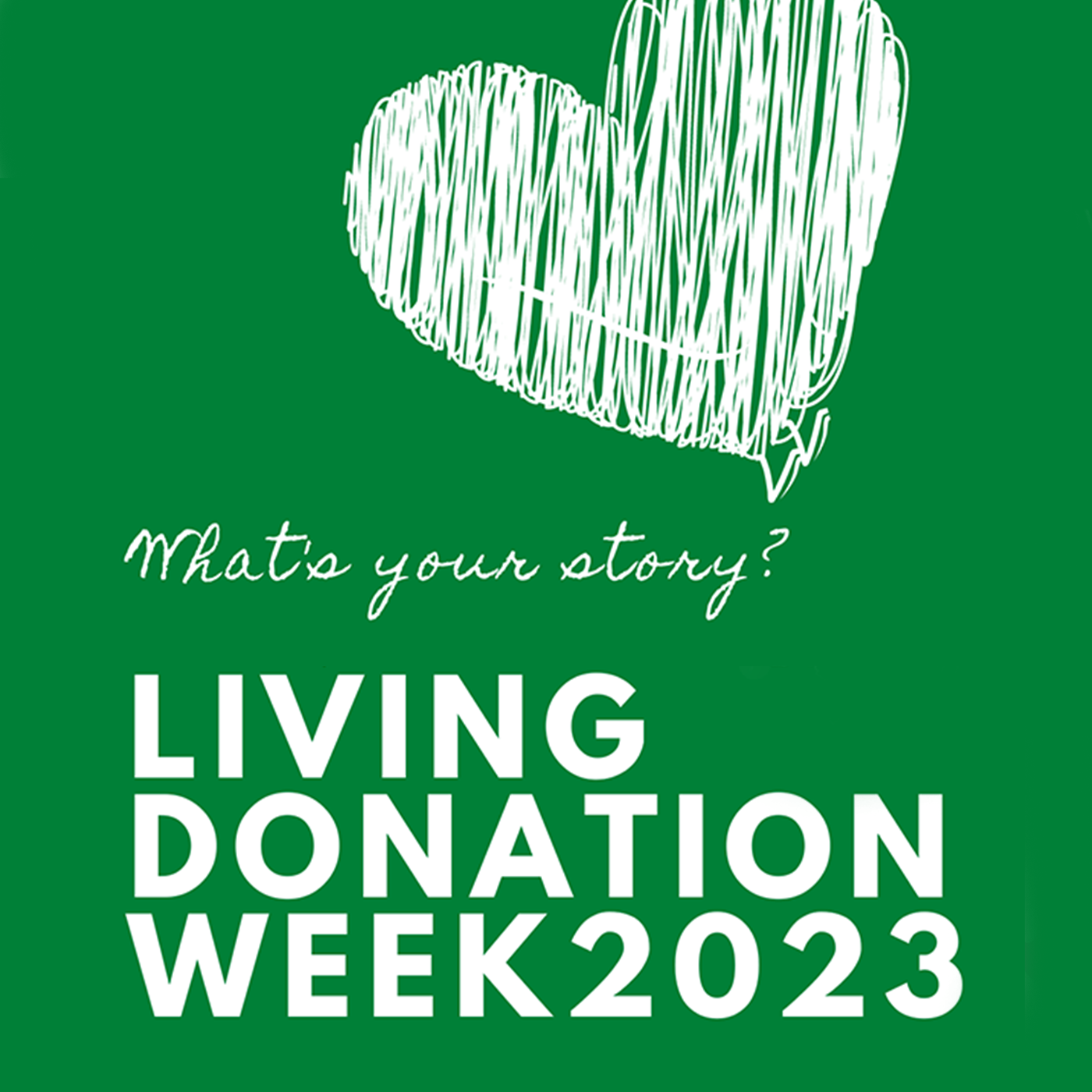
This year for Living Donation Week (September 10-16), Thunder Bay Regional Health Sciences Centre (TBRHSC) along with University Health Network (UHN) Centre for Living Organ Donation and centres across Canada, are recognizing individuals who have donated and received a living donor organ.
Each year, living donor transplants save the lives of hundreds of Canadians awaiting a kidney or liver transplant. Living organ donation offers a shorter pathway to better health, with less wait time and better health outcomes than a deceased donor transplant. Yet many Canadians are not aware of living organ donation. An estimated 3,500 living kidney and liver donations can eliminate the wait for those patients who are on deceased donor organ waitlists.
Living Donation Week is a national awareness week features social media campaigns (#LDW2023), free virtual events and activities. The focus is on improving access and equity in living organ donation, profiling the work of Team Transplant, celebrating our incredible living donors and transplant recipients and to give hope to those who are currently waiting for a transplant. Visit livingdonationweek.ca for more event details and to celebrate the incredible gift of living donation.
What’s your story?
Living Donation Week is all about sharing stories. Whether you’re a transplant recipient or candidate, a living donor, a family member, caregiver, or health care practitioner, stories help us understand our own complex experiences of those around us.
Stories of living donation play a crucial role in raising public awareness of the life-changing gift of living donation, the resilience of our transplant patients and caregivers, and the dedication of our healthcare teams. The campaign Great Actions Leave a Mark shares video stories of living kidney and liver donors and recipients at greatactions.ca.
Earlier this year, local transplant recipient Terry Gallant and donor Jennifer de Bakker shared their story, which can be read at bit.ly/BeADonor-April-2023.
Stacy Heerema, RN, the Access to Living Kidney Transplant/Donor Coordinator at TBRHSC’s Multi Care Kidney Clinic shared her thoughts on living donation.
“In the Multi-Care Kidney Clinic at TBRHSC we work with patients to complete Kidney Transplant and Kidney Donor Evaluations, in hope that our patients can receive a life-saving kidney transplant.”
“We want to sincerely thank those living donors who have selflessly stepped forward to be a living kidney donor to a family member, friend or a stranger,” Stacy continued. “We have had a few people step forward to be an anonymous kidney donor just because they have the desire to help someone in need. This is just an incredible gift that these individuals have given. I’m just in awe of the selflessness and courage that these donors have demonstrated throughout their evaluation, surgery and post surgery.”
For more information regarding living kidney donation, contact Stacy Heerema at (807) 684-6164.
If you visit Flavours Café at the Thunder Bay Regional Health Sciences Centre (TBRHSC) you’ll notice some changes. Post-pandemic, the community was hungry for a fresh start and rejuvenating change. Feedback from hospital staff and other customers encouraged Sodexo, the retail owners of Flavours Café, to breathe new life into the space.
“Our goal was to establish a welcoming environment with food options to suit the tastes of each person,” says Stephanie Rowan, manager of food and nutrition services at TBRHSC and general manager of Sodexo Retail. “Inspired by Sodexo’s Kitchen Works Co., the idea was to combine tasty, balanced food with quick service. It offers an experience that puts guests in control with an easy-to-navigate restaurant design. We also wanted to update the food offerings by incorporating local and Canadian products to the space.”
Stepping into Flavours Café, visitors are greeted with an aura of freshness and tranquility. Fresh herbs from the newly installed ZipGrow indoor garden are available to all and cultivated for use in various dishes, enhancing taste and nutritional value. A feature wall has new digital monitors highlighting a rotating menu, and static menu boards showcase items that can be purchased daily.
Surrounding yourself with healthy options makes it easier to follow Canada’s Food Guide recommendations: eating plenty of vegetables and fruits, whole grains, and protein while limiting highly processed foods with added sodium, sugars, or saturated fats. “With the refresh there are more healthy options available, but we also want to allow our customers to make their own choice based on what their preferences are,” explains Rowan. “We are offering a balance between fresh, healthy, and comfort foods.”
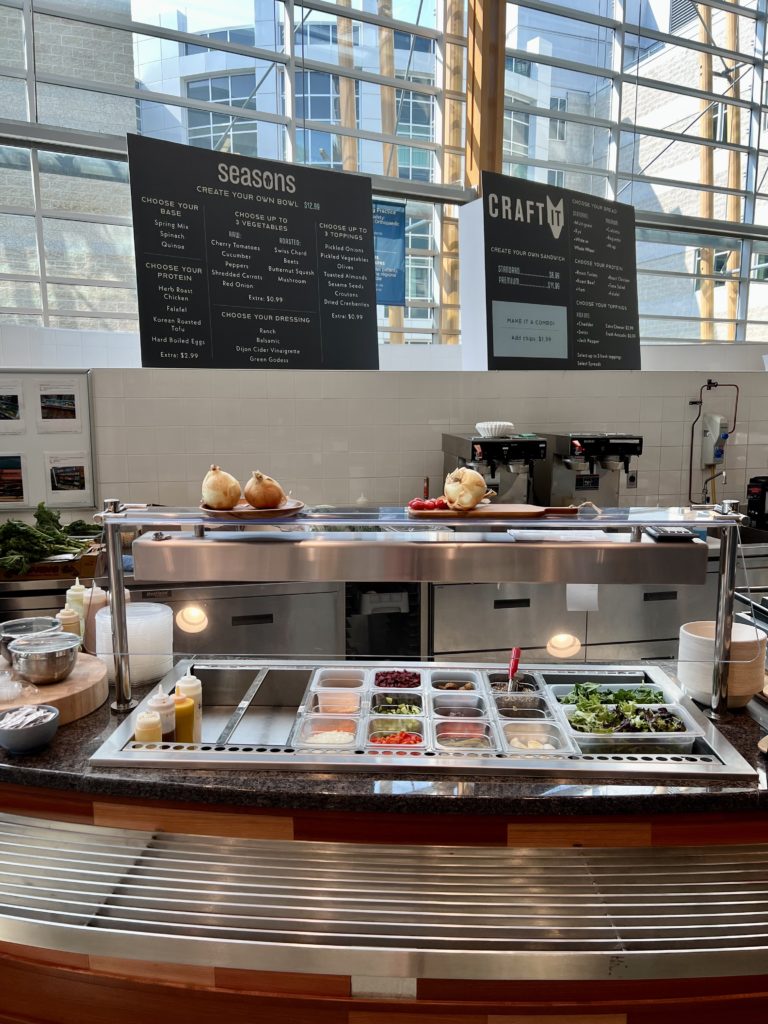
From Asian salmon burgers and fish tacos to poutine and whole-wheat rolls, there is something for everyone to savour. The Seasons Salad and Craft It Deli Bar offers customers a personalized and distinctive dining experience tailored to individual needs and preferences. Additionally, the cafeteria offers a selection of plant-based and vegan options in the spirit of embracing the demand for healthy and sustainable food choices.
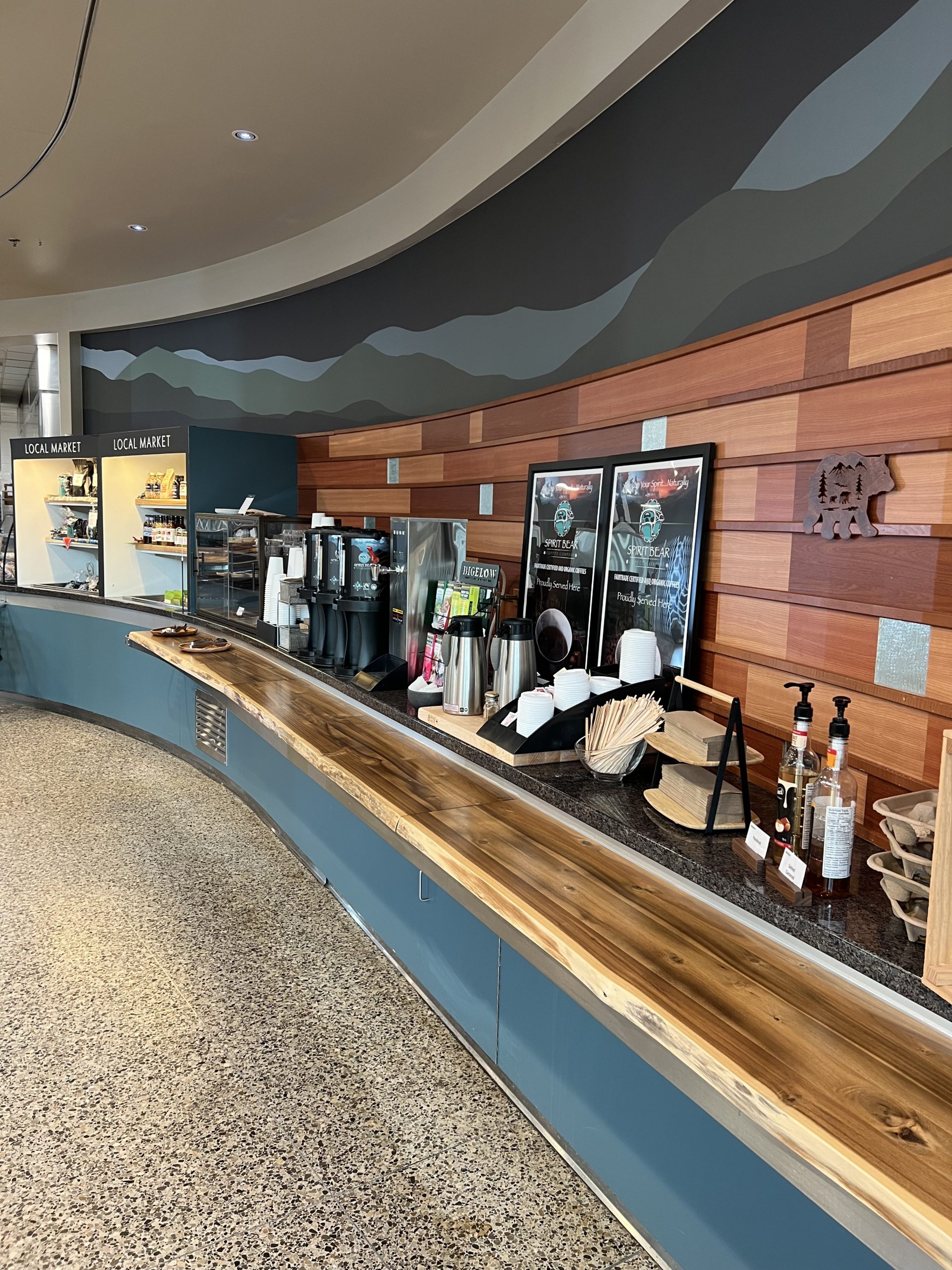
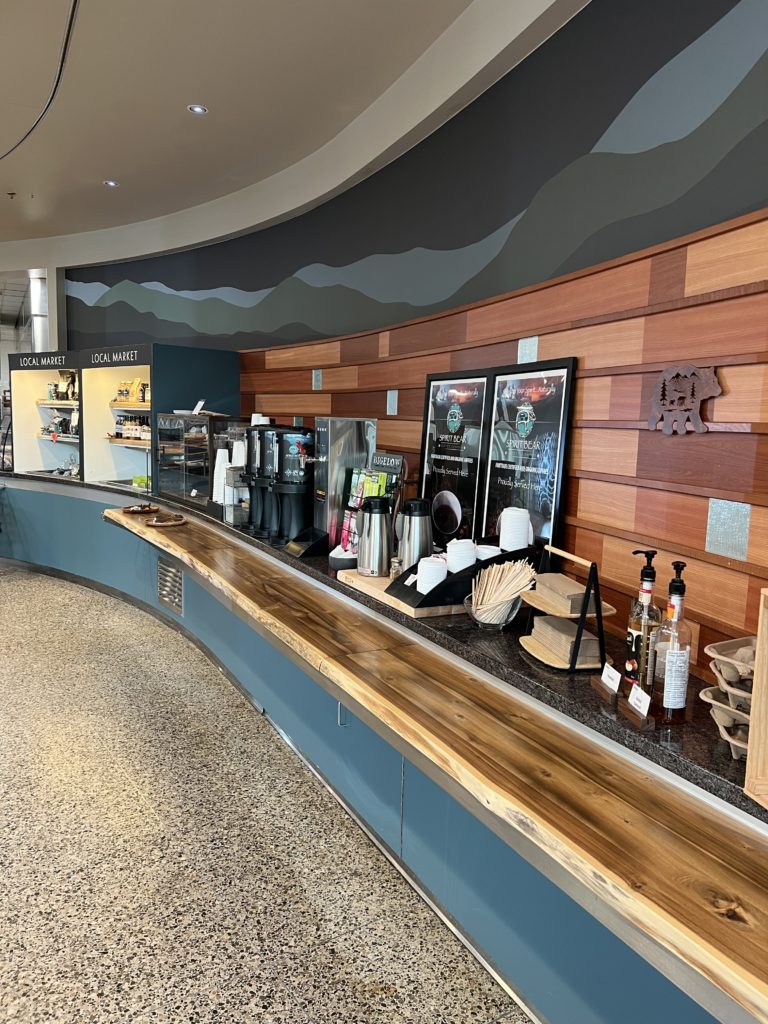
A key element of the refresh was the integration of local products and flavours. Flavours Café now proudly hosts a mini local market that offers an array of locally sourced products such as hot sauce, fish batter, pasta, and syrup. The walk-up coffee bar serves an array of flavours from Spirit Bear Coffee Company, an Indigenous-owned company boasting 100% organic and fair trade products. These products have become a beloved addition, adding a unique opportunity to support local and Indigenous-owned businesses.
Flavours Café has witnessed a steady increase in visitors since its refresh in June 2023, and aims to return to full hours by the fall. The 27-year partnership between Sodexo and the hospital reflects the long-standing commitment to providing quality service and nutritious food options. The positive feedback received from staff and visitors after the relaunch was heartening for the team who has contributed to make the project a success.
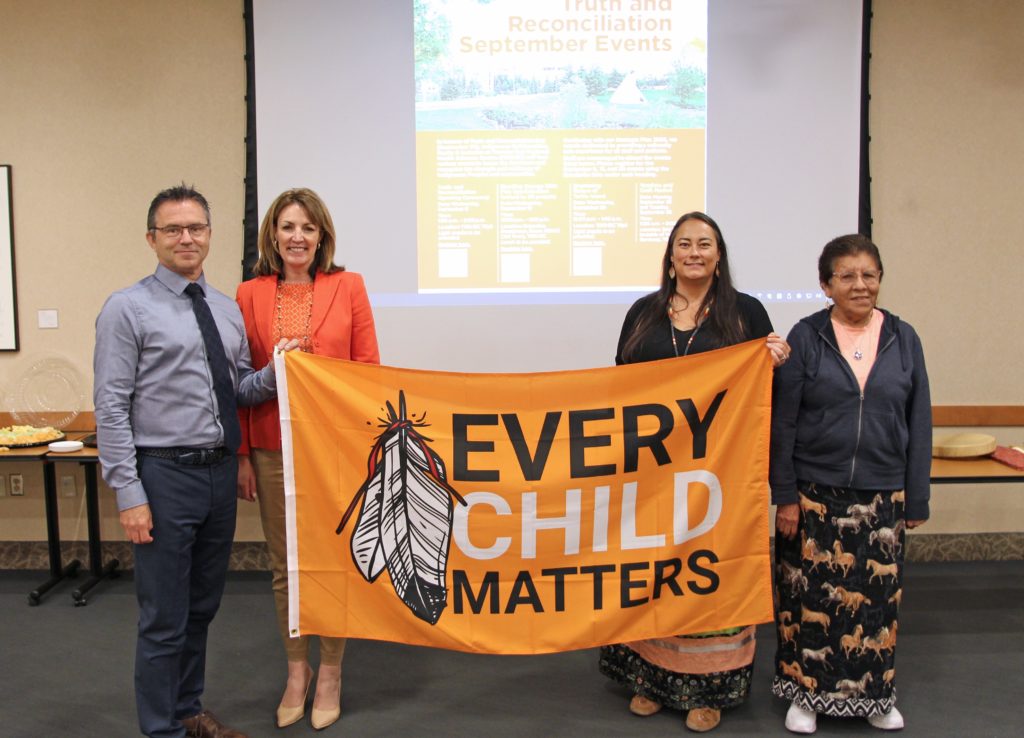
The rain may have delayed us at the moment, but the Every Child Matters flag will fly outside our Hospital all month in recognition of Truth and Reconciliation.
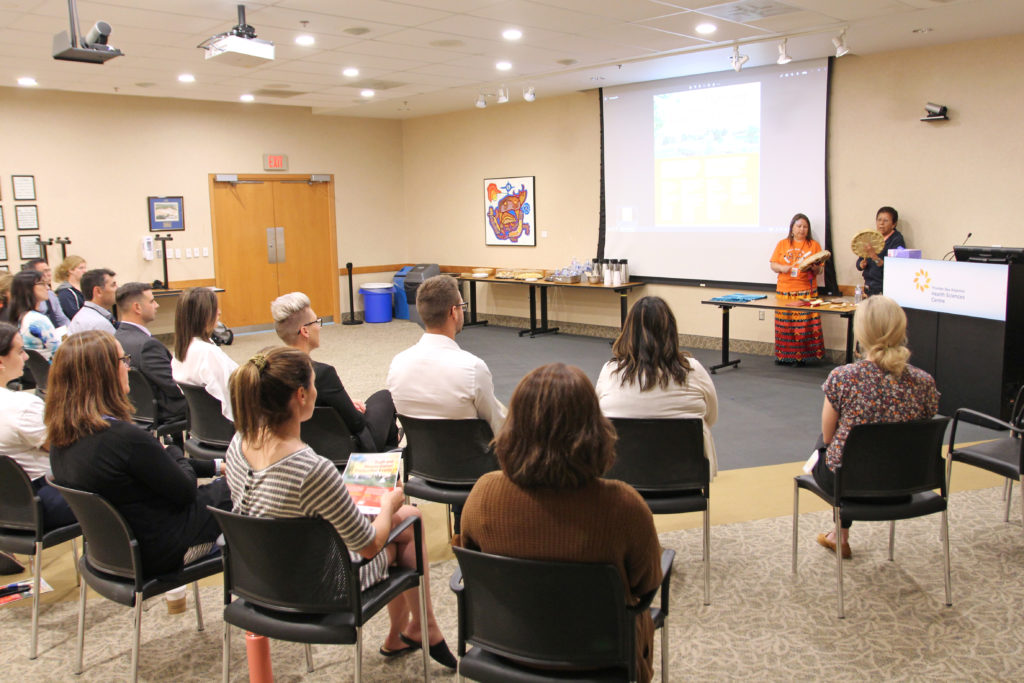
Today was the Opening Ceremony for Truth and Reconciliation led by Elder Emma Boshkaygan, with comments from Dr. Miranda Lesperance, Vice President of Indigenous Collaboration, Equity and Inclusion, Thunder Bay Regional Health Sciences Centre (TBRHSC), and Dr. Rhonda Crocker Ellacott, President and CEO of TBRHSC and CEO of Thunder Bay Regional Research Institute.
National Truth and Reconciliation Day is September 30, coinciding with Orange Shirt Day, a day to acknowledge and reflect on the intergenerational impacts of residential schools while reinforcing the messaging that Every Child Matters.
Leading up to September 30, our Hospital’s Indigenous Collaboration, Equity and Inclusion portfolio has organized various events to honour the survivors and recognize the importance of Truth and Reconciliation. Events for staff include beading and drumming, with an Indigenous Craft and Food Vendor Market open for staff and the public on September 25.
(L-R): Dr. Bradley Jacobson, Chief of Staff, TBRHSC; Dr. Rhonda Crocker Ellacott, President and CEO of TBRHSC and CEO of Thunder Bay Regional Research Institute; Dr. Miranda Lesperance, Vice President of Indigenous Collaboration, Equity and Inclusion; and Elder Emma Boshkaygan.