The 2024 iCare Impact Awards nomination now open! Submit a nomination here.




Shared on behalf of Information Technology
In order to standardize GroupWise naming schemes, IT is required to update the GroupWise resource naming format.
Starting this week, some GroupWise recourses will have altered names. Please make sure you are using the main GroupWise address book when booking rooms or equipment.
Any preexisting bookings will not be affected. If you are a resource owner, no action is required on you part.
For more information, contact the Help Desk at help@tbh.net.

NorWest Community Health Centres will be holding a virtual Peer Leader Training for the Chronic Disease Self-Management Program starting February 2024.
The program includes trained Peer Leaders who deliver self-management workshops in to the community.
This training is open to individuals who have had a chronic disease experience, is a caregiver or a staff member who is interested in delivering workshops in the community.
Training is free to all participants. Peer Leaders receive a stipend at the completion of a workshop series (6 weeks, 2.5 hours, once a week).
To register, please complete the registration form here: https://forms.office.com/r/c7vB8ifHw7 If you have any questions about the program, please contact Kevin Ng, Manager, Chronic Disease Self-Management Program at kng@norwestchc.org or call 807-626-8480.
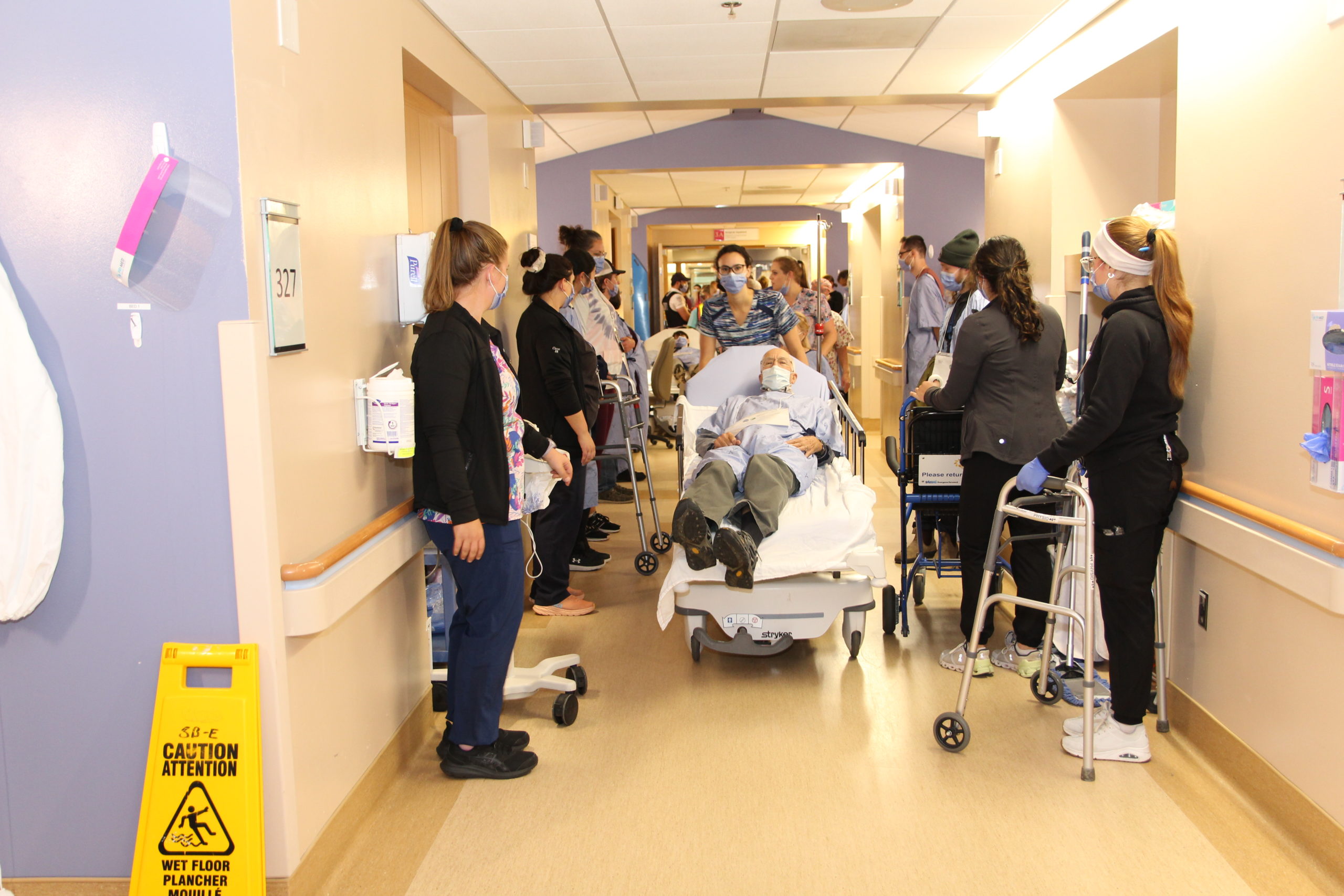
“Be prepared” may be the Scout’s motto, but it works for Thunder Bay Regional Health Sciences Centre (TBRHSC) as well.
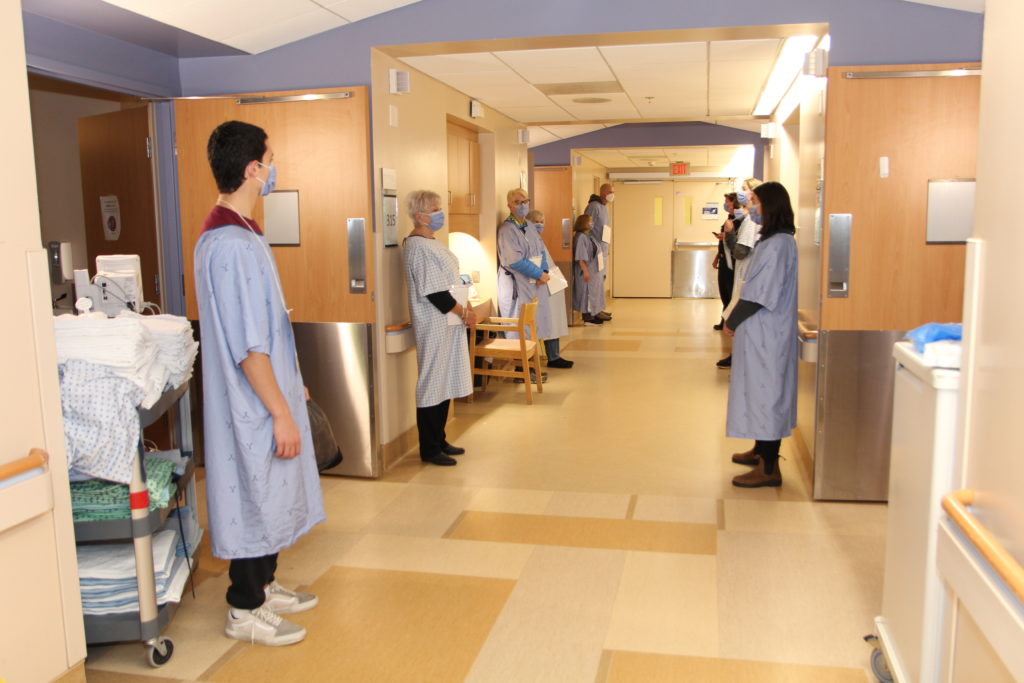
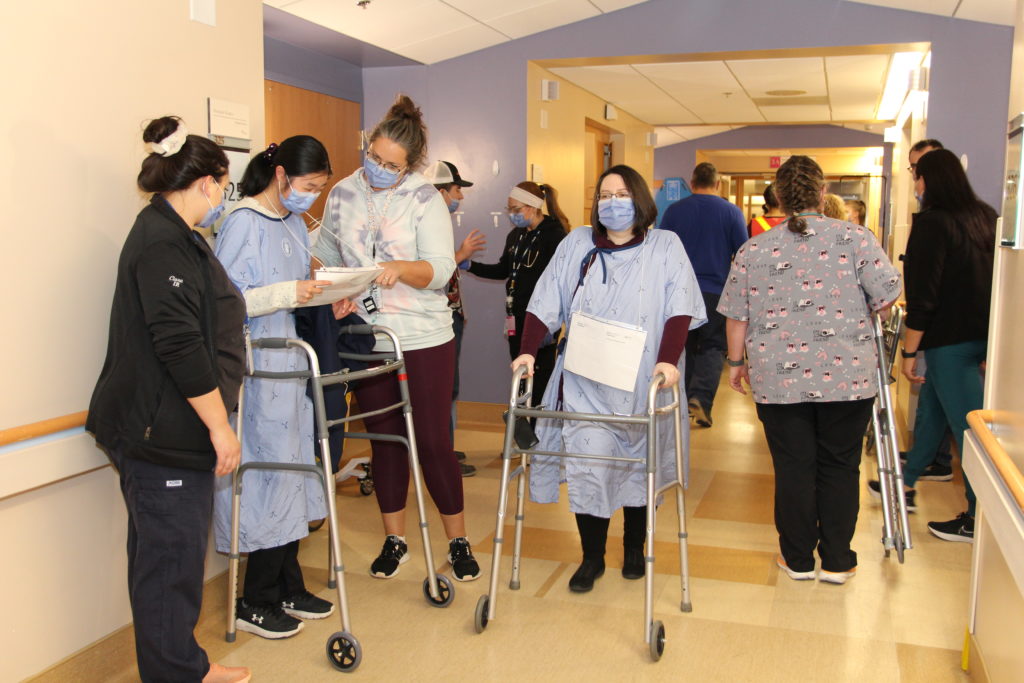
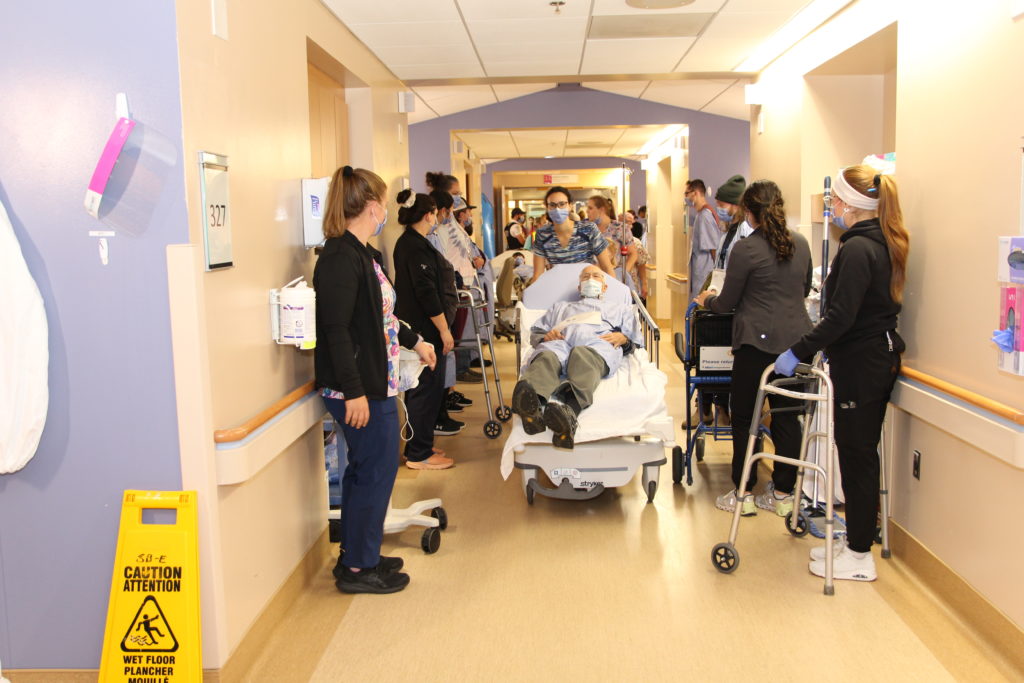
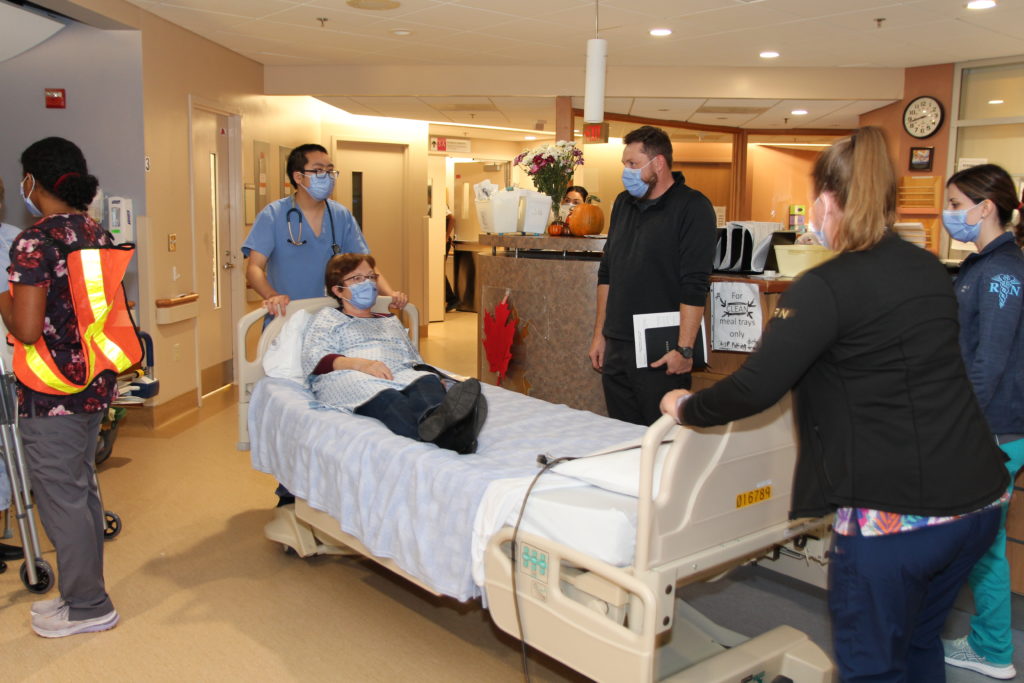
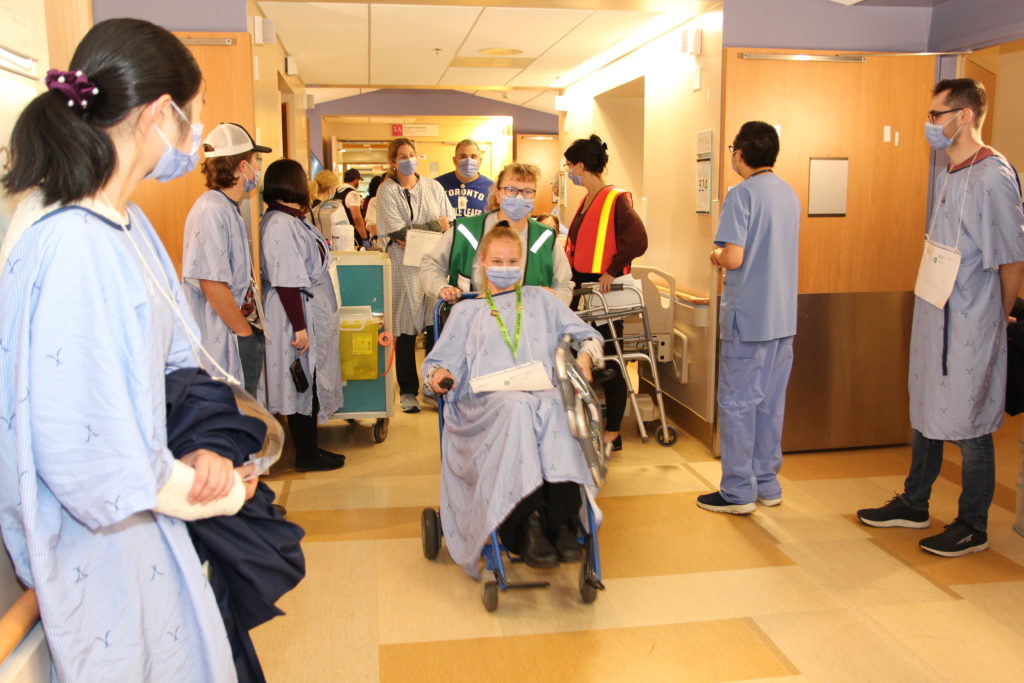
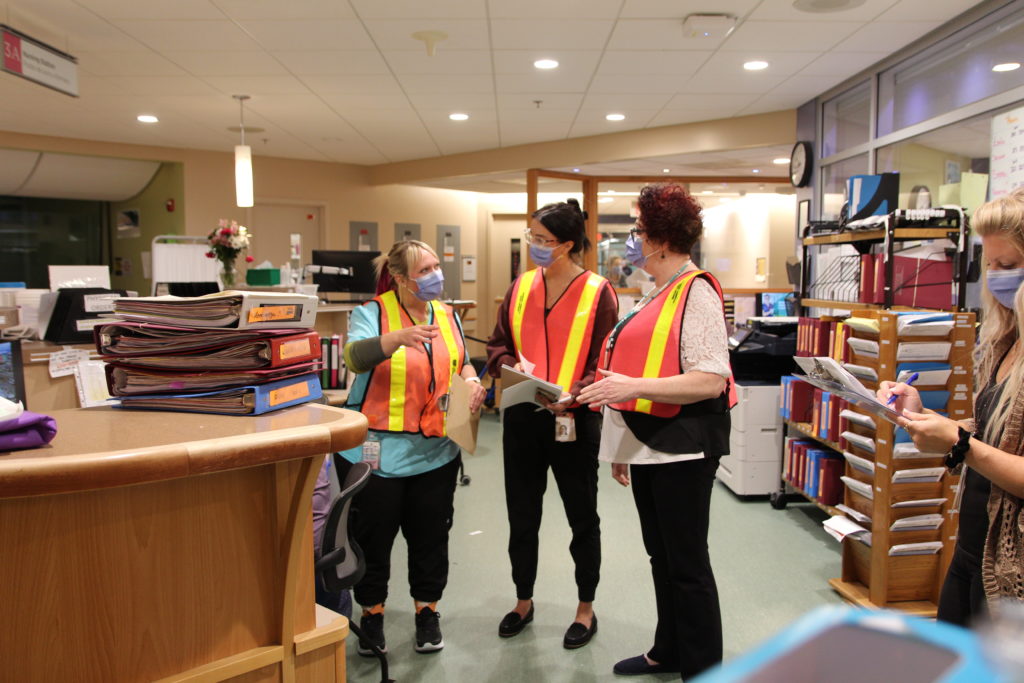
This past fall, TBRHSC Emergency Preparedness led the coordination of a Minimum Staffing Drill (also referred to as a Vulnerable Occupancy Drill) with representation from the Hospital’s the Code Red (fire) and Code Green (evacuation) policy working groups and unit management. This annual hospital-wide drill, mandated by the Ontario Fire Code, tests the Hospital’s ability to safely evacuate patients from a unit during hours with minimal staffing levels. The team’s drill response is then evaluated and timed by Thunder Bay Fire Rescue (TBFR).
The drill was conducted with conditions adjusted to replicate times of minimal staffing, with volunteers acting as mock patients. A pre-determined fire alarm was triggered within the 3A Surgery department, prompting the activation of a hospital-wide Code Red response. The simulated scenario ultimately escalated, initiating a Code Green. Designated responders quickly arrived from across the Hospital as soon as the overhead announcement was made.
“This year we had 38 volunteers, the largest number of participants since pre-pandemic drills,” explains Mēsha Richard, Emergency Preparedness Lead. “All mock patients were evacuated within the mandated time. Immediately after the drill was completed, participants and observers, including TBFR, conducted a debrief to provide feedback. This was a great opportunity to discuss potential revisions of current emergency response plans and procedures, as well as improvements regarding exercise design and coordination.”
Brittney McLaughlin, Interprofessional Educator, supported the design and facilitation of the drill, as well as co-lead the debrief.
“Drills are a chance to promote interprofessional teamwork, and ultimately enhance the quality of patient care,” says McLaughlin. “It was great to see everyone actively engaged in this learning opportunity.”
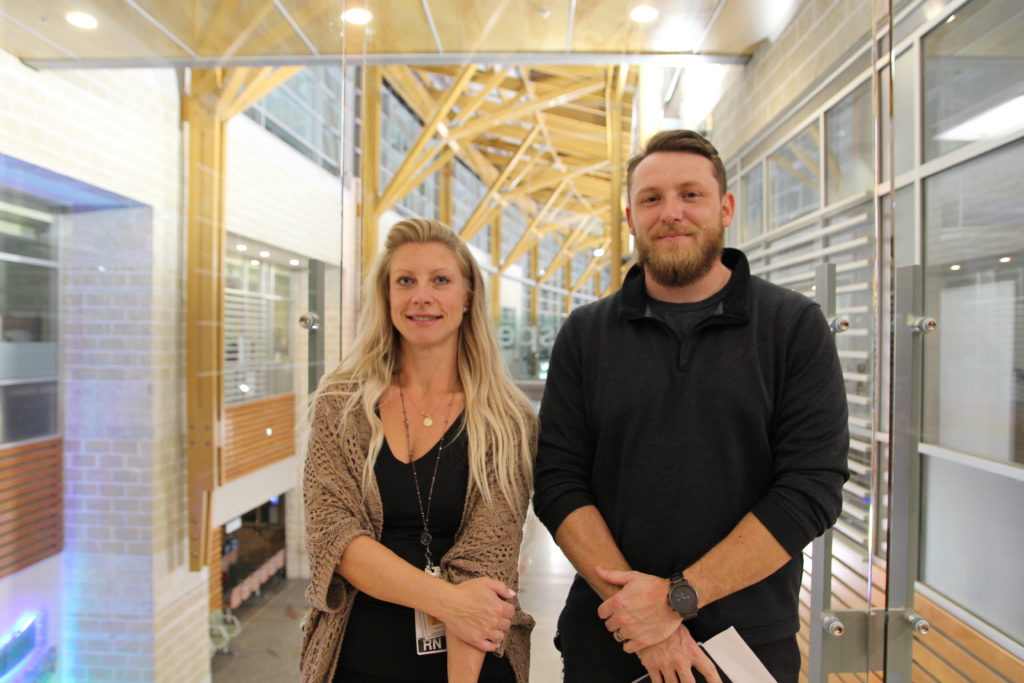
Laura Jurimae, Manager, 3A and Mike Martin, Administrative Manger 3A, 3B, 3C & Neurosurgery Units, acted as observers during the drill.
“There is quite a lot of planning that goes into these drills,” explains Martin. “Laura and I helped with the preparation by coordinating volunteers, staff, and resources. This exercise provides a unique opportunity for our staff, volunteers, and partners in the community to practice for unexpected events.”
Jurimae adds, “The drill was a great success and allowed our staff to showcase their abilities with respect to emergency preparedness. We are very pleased with how smoothly everything went.”
“A big thank you to all of our staff and volunteers for their participation and commitment to emergency preparedness at TBRHSC. Looking forward to continuing to work together on training opportunities in 2024,” concludes Richard.
For more information on emergency preparedness at TBRHSC please visit https://bit.ly/emergency-codes-TBRHSC. If you’d like to become a volunteer with us please visit https://bit.ly/become-a-volunteer-TBRHSC.

Shared on behalf of Jessica Logozzo, Vice President, Strategy and Regional Transformation
I am pleased to announce that Simona Serrao will be taking on the role of Executive Assistant, Strategy and Regional Transformation. Simona has been a trusted member of our hospital and regional team since May 2023 when she joined us as the Senior Administrative Assistant to the Regional Chief Information Officer and Director of Strategy & Performance.
In her new role, Simona will be a key point of contact for internal and external leaders across the North West region as we advance partnerships and regional initiatives. She will be a key link to building strong relationships across many partners in our region and advancing multiple initiatives and committees, including our Strategic Plan.
Since 2023, Simona has established herself as an approachable and valuable member of our team. Her experience and involvement in supporting the digital health vision for Northwestern Ontario, working with Ontario Health Teams, and supporting the Strategic Plan for TBRHSC will be a tremendous asset as she takes on this role. Simona also brings a wealth of experience from her previous role as an Administrative Assistant at St. Joseph’s Care Group, bringing a broad understanding of the health system. Please join me in welcoming Simona to her new role, effective January 29!
I would like to extend a huge thank you to Shannon Maki who has been providing coverage over the past 3 months. Shannon has gone above and beyond in her efforts and willingness to assist, and has been an incredible support and colleague.

On Saturday January 20 and 27, the Lakehead University Thunderwolves Women’s Volleyball and Basketball teams will be fundraising for the Northern Cancer Fund, with a specific focus on breast cancer through their ‘Think Pink’ games.
Enjoy a night of exciting women’s sports while supporting a great cause. Fans are encouraged to bring a little extra cash to participate in the travel draw or by purchasing ‘Think Pink’ merchandise!
Saturday January 20 – Lakehead Thunderwolves Volleyball vs Nipissing Lakers 6:00 p.m. to 8:00 p.m.
Saturday January 27th – Lakehead Thunderwolves Basketball vs Brock Badgers 6:00 p.m. to 8:00 p.m.
Located at the CJ Sanders Fieldhouse, 595 Sanders Drive Thunder Bay, Ontario
$6 for students /children, $10 for adults
For more information or to donate to one of the Thunderwolves teams, check out the links below!
Lakehead University Volleyball Think Pink Fundraiser 2024 Canadahelps
Lakehead University Basketball Think Pink Fundraiser 2024 Canadahelps

The Maternity Centre at Thunder Bay Regional Health Sciences Centre (TBRHSC) provides prenatal care for the residents of Thunder Bay and surrounding region. Our team is committed to providing evidence-based maternity care that is safe, respectful and culturally sensitive.
No referrals are necessary to access care at the Maternity Centre.
During pregnancy, you are welcome to call the Maternity Centre to schedule an appointment with one of our prenatal care providers. All of our programs are accessible with your Ontario health card.
This week’s Maternity Centre Monday post welcomes the 107 babies born at TBRHSC during the month of December. Congratulations on the new bundles of joy!
Find out more at our website bit.ly/TBRHSC-Maternity-Centre


Thunder Bay Regional Health Sciences Centre (TBRHSC) is currently recruiting volunteers to serve on the Research Ethics Board (REB). We are looking for three new members;
Although the alternate member is welcome to attend all REB meetings and may be asked to participate as a primary reviewer on specific studies, their primary responsibility is to provide coverage when the regular REB member is not available to perform reviews or attend meetings.
If you are interested in more information about this opportunity, please e-mail your cover letter and resume to Carol Pelletier, Research Ethics Officer at TBRHSC.REO@tbh.net by January 22, 2024. Please indicate which position you are applying for in your email.
Selected applicants will be contacted for an interview, with the final decision being made by the Thunder Bay Regional Health Sciences Centre Board of Directors Chair. Please see attached memos for more information.

Shared on behalf of Nicole Moffett, Emergency Preparedness, Switchboard, and Security Manager
I am pleased to announce that Mēsha Richard was the successful candidate for the permanent position of Lead, Emergency Preparedness. Mēsha has been a passionate member of our Hospital team since May 2022 when she joined our organization as the temporary Lead, Emergency Preparedness.
Mēsha will continue to be responsible for developing, maintaining, and communicating processes related to Emergency Preparedness at TBRHSC. She will oversee emergency preparedness measures and exercises to continually improve emergency preparedness and will work with those who deliver education and training at TBRHSC to ensure that appropriate education is in place.
Since 2022 Mēsha has established herself as an approachable and knowledgeable member of our team. Some examples of Mēsha’s accomplishments include collaboration with teams to update many of our Emergency Code policies, progressing expansion of e-observation, and enhancing our approach to debriefing incidents. She is an experienced and active member of the greater emergency preparedness professional community, and obtained a Master of Disaster and Emergency Management from York University.
Mēsha’s office continues to be located in ICP Administration — Room 2170 and she can be reached at 807-684-6552.
Please join me in welcoming Mēsha as a permanent member of our team!