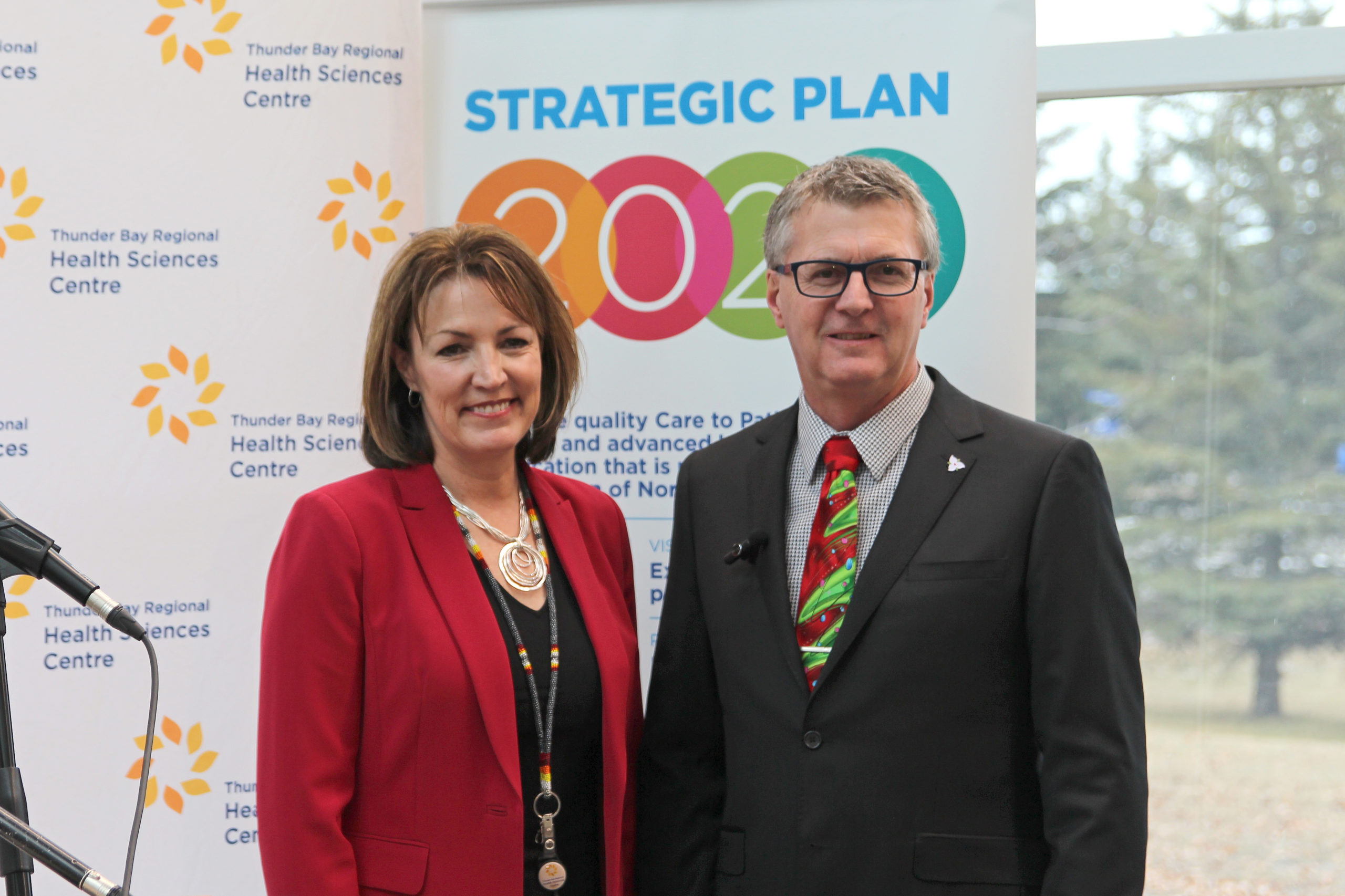
Shared on behalf of Crystal Edwards, Director, Women & Children’s & Mental Health Programs and Dr. Teresa Bruni, Medical Director, Women & Children’s Program
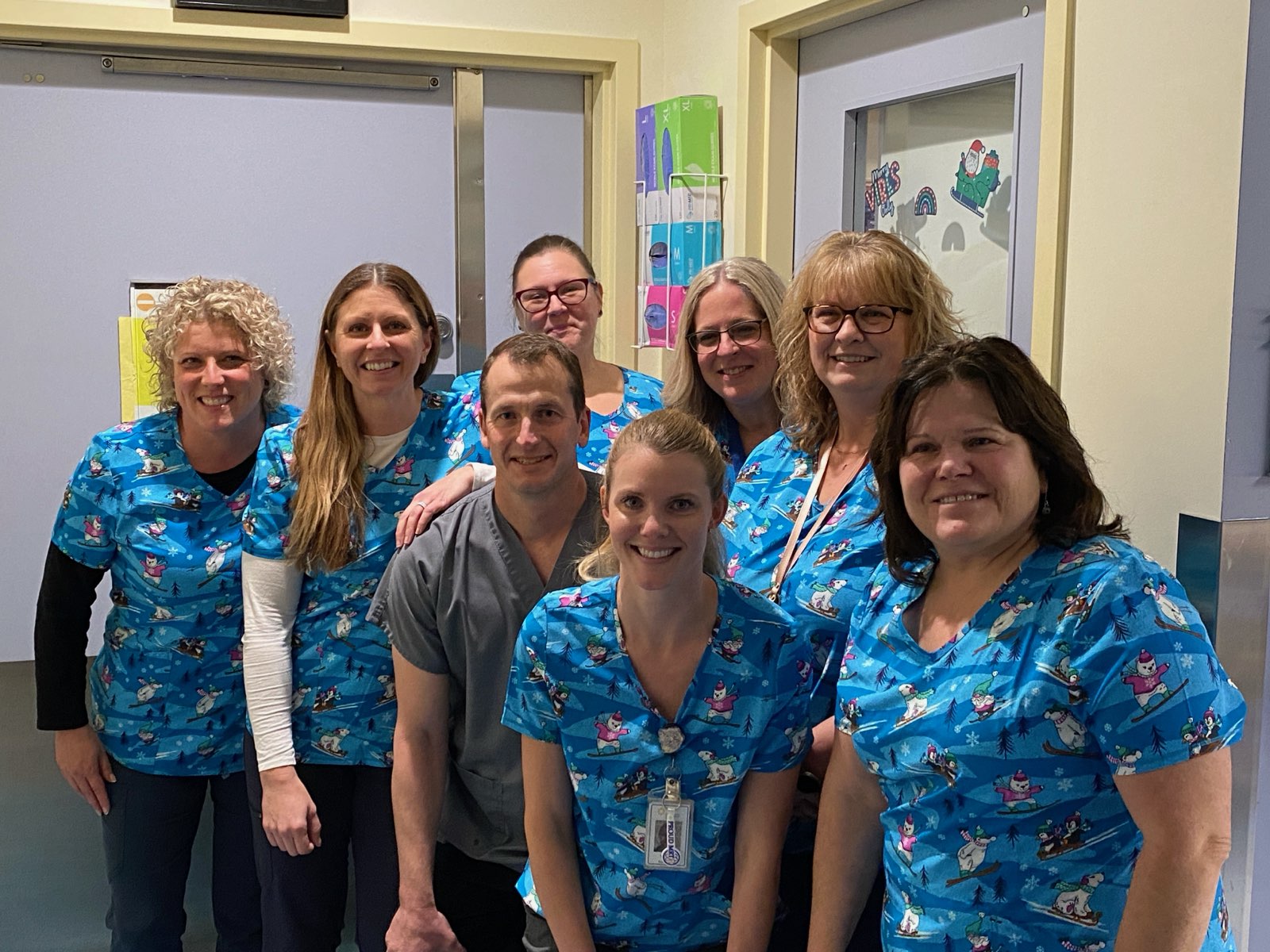
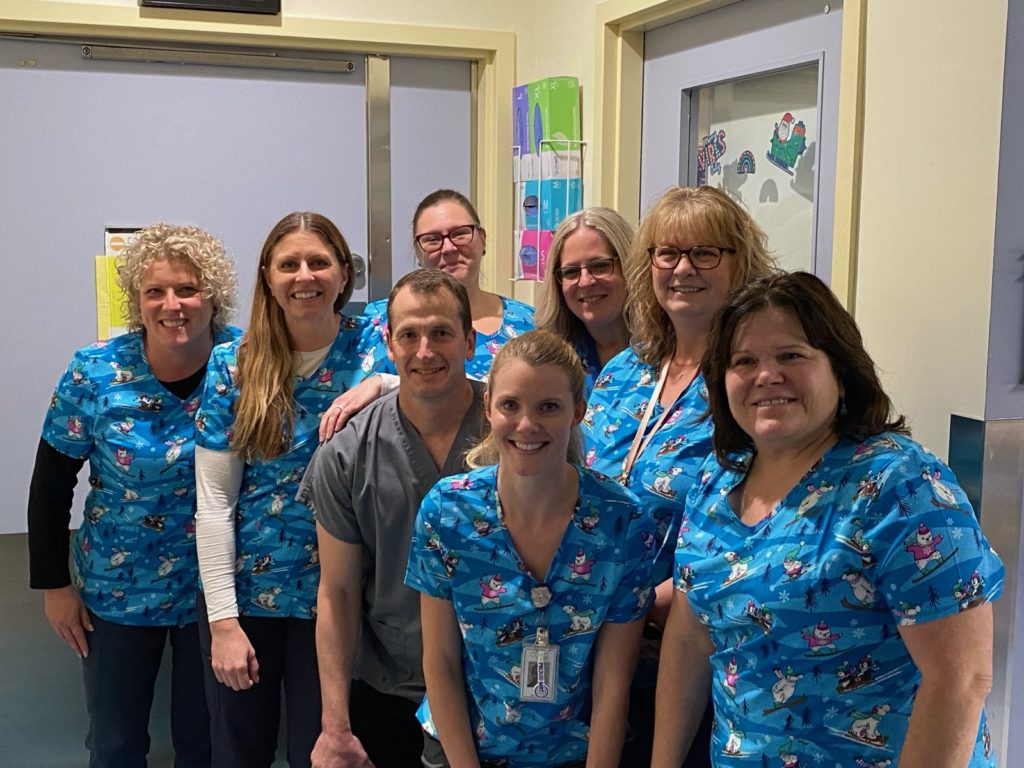
We are pleased to announce that Chris Kroker has accepted the position of Coordinator, Regional Paediatrics and Transport.
Since May 2024, Chris has been successfully leading the development and implementation of the Paediatric Emergency Transport (PET) Team. Prior to this, Chris was a Registered Nurse in the Critical Care Unit at Thunder Bay Regional Health Sciences Centre for over 8 years, working on the Medical Emergency Team (MET) as well as the Regional Critical Care Response (RCCR) team.
Chris is committed to ongoing professional development and he is currently enrolled in the Leadership Management certificate course at the University of Toronto as well as the Humanistic Leadership program at Humber College. Chris also holds other clinical certifications including a Critical Care Nursing Certificate, AACN Essentials of Paediatric Critical Care, Aeromedical Theory, Trauma Nursing Core Course (TNCC) and has completed an Indigenous Cultural Safety Training program.
Chris will continue to lead the implementation of the Paediatric Emergency Transport (PET) team as well as will oversee the Regional Paediatric Response Program.
Please join us in congratulating and welcoming Chris into his new role which will commence November 20, 2023.
Confederation College is responding to a shortage of pharmacy technicians in Northwestern Ontario
A pharmacy technician at work in a Thunder Bay pharmacy. (Submitted by Confederation College).
A new program launching at Confederation College will address a shortage of pharmacy technicians across Northwestern Ontario.
College officials and local pharmacies hope the opportunity to enroll in a two-year diploma program close to home will persuade more students to pursue a career in the Northwest.
The inaugural class of up to 30 students will begin studies in September 2024.
Shane Strickland, dean of the school of health, Negahneewin and community services, said the college is acting in response to an identified and pressing need.
“Confederation is responding to a community need, both in our local hospitals — St. Joseph’s Care Group and Thunder Bay Regional Health Sciences Centre — as well as a number of different community organizations that have asked us to create a pharmacy tech program.”
He said there’s a current shortage of pharmacists and pharmacy technicians in the Northwest.
“The reason, of course, is that we’re not getting a lot of attraction from southern Ontario for out-of-catchment students and graduates to come up here. We want to address that by having our own graduates here.”
Currently, the nearest Ontario college that offers the program is in Sault Ste. Marie.
According to Strickland, the shortage of pharmacy technicians in this region is growing.
“There have been changes in legislation that require pharmacy techs to do particular activities in a variety of different settings. As a result, we need to have those kinds of practitioners so that pharmacists can do their jobs, and their [own] expanding scope of practice as well.”
In preparation for the program, about $1 million is expected to be spent on state-of-the-art simulation labs equipped with health industry standard equipment.
An announcement from the college stated that the program will place a strong emphasis on community, long-term care, and hospital-based experiential learning.
Starting with the first semester, students will get an opportunity to explore various roles through lab learning, access cutting-edge facilities and participate in real-world placement settings.
Graduates will be eligible for registration with the Ontario College of Pharmacists, and will also have the option of practising in a variety of health-care settings to further enhance their career prospects.
Applications may be submitted through the Ontario colleges website.
Space will be renovated to accommodate 4-6 hemodialysis stations in Dryden.
Northwestern Ontario is on track to adding at least four dialysis stations to its overburdened network for kidney care.
About 1,000 square feet (93 square metres) of the Dryden Regional Health Centre will be renovated to accommodate four hemodialysis stations, Kenora–Rainy River MPP Greg Rickford and hospital officials announced Monday.
That could be expanded to six stations, Rickford added.
Dialysis availability in Dryden is “something that I think needed to come sooner rather than later,” Rickford said.
Once they’re ready “in the next couple of years,” he said, the stations will bring life-sustaining care to a city where it wasn’t available before.
Currently, Dryden-area residents in need of hemodialysis must go to Thunder Bay’s regional hospital or one of its “satellite” dialysis centres in Fort Frances, Kenora and Sioux Lookout. And all those places are operating at or near capacity.
The dialysis unit at Thunder Bay Regional Health Sciences Centre is open six days a week from 7 a.m. until 11 p.m.
Patients, whose kidneys are failing, attend three treatments per week. Each treatment visit lasts up to 4½ hours.
The Thunder Bay unit is operating near capacity while the Fort Frances, Sioux Lookout and Kenora satellites are at capacity.
That means kidney patients in the Dryden area have to drive up to four hours for dialysis treatment in other communities, Rickford said.
And getting to those dialysis appointments can be even more challenging on “days like today,” Rickford said, referring to snowy weather that prompted his team and the Dryden hospital to switch Monday’s news conference from an in-person event to a Zoom meeting hosted by Dryden hospital chief executive Doreen Armstrong-Ross.
The cost of installing dialysis stations and establishing a Dryden satellite to the Thunder Bay dialysis unit will run into “several million dollars” and possibly more than $10 million, but the province will cover it, Rickford said.
Thunder Bay hospital president and CEO Rhonda Crocker Ellacott termed Monday’s announcement “an incredibly exciting and good news announcement, and yet another positive move by our province to provide even better care closer to home for the people of this region.”
She pointed out that she and others in Thunder Bay had the option of joining the news conference virtually “but patients don’t have the luxury of receiving care virtually when they need dialysis care.”
That’s why the Dryden satellite unit is “critical for the North,” she said.
“Since 2015 the need for hospital hemodialysis in our region has increased by 31 per cent,” she said. “That is twice the increase in the same period for Ontario as a whole.”
The Dryden hospital is “beyond grateful” for Rickford’s support in bringing dialysis services to the city, Armstrong-Ross said.
Dialysis does the kidneys’ job of removing waste and excess fluid from the blood of a person who has kidney failure.
In hemodialysis, a machine removes blood from a patient’s body, filters that blood through a kind of artificial kidney, and then returns it to the body.
Hemodialysis is done at a hospital. Another type of dialysis, peritoneal dialysis, can be done at home.
About 30,000 people across Canada received dialysis in 2021, according to the Canadian Institute for Health Information.
Thank you to all staff, learners, and volunteers who completed our Staff Wellness Spaces survey.
The Staff Advisory Committee received hundreds of responses, which they reviewed at the November meeting this week, and will be incorporating into recommendations to Senior Leadership.
We will be posting the responses that were received to our iNtranet page, included in the November minutes, when they are ready for posting.
If you want to reach out to the Staff Advisory Committee directly with thoughts, comments, or concerns, you can email TBRHSC.StaffAdvisoryCommittee@tbh.net.
November 9th is Genetic Counsellor Awareness Day, a day dedicated to raising awareness and interest about genetic counsellors and helping everyone to understand the important role genetic counsellors play in health care.
At our Hospital, we have two genetic counsellors in our Clinical Genetics Program. The Program offers a variety of services, including assessment and diagnosis of genetic conditions, medical information about genetic conditions, discussion about chances of passing on conditions, information about the management and prevention of inherited conditions and services that arrange and interpret laboratory test results. Each year, the Program receives between 700 to 800 referrals.
Leanne Mercer, a genetic counsellor at our Hospital, shares why she enjoys working in this profession:
“Genetics is rapidly expanding with more knowledge and tests available. I like helping people understand what genetic information means for them and their families in this evolving field.”
As part of our commitment to keeping staff engaged and informed on the Strategic Plan 2026, Strategy and Performance is sharing updates in alignment with the identified priorities: Equity, Diversity & Inclusion, Patient Experience, Staff Experience and Research, Innovation, & Learning.
The November 8th Operational Updates and Strategic Planning Meeting covered the Emergency Department’s Workplace Violence project and was presented by Amy Carr (Director, Human Resources and Organizational Development) and Chad Johnson (Director Trauma, Prehospital Programs, Emergency, Critical Care, Respiratory and Nurse Led Outreach Team).
Visit the Strategic Plan 2026 page on the Hospital’s corporate intranet, where these presentations, along with other resources can be found.
In many places in the world, there are communities of Indigenous Peoples—the first Peoples that inhabited those lands. Each community has its own unique history, culture, practices, spiritual beliefs, and worldviews. I work as a psychologist in Indigenous Peoples’ communities in northern Canada, exploring how we can use scientific methods, combined with the traditional wisdom of communities and culture, to improve mental health. In this article, I will tell you about Indigenous Peoples, how many view health and wellness, and what I do to support their mental health—specifically with groups of young people who are having trouble with substance use. I hope that this article will inspire you to find ways to combine scientific approaches with traditional wisdom, to improve your own wellbeing.
Dr. Christopher Mushquash won the 2023 Canada Gairdner Momentum Award for mental health and substance use research performed in close collaboration with Indigenous communities. This research is assisting the development of services for Indigenous children, adolescents, and adults, that suit the culture and context in which they live.
Graphical Abstract – Article Summary. (1) My work with Indigenous communities is based on relationships—cooperation, trust, and a shared vision. (2) I meet Indigenous Peoples in my clinic and try to deeply understand their experiences. (3) The healing practices I offer my patients combine ancient wisdom (such as traditional ceremonies) and modern psychology techniques (such as questionnaires). (4) In one study, we found that some Indigenous Peoples are having trouble with substance use, because of trauma. (5) Understanding the source of their challenges empowers young people to heal and learn positive coping behaviors. (6) I encourage youth to: know who you are and where you came from, and lean on the things that bring you strength. Illustration by: Iris Gat.
Who Are Indigenous Peoples?
Do you know who lived on the land you live on 1,000 years ago? Or 5,000 years ago? There are three broad groups of Peoples that have been living in Canada (where I live), for thousands of years. These groups are called First Nations, which is the group I come from (Figure 1A); Inuit, who are the original inhabitants of the northernmost parts of Canada (Figure 1B); and Métis, who have a distinct culture with combined ancestry of both First Nations Peoples and European settlers (Figure 1C). Collectively, these groups are called Indigenous Peoples. The original inhabitants of an area.. According to the government of Canada, Indigenous Peoples is “a collective name for the original Peoples of North America and their descendants.” In other words, Indigenous Peoples are considered the first people who inhabited the lands that make up many of the countries that exist today. In Canada, there are Indigenous Peoples who live in urban centers and there are Indigenous Peoples who live in smaller, rural communities. Some Indigenous Peoples live in remote communities that are only accessible by airplane, or accessible by roadway only in the winter when the lakes are frozen!
Figure 1 – Indigenous Peoples in Canada. In Canada, there are three main groups of Indigenous Peoples: (A) First Nations, (B) Inuit, and (C) Métis. Illustration by: Iris Gat.
Indigenous Peoples have very distinct histories, cultures, languages, practices, spiritual beliefs, and worldviews. What is shared between all the Indigenous Peoples in Canada is a history of colonization, an act in which settlers seek control over the Indigenous Peoples of an area and the lands they inhabit., in which people from Europe came to settle in Canada. As part of colonization, a lot of the traditional cultural practices of Indigenous people were disrupted. Some cultural practices were made illegal, and Peoples were physically threatened or harmed for engaging in them. This contributed to some of the mental and emotional health difficulties that Indigenous Peoples in Canada are now experiencing [1]. A big part of my work is to become familiar with Indigenous Peoples’ stories, cultures, and practices, and to find new ways to contribute to their mental health.
Wholistic Mental Health
Many non-Indigenous communities in Canada often think about health functionally, as simply being free from any type of physical illness. In contrast, for many Indigenous Peoples, health is understood in the context of being well, or having a sense of wellbeing in all aspects of human experience. Many Indigenous Peoples, including myself, view health and wellbeing as keeping a balance between the mental, emotional, physical, and spiritual areas of our lives. We also include social and environmental factors as part of health. In other words, we believe that people’s health is also determined by life circumstances, including education and income, whether they can regularly access enough healthy food and clean water to drink, what kinds of spaces they live in and whether their housing is enough for them and the other people they live with, and whether their physical environments are polluted. These are broad understandings of health, which Indigenous Peoples have held for hundreds to thousands of years, and these understandings are now spreading to non-Indigenous communities—and I am glad for it.
The focus of my work is mental health. I try to understand how we can use culture-based approaches. These are techniques that are rooted in the cultural wisdom of the community that the psychologist is working with.—approaches that honor the cultural wisdom, knowledge, and practices—to help address current mental health and substance use difficulties faced by some Indigenous Peoples [2]. A big part of my work is to try to understand how to combine my knowledge and training in psychology with traditional practices and customs, to best benefit the health of Indigenous Peoples and communities. To do so, I must understand the bigger context of how each community views health in general, and mental health in particular, and I must be familiar with the common practices and ceremonies held in that community. This knowledge, along with a close relationship with the Indigenous community, helps me to come up with new ways of harmoniously weaving contemporary approaches and practices into the practices traditionally used by that community, to give people more tools with which to address their mental health difficulties.
How I Work With Indigenous Peoples
When I conduct a new study with Indigenous Peoples, I work very closely to understand their values. This helps me to develop trust and make sure that our goals are aligned. I then take the shared wisdom from both modern psychology and Indigenous culture-based methods, and collaborate with partners from community to generate research questions for mental health studies, such as how can we help young Indigenous Peoples in your community to regulate their emotions? Finally, I use my findings to improve wellness, to promote the use of certain practices and treatments, or to demonstrate how things might work differently and why that might be the case.
I am fortunate to work in a psychology clinic that is part of a community-based organization. This means that I work with the local community, and I learn about peoples’ needs, priorities, and experiences. I do my best to understand people as deeply as I can and shed light on their experiences based on my clinical training and knowledge. Often, direct exposure to people’s experiences helps me to get a general idea of the common difficulties that many people in that community are experiencing. Then I can use current, science-based psychology tools to offer a new service that could help people while also respecting their cultural beliefs and practices. Finally, I evaluate how effective the services are, for example by asking the people to fill out questionnaires (some of which we have developed in collaboration with people from the community!) report on whether the new treatment helped them to deal with their difficulties [3]. I also collect data using sharing circles, where I hear stories that people communicate about their experiences and the meaning a specific treatment has for them.
Helping Young People Deal With Substance Use Difficulties
My colleagues, students, and I are working on a study with First Nations Peoples who are having trouble with substance use. The use of substances, such as drugs, tobacco, or alcohol, that could have negative effects on the person and/or the people around them. [2]. We wanted to understand the role of adverse childhood experiences. Difficult experiences that people had in childhood, that might have effects on health and wellness in adult life., which are difficult, sometimes traumatic experiences that people have in childhood. Scientists have studied adverse childhood experiences since the 1990s, but this type of work has not typically been done in close collaboration with First Nations Peoples. So, our close relationships and collaboration with the First Nations community is unique and significant.
In this study, we also wanted to understand the effects of colonization and intergenerational trauma. Emotional challenges, or traumatic experiences, that are passed between generations—through families. on the experiences of young children (Figure 2). Intergenerational trauma is trauma that has been passed down through the generations. When European settlers came to Canada and cultural practices of Indigenous Peoples became disrupted, it negatively affected mental wellbeing. We found various connections between colonization, intergenerational trauma, and the disruption of relationships between children and parents. When early attachment is disrupted through colonial processes, children’s abilities to regulate their emotions and control their impulses can also disrupted. This can lead to an increase in the risk that an individual experiencing emotional challenges might use substances to manage those difficult feelings. We also found that the difficulties First Nations Peoples experienced through childhood were, on average, larger than the difficulties experienced by non-Indigenous Peoples, due to the intergenerational trauma that resulted from colonization. Finally, we found that, unfortunately, such difficult experiences are increasing in some First Nations communities.
Figure 2 – Intergenerational trauma and substance use. Substance use problems in young Indigenous Peoples can be rooted in intergenerational trauma. This trauma interferes with emotional development in childhood, making it more difficult to manage difficult feelings in adolescence. (A) Much of this trauma resulted from colonization. (B) The traditional cultural practices of Indigenous Peoples were disrupted, and in some cases outlawed, which continues to have negative impacts on the wellbeing of the community for generations. Illustration by: Iris Gat.
To support young Indigenous Peoples in dealing with substance use, we developed ideas from psychology to include specific difficulties experienced by First Nations Peoples. Then we worked with the First Nations Peoples who experienced these difficulties to develop new understandings about how to cope with trauma and the challenging emotions they might experience. This kind of understanding gives Individuals the power to develop new skills that can have positive effects on their health. We also help people to learn about how emotional injuries from past trauma can be healed by cultural practices. For example, people who are trying to regulate their emotions and deal with difficult past experiences might be helped by participating in cultural and spiritual practices like sweat lodges or smudge ceremonies. These traditional practices can help people to process what they have experienced and help them to focus on the current moment — which can help them to regulate their emotions and lead to new ways to manage strong feelings in difficult moments.
I am happy to say that I am hopeful about the future. I think that there is more national and international attention on Indigenous Peoples’ mental health and wellness today than there has ever been before. Many people in our communities are working to improve the mental health of Indigenous Peoples, including Elders, cultural teachers, community members, health professionals and researchers; and many young people who are joining these professions have a lot to contribute. My vision for the future is that the next generations of young scientists and clinicians (like you!) will be confident in their ability to help answer questions that are important to Indigenous Peoples. This career is very meaningful to me, and I believe many young Peoples will find it incredibly meaningful as well. Whichever route you choose along your life’s path, remember who you are and where you came from, and lean on the things from your own unique background and experience that bring you strength.
Glossary
Indigenous Peoples: ↑ The original inhabitants of an area.
Colonization: ↑ An act in which settlers seek control over the Indigenous Peoples of an area and the lands they inhabit.
Culture-Based Approaches: ↑ These are techniques that are rooted in the cultural wisdom of the community that the psychologist is working with.
Substance Use: ↑ The use of substances, such as drugs, tobacco, or alcohol, that could have negative effects on the person and/or the people around them.
Adverse Childhood Experiences: ↑ Difficult experiences that people had in childhood, that might have effects on health and wellness in adult life.
Intergenerational Trauma: ↑ Emotional challenges, or traumatic experiences, that are passed between generations—through families.
Conflict of Interest
The author declares that the research was conducted in the absence of any commercial or financial relationships that could be construed as a potential conflict of interest.
I wish to thank Noa Segev for conducting the interview which served as the basis for this paper and for co-authoring the paper, and Iris Gat for providing the figures.
References
[1] ↑ Nelson, S. E., and Wilson, K. 2017. The mental health of Indigenous Peoples in Canada: a critical review of research. Soc. Sci. Med. 176:93–112. doi: 10.1016/j.socscimed.2017.01.021
[2] ↑ Rowan, M., Poole, N., Shea, B., Gone, J. P., Mykota, D., Farag, M., et al. 2014. Cultural interventions to treat addictions in Indigenous populations: findings from a scoping study. Subst. Abuse. Treat. Prev. Policy. 9:1–27. doi: 10.1186/1747-597X-9-34
[3] ↑ Fiedeldey-Van Dijk, C., Rowan, M., Dell, C., Mushquash, C., Hopkins, C., Fornssler, B., et al. 2017. Honoring Indigenous culture-as-intervention: development and validity of the Native Wellness AssessmentTM. J. Ethn. Subst. Abuse 16:181–218. doi: 10.1080/15332640.2015.1119774
Article information
Citation
Mushquash C (2023) Improving Mental Health Within Indigenous Communities. Front. Young Minds. 11:1236682. doi: 10.3389/frym.2023.1236682
This is an open-access article distributed under the terms of the Creative Commons Attribution License (CC BY). The use, distribution or reproduction in other forums is permitted, provided the original author(s) and the copyright owner(s) are credited and that the original publication in this journal is cited, in accordance with accepted academic practice. No use, distribution or reproduction is permitted which does not comply with these terms.
Thunder Bay Regional Health Sciences Centre (TBRHSC) presents “Ask an Expert”, a series where team members from our Bariatric Centre of Excellence answer questions they commonly encounter. For more information on our Regional Bariatric Care Centre, please visit bit.ly/TBRHSC-RBCC. This month’s question is answered by Alison Donovan, Registered Dietician.
How can I benefit from bariatric surgery?
Bariatric surgery can offer sustainable weight loss of 20-30 per cent and reduction in weight-related complications, as well as improvements to mental health and quality of life to eligible patients. Individual results vary; however, individuals often experience improvements in cardiovascular health including high cholesterol and high blood pressure, type 2 diabetes, liver disease, and sleep apnea. As well, individuals can experience reduced need for medications, increased physical ability and mobility, as well as improved fertility.
Please be advised that Baxter Corporation has issued a medical device field action for our current intravenous pump, the Novum IQ Large Volume Pump (LVP). This notice has been issued due to the potential for the keypad on these pumps to malfunction, which could result in excessive therapy, insufficient therapy, delay in therapy, or interruption of therapy.
Specifically, when a pump operator presses a single key on the keypad, the pump may incorrectly register multiple keys (e.g. a user presses the number “8” on the keypad, but the pump registers and displays both an “8” and the adjacent “0”). Hearing a “double beep” after a single key press may be an indication that the pump incorrectly registered the keypad entry.
The following mitigation actions have been identified by Baxter:
Health care providers may continue to safely use the Novum IQ Large Volume Pumps while following the Instructions for Use.
Visually verify that entries made on the keypad were correctly registered on the pump display: drug concentration, dose mode, dose rate, and time are correct prior to starting an infusion or initiating a drug titration.
Pay additional attention to drug limits, hard, soft and change limits triggered when programming and verify infusion parameters prior to starting an infusion or initiating a drug titration.
If you notice any keypad malfunction of the Novum IQ LVP, please take the following actions:
Immediately remove the pump from use and label “out of service”.
Complete a biomedical requisition and attach to the pump (include asset number located at the top of each pump, e.g. “2022B10251”).
Notify and bring the pump to your Manager.
We appreciate your efforts and cooperation in these extra steps to ensure patient safety is maintained. Baxter Corporation is working diligently to resolve the issue. Further communication will be provided once the issue is resolved.