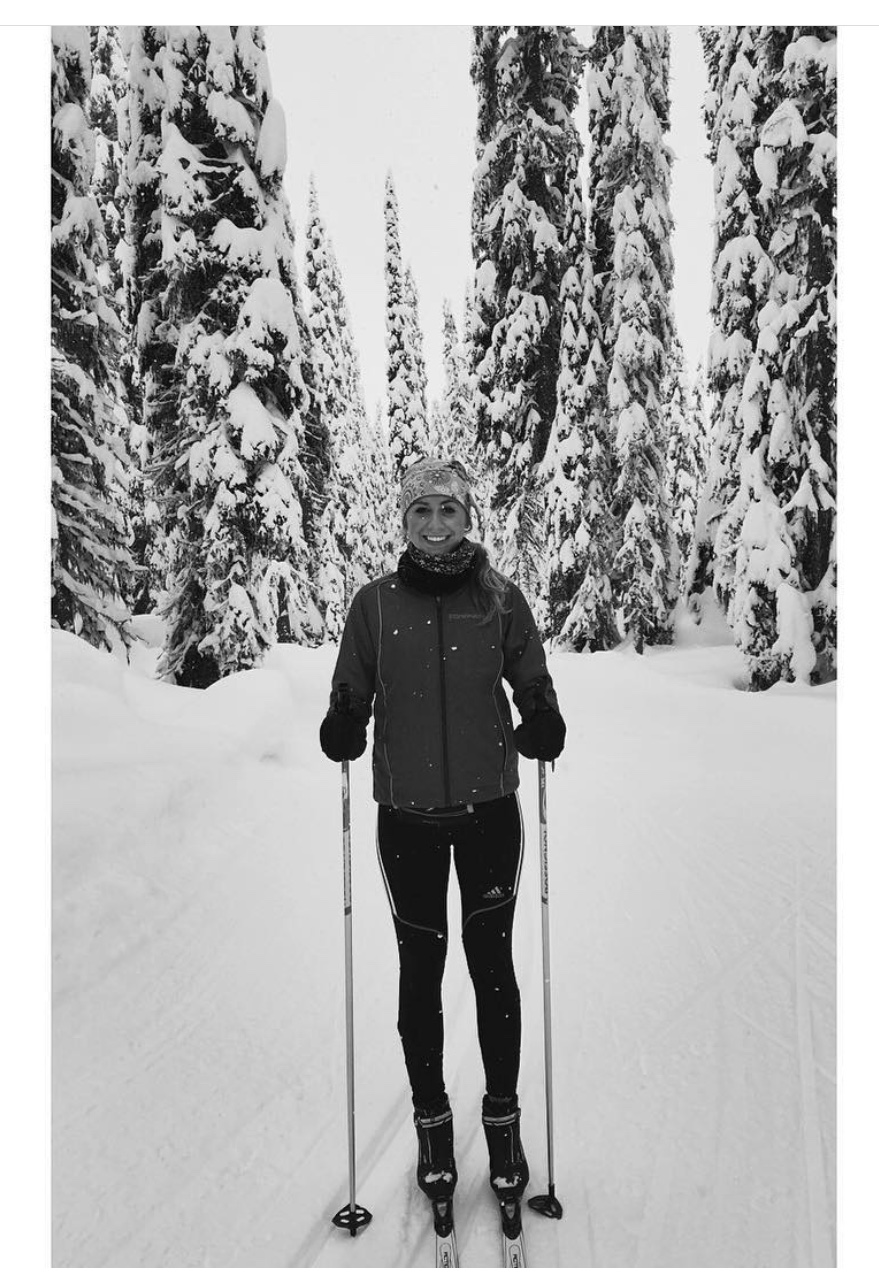
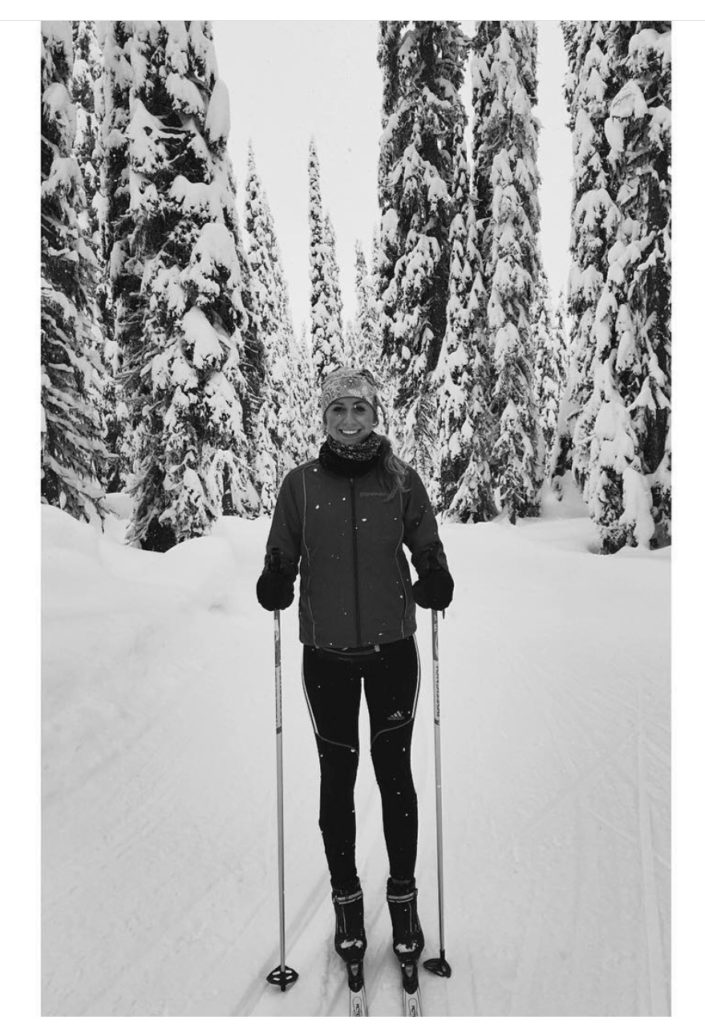
Four years ago, Marielle Henderson (Hospital Elder Life Program Coordinator) began cross country (skate) skiing when she moved back to Thunder Bay as a fun way to enjoy the outdoors and get a great workout while doing it. It also contributes to her wellness by keeping her physically fit and gives her a sense of inner peace while she is on the trail surrounded by snow covered trees and chirping birds. If you are looking for something fun to do this winter, Marielle encourages everyone to get out and try cross-country skiing.
As the temperature drops, many of us welcome the opportunity to cozy up on the couch to watch the best shows on Netflix. However, the cold weather doesn’t mean you need to stop doing outdoor activities. Getting outside in the winter can be just as fun as in the summer, but be sure to dress for the weather and keep hydrated. Checking the weather conditions and the wind chill before heading outside will help you to plan ahead and dress appropriately. Dressing in layers and wearing a hat and mitts will help keep you warm when being active outdoors.
During the winter months the days are shorter and the temperatures are lower, often making it difficult to find the motivation to get outside. However, if you are brave enough to face the cold, outdoor winter activities have many health benefits. Exposure to the cold causes our bodies burn more calories and use more energy to help maintain our core body temperature. Brave the cold this winter by trying some of these outdoors activities:
Winter Running: Running outdoors doesn’t have to stop in the winter. Having the right equipment is important for your safety and comfort, and will enhance your exercise experience. Make sure you wear good running shoes that will keep your feet warm and have gripped bottoms to prevent falls.
Winter Camping: If you love camping in the summer, why not try it in the winter? Winter camping is just as beautiful and can be just as enjoyable with the proper equipment and clothing. Start small and try it out for one night to see how you like it.
Skiing and Snowboarding: Embrace the snow with downhill skiing or snowboarding as soon as the lockdown lifts. If downhill isn’t your thing, try cross-country skiing. It’s a great way to workout while enjoying nature.
Ice Fishing: Try fishing in the winter to get some vitamin D and enjoy a day outside while (hopefully) catching fish. Wear your snow pants and a heavy jacket as it can get windy and cold on the lake.
Due to the COVID-19 pandemic, many employees have unexpectedly shifted to a “work from home” environment. In response, the Canada Revenue Agency (CRA) has made the home office expense deduction available to more Canadians and simplified the method for claiming this deduction on their personal income tax returns for the 2020 tax year.
The new simplified method allows eligible employees to claim a flat rate deduction and does not require the employee to obtain a T2200S claim form signed by their employer or to keep supporting documents.
Employees still have the option to use the existing detailed method instead of the simplified method mentioned above. Employees can determine their eligibility to use the detailed method by referring to the CRA link below. Employees who determine they are eligible to use the detailed method may request a signed copy of the T2200S claim form by contacting Payroll at payroll@tbh.net. Payroll will provide the T2200S only to employees who were approved by Human Resources to work from home during the pandemic. Payroll will also not provide any tax advice or guidance on your eligibility for either option listed above. In order to determine your eligibility for this deduction and for further information on the calculation, please refer to this CRA link or speak to your professional tax preparer.
To support our continued commitment to building stroke expertise within our region, the Northwestern Ontario Regional Stroke Network (NWORSN) is pleased to offer full coverage of the registration cost of the virtual International Stroke Conference on March 17-19, 2021.
The target participants are those who work directly with stroke patients or within the stroke program. This is open to all disciplines (ex. Nursing, OT, PT, RD etc).
The successful applicants will receive full coverage of the registration fees (AHA Members pay $49 or Non-Members pay $99).
For those interested and able to accommodate their work schedules please fill out an application through the NWORSN website. All interested applicants would be responsible to apply for funding by March 1th, 2021.
The successful applicants will be notified within 72 hours of submitting their application. Upon confirmation of registration support, the clinician must immediately complete the online registration.
For TBRHSC employees, please provide the Northwestern Regional Stroke Network with proof of registration and fill out form FIN-10, which will be submitted for reimbursement. Reimbursement must be submitted to NWORSN no later than March 8th, 2021.
For external applicants, please provide your internal finance department with proof of registration and fill out the appropriate form within your organization. Your finance department will invoice TBRHSC for reimbursement. Reimbursement must be submitted to TBRHSC finance department no later than March 8th, 2021.
If you have any additional questions please do not hesitate to ask! Thank you,
The Northwestern Ontario Regional Stroke Network Thunder Bay Regional Health Sciences Centre Medical Centre, 201-984 Oliver Road Thunder Bay, ON P7B 7C7 phone: (807) 684-6703 fax: (807) 684-5883 For more information, visit www.nwostroke.ca
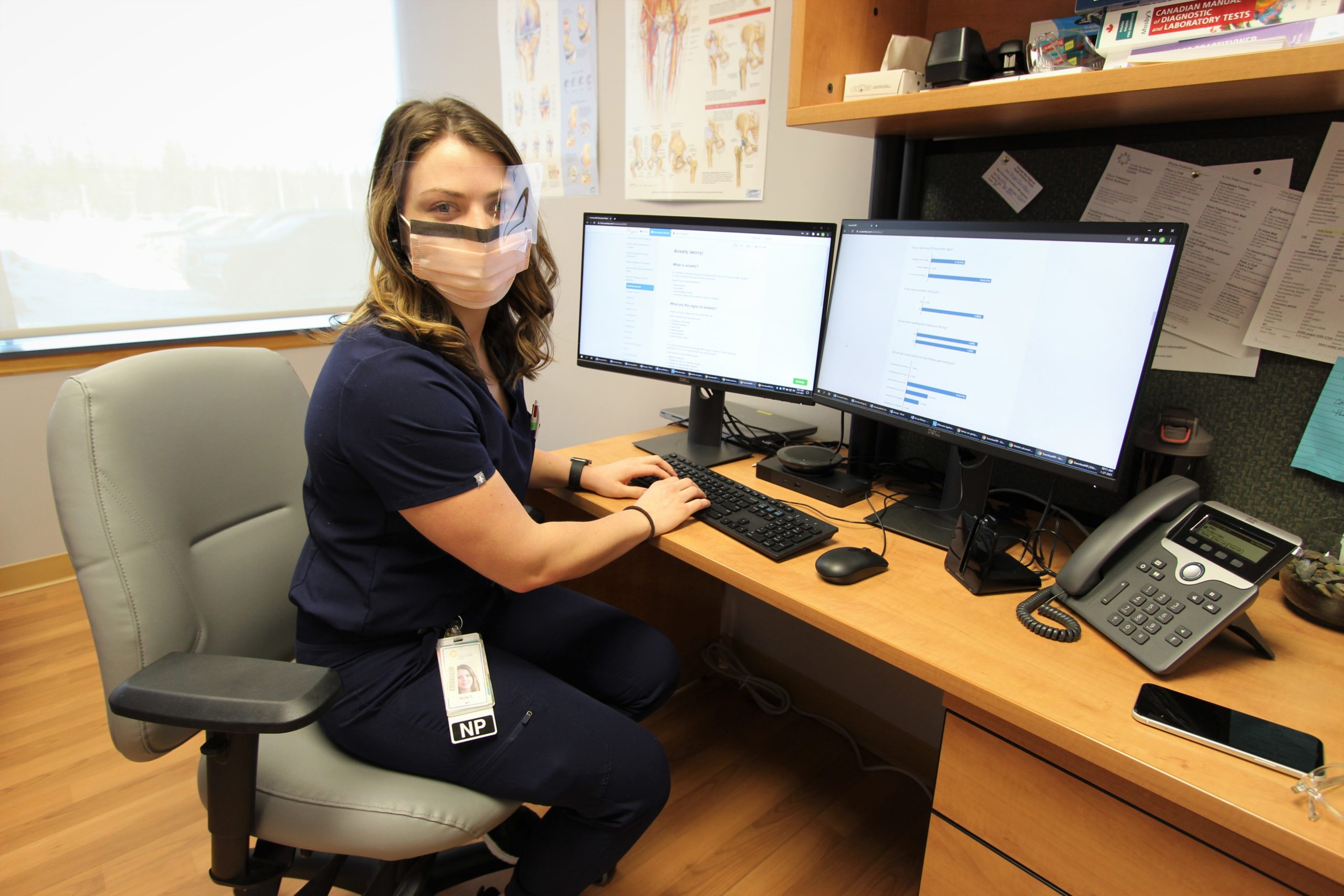
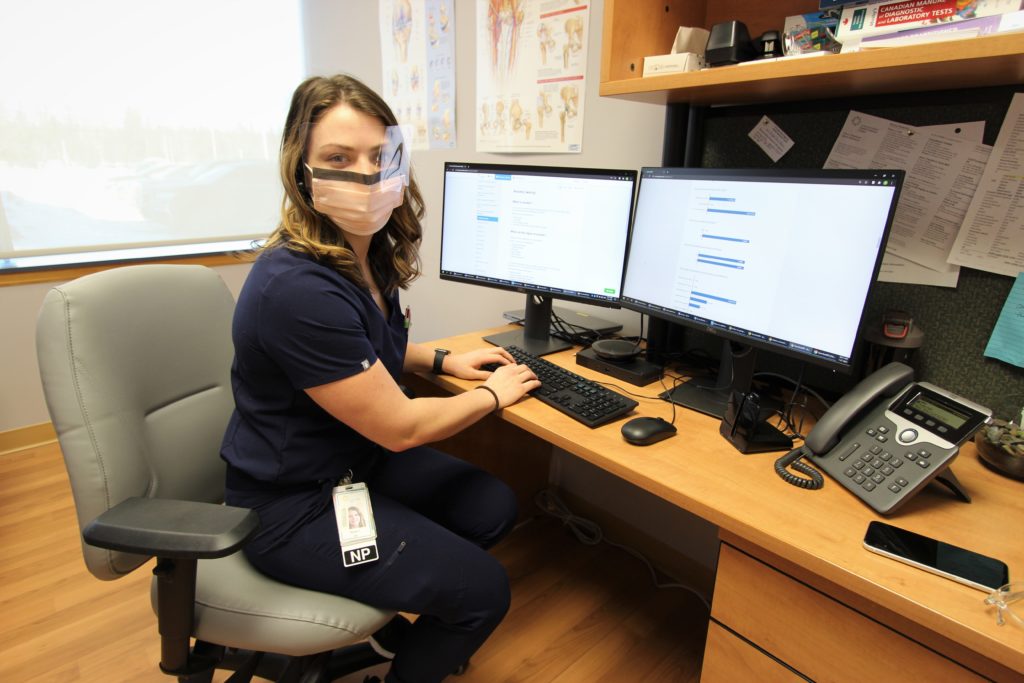
Skylar Christian is the Lead Nurse Practitioner for remote patient monitoring at Thunder Bay Regional Health Sciences Centre (TBRHSC).
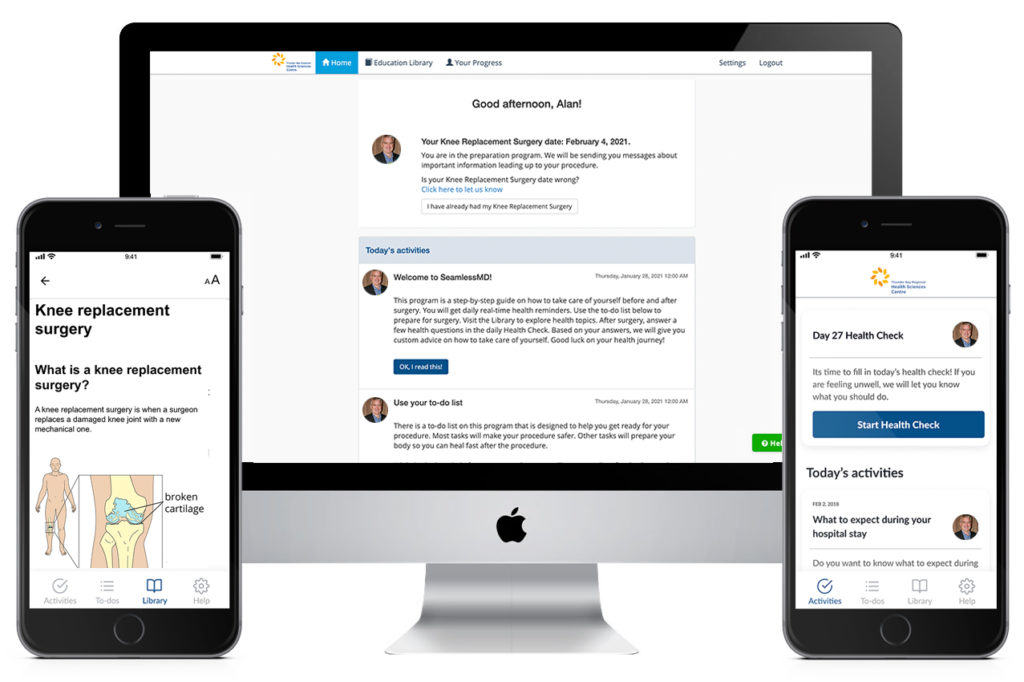
A new digital tool is helping to keep surgical patients connected to their health care providers from the comfort of their home.
Thunder Bay Regional Health Sciences Centre (TBRHSC) is the first hospital in Northwestern Ontario to offer a new digital patient engagement tool for patients undergoing surgery. It provides an interactive, step-by-step guide to help patients prepare for their procedure and recover faster afterwards. The patient or their caregiver can access the tool on any wi-fi connected smartphone, tablet or computer.
“Engaging and monitoring patients remotely allows us to deliver safer perioperative care during the COVID-19 pandemic – regardless of where patients live,” said Caroline Fanti, Director, Regional Surgical Services at TBRHSC. “Smart health technology aligns well with our mission to deliver a quality patient experience that is responsive to the needs of the population of Northwestern Ontario.”
Since launching in November 2020, over 170 patients have benefited from using the digital tool, with 91% of those surveyed recommending their experience to others, and 87.5% saying the program helps them feel less anxious before surgery.
The digital tool enables safer surgical transitions from hospital to home during the COVID-19 pandemic. It enables the safe discharge of patients earlier and minimizes in-person home care services by guiding patients from pre-op preparation through post-surgery recovery with personalized education, progress-tracking and remote monitoring. Upon discharge from the hospital, patients are able to report their pain scores, symptoms, and share wound photos from their own devices, enabling them to be monitored by the care team.
TBRHSC is rolling out this digital tool broadly for patients across many surgical programs, including Hip and Knee Replacement, Spine, Shoulder, Urology, Colorectal, Bariatrics and Thoracics.
“Our patients are very happy with this technology and the connectivity it provides”, said Skylar Christian, Lead Nurse Practitioner for remote patient monitoring at TBRHSC. “Being able to use the dashboards to monitor what patients are reporting is enabling us to follow-up more quickly. Patients can return home sooner with immediate, constant access to the information and support they need throughout their journey.”
This initiative received provincial funding to enhance the pandemic response through appropriate virtual care options, which are key in ensuring continuity of health services while preventing the spread of COVID-19.
Launched officially on January 4, 2021, the Integrated Mobile Police Assessment Crisis Team (IMPACT) is an expansion of the Joint Mobile Crisis Response Team (JMCRT). The project is scheduled to be in place for a year and will feature a team comprised of one police officer and one crisis worker. This team will respond to all Mental Health related calls for service on a 24-hour and seven-day-a-week schedule.
“The goal of the pilot is to reduce police time in the emergency department, divert individuals from having to attend the emergency department while providing supports for individuals in the community,” said Community Services Branch Insp. Derek West. “Better service, support and intervention at the right time, right place and by the right service.”
The JMCRT, which project IMPACT expands upon, operated since June 2018. The CMHA will still operate a two-person crisis response mobile team from 2 p.m. to 2 a.m., seven days a week.
“I truly believe if we did not have the partnership with the Thunder Bay Police to jointly respond to mental health crisis there would be an increasing number of people who are experiencing a mental health crisis in our community, who interact with only police,” said Jennifer Hyslop, CEO, Canadian Mental Health Association Thunder Bay Branch.
“Evidence has shown that the community and all communities in Ontario have had to over-rely on police managing mental health issues. The development of IMPACT was the next logical step in providing a joint response in the community after the success of the joint mobile crisis team.”
Hyslop added the CMHA wanted to enhance the way that a person in crisis could receive care in the right place, at the right time by trained professionals and avoid unnecessary encounters with law enforcement or the emergency department.
“What we are doing with this partnership is to support, educate, advocate and generate mental health for all,” Hyslop said. “I think the timing is now and the need is now for us to take significant steps and make an impact on diverting individuals from unnecessary emergency department visits and police encounters when experiencing mental health crisis.”
“IMPACT provides a valuable service to support our community and combat the mental health crisis,” said Lisa Beck, Director, Trauma, ED & Critical Care, Thunder Bay Regional Health Sciences Centre. “Providing care at the scene of a mental health call can help to avoid a visit to the Emergency Department (ED). If a visit to the ED is required, the IMPACT team provides reassurance for the individual and improves their patient care experience.”
Dr. Mitchell Albert, a professor of chemistry at Lakehead University and Research Chair and Scientist at the Thunder Bay Regional Health Research Institute, has pioneered an imaging technique which is giving researchers a closer look at the damage COVID-19 causes to the lungs and other organs. The technique has also led to a breakthrough in brain imaging, which could improve our understanding of diseases such as Alzheimer’s, autism and epilepsy.
A chemistry professor at Lakehead University in Thunder Bay and the imaging technique he co-invented, are part of an Ontario-wide research project that has received nearly $1-million over two years to study the long-term effects of COVID-19 on people’s lungs.
It’s already known the coronavirus can lead to pneumonia, lung inflammation and respiratory failure, but now scientists believe the damage caused by the infection may be irreversible.
They’re hoping to get a better idea of what exactly is happening inside our airways and surrounding tissues and blood vessels, said Mitchell Albert, who is also the research chair at the Thunder Bay Regional Research Institute.
First, a person breathes in a noble gas, such as xenon, which dissolves into the blood.
Then, using hyperpolarized 129Xe magnetic resonance imaging (MRI) in combination with computed tomography (CT), researchers are able to see what is going on inside the airways, all the way to what is happening in tiny alveoli.
‘Absolutely lights up the lungs’
“The xenon gets inhaled into the lungs and then it absolutely lights up the lungs in the MRI,” said Albert.
“It makes the invisible become visible and we can see exactly how the lungs are functioning. We can look at the ventilation, the function and also structure of the airways, the lung tissue and also probe the blood vessels in the lungs and see exactly how healthy” the system is.
He explained that this technique allows researchers to see the extent of scarring on the lungs or surrounding tissues, and observe any blockages in the airway.
“When somebody presents with a very serious case of COVID, we know that their lung function has been compromised, they’re very, very important to follow-up long-term,” said Albert.
But this technique may be even more important for understanding the long-term prognosis of someone who had just a mild case of the disease.
Long-term impacts of COVID unknown
“We don’t know what the long-term consequences are, even for mild cases. When the pandemic first hit, we thought only the lungs were affected and now we’re finding many other organs in the body — the heart, the kidneys, the pancreas, the liver, almost all tissues of the body are affected,” he said, noting this imaging technique may be expanded to scan those organs as well.
“So, even for people with mild cases, they need to be looked at and followed to see what the damage is from the acute phase of the disease and then what are the long-term consequences and see if they’re improving, if they’re getting better or getting worse” and require medication or further therapy.
But Albert said this imaging technique isn’t just helping scientists understand COVID-19. It will soon provide new insights into the functioning of our brain.
‘Cutting edge brain imaging’ is next step
“We just developed a really really cutting edge brain imaging technique,” that allows doctors to see what is happening inside the brain while a person is performing a function, such as speaking or moving their fingers.
“Our preliminary studies showed it to be about 100-times more powerful than the conventional technique,” said Albert, adding it could revolutionize brain surgery and offer new information on everything from Alzheimers to autism to epilepsy.
“Just understanding how the brain is used for imagery, imagining things, memory, sleep, dreams and for surgery guidance.”
The study into the impact of the coronavirus on the lungs is receiving $876,000 over two years from the Ontario COVID-19 Rapid Research Fund.
The research team includes co-investigators and collaborators from the Hospital for Sick Children, Western University, Lakehead University, McMaster University and Ryerson University.
You can hear the full interview with Dr. Mitchell Albert on CBC’s Superior Morninghere.
Protecting the health and safety of our staff, professional staff, patients, and the community during the COVID-19 pandemic is our utmost priority. With the current lockdown order issued by the Province of Ontario, it’s now more important than ever to maintain physical distancing and avoid non-essential movement from home.
Although the Health Records department has been closed to in-person traffic since the beginning of the COVID-19 pandemic, many patients and families continue to prefer dropping off and picking up paperwork related to their health records request in person.
In order to minimize traffic in the main entrance of our Hospital and decrease pressure on our screeners and Health Records staff, we are strongly encouraging patients and families to access our services through mail, fax, or the electronic Medchart platform.
Please note that while we are not offering in-person service as an option during the pandemic, we will continue to accommodate those who arrive at our Hospital with a request.
If the patient or family member requires further assistance, please direct them to contact the Health Records department at (807) 684-6640.
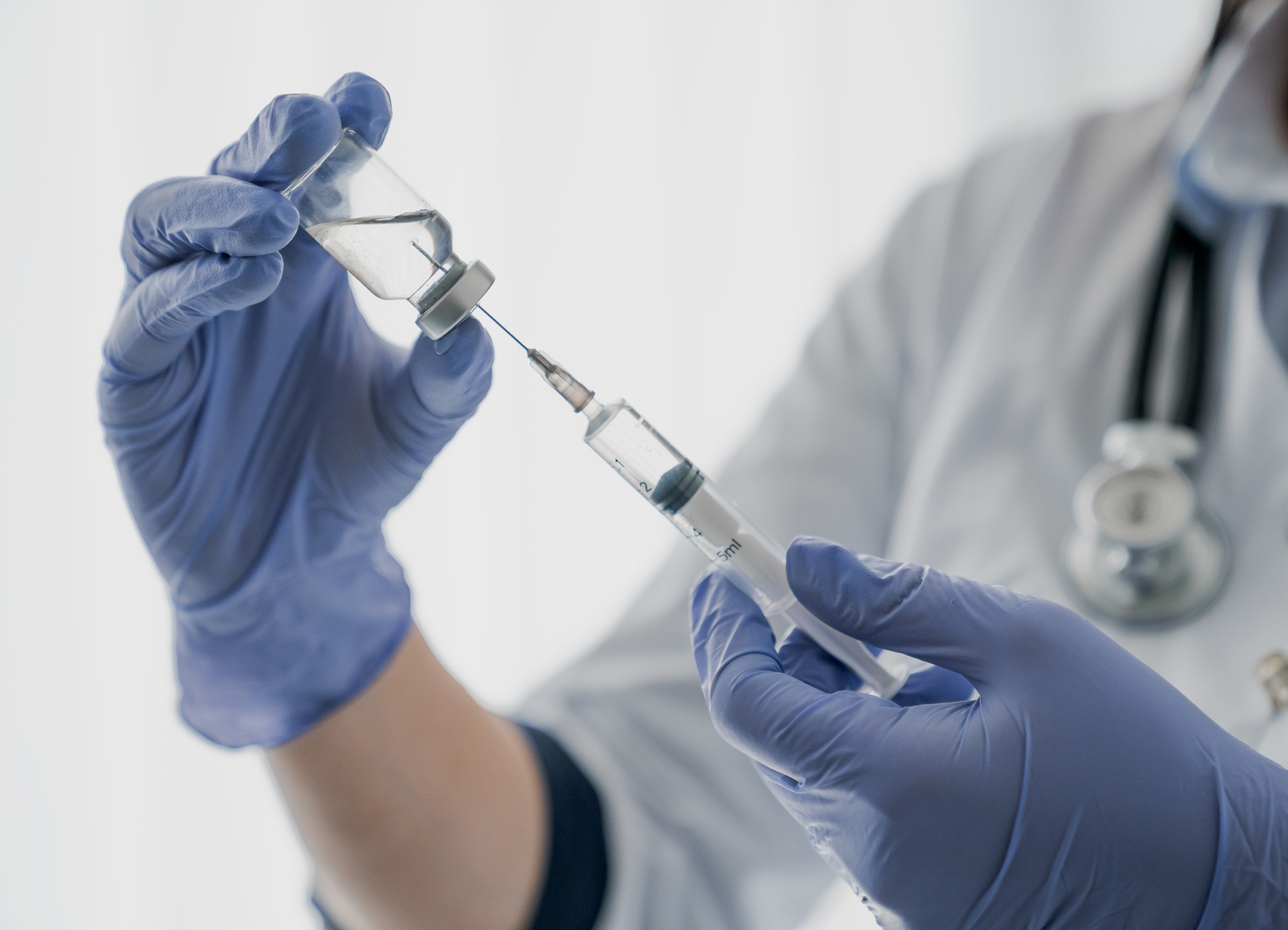
Thunder Bay’s COVID-19 vaccine program is a collaborative effort between the Thunder Bay Regional Health Sciences Centre (TBRHSC) and Thunder Bay District Health Unit (TBDHU). TBRHSC has revised information on the Pfizer vaccination rollout from the provincial government which gave an update today, following Pfizer’s decision to pause and slow down their supply chain for a few weeks. As you know, we are expecting considerably fewer vaccination doses than originally planned over the next few weeks.
Under the direction of the province, we will only be providing First Dose Vaccination to long-term care residents in the District in the coming weeks.
Our goal is to administer first doses by February 5th (pending vaccine availability).
For 2nd doses, Long Term Care resident groups will receive second doses within the 21-27 day period after their first dose.
For all other groups, we are following the directive to expand the allowable second dose time period to no more than 42 days. This is based on recommendations from the National Advisory Committee on Immunization (NACI), with support from the WHO and CDC.
Ontario’s initiative to vaccinate northern, remote First Nations communities will also continue.
Clearly, given these unplanned changes in vaccination availability, many scheduled appointments will need to be rescheduled. People who had appointments will be contacted directly.
To date, more than 2600 COVID-19 vaccine doses have been administered in Thunder Bay, with 100% of Long Term Care residents who requested the vaccine having now been vaccinated in the City of Thunder Bay. Over half of LTC staff have also been vaccinated, some with second doses already.
Given operational time challenges and the changing nature of the vaccination rollout, we appreciate your patience and understanding of our inability to give interviews at this time.
Please note that the telephone extension for the Main Information Desk has changed to 4-2-2-1.
If you require assistance from a volunteer for a wheelchair, transport, or delivery to or from the main entrance, please contact them at this extension.