Science and research never stop, and while these past two years thrust research into the forefront, as researchers endeavored to develop diagnostic tests, vaccines, and treatments for COVID-19, the Scientists and their teams at Thunder Bay Regional Health Research Institute continued their work to advance patient care for the people of Northwestern Ontario. Their research also plays a significant part in the ongoing efforts for the medical and scientific community to learn more as a whole. Read more in the Thunder Bay Regional Health Research Institute’s 2021-2022 Annual Report: https://bit.ly/2021-22-TBRHRI-Annual-Report
After two years of a global pandemic, and the challenges it has brought with it, we want to reflect on our accomplishments as a Hospital community. Thanks to their strength and tenacity, our staff, professional staff and volunteers remained dedicated to providing safe and quality patient and family centred care. We have many achievements (both COVID-19 and non-COVID-19 related) to recognize. Read more in the Thunder Bay Regional Health Sciences Centre’s 2021-2022 Annual Report: https://bit.ly/2021-22-TBRHSC-Annual-Report
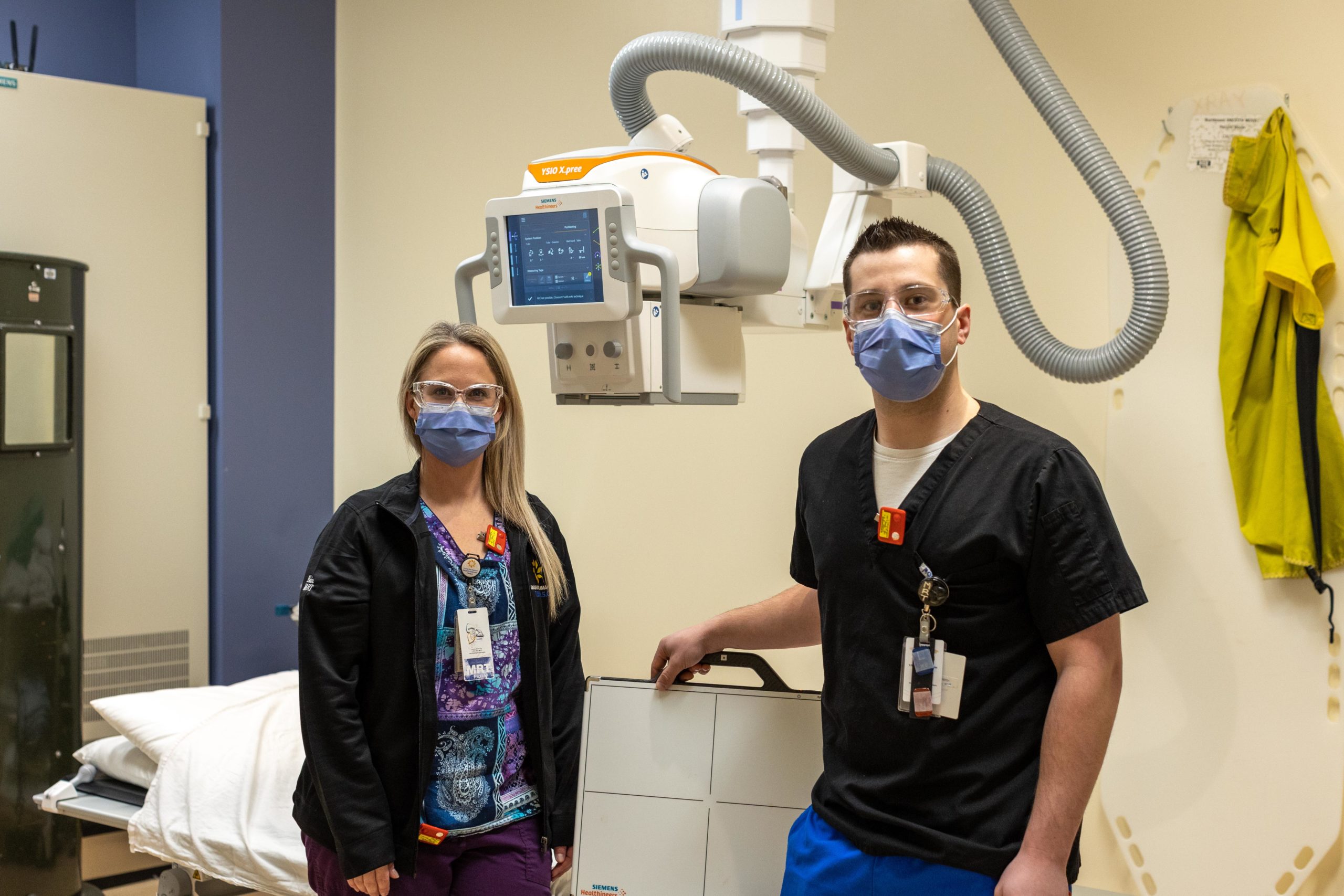
The Thunder Bay Regional Health Sciences Foundation would like to thank their donors for the tremendous support this past year. Donations allowed the Foundation to purchase equipment and fund various programs at the Thunder Bay Regional Health Sciences Foundation, including a new X-ray machine for the Fracture Clinic. Pictured in photo – Erin Arps and Mitchell Barr, MRTs in the Fracture Clinic.
The Thunder Bay Regional Health Sciences Foundation wants to thank all of its generous donors, volunteers, event-goers and supporters during their annual Thank-a-Thon, happening today. Although many of the Foundation’s regular activities like events and volunteer opportunities were put on hold the past few years during the pandemic, the generosity of the Foundation’s many donors allowed for millions of dollars of equipment to be purchased, and upgrades to be made at the Thunder Bay Regional Health Sciences Centre and its regional programs.
Foundation staff members, board members, and other hospital staff are one again rallying together for a thank-a-thon, where they deliver personalized messages to donors, volunteers, event-goers, and Thunder Bay 50/50 supporters. Thank you messages are sent via email, though phone calls, and posted on social media.
“It’s so great to see the level of support that the community has for our Hospital, even during the pandemic,” says Terri Hrkac, Senior Director of Philanthropy, Thunder Bay Regional Health Sciences Foundation. “In the past, we were used to seeing our donors face-to-face in the community, at the Foundation events, and meeting with them in person throughout the year, so since we haven’t been able to do that, we still want to make sure that our donors know just how much we appreciate them. This is a great opportunity to tell everyone what’s been happening in our Hospital – we have been able to purchase some really great equipment this year, thanks to our supporters, and in turn, giving Hospital staff the tools they need to provide exceptional care to patients in Thunder Bay and Northwestern Ontario.”
Thanks to the generosity of donors, patient care in the Fracture Clinic received a huge boost this year, with the installation of a brand new X-ray unit, replacing one that was from when the Hospital opened in 2004. The old unit was aging and in desperate need of replacing. Without an on-site X-ray, patients would have to visit Diagnostic Imaging to receive their scans, which could be a burden for patients with mobility issues. This new unit is equipped with auto-positioning, and can also detect the size of body parts being X-rayed and automatically adapts radiation levels accordingly. This makes it safer for both staff and patients.
There are also two new echocardiography machines with complete upgraded software packages making their way to the Hospital. Echocardiograms use ultrasound waves to image certain areas of the body including the heart to diagnose conditions, for treatment planning, and for treatment monitoring. Today’s new technology is lighter, easier to use, and more portable than ever. These multi-purpose units will be used for cardiovascular, cancer, Emergency Department, NICU, and other patients throughout the Hospital without transferring the patient – the portable unit comes to them.
Equipment purchased this past year will benefit departments including Regional Cancer Care, Urology, Forensic Mental Health, Labour & Delivery, NICU, Paedatric Outpatient, Intensive Care Unit, and the Emegency Department to name a few. For a complete list of all the equipment funded in 2021 through the Thunder Bay Regional Health Sciences Foundation, visit healthsciencesfoundation.ca/equipment-funded.
For more information on the Thank-a-Thon, and to see a special video message below:
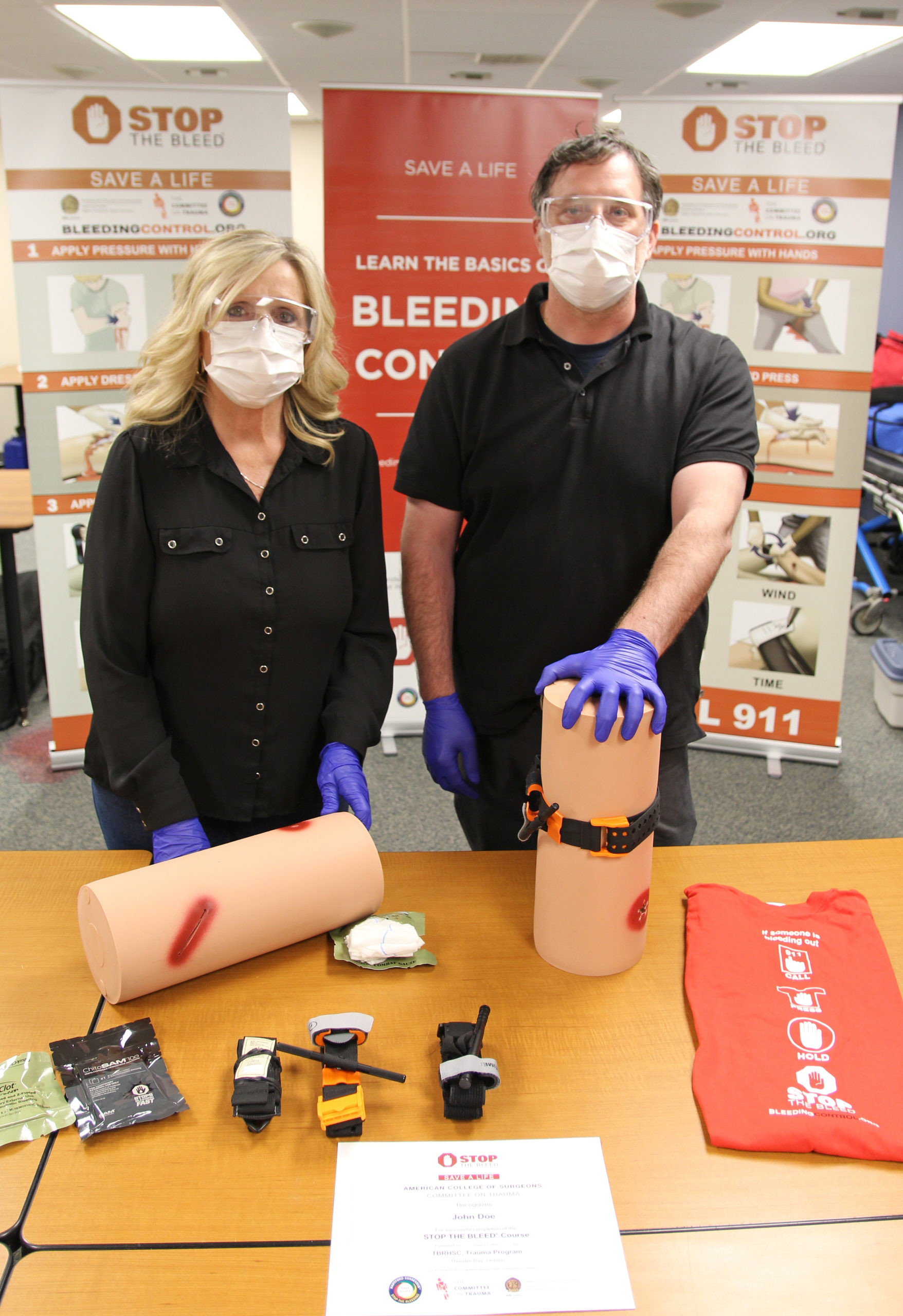
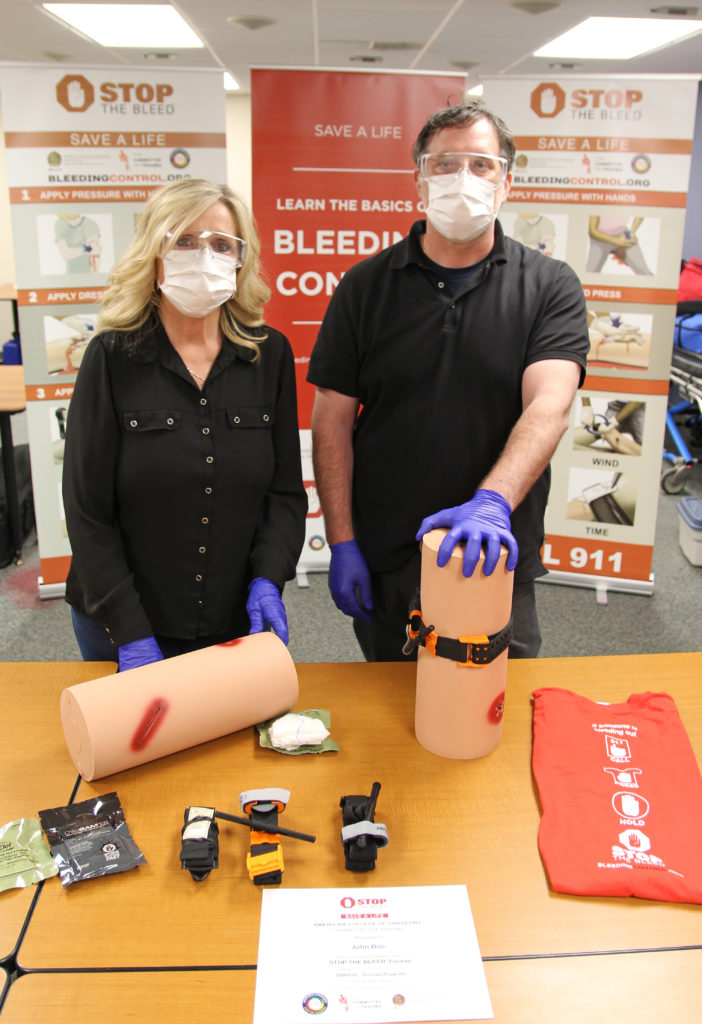
Pictured: Shonath Kajorinne (left) and Joe Benvenuto (right), TBRHSC Trauma Program Regional Injury Prevention Leads
The Thunder Bay Regional Health Sciences Centre (TBRHSC) Trauma Program wants to support the community to be better prepared for traumatic events through awareness, education and bleeding management training.
TBRHSC Trauma Program Regional Injury Prevention Leads have specialized training as instructors in STOP THE BLEED®, a course that teaches how to stop bleeding in a severely injured person. Only certified health care providers can instruct a STOP THE BLEED® Course. The TBRHSC Trauma Program wants to enhance public awareness for this life-saving program that is available to all residents of Northwestern Ontario.
STOP THE BLEED® is an initiative of the American College of Surgeons and the Hartford Consensus, prompted by the tragic mass shootings at the Sandy Hook Elementary School in Newtown, Connecticut in 2012. The goal is to provide civilian bystanders the skills and basic tools required to stop uncontrolled bleeding in an emergency. Similar to how the general public learns and performs CPR, in the STOP THE BLEED® course, individuals learn proper bleeding control techniques, including how to use their hands to apply direct pressure, how to properly apply dressings or packings, and most importantly, the proper use of tourniquets.
STOP THE BLEED® is a 90-minute course that includes hands-on training with mannequins, packing and tourniquets. Participants complete a short quiz following the program to receive a Certificate of Completion.
TBRHSC Trauma Program offers STOP THE BLEED® training to the general public, local businesses, and any people that work in public areas or venues that may be a first person on scene until a first responder arrives (e.g. security, event staff, and vendors).
Some local businesses that invested in STOP THE BLEED® for their staff are Resolute Mill, Richardson Elevator, and The Motorcycle Safety Training Organization (MSTO).
Robbin Lavoie, Canadian Registered Safety Professional (CRSP) and Superintendent of Health, Safety and Training at Resolute Mill said, “Stop the bleed is the most practical and effective hands on life saving training that you will ever take!”
Greg Stein, President and Chief Instructor of MSTO Northwestern Ontario commented, “As an avid motorcyclist/instructor, I would recommend the STOP THE BLEED® course to all motorcyclists. The training is clear, concise, well presented and the equipment is easy to use. ATGATT – All the Gear All the Time and carry a first aid kit with tourniquets. Not only can you STOP THE BLEED®, you can save a life.”
Upcoming STOP THE BLEED® course dates 2022:
July 21, 2022
August 18, 2022
September 15, 2022
October 27, 2022
November 24, 2022
December 8, 2022
For more information or to enroll in an upcoming STOP THE BLEED® program, please visit tbrhsctraumaprogram.ca/ or call 807-684-7951.
Would you like to be a part of an exciting new research study?
Researchers are looking for 𝗵𝗲𝗮𝗹𝘁𝗵𝘆 𝗽𝗮𝗿𝘁𝗶𝗰𝗶𝗽𝗮𝗻𝘁𝘀 and 𝗽𝗮𝗿𝘁𝗶𝗰𝗶𝗽𝗮𝗻𝘁𝘀 𝘄𝗶𝘁𝗵 𝗔𝗹𝘇𝗵𝗲𝗶𝗺𝗲𝗿’𝘀 𝗱𝗶𝘀𝗲𝗮𝘀𝗲 to undergo Magnetic Resonance Imaging (MRI) scans using a new gas contrast agent to improve images of the brain.
The study takes place at the Thunder Bay Regional Health Sciences Centre and will require a minimum of 2 study visits (maximum of 6). You will be compensated $50 for each MRI study visit.
For more information about your rights as a research participant, contact the Thunder Bay Regional Health Sciences Centre Research Ethics Office at (807) 684-6422 or Lakehead University Research Ethics Office at (807) 343-8283.
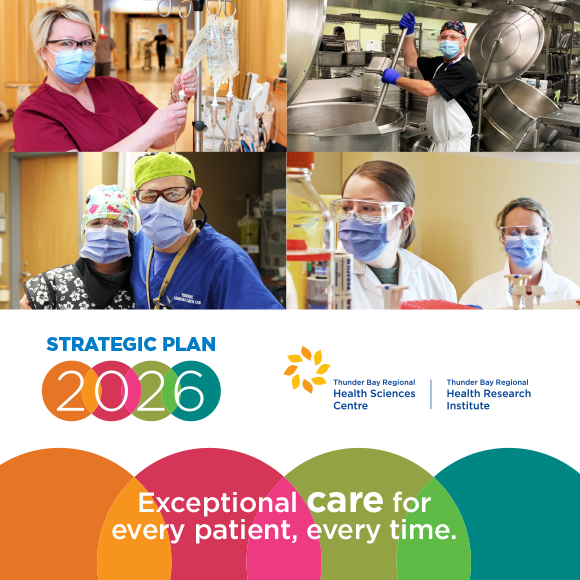
With much anticipation and celebration, Thunder Bay Regional Health Sciences Centre (TBRHSC) and Thunder Bay Regional Health Research Institute (TBRHRI) released Strategic Plan 2026 today – a plan that will guide both organizations along a path of growth and continued success for the next four years.
“I am so pleased to see the official launch of Strategic Plan 2026,” says Gord Wickham, Board Chair for TBRHSC. “This blueprint for our success is the result of input from 120 engagement sessions with more than 700 stakeholders, including community and regional partners, staff from TBRHSC and TBRHRI, Indigenous communities, patients, families and caregivers, and so many more. Our Patient and Family Centred Care philosophy will continue to guide us as we set out to accomplish our strategic plan, which focuses on enhancing the overall patient experience through patient partnership and improving care coordination, all while embedding the principles of equity, diversity and inclusion.”
“Strategic Plan 2026 will drive our post-COVID-19 recovery,” says Dr. Andrew Dean, Board Chair for TBRHRI. “We’ll be incorporating innovation and inspiration into every decision we make, which is key to advancing health care for the people of Northwestern Ontario and beyond. Strategic Plan 2026 will shape the future of health care through cutting edge research and education.”
Strategic Plan 2026 builds on the successes of the previous strategic plan, with focused strategic directions identified during stakeholder consultations, including: Equity, Diversity, & Inclusion, Patient Experience, and Staff Experience. A clear emphasis on Research, Innovation, & Learning will help prioritize and integrate research efforts, build research capacity and create an environment that better supports research, innovation, teaching and learning. The strategic enabler, Sustainable Future, is critical to the organizations’ financial health and future success, and includes supporting expansion of digital health, creation of a clinical services plan, advancing partnerships and system integration.
“The past two years have seen our amazing teams at the Hospital and Health Research Institute adapt, pivot and go above and beyond their everyday practices and duties,” says Dr. Rhonda Crocker Ellacott, President and Chief Executive Officer of TBRHSC and Chief Executive Officer of TBRHRI. “Strategic Plan 2026 seeks to address the needs of the people of Northwestern Ontario, supports community and regional partnerships and is a roadmap to our COVID-19 recovery. I am excited to lead both of our organizations forward into a positive and promising future.”
Shared on behalf of Infection Prevention and Control
Please be advised that the COVID-19 outbreak has been declared over on the 2B Unit at Thunder Bay Regional Health Sciences Centre. All restrictions have been lifted.
Please share this information with the appropriate staff. As always, our number one priority is the safety of patients and their families, staff and visitors. The department of Infection Prevention and Control encourages everyone to keep applying the routine practices of hand hygiene, proper use of PPE, equipment cleaning, and the appropriate admission screening of all patients. Please set an example for staff and students and assist us by maintaining compliance and due diligence.
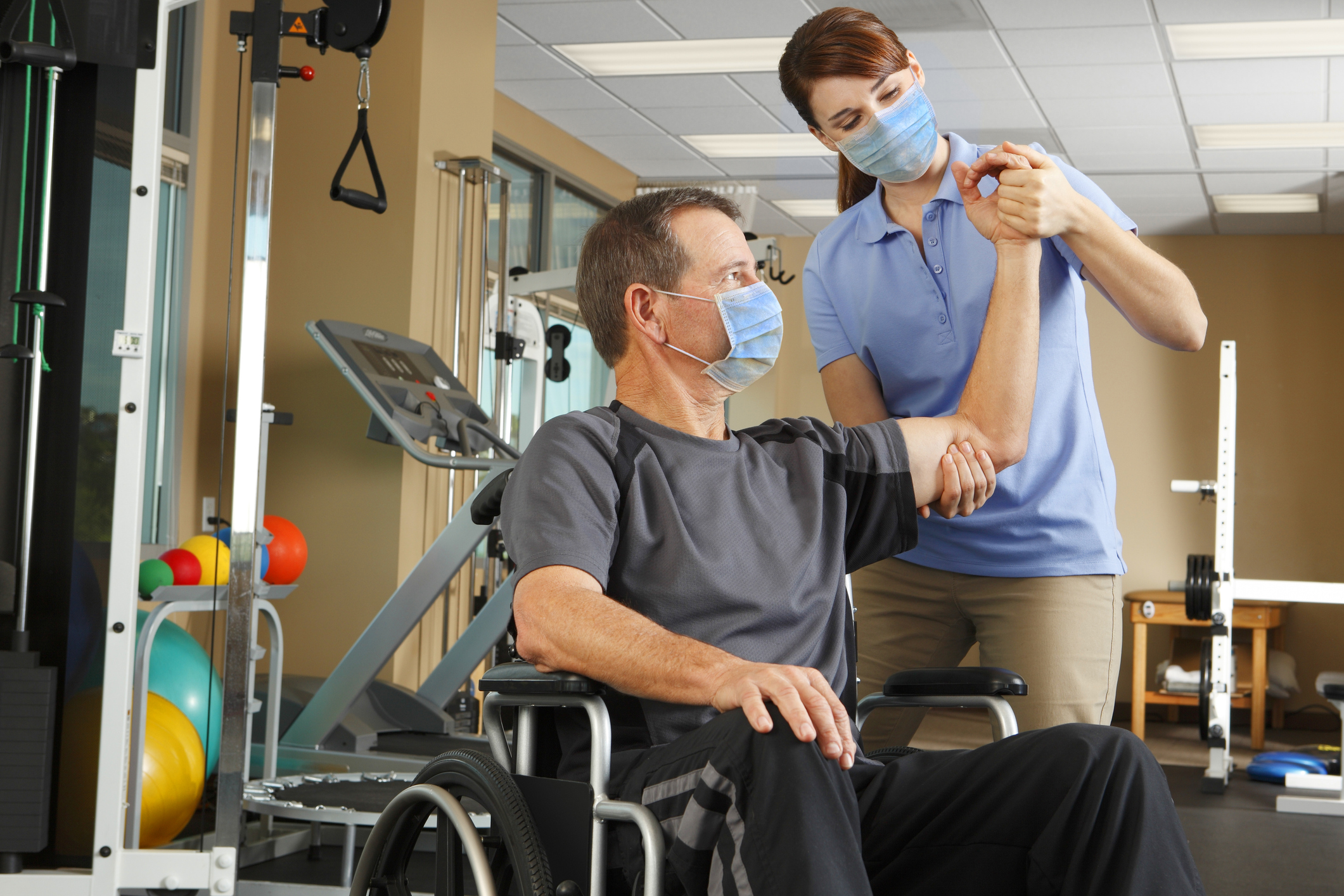
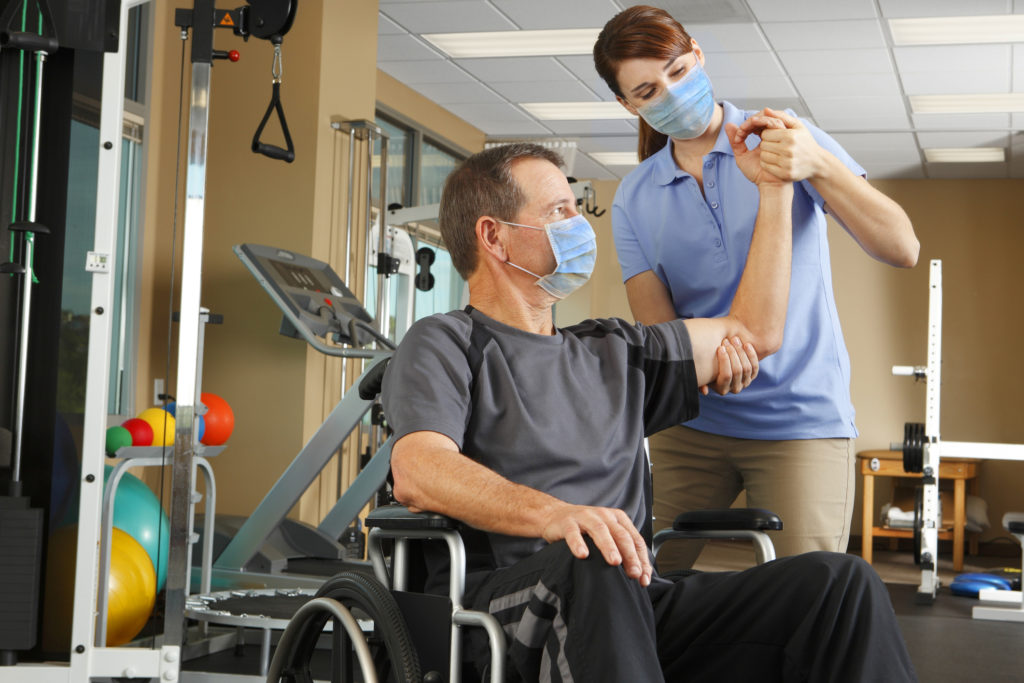
It is a progressive, dynamic, goal orientated process aimed at enabling a person with impairment to reach their optimal physical, cognitive, emotional, communicative, and social functional level.
Why does rehab work?
The brain is able to make up for functions lost in areas that were damaged by the stroke. It does this by reorganizing and rewiring itself. This ability is called neuroplasticity.
Did you know?
Stroke rehabilitation is a process not a place
Rehabilitation (or “rehab”) can take place in many settings such as hospitals (inpatient or outpatient departments), community clinics, or directly in one’s home. Rehab includes homework that people with stroke complete independently or often with the help of family, friends or community supports. In some cases, virtual care (connecting by phone or computer video-conferencing) can be used to deliver stroke rehabilitation.
Stroke rehabilitation starts as soon as people with stroke are stabilized
Canadian Best Practice Recommendations for Stroke state that people with stroke should be seen by rehabilitation clinicians for initial assessment within 48 hours of admission to hospital. Acute stroke rehab clinicians assess and treat people on the regional stroke unit, intensive care unit and occasionally even in the Emergency Department.
Recovery after stroke is a long-term process
It is important for patients with stroke to keep working at it in order to continue to improve and maintain the gains made during the course of rehabilitation. Everyone’s recovery from stroke is different and there is no set schedule for stroke recovery. Rehabilitation has been shown to be most beneficial when started early; however, recovery of impairments is still possible months and even years after stroke.