
UKG Dimensions – Employee Time Keeping and Scheduling System

Shared on behalf of Adam Vinet, Vice President, Patient Experience & Chief Nursing Executive and Regional Vice President, Cancer Care Services, North West Region, and Peter Myllymaa, Vice President, Operations, Clinical and Support Services and Chief Financial Officer


***IMPORTANT INFORMATION ABOUT HOW WE SCHEDULE TIME***

In June 2022, we initiated an organization wide project to convert our legacy timekeeping system (Staffright) to a new best-in-class system (UKG Dimensions). With this change, we are set to embark on a new era of workforce management that provides you, our managers and employees, with direct access to the time and attendance information you need, in real-time.

We have partnered with UKG Dimensions, the world leader in workforce management software, to bring about some big changes in the way we manage and schedule the work we do. The changes may be big, but we are striving to minimize the disruption to our employees by providing you with the information you need to maintain a “business as usual” environment.

Over the next few months, we will be rolling out communication about the UKG Dimensions implementation and deactivation of the Staffright legacy system. Look for specific communication about what is changing and when as we move forward with this important initiative.

Why we are standardizing with UKG Dimensions:

  • Through engagement sessions, we have heard loud and clear that employees would like the ability to view their schedules anytime, anywhere
  • We have also heard that employees would like more autonomy and want a more active role in tracking their own time
  • Current scheduling processes are manual, repetitive, paper based, and time consuming and do not support a proactive response to filling vacant shifts
  • Convenience of mobile or web-based access and self-serve capabilities to set scheduling preferences, manage availability, and stay up-to-date as schedules change
  • UKG Dimensions will assist in ensuring employees are paid accurately for the work they are scheduled to perform
  • Significantly reduce the number of payroll adjustments required following pay end dates

Important information for you to know:

  • Starting in Spring 2023 everyone, both salaried and hourly employees, will track their time using UKG Dimensions
  • Prior to this date you will be trained on how you will track your time• You will have several options to sign in and out for every shift – mobile device, self-serve terminals at main site, or any hospital workstation computer
  • You will submit your time off requests solely through UKG Dimensions—no more paper or emails—and no more missed or misplaced requests!
  • You will take an active role in ensuring the accuracy of your own time and advise your manager of any updates immediately

Next steps:

  • Ask your manager any questions you may have
  • Give us constructive feedback about what we can do to make the transition easier for you

Thank you for helping us make this important transition! We know we can depend on each one of you as we make this change.

For current information and updates visit: https://informed.tbrhsc.net/departments/staffing/ukg-dimensions-new-staff-scheduling-system.

UKG Dimensions Implementation Team:

  • Dino Armenti – Co-Project Sponsor
  • Dawna Maria Perry – Co-Project Sponsor
  • Rita Grenier Buchan – Project Lead – Scheduling
  • Michael Iorianni – Project Lead – Payroll
  • Carrol Wenzell – Payroll Subject Matter Expert
  • Monique Trudeau – HR Subject Matter Expert
  • Domenic Falcetta/Cora Rouillard – Integration Subject Matter Expert
  • Laura Macgowan – HR Subject Matter Expert – Leaves
  • Sharen Howarth – HR Subject Matter Expert – Leaves
  • Angela Kutok – PI Consultant – Project Manager

January Health and Wellness Challenge

New this year, we are introducing monthly health and wellness challenges that will allow us to engage with our colleagues and share with others how we stay well. In our Hospital’s 2023 Health and Wellness Calendar, you will find monthly inspirations that encourage you to visit Informed for details about each challenge.

January’s challenge is about music. Both listening and making music have links to our emotions and can be used as a stress management tool. Light jazz, classical and easy listening music as well as sounds of nature have been found to effectively reduce stress.

Share your current top 3 favourite songs. Your responses can be submitted to Caitlund.Davidson@tbh.net. Our Hospital’s Top 10 list will be released at the end of the month.

Tips from TBRHSC’s Paediatric Healthy Living Program

It’s time for this month’s tip from Thunder Bay Regional Health Sciences Centre’s (TBRHSC’s) Paediatric Healthy Living Program.

Try a smoothie bowl for breakfast! Smoothie bowls are a nutritious way to start your morning and there are a variety of ways you can make them. 

Strawberry Smoothie Bowl:

Blend together 1½ cups frozen strawberries, ½ medium banana, ½ cup plain yogurt and 1 cup 100% orange juice (makes 2 servings).  To make it thicker add more frozen fruit or ice.  Pour smoothie into a bowl and add your favourite toppings, for example ¼ cup granola, ¼ cup sliced strawberries and ¼ cup sliced banana.  Other topping ideas include almonds, cashews, pumpkin seeds, coconut, chocolate chips, raspberries, blueberries or other fruit.

For more resources on healthy living or to learn more about TBRHSC’s Paediatric Healthy Living Program, please visit our website at https://bit.ly/Paediatric-Healthy-Living-Program

50/50 Winners Natalie and Nick Pace “Just Wanted to Support the Hospital”

One week later and Natalie Pace is still in disbelief.

“I never thought I’d win – I just wanted to do something good for the Hospital!” she said. But win they did. Natalie and her husband Nick are taking home December’s Thunder Bay 50/50 Draw Grand Prize of $2,530,500. The tax-free cash prize is the largest in Thunder Bay Regional Health Sciences Foundation history – and the largest 50/50 win ever in Thunder Bay.

“I was going to ask if it was a joke, but maybe it’s not a joke!” Nick said when the couple got the call from Health Sciences Foundation President and CEO Glenn Craig on Friday, December 29.

Still, it was a quiet New Year’s spent at home with family, just as they planned.

“Honestly, it hasn’t sunk in yet,” Natalie said. “I haven’t thought long-term yet – we’re still going through our daily routines. I’m still working in the office; I’m still doing laundry.”

Natalie and Nick started buying Thunder Bay 50/50 tickets when the draw first launched as a way to support the Thunder Bay Regional Health Sciences Centre.

“It is nice that the money goes to a good cause, and we are happy to be a part of it,” Nick said.

“The Hospital here in Thunder Bay has been amazing to us and our family,” Natalie said. “I thought that if I could help somebody by buying tickets, I was proud to support it.”

Born and raised in Thunder Bay, Natalie and Nick have seen the Hospital grow over the years. Today, more people than ever in Thunder Bay and across Northwestern Ontario can get the care they need, closer to home. “This draw allows us to have more equipment and services here locally and regionally. It’s a win-win situation for everyone – we all benefit from it,” Natalie said.

Cardiac and cancer care are particularly close to Natalie’s heart. She appreciated the fact though that proceeds from December’s Thunder Bay 50/50 went directly to supporting the Emergency Department – an area people don’t always think about until they need it.

“If we didn’t have such a great Emergency Department, I don’t know what we’d do. Every time we’ve had to go there, we’ve always been treated well. It’s nice to know that there are people there who want to help you when you really need it,” she said.

One thing Natalie does have planned: she’ll continue to support the Hospital by buying tickets for January’s draw.

“You know, it’s funny, Nick just asked me this morning if I’m buying more tickets. Even though we already won, it’s more about supporting our Hospital. The Thunder Bay Regional Health Sciences Centre and the staff are a great gift to us here in Northwestern Ontario and it cannot be taken for granted! So yes, I’m definitely buying more tickets.”

Congratulations to Natalie, Nick, and the whole Pace family!

Buy your tickets for January’s Thunder Bay 50/50 draw at: thunderbay5050.ca. There are three $5,000 Early Bird prizes yet to be drawn. The grand prize draw takes place Friday, January 27th.

The Screen for Life Coach: A One Stop Cancer Screening Shop

As you drive around Thunder Bay this winter, you may spot a unique looking blue and white mobile coach parked at various locations around the city. This is the Screen for Life Coach. Inside it contains a mammography unit and a nursing room, designed to offer breast, cervical and colon cancer screening in one convenient location.

Each year, the Coach travels to more than 75 different locations across Northwestern Ontario bringing cancer screening services closer to home. From April to October, the Coach travels to communities between Chapleau and the Manitoba border and as far North as Red Lake and Pickle Lake. Throughout the winter months, the Coach returns home and parks in various locations around Thunder Bay.

The Coach offers three cancer screening programs to residents in Northwestern Ontario:

  1. Ontario Breast Screening Program: Women aged 50 to 74 years should have a mammogram every two years. A mammogram is the recommended method for detecting breast cancer.
  2. Ontario Cervical Screening Program: Anyone with a cervix, aged 25 to 69 years, who has ever been sexually active, should complete a Pap test every three years to screen for cervical cancer.
  3. ColonCancerCheck Program: Anyone aged 50 to 74 years with no family history of colon cancer should complete a fecal immunochemical test (FIT) kit every two years to screen for colon cancer.

Cancer screening is for eligible individuals who don’t have any symptoms, allowing you the chance to be proactive with your health. The earlier you detect cancer, the more treatable it can be.

The staff on the Coach work in teams of two; there is one Medical Radiation Technologist (MRT) and one Registered Nurse (RN). The MRT performs the breast cancer screening mammograms. The RN provides cervical cancer screening through a Pap test and coordinates colon cancer screening by completing a requisition for a Fecal Immunochemical Test (FIT) kit that can later be done by the patient at home.

The Coach is a one-stop shop to get all your screening done at once! If you are at average risk and are within the recommended screening age range, you don’t need a primary care provider referral to visit the Coach. All appointments can be booked by calling (807) 684-7777. Morning, afternoon, evening, and weekend appointment times are available.

Take the time to talk to your primary care provider about your cancer screening options or visit www.tbrhsc.net/cancerscreening to learn more about how to book your cancer screening appointment and take care of your health this winter.

Project SEARCH helps special needs students prepare for working world

(via TBNewswatch.com)

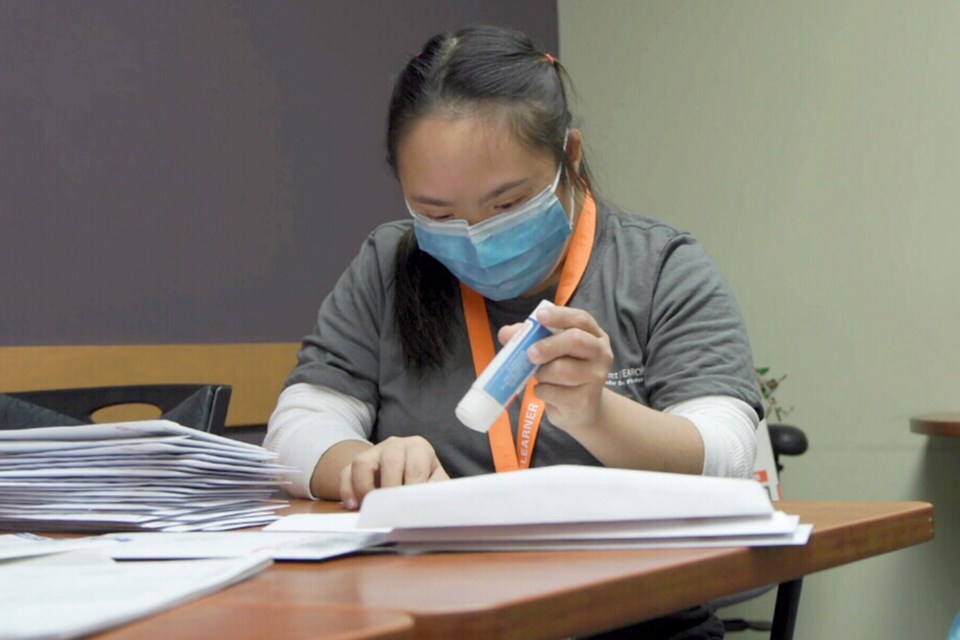
Seven students are currently on placement at Thunder Bay Regional Health Sciences Centre as part of the first-year program


Ken Skinner says a program aimed at teaching students with special needs the skills they need to find meaningful post-graduation employment was long a missing link in the education process.

Skinner, a teacher with the Thunder Bay Catholic District School Board, says he’s already seeing a difference in his students, thanks to Project SEARCH, a partnership with the Thunder Bay Regional Health Sciences Centre and Community Living Thunder Bay. The initiative has seen seven students take on unpaid internship positions in a variety of different areas at the hospital.

“For a lot of students, when they leave our high schools, they have their credits and they have the skills that they’ve built, but there isn’t a lot out there for them, especially in the capacity of paid employment. So, I think this is the missing link for them that we’ve been looking for with our high schools,” Skinner said.

“They’re going to learn the skills and independence, being an adult leaving high school and getting a job and continuing on.”

Special needs students typically graduate between the ages of 18 to 21, and Skinner said the seven students chosen to take part in Project Search bought into the program almost immediately.

“We start off with the whole mentality that this isn’t high school anymore and we’ve got to work on our independence and our self-advocacy and we need to be ready to work and have work stamina,” Skinner said.

“The growth we’ve seen since we’ve started in September has been really incredible.”

Students applied for the program and were vetted to ensure they’d be a good fit and were placed in a variety of spots in the hospital, from human resources to housekeeping. They spend the first part of the day discussing the work they’ll be doing, then several hours on site at the hospital and wrap up with another classroom discussion and writing in journals.

Allison Sargent, a superintendent of education with the board, said Project SEARCH was a full year in the making, noting it took quite some time to find a willing community partner able to take on placement students.

In the end, they were one of seven schools across Ontario to do so, after 14 boards were initially chosen for the Ministry of Education-funded project.

The benefits are enormous, Sargent said.

“I think the program for the students themselves is life-changing,” she said.

“They have an opportunity to develop the skills they need to gain employment, but meaningful employment. I also think it’s a really important program for our community. To have these students with intellectual or developmental disabilities working in our hospital, for our community members to see them, for the staff at Thunder Bay regional to see that they have abilities.”

Sargent said recruitment for the 2023/2024 program will begin in March and encouraged parents and students alike to consider signing up.

Stay Heart Healthy This Winter

Originally published in the January 2023 edition of The Walleye Magazine


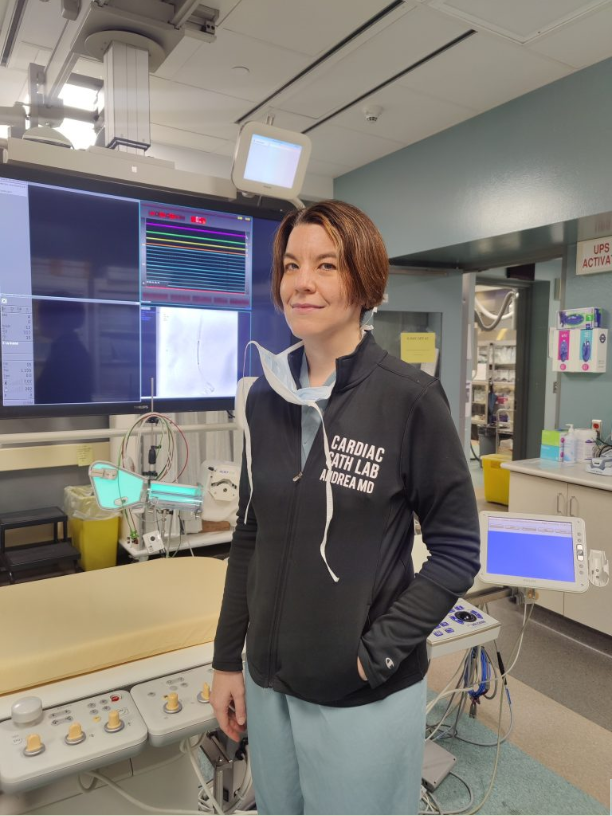
Heart health is important year round, but the cold weather that we experience in Northwestern Ontario can affect our hearts in ways you may not expect. We asked Dr. Andrea MacDougall, an interventional cardiologist and medical program director of the Cardiovascular Science Program at Thunder Bay Regional Health Sciences Centre, to help us understand what happens to our hearts when we are exposed to the cold and what we can do to stay heart healthy this winter.

“The heart has to work a bit harder in the cold weather,” she explains. “The heart beats faster to keep us warmer, the blood vessels constrict, and blood pressure can increase. Some people can have constriction of the airways in cold weather, making it difficult to breathe. With snowy or icy conditions, it’s more physically demanding to walk outdoors and the heart has to work harder.”

Unfortunately, this means that heart attacks can be more common in the winter. Dr. MacDougall shares why this can happen: “The heart needs to work harder in the cold for the reasons described above. Also, many of us are more sedentary during winter, often not getting much activity and eating comfort foods. If someone who hasn’t been exercising much starts to do strenuous exertion (such as shoveling snow), it places a sudden demand on the heart which isn’t used to working that hard. This can lead to heart attacks.”

As we head outdoors to shovel snow or to participate in our favourite outdoor winter activities, it’s important to know the warning signs to watch for and recognize when to seek medical attention. “Warning signs that might indicate a heart problem include pain or pressure in the chest, arms, jaw or back that are worse with exertion,” says Dr. MacDougall. “This might also be associated with nausea, sweating, and/or shortness of breath. Everyone’s presentation is different. Women and the elderly, specifically, often don’t have the textbook presentation of heaviness on the chest. Palpitations (racing heart), dizziness or fainting can also signify heart problems.”

With all of this in mind, you may be wondering if we should be spending less time outside in the cold to protect our hearts. However, in reality, spending time outside and exercising is good for both our physical and mental health, especially during winter when days are short. “Exercise benefits our cardiovascular health, but also strengthens muscles and bones and improves balance, preventing fractures and falls as we grow older,” Dr. MacDougall says. “It can be difficult to exercise outside during winter as the days are much shorter, the cold can be unpleasant, and the snow and ice make walking treacherous. Luckily here in Thunder Bay and surrounding area, we have many opportunities for outdoor exercise—walking, hiking, snowshoeing, skating, and skiing to name a few. For those who can’t exercise outside, indoor walking, treadmill, exercise bike, or pool are good options.”

When asked what we can do to ensure our hearts stay healthy this winter, Dr. MacDougall had this to say: “Maintaining a healthy heart is a year-round endeavour. It is always important to eat well, exercise regularly, and avoid smoking. Keep a close eye on risk factors such as diabetes, high blood pressure, and cholesterol. Take any medications that your physicians have prescribed for you, and seek medical attention if you experience symptoms or a change in exercise tolerance.”


To learn more about how you can stay heart healthy year-round, visit https://www.heartandstroke.ca/.

To learn more about how cardiovascular care is improving in Northwestern Ontario, visit https://bit.ly/TBRHSC-CVS-Program.

Manager, Critical Care

Shared on behalf of Lisa Beck – Director, Trauma, Emergency, Critical Care, Respiratory & Nurse Led Outreach and Dr. Michael Scott – Critical Care Chief


We are pleased to announce the appointment of Edith “Edie” Hart as Critical Care Manager, effective February 13, 2023.

In this leadership role, Edie will be responsible for the operations and management of the Critical Care Department (ICU), Critical Care Response Teams (MET and RCCR) and Operational Lead for the Trillium Gift of Life Network.

In 2018, Edie assumed the role of ICU Operations Coordinator and in 2015 was the Clinical Lead for the Regional Critical Care Response (RCCR) Program for Northwestern Ontario. As a result of Edie’s passion and leadership, RCCR was named in Ontario’s Health Minister’s Honor Roll and received the NW LHIN’s Leadership Award in 2017.

Edie comes with 28 years of ICU nursing experience caring for both adults and children. In addition, Edie is a part-time instructor at Confederation College and has presented at several conferences. With her ability to empower and engage staff, Edie has facilitated many positive improvements in the ICU particularly during the pandemic.

Edie graduated from Confederation College in 1994 with a Diploma in Nursing and recently has enhanced her knowledge by obtaining a certificate in Leadership and Management through the University of Toronto.

Please join us in congratulating Edie in her new position!

>