April 1st, 2025 marks the 22nd anniversary for Oncology Nursing Day in Canada. The theme, “Striving for the Summit: Empowering Oncology Nurses Towards Excellence” emphasizes the dedication of oncology nurses in providing exceptional care, advancing research, and making a lasting difference in the lives of cancer patients and their families.
It is a day to recognize the incredible role oncology nurses play in our national health care system. Cancer affects people of all genders, nationalities and age groups. Oncology nurses are on the front lines of cancer treatment, care and research.
There are few specialties in the nursing profession where nurses have the privilege to practice, teach, lead and impact patients and families with an illness across the entire disease trajectory. Oncology nursing affords nurses this opportunity, to care for patients from prevention and screening, diagnosis and assessment, treatment, symptom management and support, survivorship, and palliative and end of life care, helping patients to meet their goals of care along the way. Even during difficult times, oncology nurses are inspired by the patients and families they care for.
We encourage our community, region and all Canadians to join us in showing appreciation and thanks to all of our oncology nurses for their commitment, passion, and dedication to patient and family centred care.
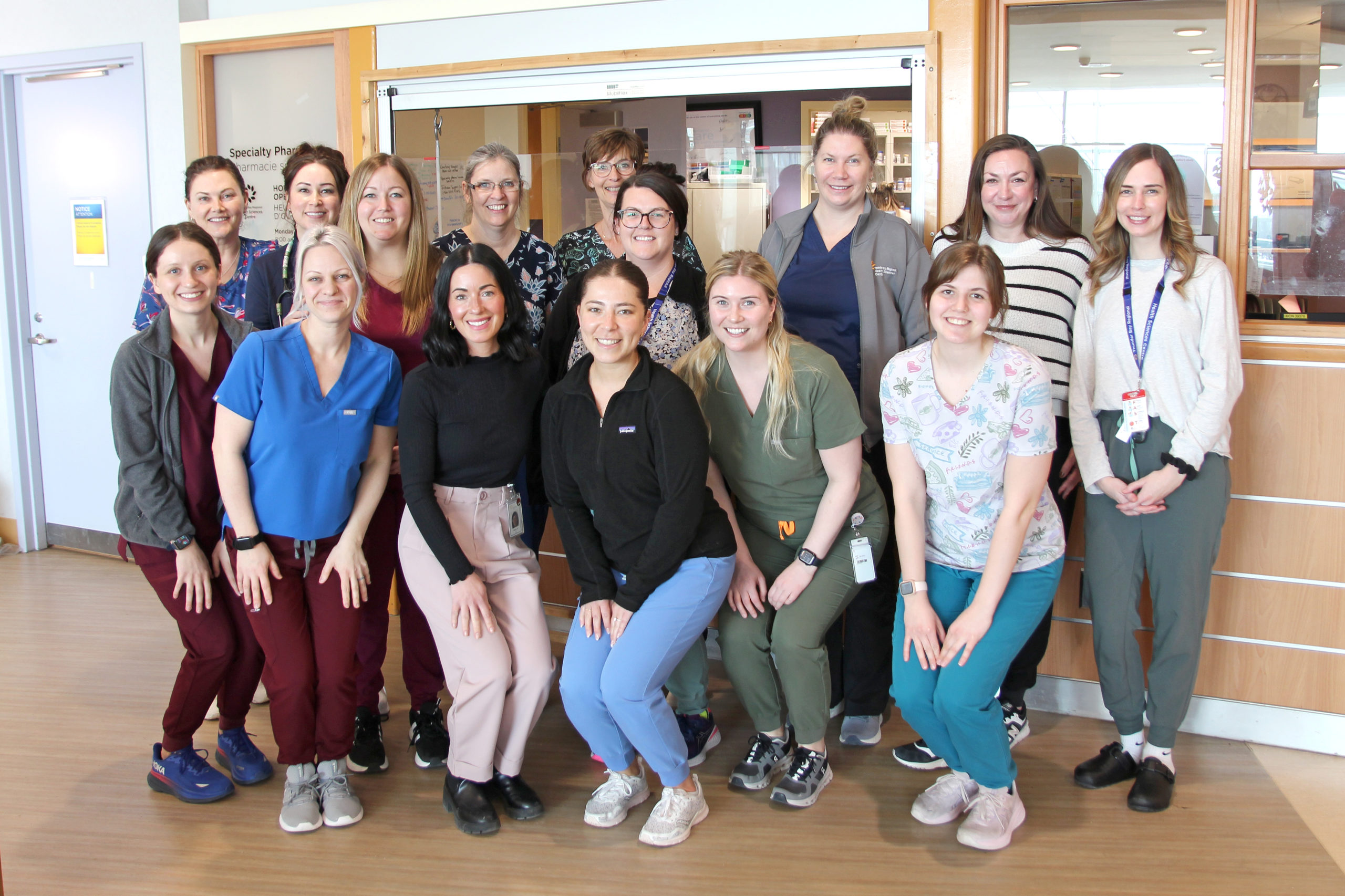
Members of the oncology nursing team at Thunder Bay Regional Health Sciences Centre.
We are starting to see the actual signs of spring upon us, with longer days and a sense of renewal and vitality on the horizon. Spring is a season of new beginnings, synonymous with renewed energy and hope. As we embrace the changes that spring brings, let us also embrace the opportunities. There are a lot of new things happening within our Hospital and Health Research Institute and I hope you feel positive about the future ahead.
Preparations for the cardiovascular surgery project are progressing as we ready our site for the construction activities set to commence on March 31, 2025. Given the scale of this project, logistical challenges are expected, and some disruptions will inevitably occur. As we adjust our parking arrangements and clinical operations to accommodate these activities, we kindly request your patience and understanding. We are continuously monitoring our parking situation and traffic flow on our campus to ensure safety and accessibility for everyone. We do know all of this change creates inconvenience and challenges for our patients, families, visitors, as well as our staff. Thank you for your patience as we work through and adapt. I would like to extend gratitude to the project team for their ongoing efforts to support us all.
As we work to bring improvements to ways in which we access health information, PocketHealth is now live and is providing secure access to medical imaging for both patients and providers. We are pleased to be offering this innovative digital platform where patients can retrieve their own diagnostic imaging, be informed of medical decisions and have greater involvement in their own healthcare journey. Providers benefit from streamlined access to critical imaging data, enhancing the efficiency of diagnostics and treatment plans.
By bridging the gap between patients and medical professionals, PocketHealth enables us to be more responsive, transparent, and efficient, ultimately improving the overall quality of patient care.
As well, the technology will provide our staff who typically have to manage these requests, more opportunity to support direct patient care needs.
Over the last several months, I have taken part in many of the Quality Huddles happening around our Hospital. These forums provide clinical and non-clinical areas opportunity to share team successes, opportunities for improvement and discuss safety and quality issues. To date, it has been a great experience to be a part of and I am amazed at the number of staff engaged in the topics. It is evident that this corporate initiative is providing a forum where all staff can feel they are contributing to our safety culture and driving quality work within all areas. Thank you for all your work and improvements.
There is always something to celebrate and at the Research and Innovation Week at Lakehead University, Dr. Christopher Mushquash, Vice President Research at Thunder Bay Regional Health Sciences Centre and Chief Scientist at Thunder Bay Regional Health Research Institute received the Distinguished Researcher Award. This award is the highest honour conferred by Lakehead University for research and scholarly activity and is only given to a scholar once in their career for research and scholarly activity sustained at a high level over a period of at least one decade. Congratulations to Chris and all of our distinguished researchers and those supporting this work.
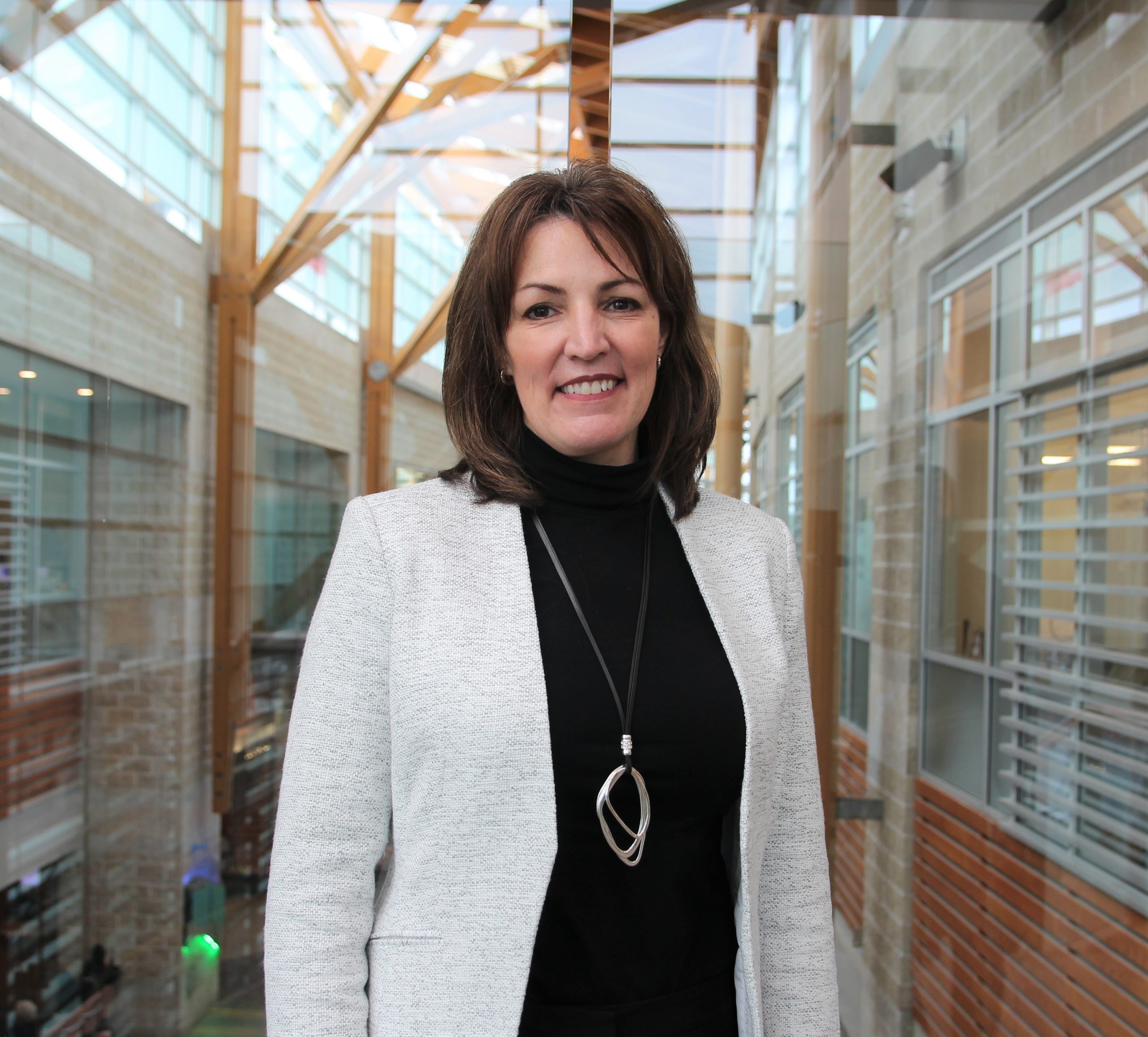
As always, I welcome your feedback — about this blog or anything else on your mind. Feel free to reach out to me at rhonda.ellacott@tbh.net. I appreciate hearing from you.
The annual mandatory E-Learning courses for 2024-2025 are now offline. Learning modules for 2025-2026 will be launched shortly. Stay tuned to the Daily Informed Newsletter for more information!
Shared on behalf of Justin Garofalo, Vice President, Facilities, Capital Planning and Support Services & CFO
I am pleased to announce that Pascal Rivest has accepted the position of Manager, Decision Support and Case Costing, effective April 7, 2025.
Pascal has been serving as the Interim Manager Decision Support and Case Costing, providing steady leadership and valuable support to his team. With over a decade of experience as a Decision Support Consultant at the Hospital since 2010, he has developed a deep understanding of data analytics, case costing and financial decision-making in Healthcare. His expertise, combined with his strong analytical skills and commitment to excellence, has made a meaningful impact on our organization.
Beyond his technical knowledge, Pascal is known for a collaborative approach, enthusiasm and dedication to continuous improvement. We are confident that his leadership will further strengthen the Decision Support and Case Costing team and contribute to the Hospital’s ongoing success.
Please join me in congratulating Pascal on his new role!
Shared on behalf of Dr. William Harris, VP, Medical and Academic Affairs
I am very pleased to announce the appointment of Dr. Rosamaria North to the interim position of Medical Director, Emergency Department, effective March 31, 2025. Dr. North has previously served as the Medical Lead, Emergency Department Operations and is current a co-Medical Lead of Simulation. Dr. North has demonstrated exceptional leadership in clinical, operations and academic work.
The ED Medical Director is a collaborative leadership role working within a dyad model alongside the Program Administrative Director. Together, they drive high standards of care, operational excellence, and quality improvement in the ED.
The primary responsibility of the ED Medical Director is clinical quality, performance targets, operational planning, and ensuring services align with Hospital goals and evolving community/regional needs.
While having joint responsibilities with the Department Chief to ensure high standards of medical care, the Medical Director bears the primary responsibility for program specific quality targets, indicators, and performance metrics relevant to individual programs such as Pay for Results [P4R] and the Clinical Decision Unit [CDU].
Please join me in welcoming Dr. North to her new role.
Parking and Hospital Entrance Information March 31 to Mid/Late June
Starting Monday, March 31, several key areas around the Renal Entrance and Main Entrance will be impacted as part of the Cardiovascular Surgery (CVS) Construction project. These changes are essential for the expansion and improvement of our Hospital. Please take note of the following important updates:
Major Impacts
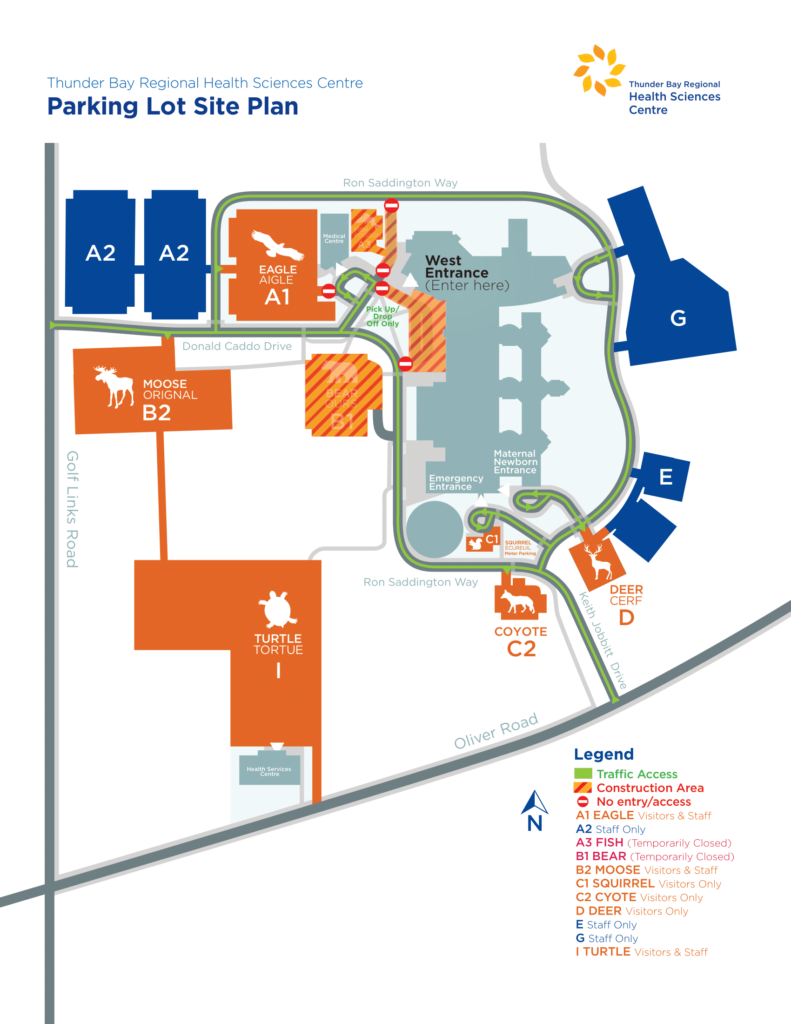
Main and Renal Entrances: Both the Main Entrance (at the revolving doors) and Renal Entrance will be closed for the duration of the construction project. To enter the Hospital, please use the West Entrance (see attached map). Dialysis Aides will be stationed at the West Entrance to assist renal patients who are accessing the Renal department.
Roadway Access and Fish (A3) Parking Lot: The Fish (A3) parking lot and the roadway in front of the Cancer Centre Entrance will be closed until mid to late June.
Pick-up and drop-off locations: Temporary pick-up and drop-off will be re-located to the roundabout in front of the Medical Centre building (next to the West entrance). Please follow posted signage as this will be one-way traffic only to ensure safety and smooth traffic flow. Security will be posted to assist with wayfinding and ensure the flow of traffic.
Eagle (A1) Parking Lot East Gate: The East Gate (gate closest to the Medical Centre building) of the A1 parking lot will be closed for the duration of the construction.
Information on bus scheduling (Electronic bus sign): The electronic bus sign has been temporarily relocated to an area adjacent to the West Entrance.
Hospital Access
All patients, visitors, and staff can access the Hospital via the West Entrance during this period (please refer to the map). Please follow all posted signage and instructions for a safe and efficient experience.
Summary of Construction during this Period:
Fencing and signage: Construction fencing and signage will be installed around the construction areas to keep all pedestrians and vehicles safely away from active work zones.
Site work demolition: Work will include the removal of the canopy, foundations, curbing, sidewalks, retaining walls, trees, asphalt, and other structures to prepare for the new construction.
Sewer and water modifications: Necessary updates to the sewer and water systems will be carried out.
New CVS expansion foundation work: Excavation, piling, rebar installation, and formwork will be done to starting creating the foundation for the new expansion.
Reconstruction of Fish (A3) Parking Lot: The Fish (A3) parking lot will be reconstructed with a new entrance and additional accessible parking spaces.
Temporary bus stop Location: Temporary bus stops on the East side of the Hospital (East Entrance at the Cafeteria) will be installed to prepare for upcoming phases of construction.
For everyone’s safety, please adhere to all construction fencing, barricades, and safety signs. The construction site will be clearly marked, and all unauthorized personnel are restricted from entering construction areas. We encourage everyone to use designated walkways and stay alert while navigating around the construction zones.
We recognize that these changes will impact patients, visitors, and staff, and we appreciate your cooperation and patience as we work towards expanding cardiovascular care services in our region.
Thank you for your ongoing support and dedication to improving patient care at TBRHSC.
National Indigenous Languages Day, celebrated on March 31, is an opportunity to appreciate the linguistic diversity within Indigenous cultures. This Day emphasizes the importance of revitalizing and preserving Indigenous languages, which are vital to cultural identity and community connections.
In Canada, languages like Anishinabek (Ojibwe), Mushkegowuk (Cree), and Anisininew (Oji-Cree) demonstrate unique vocabulary and grammar, reflecting the rich histories and cultures of their communities.
Within the Ojibwe community, there are some common words and phrases that showcase the beauty and significance of the language. Here are a few:
Miigwech – Thank you Indinawemaaganidog – All of my relatives Mino-Bimaadiziwin – The good life
Celebrating National Indigenous Languages Day not only honors these languages but also encourages individuals to learn and incorporate them into their daily lives, ensuring the preservation of Indigenous cultures for future generations.
The International Transgender Day of Visibility takes place annually on March 31. It is an opportunity to celebrate and empower the Trans community, while also bringing awareness to the barriers and ongoing discrimination Trans people face.
Transgender people often experience significant barriers to accessing essential healthcare services, including primary care, emergency care, and gender-affirming care (The Trans PULSE Canada Team, 2020), and these challenges are compounded for Trans individuals residing in rural areas (Scheim, Lopez, Bauer, Brasseur, Baptiste, Navarro, Smith, Blodgett, Churchill, Coleman, 2024). Additionally, both past and anticipated experiences of discrimination further limit Trans peoples’ access to necessary healthcare services (Scheim et al, 2024).
What is gender-affirming care?
Gender-affirming care is a range of services that provide life-saving healthcare for Trans individuals. This includes transition-related services and other medical care, mental health care, and social services.
How can healthcare workers start to provide more gender-affirming care?
Learn. To learn more about the 2SLGBTQQIA+ community, including the inequities and challenges they face when accessing healthcare, and how you can provide gender-affirming care, seek education opportunities!
Shared on behalf of Wayne Taylor, Director, Cardiovascular, Medicine & Renal Program, Regional Director, NW Regional Renal Program, Ontario Renal Network
We are pleased to share the dedication of four beds to acute withdrawal management, on 2A Medicine, at the Thunder Bay Regional Health Sciences Centre, effective April 1, 2025. These beds will provide focused care for patients aged 17 years of age and older, who present with acute withdrawal symptoms and require inpatient admission, primarily for withdrawal management.
The implementation of these beds represents an important step in enhancing our capacity to manage acute withdrawal in a safe, supportive environment. The key goals of this service include:
Advancing staff knowledge in withdrawal management.
Reducing re-admission rates and Emergency Department (ED) visits after discharge.
Ensuring safe and effective management of withdrawal symptoms.
Decreasing the number of patients leaving against medical advice.
To ensure effective use of these new beds, staff on 2A have received specialized training in withdrawal management, with a focus on recognizing and managing the complexities of withdrawal symptoms. Providers admitting patients to the Acute Withdrawal Management beds will consult the Addictions Medicine Consult Service (AMCS) for additional support in care delivery.
This expansion to our services demonstrates our continued commitment to providing comprehensive care to those in need of addictions medicine. By addressing these needs directly within the medical unit, we aim to improve patient outcomes.
If you have any questions or require additional information, please feel free to contact:
Taylor MacKenzie Manager-2A Medicine Hospital Elder Life Program Acute Withdrawal Management Beds (807) 684-6657
Thank you for your ongoing commitment to providing high-quality care to our patients.