National Indigenous Languages Day, celebrated on March 31, is an opportunity to appreciate the linguistic diversity within Indigenous cultures. This Day emphasizes the importance of revitalizing and preserving Indigenous languages, which are vital to cultural identity and community connections.
In Canada, languages like Anishinabek (Ojibwe), Mushkegowuk (Cree), and Anisininew (Oji-Cree) demonstrate unique vocabulary and grammar, reflecting the rich histories and cultures of their communities.
Within the Ojibwe community, there are some common words and phrases that showcase the beauty and significance of the language. Here are a few:
Miigwech – Thank you Indinawemaaganidog – All of my relatives Mino-Bimaadiziwin – The good life
Celebrating National Indigenous Languages Day not only honors these languages but also encourages individuals to learn and incorporate them into their daily lives, ensuring the preservation of Indigenous cultures for future generations.
The International Transgender Day of Visibility takes place annually on March 31. It is an opportunity to celebrate and empower the Trans community, while also bringing awareness to the barriers and ongoing discrimination Trans people face.
Transgender people often experience significant barriers to accessing essential healthcare services, including primary care, emergency care, and gender-affirming care (The Trans PULSE Canada Team, 2020), and these challenges are compounded for Trans individuals residing in rural areas (Scheim, Lopez, Bauer, Brasseur, Baptiste, Navarro, Smith, Blodgett, Churchill, Coleman, 2024). Additionally, both past and anticipated experiences of discrimination further limit Trans peoples’ access to necessary healthcare services (Scheim et al, 2024).
What is gender-affirming care?
Gender-affirming care is a range of services that provide life-saving healthcare for Trans individuals. This includes transition-related services and other medical care, mental health care, and social services.
How can healthcare workers start to provide more gender-affirming care?
Learn. To learn more about the 2SLGBTQQIA+ community, including the inequities and challenges they face when accessing healthcare, and how you can provide gender-affirming care, seek education opportunities!
Shared on behalf of Wayne Taylor, Director, Cardiovascular, Medicine & Renal Program, Regional Director, NW Regional Renal Program, Ontario Renal Network
We are pleased to share the dedication of four beds to acute withdrawal management, on 2A Medicine, at the Thunder Bay Regional Health Sciences Centre, effective April 1, 2025. These beds will provide focused care for patients aged 17 years of age and older, who present with acute withdrawal symptoms and require inpatient admission, primarily for withdrawal management.
The implementation of these beds represents an important step in enhancing our capacity to manage acute withdrawal in a safe, supportive environment. The key goals of this service include:
Advancing staff knowledge in withdrawal management.
Reducing re-admission rates and Emergency Department (ED) visits after discharge.
Ensuring safe and effective management of withdrawal symptoms.
Decreasing the number of patients leaving against medical advice.
To ensure effective use of these new beds, staff on 2A have received specialized training in withdrawal management, with a focus on recognizing and managing the complexities of withdrawal symptoms. Providers admitting patients to the Acute Withdrawal Management beds will consult the Addictions Medicine Consult Service (AMCS) for additional support in care delivery.
This expansion to our services demonstrates our continued commitment to providing comprehensive care to those in need of addictions medicine. By addressing these needs directly within the medical unit, we aim to improve patient outcomes.
If you have any questions or require additional information, please feel free to contact:
Taylor MacKenzie Manager-2A Medicine Hospital Elder Life Program Acute Withdrawal Management Beds (807) 684-6657
Thank you for your ongoing commitment to providing high-quality care to our patients.
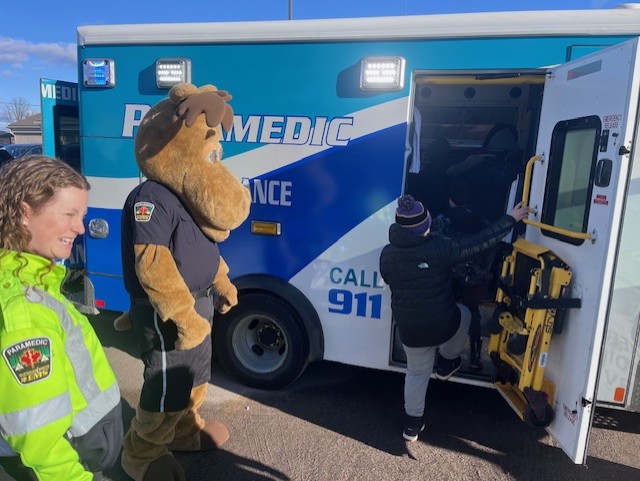
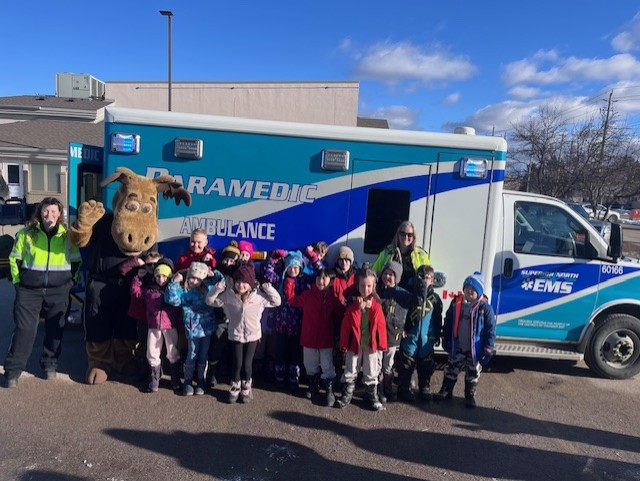
Grade 1 and 2 students from St. Martin Elementary School recently celebrated the largest graduation class from the FAST Heroes program, a global health education initiative aimed at raising stroke awareness. This program, taught by a dedicated teacher, Jennifer Edwards, focuses on educating young students to recognize stroke symptoms, thereby helping protect their loved ones especially their grandparents – we call them grandheroes!
The graduation ceremony was supported by the Northwestern Ontario Regional Stroke Network from Thunder Bay Regional Health Sciences Centre and Superior North EMS. The Thunder Bay Catholic District School Board (TBCDSB) has endorsed the FAST Heroes program since 2024, achieving significant success in equipping students with crucial knowledge about stroke symptoms. This initiative not only educates students but also fosters community-wide awareness that extends beyond the classroom.
In Canada, a stroke occurs every five minutes, underscoring the urgent need for awareness and timely medical intervention. With one in four adults likely to experience a stroke in their lifetime, early recognition of symptoms is critical. However, many people fail to identify these symptoms promptly, leading to delays in seeking treatment, which can significantly impactoutcomes. Stroke is one of the main reasons that children lose their grandparents! By encouraging students to take an active role at home to educate their families, the children can have more quality time together with their grandparents.
Congratulations to the TBCDSB, its elementary schools, principals, and teachers for implementing the FAST Heroes program and making a life-saving impact in your community.
FAST Heroes Grand Mission – together we can save the world one grandparent at a time.
Participation Success – Since March 2024, the FAST HEROES program in Canada has engaged 2,584 students, with the TBCDSB accounting for 27% of these student numbers.
Please be advised, the Hospital’s Mandatory Disclosure of Harm/Critical Incidents (QM-70) policy has been revised.
Actions Required
All – Review the updated policy to familiarize yourself with key policy changes and as a refresher on procedural steps.
Managers – Review this memo and the attached poster with your staff during Safety/Quality Huddles and post in your department.
Policy Changes
Scope Change:
Volunteers removed as out of scope
New Definition Added:
Clinical Debrief (aka “Hot Debrief”): Following a critical incident, a meeting to summarize the case, determine what went well and opportunities for improvement, and highlight where actions are required.
Procedure 5.1 Updated:
Upon the discovery of harm (any level), the healthcare team should meet as soon as possible to discuss. This may just be a conversation with the Department Manager, or for more serious events/critical incidents, a clinical debriefing (aka “hot debrief”) should occur. Members of this debrief team may include involved Staff, Professional Staff, Managers, Directors, Section Chiefs, Quality and Risk Management, the Executive Vice President(s) and Chief of Staff.
Process Reminders
Please see the attached poster.
If you have any questions, please email: TBRHSC.QualityandRiskManagement@tbh.net.
Thunder Bay Regional Health Sciences Centre (TBRHSC) is excited to announce our partnership with PocketHealth, a secure online platform designed to improve the diagnostic image sharing process.
There are two types of image sharing requests that will be fulfilled using the PocketHealth Image Sharing tool:
Provider Image Sharing
Available as of October 3, 2024.
Thunder Bay Regional Health Sciences Centre’s Digital Library has fulfilled over 400 provider image sharing requests via PocketHealth since October 2024.
Patient Image Sharing
Available as of March 26, 2025.
Once live, patients will be able to visit PocketHealth.com in order to enroll with an account and make requests for diagnostic images.
The PocketHealth tool will ultimately eliminate the need to burn CDs and empower our patients to access and share their images electronically. This transition will reduce patient on-site visits and will provide more timely image sharing with care providers.
How does PocketHealth’s Provider Sharing work?
Provider image requests will follow the existing request process.
Instead of burning CDs to store imaging, an access page containing a unique security code will enable any health care provider to access imaging exams online.
This page can then either be handed over to the patient to deliver to the physician (similar to a CD), or faxed directly to the requesting physician.
The recipient will then navigate to www.pockethealth.com/VIEW, enter the patient’s date of birth and the security code on the Access Page, then the images will be accessible instantly.
How does PocketHealth Patient Sharing work?
Patients request access to their diagnostic images by enrolling to PocketHealth at www.pockethealth.com/TBRHSC
Once signed up, patients can access, store, and share their recent images with any care provider or loved one.
For questions regarding PocketHealth and image sharing requests, please contact TBRHSC Health Records or visit www.PocketHealth.com
It is with deep sadness and heavy hearts, that Housekeeping announces the passing of our colleague and friend Ron Komoski.
Ron started working for the Housekeeping Department in 2010. He was a valued member of our team, dedicated to his work, kind to everyone around him, and always willing to lend a helping hand and offer his expertise.
Ron was a kind and loving person who would always put others first. He always loved a good conversation no matter what the topic. Colleagues remember him as a beautiful person inside and out and will be greatly missed.
Our thoughts go out to his family and friends for their loss.
A celebration of life will be held on Tuesday, March 25 from 3:00 p.m. – 7:00 p.m. at the Slovak Legion Bar (801 Atlantic Ave).
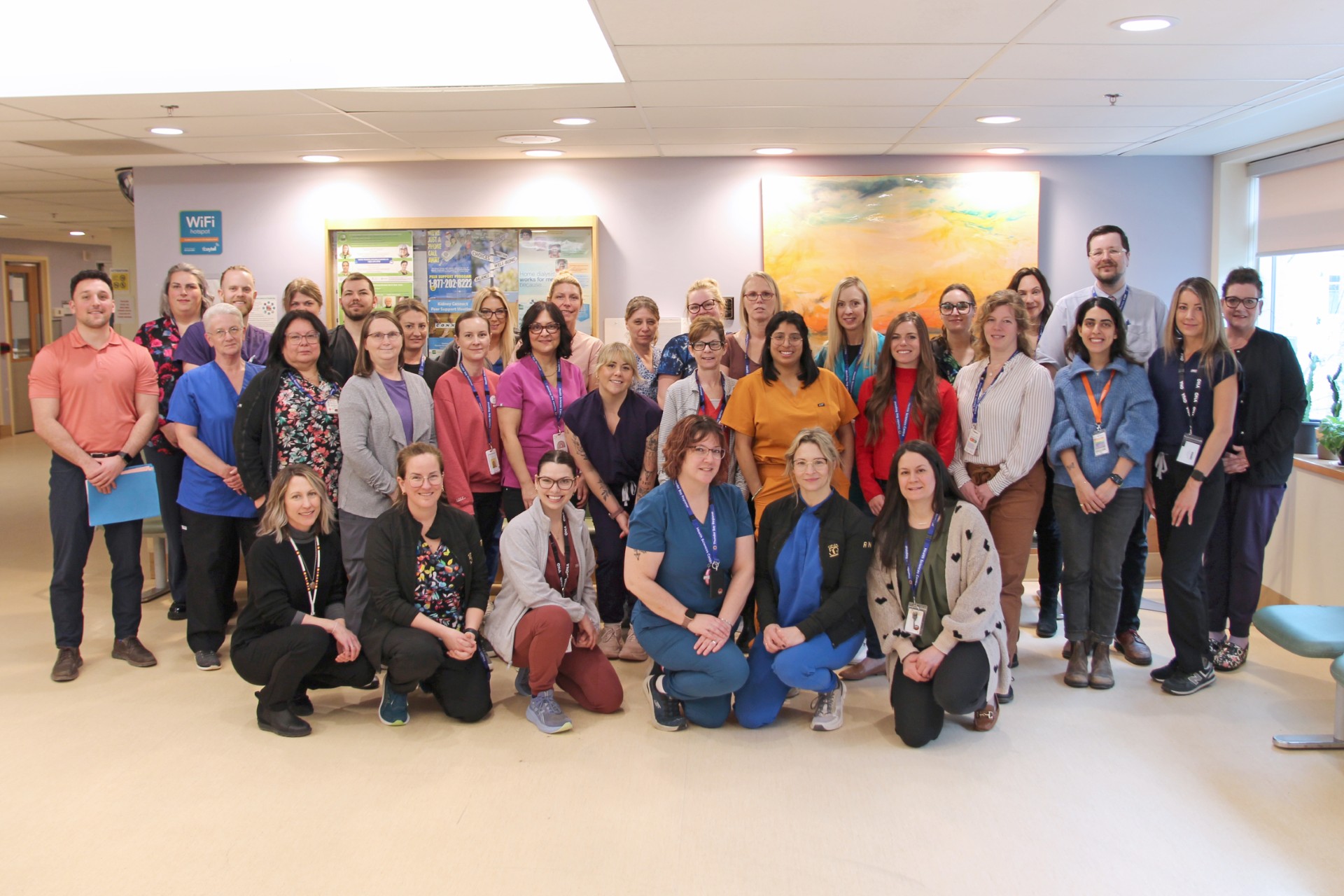
March is Kidney Health Month, and we want to raise awareness about kidney disease and its impact on the people of Northwestern Ontario. Throughout the month, we will be featuring members of the Renal Team, and highlight the incredible care they provide for renal patients across our region.
“The Hemodialysis unit in Thunder Bay consists of a manager, coordinator, dialysis aides, registered nurses, nephrologists, nurse practitioners, social workers, dietitians, pharmacists, pharmacist assistant, clerks, Indigenous Patient Navigators, Clinical Nurse Specialist and Vascular Access Coordinator. The unit operates three shifts and provides dialysis treatments for over 140 patients daily. The program supports patients from the Thunder Bay and surrounding area, covering the region from the Manitoba border to English River.” – Ramsey Broennle, Registered Nurse (RN), Regional Renal CKD Lead, TBRHSC
“Registered dietitians (RD) are essential members of the interdisciplinary Renal team, working closely with patients, their families and other health care providers, to support those living with chronic kidney disease. Registered dietitians help simplify the science of kidney nutrition into practical, individualized advice, helping patients manage their condition and optimize their health at every stage of kidney disease.” – Marisa Tamasi, RD, Renal Services, TBRHSC
“As a charge nurse in dialysis, Karen and I coordinate the day-to-day activities of the Hemodialysis unit. We organize patient schedules, staff assignments, adjust for dialysis in the intensive care unit when needed, and work closely with team members to provide comprehensive care for our dialysis patients. We work directly in the Hemodialysis unit and engage with patients, families and staff everyday, which makes our job very rewarding.” – Barb Appel, Charge RN (Hemodialysis), TBRHSC
“As a Hemodialysis clerk in the Renal Department, our responsibilities are to assist the entire team in the day-to-day operations in the unit in order to facilitate the best care for our patients. Some of the duties include ensuring the patients schedule and attendance are is up-to date, and processing doctors’ orders which may include patient bloodwork or diagnostic test requisitions. This in turn frees up the nurses’ time and allows them to deliver direct patient care. Often the first point of contact, we communicate information to patients or other staff members throughout the renal department in a timely manner to assist in the best patient care.” – Holly Hebert, Hemodialysis Clerk, TBRHSC
Photo: Staff from the TBRHSC Renal Program
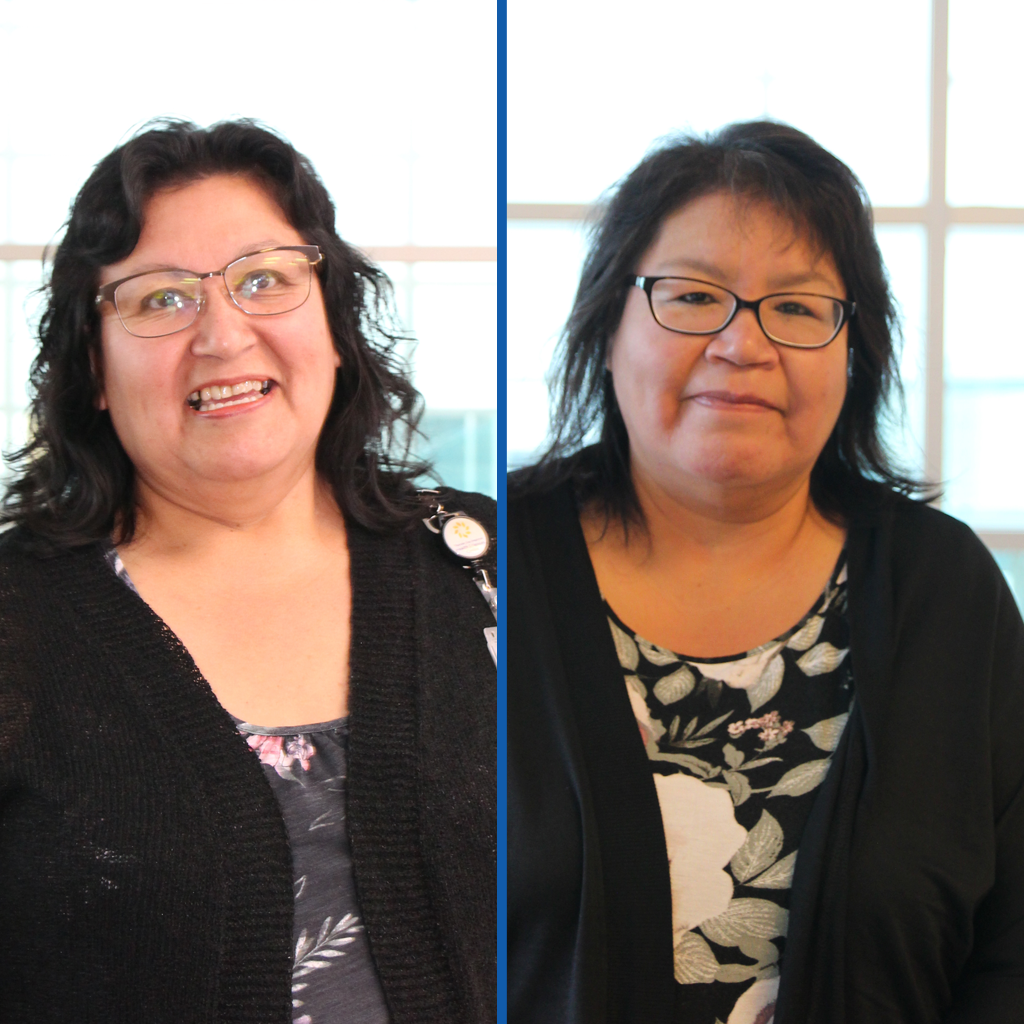
Renal Indigenous Patient Navigators
“The Renal Indigenous Patient Navigators are an essential part of the Renal team. They provide Indigenous patients and their families with interpretation services and offer support to help navigate the health care system. They advocate for patients and their families to assure cultural and linguistic diversities are acknowledged, and that the needs of patients are heard and understood by health care providers.
The Renal Indigenous Navigators work primarily with three diverse groups of First Nations peoples – Cree, Oji-Cree and Ojibway. There are be many differences between these groups that must be considered including different customs, traditions, beliefs, dress and dialect.” – Susan Anderson and Lorraine McKay, Indigenous Patient Navigators, TBRHSC Renal Services
Photo (L-R): Susan Anderson and Lorraine McKay, Indigenous Patient Navigators, TBRHSC Renal Services