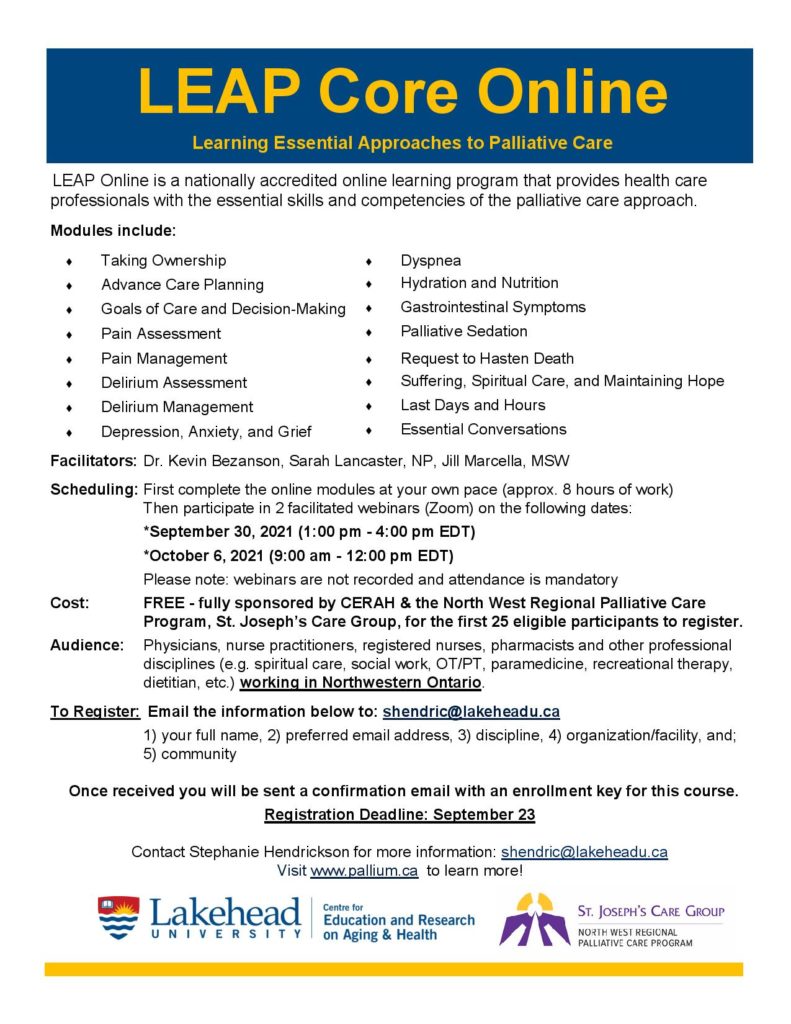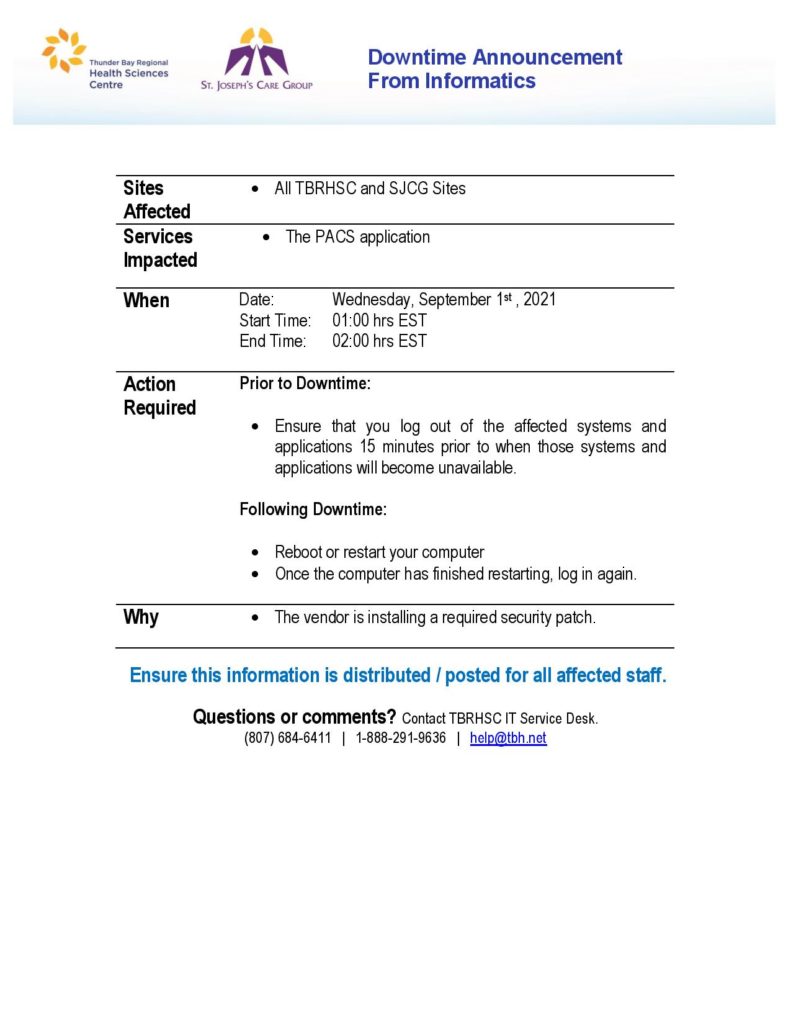
Scheduled Downtime Notice (September 1st)



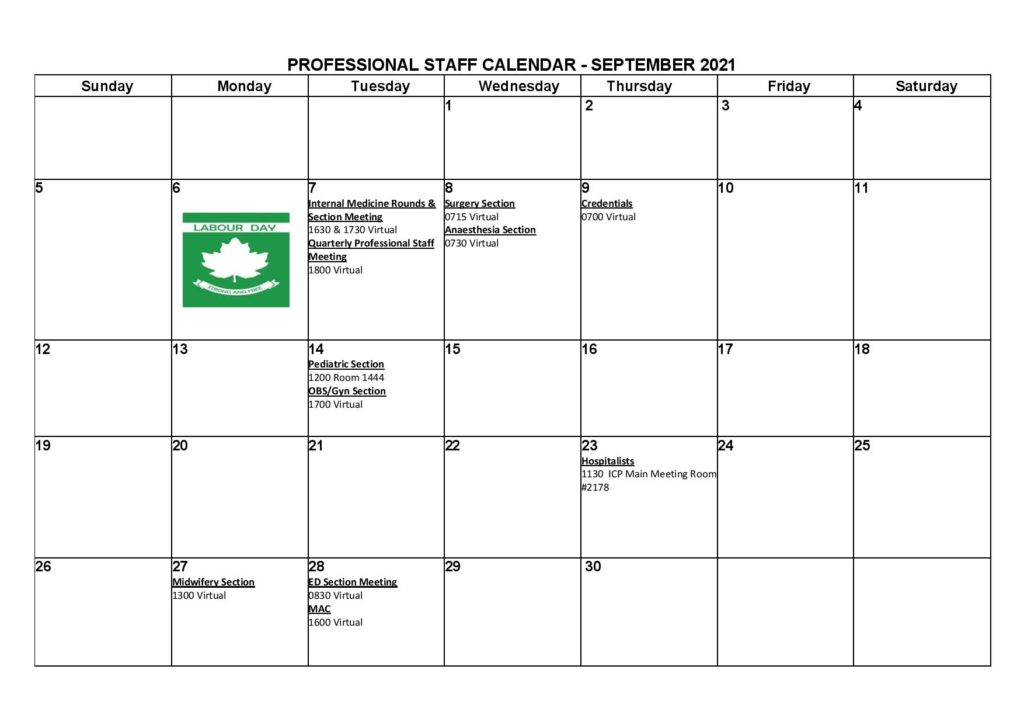
Below is the Professional Staff Calendar for September 2021.
Any revisions made to the calendar will be posted to the Intranet and to the bulletin board in the Professional Staff Lounge.
Sent on behalf of Dr. Rhonda Crocker Ellacott, President and CEO, TBRHSC, and CEO, TBRHRI
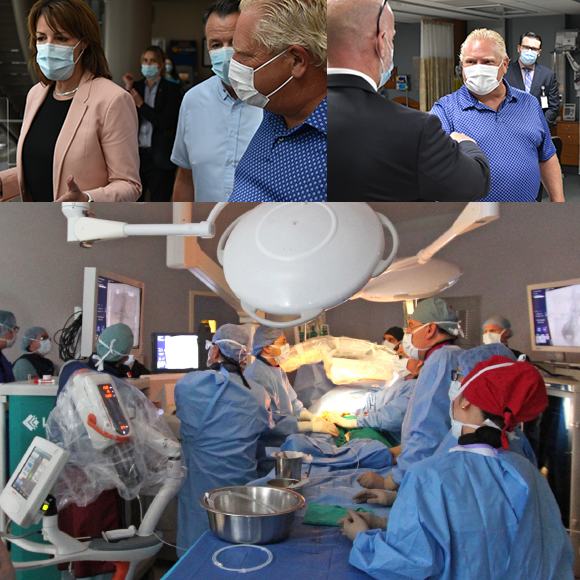
We are very pleased to share that Premier Doug Ford and Minister Greg Rickford visited Thunder Bay Regional Health Sciences Centre (TBRHSC) on Tuesday, August 24th to announce a $5.2 million investment to support the planning and design of our cardiovascular surgery (CVS) program. Thanks to this funding, cardiovascular surgery will be regularly performed in Northwestern Ontario, helping to address surgical wait times and improving access to lifesaving care closer to home.
Our current cardiovascular program is a partnership between TBRHSC and the Peter Munk Cardiac Centre (PMCC). The PMCC is one of the world’s leading cardiac and vascular centres, and is part of University Health Network (UHN), located in Toronto. Often referred to as a ‘one program on two sites’ model, this partnership enables us to bring much-needed comprehensive cardiovascular services to underserviced communities in Northwestern Ontario.
Providing safe, quality, life-saving care closer to home is our goal, and the generous financial support from the Government of Ontario is vital to achieve it. A full cardiovascular surgery program at TBRHSC will allow patients in Northwestern Ontario to be provided with the same quality cardiovascular care as they would in Southern Ontario, but without the added stress and expense of having to travel. It also enables patients living in Northwestern Ontario to receive the life-saving procedures they need in a community that is more sensitive to their needs and more familiar with their circumstances.
To launch the CVS program, existing space at TBRHSC will be renovated and expanded to include:
We’ve already made tremendous progress with the CVS development, particularly with our vascular program. Since 2018, our three talented vascular surgeons, Dr. Mary MacDonald, Dr. Elrasheed Osman, and Dr. Matthew Ingves, have performed life and limb saving vascular surgery and procedures, caring for patients closer to home, on an impressive average of almost 400 patients per year!
Successes by the numbers:
Furthermore, since 2018, an average of 350 patients from Northwestern Ontario per year, have received cardiac surgery referrals. Soon, most of those patients will be able to receive the care they need, right here at TBRHSC. Thank you to all staff, professional staff, volunteers, Patient Family Advisors, our partners at the PMCC and UHN, and our generous donors who have supported our CVS progress so far. This funding announcement marks an important and exciting milestone in our overall goal. Thank you for your continued support and we look forward to celebrating many more milestones in the near future.


August marks the seventh month of the popular Thunder Bay 50/50, and the take-home jackpot is over $350,000 going into the final week of ticket sales.
The Thunder Bay 50/50 is a monthly raffle in support of Thunder Bay’s Hospital, with a new Grand Prize draw on the last Friday of every month. Nearly $4 Million has been won since the 50/50 launched in January. Ticket sales for August’s draw will end this Thursday night.
Each Thunder Bay 50/50 ticket helps fund the highest priority equipment needs at the Thunder Bay Regional Health Sciences Centre, which cares for patients from Thunder Bay and all across Northwestern Ontario. Many pieces of equipment have been funded so far including 3 specialty ICU beds, a BiPAP ventilator, a cardiac & oxygen Monitor, a and a dental x-ray machine. More exciting equipment announcements are expected next month.
When asked why they support the Thunder Bay 50/50, ticket purchasers shared the many reasons they take part:
“To support local and keep money in the area. I have spent time in the Hospital and thought the 50/50 was a great way to help give back and support them in getting new equipment.” – Jennifer B.
“My granddaughter is now working at the hospital (as a physiotherapist), so I feel I must be supportive of her workplace. I was also impressed by the care given to my sister many years ago when she was transported from a holiday in Mexico to your hospital.” – Pat D.
“I spent several days in the hospital and received excellent care while there. I wanted to give back and say thank you.”- Scott S.
Tickets are available online only at www.thunderbay5050.ca:
– $10 for 5 numbers
– $20 for 30 numbers
– $50 for 150 numbers (Best Value)
** Must be purchased by 11:59 p.m. ET on Thursday, August 26th to be eligible for the Grand Prize draw on August 27th, 2021.
Questions about the draw can be sent to info@thunderbay5050.ca. Participants must be present in Ontario and 18 years old or older at time of purchase. Lottery licence RAF1199631.

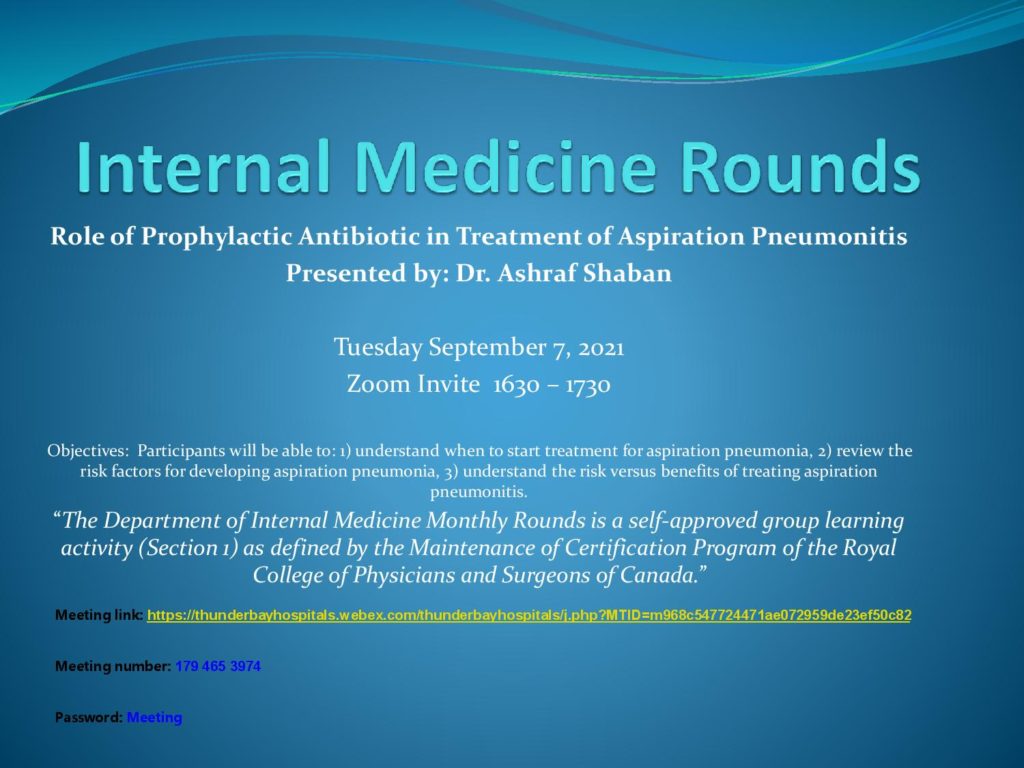
Internal Medicine Rounds
Role of Prophylactic Antibiotic in Treatment of Aspiration Pneumonitis Presented by Dr. Ashraf Shaban
September 7, 2021 at 1630
Webex Link in attached poster

Shared on behalf of Georgia Carr, Manager of Laboratory Services
Please join me in welcoming Jim Uliana, our new Biochemistry Coordinator beginning September 2nd, 2021.
Jim became a licensed Medical Laboratory Technologist in 1986, graduating from the Thunder Bay Institute of Medical Technology, subsequently obtaining his BA at Lakehead University.
Jim worked at a small regional hospital for 19 years as well as at our large acute care facility since 2006. This vast background has been honed over Jim’s 34-year career which has included working in a variety of laboratory disciplines, as well as in the Information Systems department as a Laboratory Information Systems (LIS) programming specialist.
This unique work experience coupled with Jim’s expertise and professionalism will aid in the delivery of laboratory services via the Biochemistry section to clients and patients of Northwestern Ontario. Congratulations to Jim!

Shared on behalf of Georgia Carr, Manager of Laboratory Services
Please join us in celebrating Sheila’s retirement:
Date: September 2nd, 2021
Place: Auditorium B
Time: 11:15 am to 1:15 pm
Treats: Cake, Tea & Coffee
Maximum Room Capacity: 40 individuals (will be monitored)
Sheila was born and raised in Fredericton NB, the youngest of 5 children. She graduated from New Brunswick’s School of Medical Technology in 1975, when after such time Sheila held various jobs, ultimately moving to Thunder Bay, Ontario in 1981 to attend Lakehead University where she obtained her HBSc in Medical Laboratory Sciences and her BEd.
Throughout and since that time, Sheila’s career spanned working at McKellar General Hospital, the Port Arthur General Hospital and subsequently here at the TBRHSC, where she became the Biochemistry Coordinator in 2012.
Sheila has had an accomplished career and contributed a great deal of expertise to her profession. She has seen a complex scientific department through a great many changes. She has been instrumental to ensuring compliance to accreditation standards and quality patient care, setting the bar high.
Please join me in congratulating Sheila on this accomplishment – 45 years working in the field of Medical Technology. She is highly respected and will be greatly missed by her peers. We wish Sheila all the best, always!
(Originally published in the August 2021 edition of The Walleye)
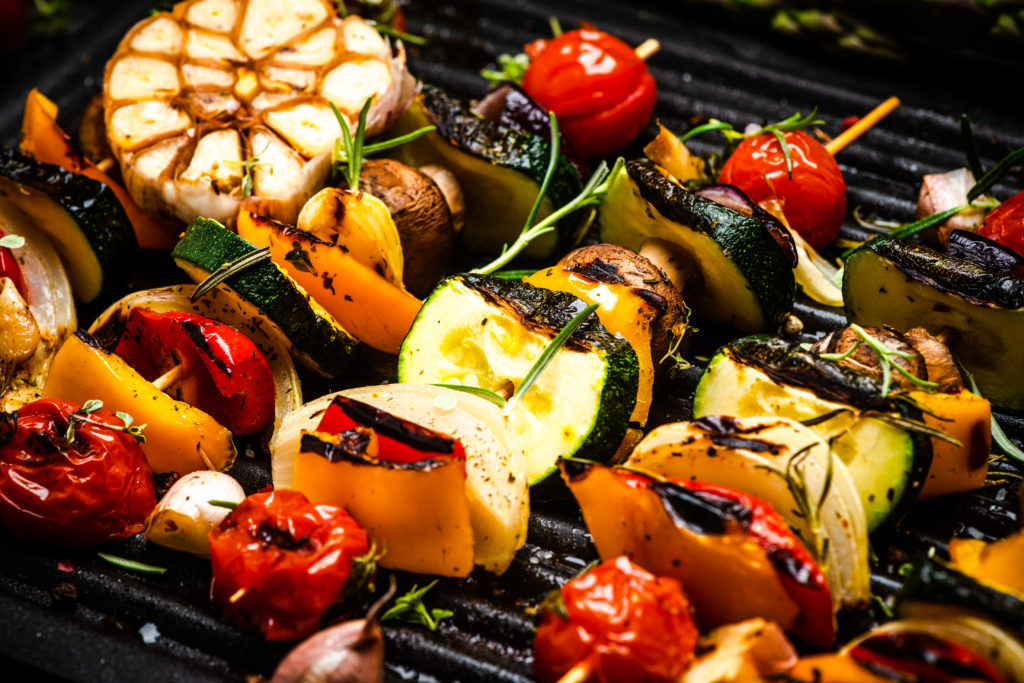
Grilling is one of the great joys of summer. Cooking over an open flame simply gives foods a unique flavour. Not to mention that gathering around the grill with friends and cooking dinner outside can be more fun than staying in the kitchen. However, many people are surprised to hear that grilling does have its health risks.
Grilling meat can produce chemicals that could increase your risk of cancer. Studies have found that charring, burning, or grilling meat, fish, or poultry at high temperatures can generate compounds called polycyclic aromatic hydrocarbons and heterocyclic amines that can alter our DNA in a way that could lead to cancer. Despite these concerns, no one is suggesting that you throw away your barbecue. Instead, we asked Holly Freill, a registered dietitian with the renal program at Thunder Bay Regional Health Sciences Centre (TBRHSC), how we can grill the safest, most delicious foods without the health risks.
“It is important to consider how our eating patterns may change once we start cooking outdoors, and the foods you are putting on the grill,” says Freill. “Do a quick survey; does your family eat more meat in the summer? Maybe you eat the same amount but the meat is more processed. All meat is not created equal so paying attention to how eating patterns might change is the first step toward a healthy diet and eating mindfully.”
The practice of barbecuing can increase the quantity and frequency of our fresh or processed meat intake. Consuming red meat (beef, pork, and lamb) or processed meats (deli meat, hot dogs, sausages, etc.) can also increase your risk of developing colon cancer. One way that we can grill healthier is to choose meat wisely.
“Foods like hot dogs have a number of additives like sodium, nitrates, and phosphates,” explains Freill. “When used as additives, these chemicals behave differently in the body than when they occur naturally and research suggests their effects are much more harmful. Try choosing leaner cuts of meat when barbecuing but also consider your portion size.”
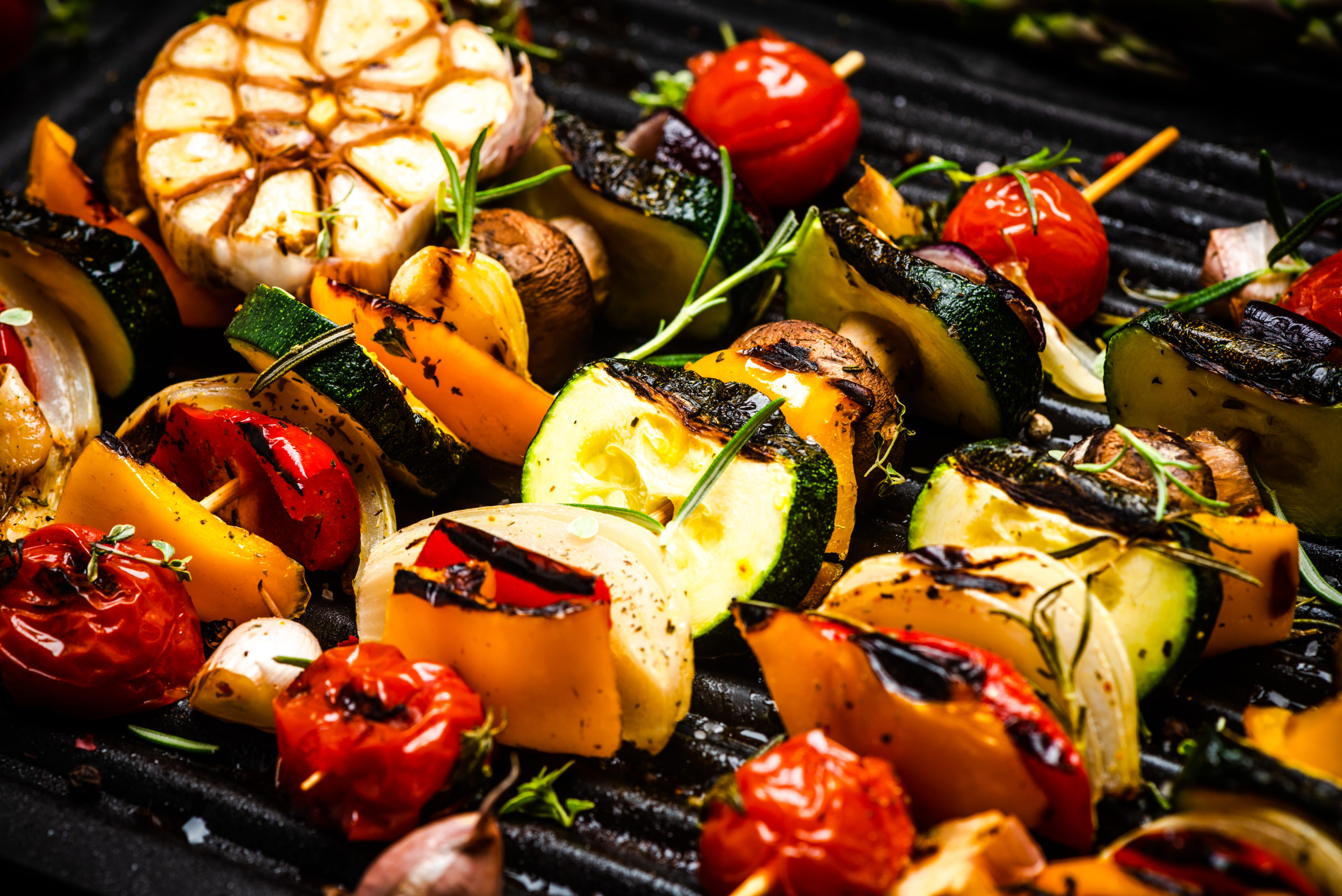
With so many tasty options to choose from, it can seem overwhelming to plan a meal and many people will resort to red meat. For those of us that fall into this category, Freill has the following advice. “If you choose to eat red meat, try skewering it into kabobs. Alternating between meat and vegetables can help cut down on the portion size while helping to sneak in a couple more vegetables onto your plate. Fruits like pineapple and peaches work well on the grill and add a great addition to your entrée. Remember, meat on a bun is not a complete meal—you need a fruit or vegetable to round it out.”
Freill stresses the many reasons to increase our plant intake.
Not only is the environmental impact of a plant-based diet more favourable than a diet that emphasizes meat from grazing livestock, it also has health benefits. “Fruits and vegetables are high in fibre and micronutrients, and low in calories,” says Freill. If we aren’t eating vegetables with all meals and snacks then we likely aren’t eating enough plants throughout the day.”
One way to boost our plant intake is to include lots of colour on our plate. This can make vegetables seem more appealing. Using peppers, gourds, root vegetables, fruit, and mushrooms is a great way to make a plate of grilled vegetables look even more appetizing—and they taste good too! It can also be a great way to get kids to consume a well-rounded barbecue dinner.
Next time you are planning to fire up the grill, keep these healthy grilling tips in mind to ensure that you are keeping yourself and family safe. If you are tired of the same old barbecue menu and looking for some healthy menu options, visit the Dietitians of Canada website at bit.ly/overthegrill for more recipes.