Resumption of Attendance Support Program (October 1)



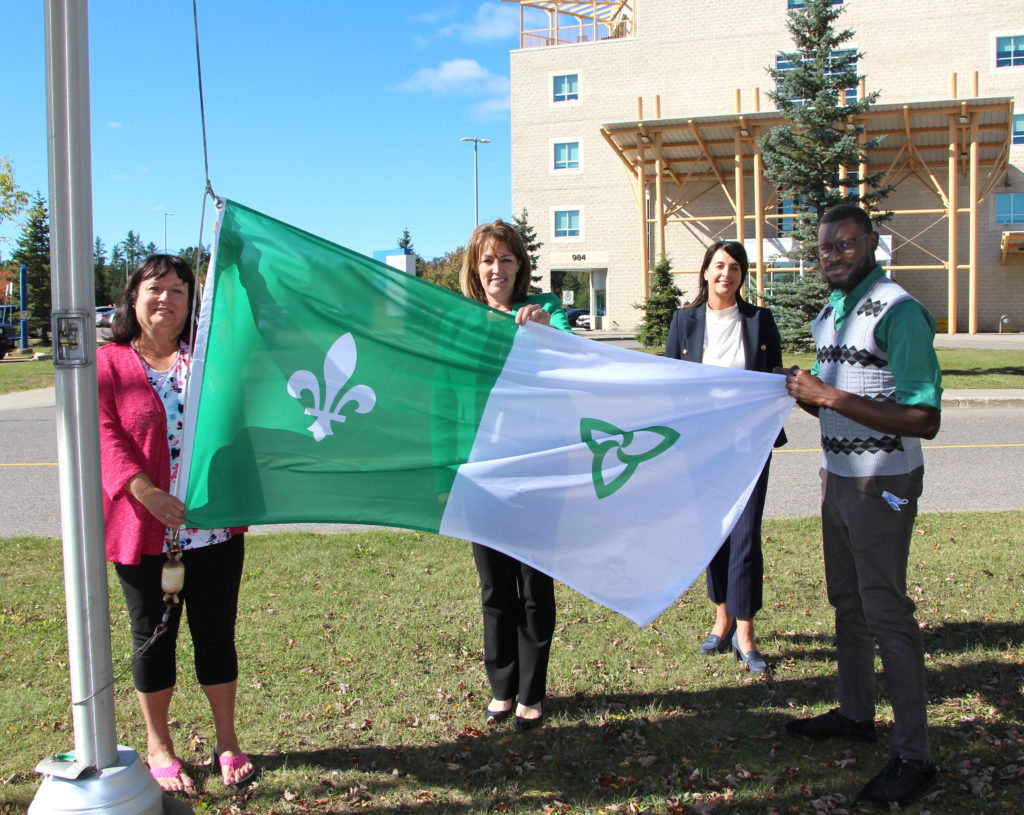
Thunder Bay Regional Health Sciences Centre (TBRHSC), joined by representatives from the community’s Francophone organizations, recognized the rich Francophone culture in Northwestern Ontario by raising the Franco-Ontarian Day flag today.
“We are raising the Franco-Ontarian flag in celebration of the rich history and social, economic and cultural contributions of the Francophone community. We want to encourage you to take this opportunity to learn more about francophone language and heritage,” said Dr. Rhonda Crocker Ellacott, President and CEO, TBRHSC and CEO, Thunder Bay Regional Health Research Institute.
Franco-Ontarian Day officially recognizes the contribution of Ontario’s Francophone community to the cultural, historical, social, economic, and political life of the province. There are more than 622,000 Francophones and 1.5 million who can speak French, making Ontario the largest Francophone community outside of Quebec. September 25th marks the anniversary of the first raising of the Franco-Ontarian Flag in 1975.
Today, there are 8,000 Francophones who call Northwestern Ontario home. “We know that providing care that is culturally sensitive can improve health outcomes and quality of care” said Dr. Crocker Ellacott. “Our goal is to meet the social, cultural and linguistic needs of all our patients. We are committed to ensuring that we are respectful and responsive to Francophone cultural preferences, needs and values, and all the other diverse populations we serve.”
A number of initiatives have been done at TBRHSC to better care for Francophone patients and families in the region. Bilingual educational documents and care instructions, such as consent forms, are available to patients and families.
TBRHSC is fortunate to have a number of volunteers who speak French. Being able to support Francophone patients and families or provide comforts and friendly visiting in a patient’s language of choice can make a huge difference for people going through stressful situations in the health care system.
TBRHSC also promotes French language training and eligible staff are encouraged to further develop their French language by taking advantage of a tuition reimbursement program.
For more information French Language Health Services in Northern Ontario, please visit https://reseaudumieuxetre.ca/en/. If you’d like to learn more about Franco-Ontarian history, please visit https://www.ontario.ca/page/franco-ontarian-history.
We all move about in our own ways, but for some, how we move can be hindered by conditions such as arthritis.
Arthritis isn’t a single disease, but rather a term that refers to joint pain or joint disease and includes tenderness and swelling of one or more joints. It is considered to be a chronic and incurable condition that tends to progress with age. Arthritis can involve any part of the body but most commonly occurs in weight-bearing joints such as your hips, knees, or spine. About one in five Canadians have arthritis, with women (one in four) having a greater likelihood than men (one in six). The effects of arthritis can vary from person to person, however, knowing your body and how to move through the discomfort can be more freeing than you think.
Although a common term, there are actually more than 100 different types of arthritis. The most common type of arthritis, osteoarthritis, often occurs as a result of regular wear and tear on the aging body. Arthritis can also be caused by injuries, obesity, autoimmune disorders, muscle weakness and family history. Some of the common symptoms of osteoarthritis include a clicking or popping noise with bending, joint instability, muscle weakness around a joint, a scraping feeling in the knees, and limited range of motion that may go away after a movement.
Arthritis generally cannot be prevented, but there are some simple steps that we can take to reduce the risk of developing it. Keep your body in tip-top shape for the long run by implementing these lifestyle choices:
For more information on how you can reduce the risk of arthritis, visit https://arthritis.ca/living-well.
Staff Feature:
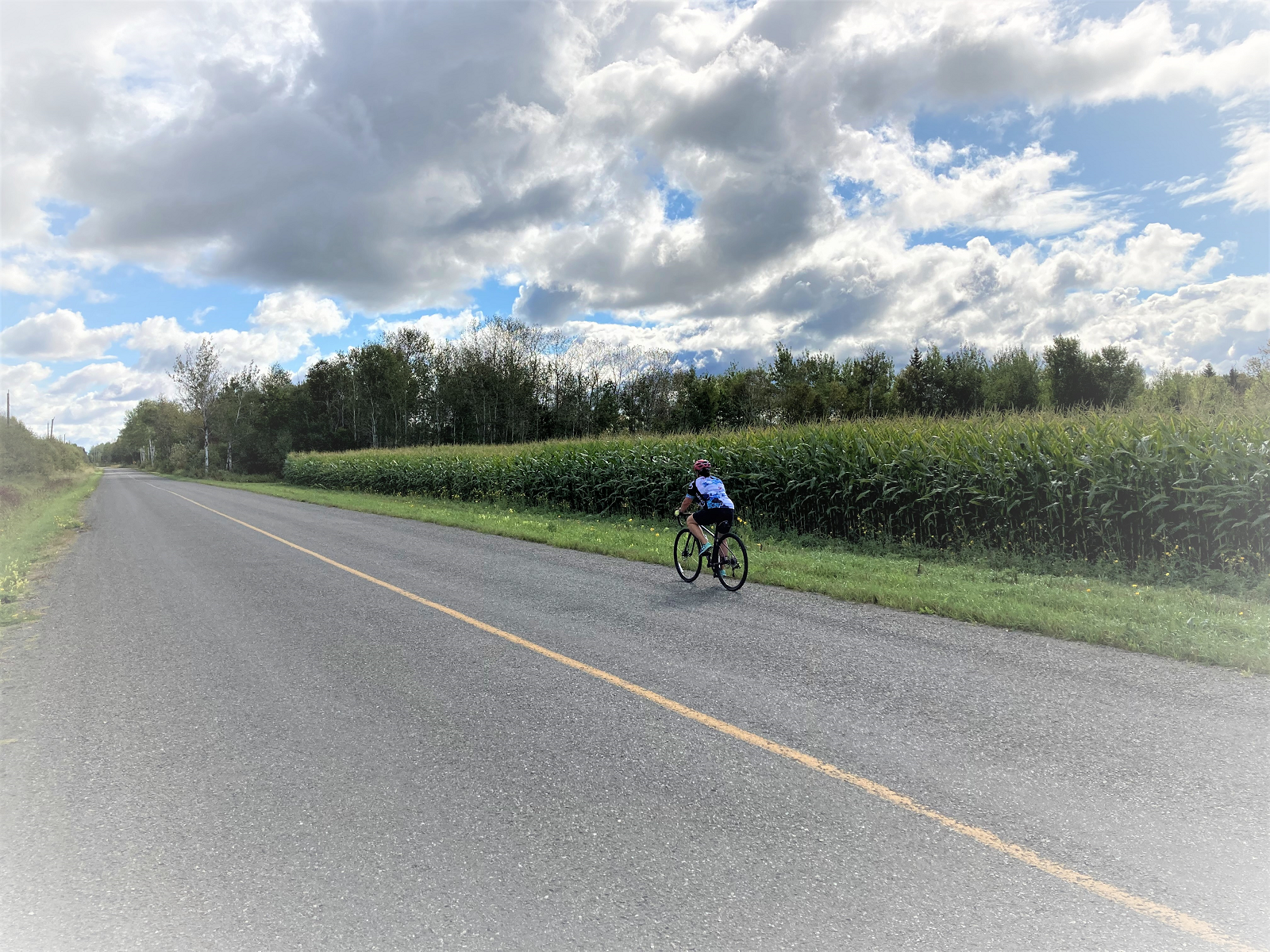
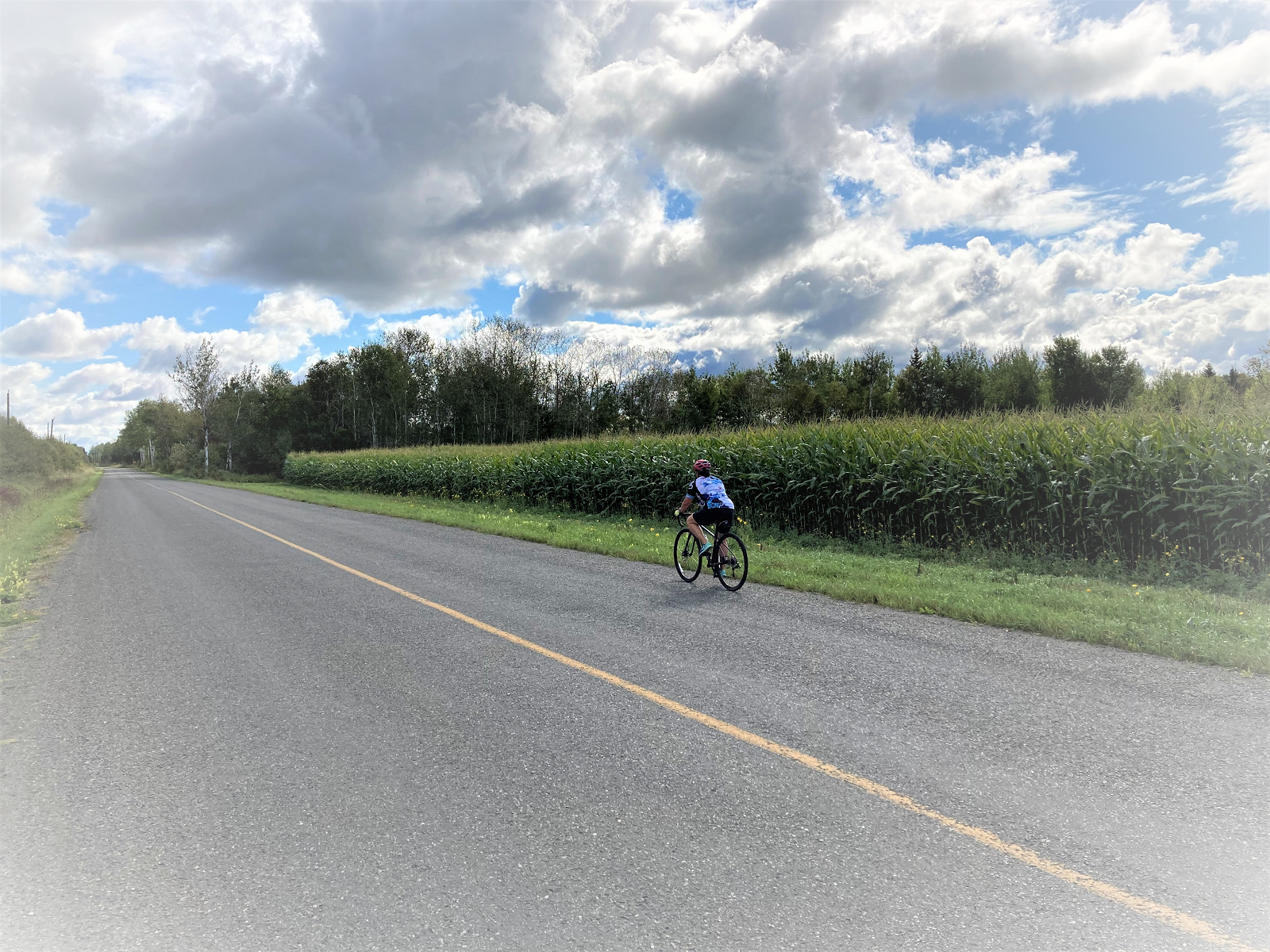
Dr. Sheri Robertson (Chiropractor and Lead for the Spine Assessment Clinic) enjoys outdoor activities and tries to mix things up based on the season. Cycling is one of her favourite outdoor activities. She enjoys the peacefulness of the outdoors, the challenge of changing terrain/elevations and how cycling can be enjoyed as a group or solo activity. “It is always amazing to me just how far my legs can take me!”
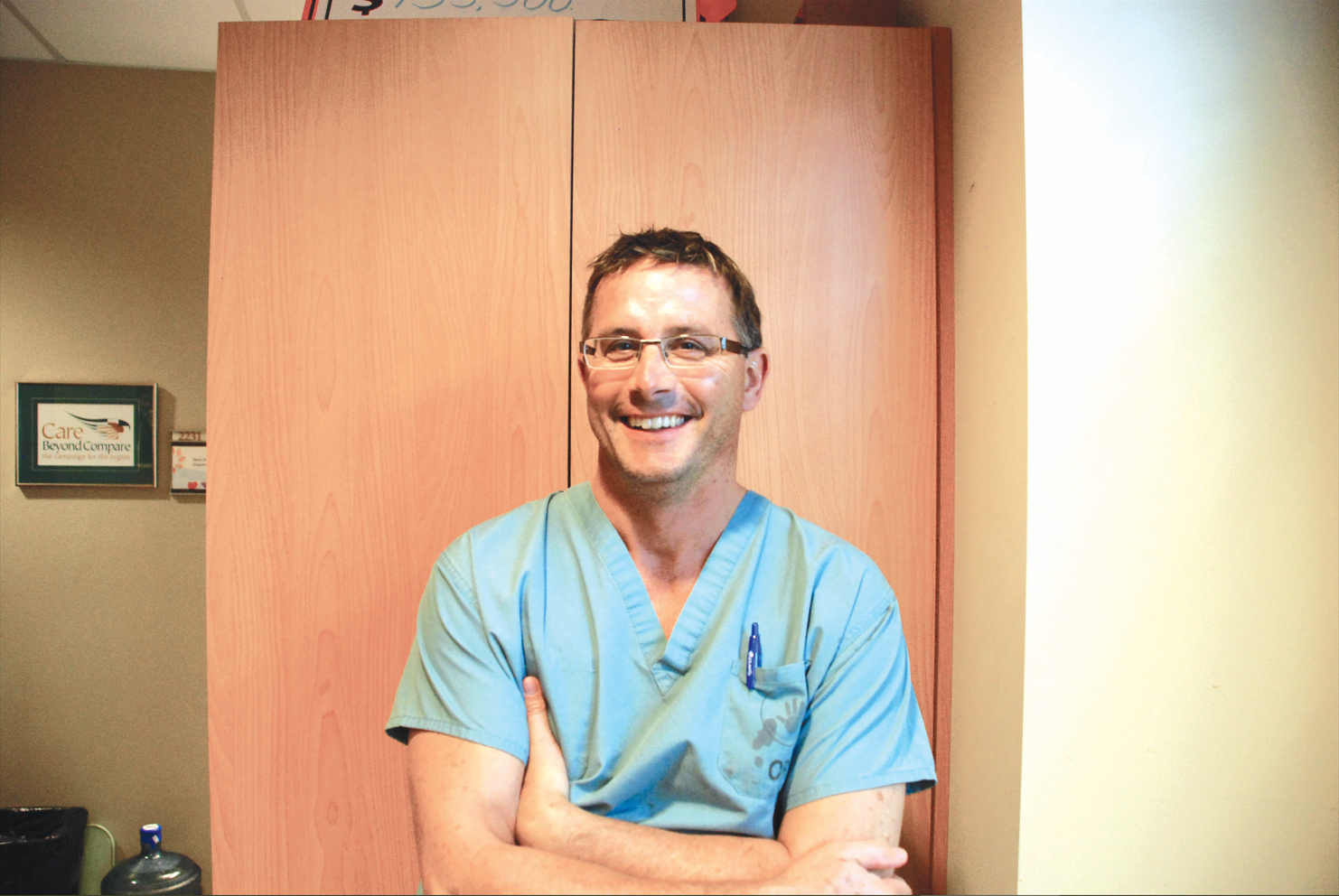
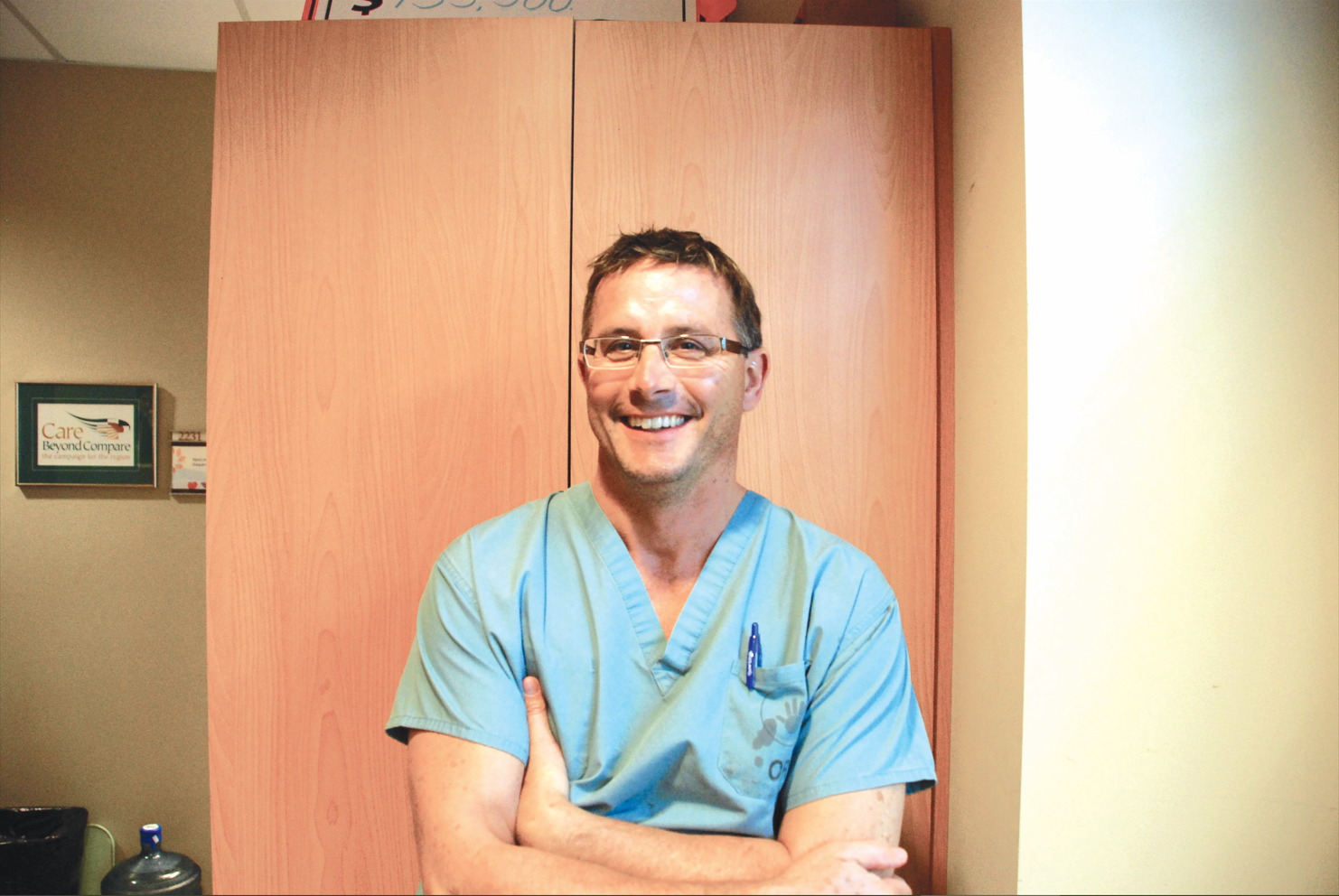
What do you do when you have to decide between travelling for an eye treatment or losing your sight? Seems like an obvious choice. But for some patients in Northwestern Ontario who have difficulties travelling, it’s a very real problem.
“One of the hardest parts of being an ophthalmologist is telling patients that they need to leave the region for vision care,” said Dr. Chris Francis, one of the four ophthalmologists (eye specialists) at the Lions Vision Care Centre at our Hospital. “That’s because we know travelling for treatment may not be an easy option.”
Age-related factors such as difficulty sitting for long periods, the need for oxygen tanks, and other health-related complications can make travel hard for patient and caregiver alike. Other patients struggle to pay unexpected travel costs. For immune-compromised patients, COVID has complicated travel even further.
The reality is that some patients simply cannot travel to get the care they need.
“It’s frustrating,” Dr. Francis said. “No one should have to lose their eyesight because vision care services are too far away from home.”
That’s changing thanks to the Thunder Bay Regional Health Sciences Foundation’s generous donors. With their support, the Lions Vision Care Centre has been able to purchase new and advanced equipment that helps ophthalmologists perform more surgeries and diagnostics right here in Thunder Bay.
Donations to the Lions Vision Care Centre will help fund a new ophthalmic operating microscope. “Modern eye surgery just is not possible without this technology,” Dr. Francis said. “Eye surgery is so precise and happens in such a small space that we need to be able to zoom in with crystal-clear images.”
Vision problems are only natural as we age. Having the right treatment options and equipment right here in Thunder Bay should be only natural too.
Yes, we’ve made great progress, but our work isn’t done yet. You can help more patients get more treatments closer to home so that patients don’t have to make the choice between travel or their vision. Please donate online at healthsciencesfoundation.ca/vision, or call our Donation Centre at (807) 345-4673 right now.
With your support, we can ensure more eye patients can get the care they need, right here closer to home. Thank you!

Shared on behalf of Help Desk
The Video Conference Cart that was previously stored in the storage closet in Auditorium A, will now be stored in The Informatics Department at the main hospital site. This cart can be used for web based video conferencing, like Cisco WebEx and OTN meetings.
To book this cart please create an appointment in GroupWise with the resource
TBRHSC-EQUIP-HelpDesk_Video_Conf_Cart
This cart will come with a large room camera, multiple speakers with microphones as well as instructions for use. **Please note any room bookings are still required to be booked separately.
To ease into this new resource, a technician will contact you before your appointment to see if you require assistance with the setup (useful for first time booking). The cart can be picked up 7 days a week from 8-4pm in room 1458 (behind rehabilitation). Please ensure you book and pickup the cart at least 30 minutes before your appointment to ensure there are no technical issues.
Other IT equipment that is available for booking:
Short Term Laptop Loan (for any loans longer than a week, requires monitors or special setup is required, please use the Help Desk Self Service Temporary Loan form)
TBRHSC-EQUIP-HelpDesk_Laptop#1
TBRHSC-EQUIP-HelpDesk_Laptop#2
TBRHSC-EQUIP-HelpDesk_Laptop#3
Cisco conference room phones (Previous name Star Phones)
TBRHSC-EQUIP-HelpDesk_ConfPhone#1
TBRHSC-EQUIP-HelpDesk_ConfPhone#2
If there are any questions or concerns, please contact our Help Desk at 684-6411.
By Graham Strong
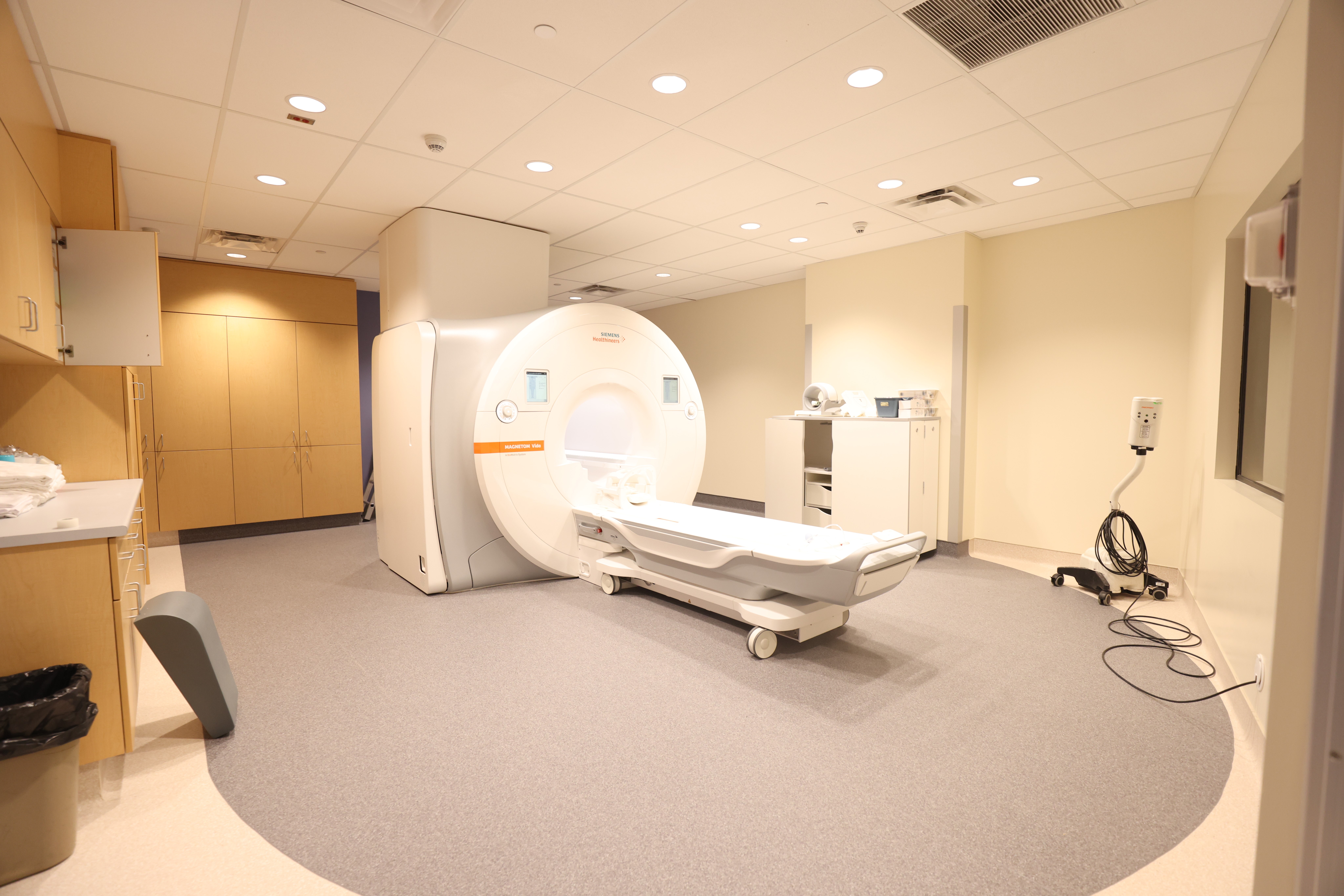
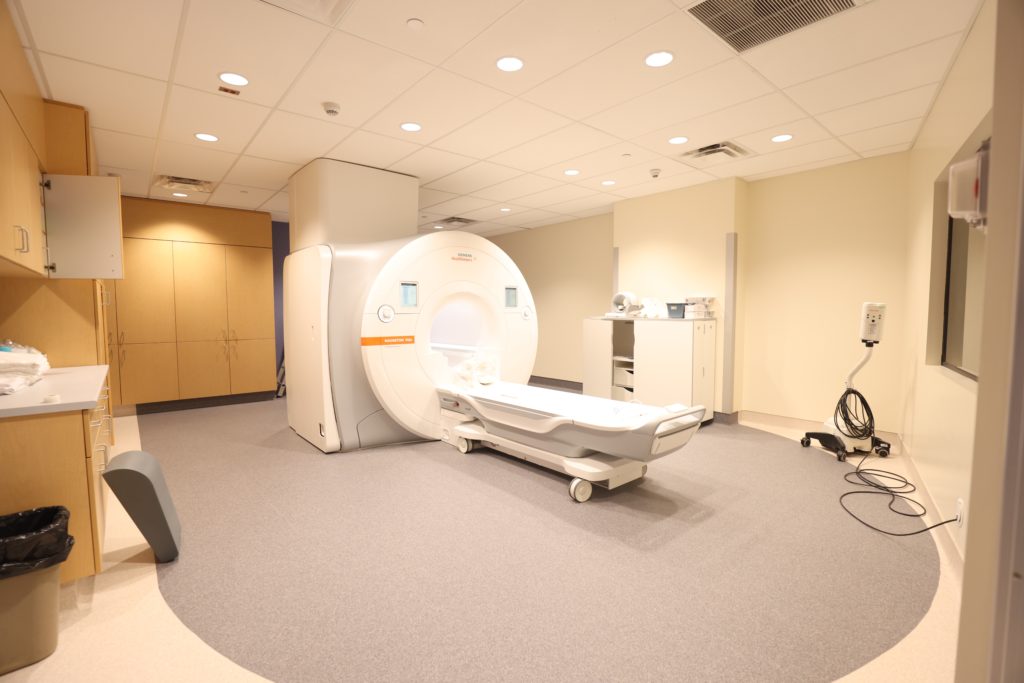
Thanks to funding from the Thunder Bay 50/50 Draw, Diagnostic Imaging at our Hospital installed a new 3T MRI unit this summer – and the things it can do are amazing.
Sandra Willson, Manager Diagnostic Imaging, Molecular Imaging, MRI, Ultrasound and Clerical Services at the Thunder Bay Regional Health Sciences Centre, said that this advanced technology will open up countless new imaging and treatment options. For the most part, clinicians will drive new innovations using the scanner.
“The new 3T MRI will enable us to do some procedures that we weren’t able to do, and do some other procedures better,” Willson said.
The new unit replaces an ageing 1.5T MRI installed 13 years ago. Not only was it at higher risk for breakdowns, the technology itself was ageing. This state-of-the-art 3T MRI scanner will be used to help diagnose certain cancers, including head and neck and prostate cancer cancers, with higher resolution images.
“With the 3T unit, we’ll get better resolution for prostate imaging (for cancer) and the muscular-skeletal system. The quality of the images will be far better in those cases,” she said.
For some procedures we already do, imaging will be faster as well, which will improve patient comfort. For example, Willson said that a patient coming in for a standard lumbar MRI might only have to lie on the table for 12 minutes instead of 16 minutes with the older 1.5T machine. “Four minutes is a long time for someone who has back pain or doesn’t like enclosed spaces,” she said.
Other new procedures include helping with cancer treatment planning.
“It will give us an opportunity to work with fusion imaging so that we can assist the Cancer Centre with some of their radiation treatment planning,” Willson said. Fusion imaging allows specialists to digitally overlay scans from the 3T MRI and other imaging sources such as CT and ultrasound to give clinicians more detailed images for biopsies and radiation treatment planning.
But that’s just the tip of the iceberg. Cardiac MRI is another procedure now possible with the 3T MRI unit. Currently, patients who need a cardiac MRI have to travel to southern Ontario. Dr. Mallory Granholm, a radiologist specializing in cardiothoracic imaging, will help develop that procedure right here in Thunder Bay when she arrives in November. Not only will that reduce travel for patients now, it will be especially important when our new cardiovascular surgical program launches.
“As we start to see cardiac surgery here, there will be more and more demand for cardiac imaging, both structural and functional. We’ll be ready for them once it gets here,” Willson said.
The new unit was funded in part by the Thunder Bay Regional Health Sciences Foundation’s Thunder Bay 50/50 Draw. That means everyone who bought a ticket in the past year has helped bring this remarkable equipment to patients in Northwestern Ontario.
“MRI as well as other areas across the Hospital have benefited tremendously from the Foundation and by funds raised through the Thunder Bay 50/50 Draw. By contributing to Thunder Bay 50/50, you’ve contributed not only to the healthcare in Thunder Bay but to the healthcare of the entire region,” Willson said.
You can help our Hospital purchase more equipment for better patient care too, just by buying tickets! Learn more about Thunder Bay 50/50, buy tickets, and see what this month’s jackpot is up to right now at: thunderbay5050.ca
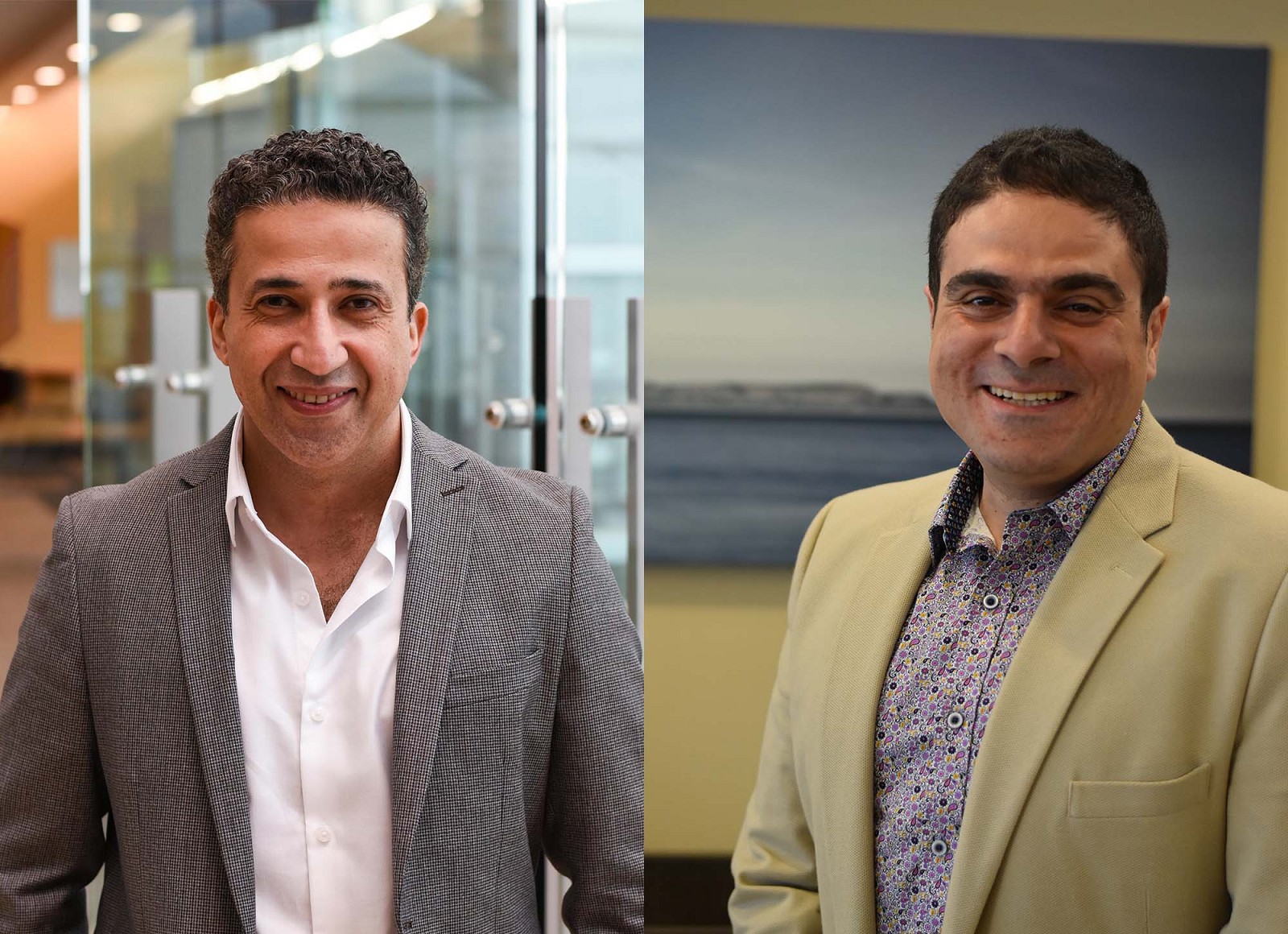
By Graham Strong
Thunder Bay has become a centre of world-class urology care in a very short time. In fact, Thunder Bay is one of a handful of centres for certain prostate and kidney stone procedures. These include holmium laser enucleation of the prostate (HoLEP) to treat benign prostatic hyperplasia (BPH) and kidney stone treatments with the holmium MOSES laser and a trilogy lithotriptor.
All three treatments offer advancements that can greatly reduce side effects, the risk of side effects, and recovery time during their respective procedures.
However, the waitlist for patients from outside of Thunder Bay for these procedures is growing. That’s why Dr. Hazem Elmansy, program director, and Dr. Walid Shahrour are taking time from their busy schedules to train other urologists in these techniques through NOSM’s first fellowship program.
“We are overbooked with fellowships until 2026,” Dr. Elmansy said. “Our last fellow was from Saskatchewan. On the first day, he saw procedures he’d never seen before.”
Although training obviously takes time up front, it pays dividends down the road. Dr. Elmansy’s vision is to train as many other urologists as possible on these procedures so that more urology patients across Canada can get these vastly superior treatments sooner.
“We are interviewing many urologists, because we need this technology across Canada as well,” Dr. Elmansy said. “My goal is that we will take one Canadian and one international fellow at a time.”
The team in Thunder Bay takes a holistic approach to training these fellows. “We don’t graduate clinical fellows as clinicians only,” he said. “We graduate them as clinicians, as researchers, and as leaders.”
That way, Dr. Elmansy said, they can go out into their own practices and advance new techniques with their own research.
You can help grow our world-class urology program! The Urology Fund at the Thunder Bay Regional Health Sciences Foundation helps ensure we can maintain and upgrade the cutting-edge technology we have here. Your donation today will impact thousands of patients in Northwestern Ontario with a range of urological conditions using treatments not always available elsewhere.
Please visit healthsciencesfoundation.ca/donate or call our Donation Centre at (807) 345-4673. Thank you!
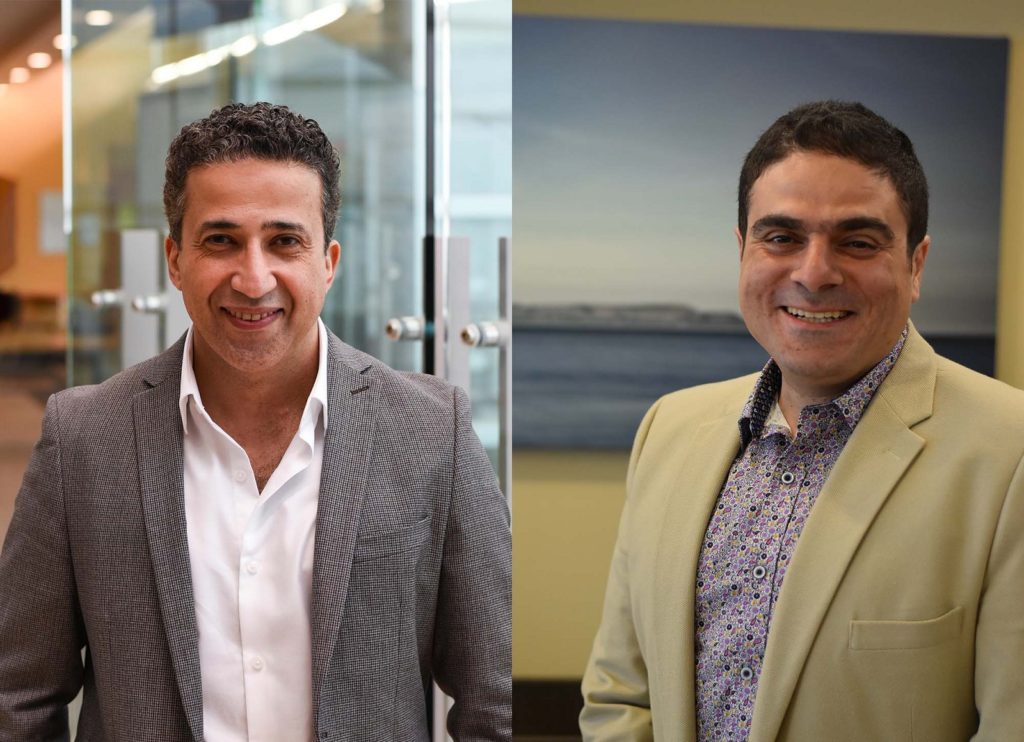

There is something about September that brings a sense of renewal. Maybe it’s those memories of going back to school – or, if you have kids, sending them off again. Maybe it’s getting back into focus after a nice summer break. Whatever it is, many of us are feeling more revitalized this September than ever as life shifts back to something closer to normal.
At the Thunder Bay Regional Health Sciences Foundation, normal means a return to our regular events schedule. Two major events in particular that really bring it home are the Ascend Fundraising Solutions Bachelors for Hope Charity Auction and the Tbaytel Luncheon of Hope. These perennial favourites have both been community highlight events for over 20 years now.
The Bachelors evening, which celebrated its 24th event last night at the Victoria Inn Hotel and Conference Centre, had an interesting twist this year. The theme was Reunion. Of course, it was the first time everyone got together for this live event since 2019. But this All-Star event was a reunion of sorts for the bachelors too. All eight have participated in past events and came back again for the 2022 edition.
As usual, each bachelor was paired with a Luxury Date Package for this high-energy auction during an elegant evening featuring a gourmet dinner, entertainment, and the ever-popular Bling Blitz. It was so nice to see a packed house once again!
The Victoria Inn will also host the Tbaytel Luncheon of Hope on October 6, 2022. Like the Bachelors evening, it is one of those events that women look forward to all year round. So far, it has raised over $500,000 for local cancer care. This year’s speaker is local entrepreneur Lisa Vescio with her own message of Hope. Find out more information and buy tickets at: www.healthsciencesfoundation.ca/luncheon
If you are not able to attend these popular events this year, you can still make a donation to the Northern Cancer Fund. Your generous gift will go towards local cancer care including equipment, treatments and research to ensure all cancer patients have the care they need, right here in Northwestern Ontario. Thank you!
Shared on behalf of Jennifer Wintermans, VP, Quality and Corporate Affairs, COVID-19 Lead, and Adam Vinet, VP, Patient Experience and Chief Nursing Executive, Regional VP, Cancer Care Services
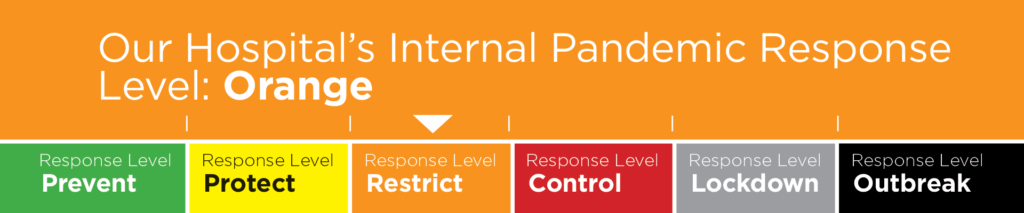
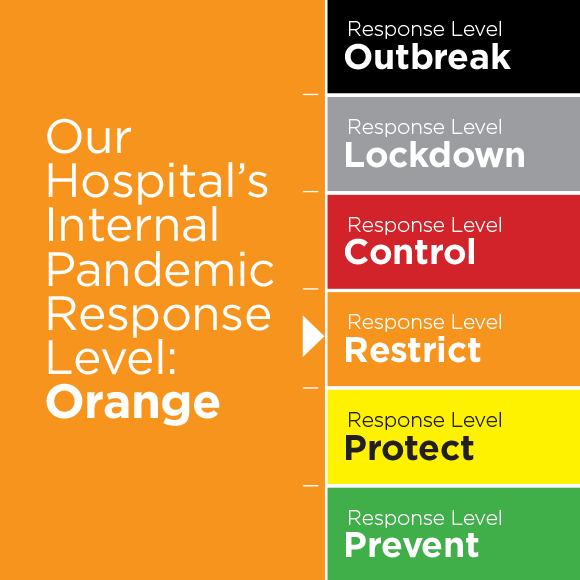
Our Hospital remains at Pandemic Response Level Orange (Restrict).
We continue to experience a high number of primary cases of COVID-19 in our Hospital. For this reason, until we have less people admitted primarily for COVID-19, we need to continue to decrease the amount of movement in our Hospital and maintain a safe environment.
The following restrictions and response activities remain in place for our Hospital operations:
All response activities are evaluated on an ongoing basis to ensure they are effective and appropriate by Senior Leadership Council and leaders across the organization.
Staff are reminded to complete the entrance screening tool prior to each shift, practice hand hygiene and wear PPE appropriate for the work environment.
We thank everyone for their continued cooperation and dedication to keeping our Hospital and community safe.
All Hospital COVID-19 updates, memos and resources are also available on the iNtranet at https://comms.tbrhsc.net/covid-19-information/.