Shared on behalf of Dr. Miranda Lesperance, Vice President, Indigenous Collaboration, Equity & Inclusion and Dr. Chris Mushquash, VP Research
I am pleased to announce Annette Klement as our new Cultural Safety Educator, Indigenous Collaboration, Equity & Inclusion, effective July 24, 2023.
Annette is a member of Pawgwasheeng (Pays Plat) First Nation, a talented beader, and a member of the traditional women’s hand drum group, Sisters of Turtle Island. In this new position, Annette will bring cultural and traditional knowledge based on her personal connections and experiences, but also her involvement on volunteer Indigenous committees which includes the joint Indigenous Health Education Committee at TBRHSC and SJCG. She has honed her communication and support skills as an Administrative Professional for the past 17 years, most recently as Executive Assistant to Dr. Chris Mushquash, VP Research and Dr. Miranda Lesperance, VP Indigenous Collaboration, Equity and Inclusion.
As the Cultural Safety Educator, Annette will report to the Manager, Indigenous Collaboration, Equity, and Inclusion where she will work directly with the TBRHSC Indigenous Health Hub and TBRHSC staff, students and volunteers to improve cultural awareness and education across the organization. She will also work to advance Equity & Inclusion initiatives for other equity-deserving groups that access services at TBRHSC.
Annette will continue to provide support to both Dr. Chris Mushquash and Dr. Miranda Lesperance on an interim basis until further notice.
Please join me in welcoming Annette Klement to her new position.
Coming to the Emergency Department (ED) can be a stressful experience. At Thunder Bay Regional Health Sciences Centre (TBRHSC), we have a team of physicians, nurses, physician assistants, Indigenous Patient Navigators, medical learners, social workers, clerks and support workers dedicated to providing you and your family with safe, quality care while in our Hospital. In this series of videos, we want to introduce you to some team members you may encounter when you come into our ED.
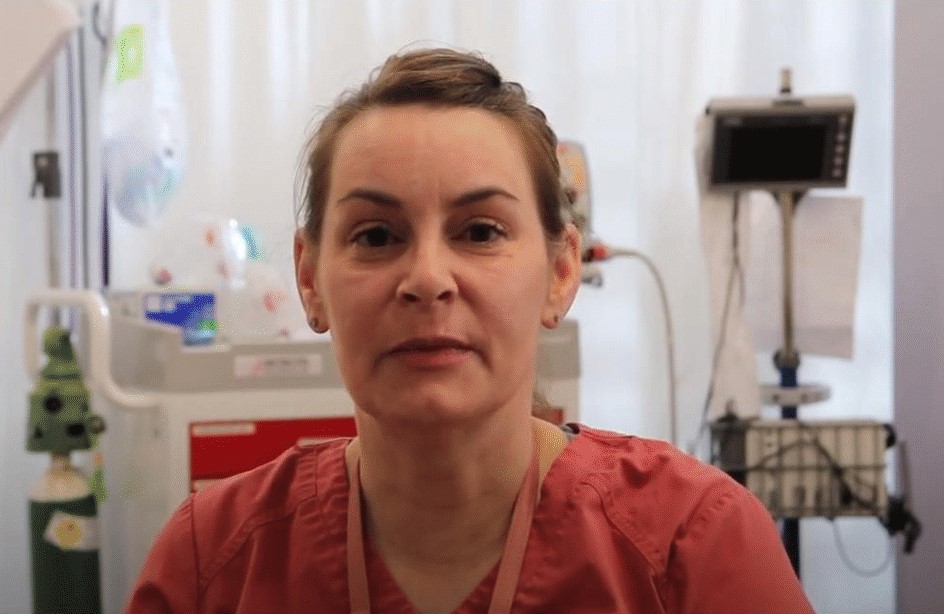
Meet Tina, a Support Worker, and find out why she chooses to work in the ED at TBRHSC.
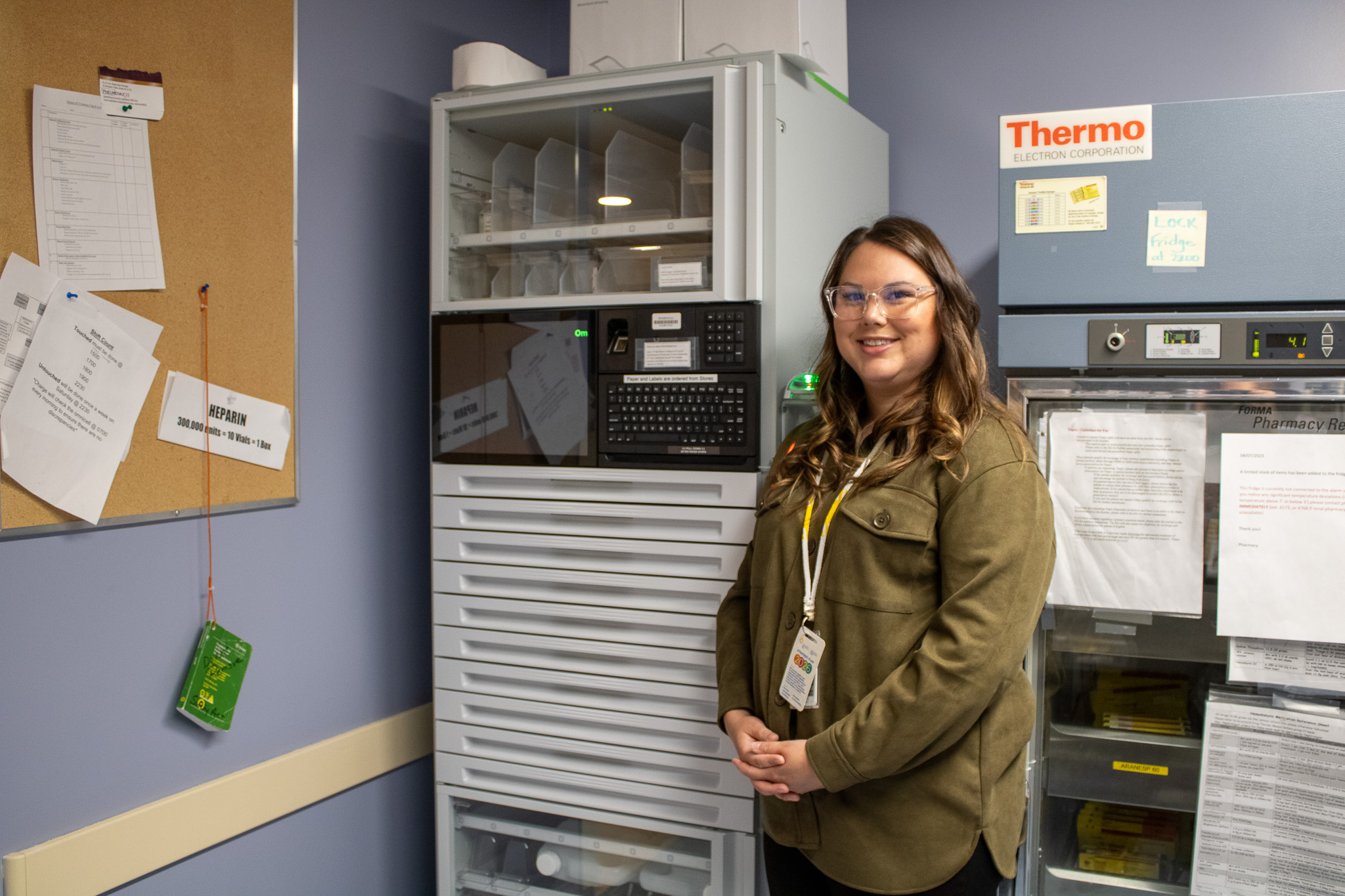
Jessica Munn, Automation Lead at TBRHSC, pictured with the new automated medication cabinet in the Renal Care Department.
Medications at the Thunder Bay Regional Health Sciences Centre (TBRHSC) got a whole lot safer, thanks to your purchase of Thunder Bay 50/50 tickets. Proceeds from the draw helped install new automated medication dispensing cabinets in three outpatient clinics: Regional Cancer Care, Renal Care (dialysis), and Surgical Day Care.
These high-tech devices are not your grandparents’ medicine cabinets. They improve inventory tracking and planning, providing a safer, and more efficient way for nurses to get the medications they need for their patients, when they need it.
Most of all though, the automated cabinets improve safety for patients, staff, and the public, said Carina Desramaux, Pharmacy Manager at our Hospital.
“Medication safety with high alert drugs is always our greatest concern. With these new cabinets, we have greater insight and control over who receives those medications and when,” Desramaux said.
That safety comes in many forms. For example, with close to a thousand different medications available at any given moment at our Hospital, labels and names can be confusing. To complicate matters, the Hospital’s pharmacy sometimes changes suppliers or the medications themselves can go through name and/or label changes. The automated dispensing cabinets use a barcode system to eliminate all confusion. This system ensures the patient gets the right drug in the right dose.
It also means medications can’t be accessed without the right prescription and patient name.
“Controlled substances such as narcotics are very useful medications, but they can pose a considerable risk to our community when they’re used inappropriately,” Desramaux said. “So, we need to make sure we keep them as safe as possible. The automated dispensing units greatly reduce that risk – you can’t just open the cabinet. Only authorized access is allowed for the medication by prescription, and only for the amount prescribed.”
The system also helps ensure the right type of medicine is being used for the right treatment. For example, syphilis treatment requires a specific type of penicillin – a type that generally isn’t used for other treatments. The dispensing cabinet can be programmed to ask if the specific penicillin is only used for that one treatment. It can also prevent access to a previous medication such as an old blood thinner if the patient is already on a new one.
The networked cabinet system can also help with things such as inventory control including purchase planning and medication management to reduce waste from expired medications. If there is a medication shortage, the pharmacy can be alerted immediately. In these cases, staff can also identify which other cabinets in the Hospital have the medications they need if their dispensing cabinet is out.
“We have so much more data now to plan, making our pharmacy more efficient,” Desramaux said.
Installation of these units is the latest phase of a project that began years ago. Automated dispensing cabinets were first used on inpatient units to great success. Now, these three outpatient clinics will receive those same benefits.
Your Thunder Bay 50/50 tickets make an impact on local healthcare every month! That means when you buy a ticket, everyone wins. To date, the Thunder Bay Regional Health Sciences Foundation has awarded over $24 million to winners across the province. Find out what this month’s jackpot is at and buy your tickets at thunderbay5050.ca
As part of our commitment to keeping staff engaged and informed on the Strategic Plan 2026, Strategy and Performance is sharing updates in alignment with the identified priorities: Equity, Diversity & Inclusion, Patient Experience, Staff Experience and Research, Innovation, & Learning.
The July 19th, 2023 Operational Updates and Strategic Planning Meeting featured the Substance Use and Addiction Strategy, presented by Chad Johnson, Director – Trauma Program, Critical Care, Emergency, Respiratory Services, and Nurse Led Outreach Team (NLOT) and Crystal Edwards, Director – Women & Children’s and Adult & Forensic Mental Health.
Visit the Strategic Plan 2026 page on the Hospital’s corporate intranet, where these presentations, along with other resources can be found.
Thunder Bay Regional Health Sciences Centre (TBRHSC) presents “Ask the Expert”, a series where team members from our Bariatric Centre of Excellence answer questions they commonly encounter. For more information on our Regional Bariatric Care Centre, please visit bit.ly/TBRHSC-RBCC. This month’s question is answered by Sarah Miller, Registered Dietician, Regional Bariatric Care Centre at TBRHSC.
Does weight-based bias affect patient care and health outcomes?
40 per cent of adults report experiencing weight bias. Research shows that weight bias comes from a variety of health professionals (e.g. doctors, nurses, dietitians, psychologists, and kinesiologists). Patients at higher body weights may anticipate “shame and blame” related to their weight, leading to avoidance or delay of health services (routine health screening, follow up care and treatment). They also tend to seek more empathetic health care providers, leading to increased visits with different primary care providers, and to emergency departments, which can reduce the quality and consistency of care. The stress of experiencing weight bias leads to affects on mental health, and increases the risk of chronic disease.
Coming to the Emergency Department (ED) can be a stressful experience. At Thunder Bay Regional Health Sciences Centre (TBRHSC), we have a team of physicians, nurses, physician assistants, Indigenous Patient Navigators, medical learners, social workers, clerks and support workers dedicated to providing you and your family with safe, quality care while in our Hospital. In this series of videos, we want to introduce you to some team members you may encounter when you come into our ED.
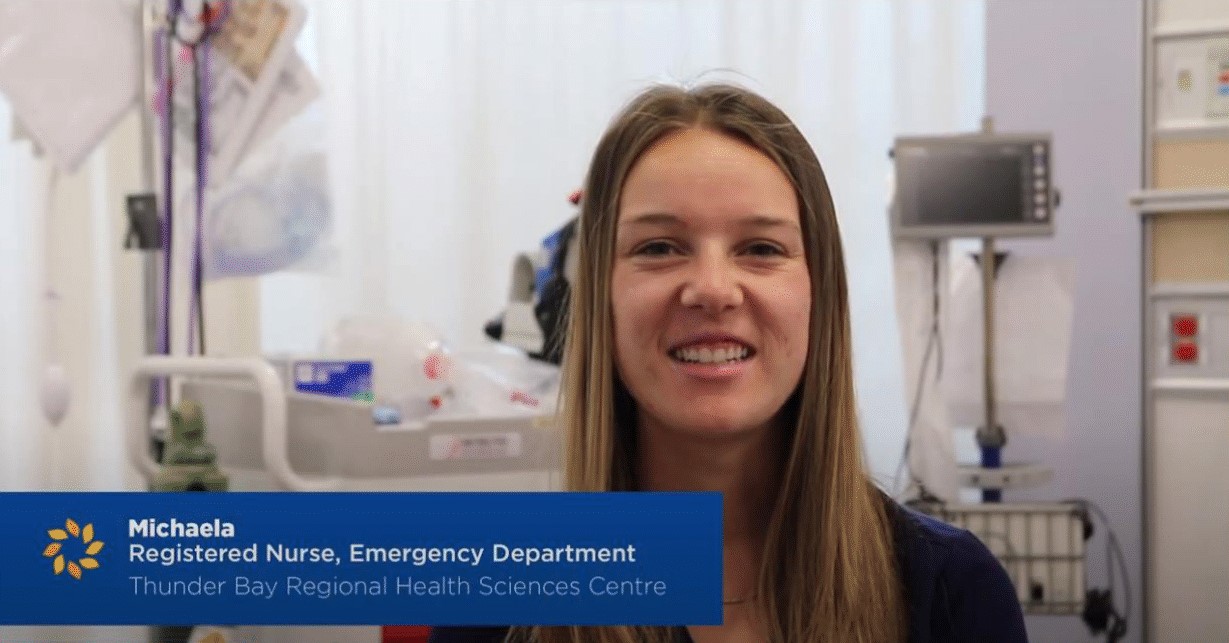
Meet Michaela, a Registered Nurse, and find out why she chooses to work in the ED at TBRHSC.
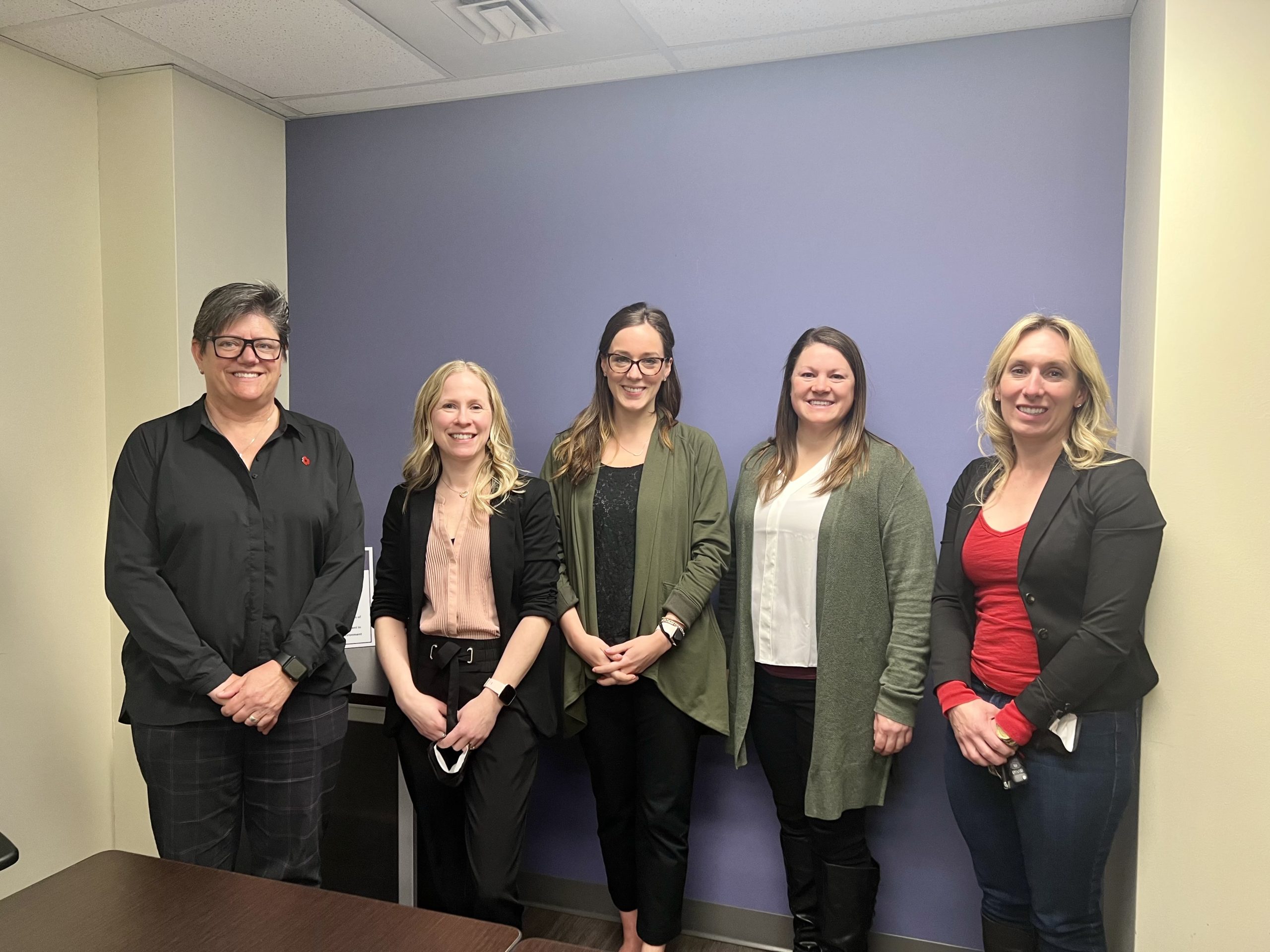
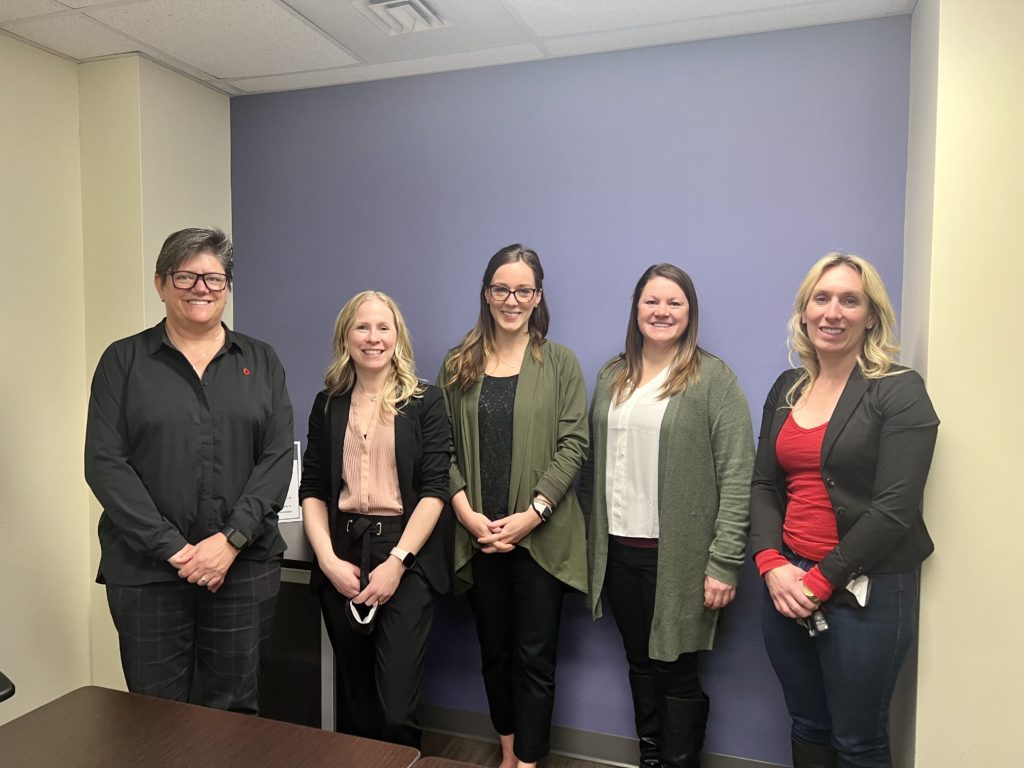
Members of the Lakehead Nurse Practitioner Led Clinic team (Left to right): Pam Delgaty, Executive Director; Crystal Kaukinen, Nurse Practitioner (NP); Stephanie Malyko, NP; Jenna Coderre, NP; Stacy Roberts, NP. Absent: Carolan Thayer, NP; Robin Latimer, NP; Jamie Lindberg, NP; Kelsey Hoogsteen, NP; and Katrina Hill, NP.
A new partnership between Prevention and Screening Clinical Services at Thunder Bay Regional Health Sciences Centre (TBRHSC) and Lakehead Nurse Practitioner Led Clinic (LNPLC) will ensure patients without a primary care provider are being screened for breast cancer and will get the follow-up care required in a timely manner.
In the Thunder Bay area, there are over 30,000 individuals without a Primary Care Provider (i.e. family physician or nurse practitioner), referred to as unattached patients. Prior to this partnership, unattached patients requiring follow-up from a routine breast screening mammogram would have to facilitate it through a walk in clinic or the emergency department.
Thanks to this new partnership, unattached patients who require follow up after having a routine breast screening mammogram at an Ontario Breast Screening Program (OBSP) site in Thunder Bay, now have the option of having it through the LNPLC. These patients are assigned a Nurse Practitioner at LNPLC who receives a copy of the patient’s test results and facilitates any necessary additional testing.
“Our clinic is pleased to partner with TBRHSC to offer this important access to care,” says Pam Delgaty, Executive Director at LNPLC. “Abnormal mammogram results are difficult for patients to understand and can be intimidating at best. Our team’s goal is to help these patients navigate the system and in doing so, relieve some of the anxiety they may be experiencing.”
As a result of this new partnership, individuals requiring follow-up due to abnormal results will be connected for further imaging and care in a more seamless manner, instead of having to search for a primary care provider through other avenues, such as emergency department and walk-in clinics.
“Often times, there are delays for unattached patients between completing the screening, receiving the result and waiting for a primary care provider to facilitate follow-up,” explains Tarja Heiskanen, Manager of Screening and Assessment at TBRHSC. “The hope is that this partnership will significantly reduce wait times.”
Heiskanen adds, “Individuals who may be reluctant to get screened for cancer because they do not have a primary care provider, can self-refer themselves for breast screening and feel less anxiety knowing they will be cared for after when follow-up is required”
For this month’s Staff Health and Wellness Challenge, try a local restaurant and submit a photo of your favourite meal. Whether you go with family, friends, coworkers or on your own, share a photo and tell us the name of the restaurant you visited.
Shared on behalf of on behalf of Ryan Sears, Director, Capital and Facility Services
As Thunder Bay Regional Health Sciences Centre continues to grow and offer services to provide enhanced care for our community, the demand for parking increases. We have recognized this as a need to expand our surface parking to accommodate the increasing number of vehicles. A new parking lot will provide us with additional parking spaces and enhance the overall campus convenience for patients, staff, and visitors.
As you may have noticed some heavy equipment mobilizing to the area west of the A2 Lot, construction has commenced today.
Key details of the project are as follows:
Duration: Construction is expected to take approximately 10 to 14 weeks to complete, short of unforeseen conditions.
Location: The new parking lot will be located at adjacent to the existing A2 Lot and Golf Links Road, on the north side of Donald Caddo Drive. Upon completion, access will be from Ron Saddington Way.
Safety Measures: We prioritize the safety of our staff and visitors. The construction site will be fenced off and restricted to authorized personnel only. It is critical that all employees adhere to the designated zones and avoid the construction area.
Impact on Parking: During the construction period, the contractor will be utilizing a portion of the existing A2 Lot as a laydown area. Some parking spaces may be temporarily unavailable.
Impact on the Golf Links Road Entrance: During construction, the contractor may implement temporary traffic control measures for equipment and material delivery from Donald Caddo Drive. The contractor will not impede emergency vehicles.
We understand that the construction process may cause some inconveniences and we appreciate your cooperation and patience as we work towards improving our infrastructure. Our project team is working diligently to ensure minimal disruption to daily routines.
Thank you for your understating and support during this construction project.