The Health Sciences Foundation Family CARE (Care Advancement Recommended by Employees) Grants are here to help you – the family of health care providers that make the Thunder Bay Regional Health Sciences Centre the excellent facility it is.
Family CARE grants can be used to improve the care you give every day. Listen for patient and family suggestions when brainstorming ideas. Initiatives that improve the care we can provide benefit us all!
Please see the application form attached below. Please submit applications to Sarah Miniaci in the Thunder Bay Regional Health Sciences Foundation office by October 31, 2023, 4:00 p.m. to room 2232 (Foundation President’s Office).
If you have any questions, please contact Sarah Miniaci, Executive Coordinator at ext. 7276 or visit room 2232.
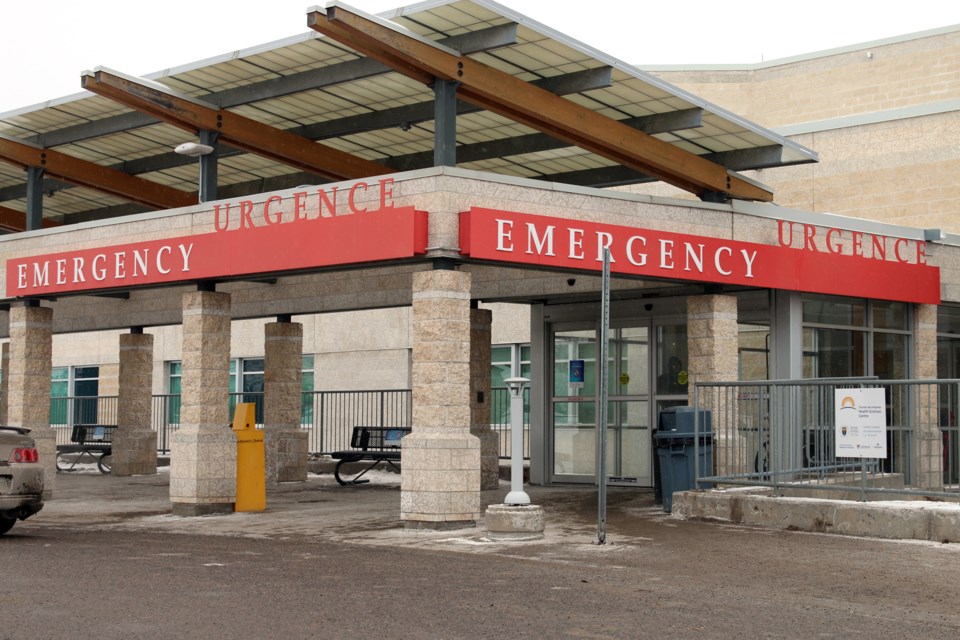
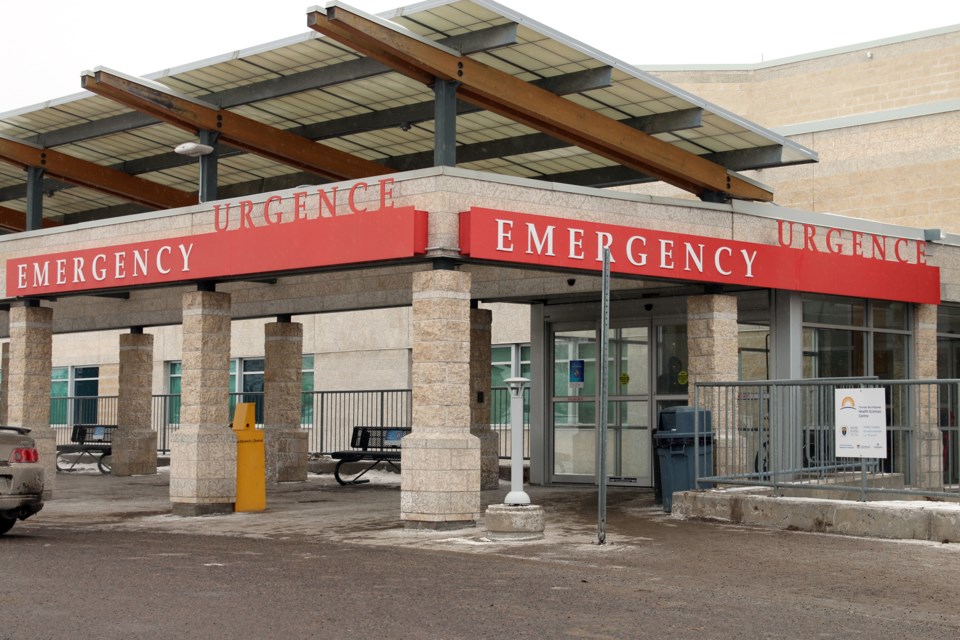
Officials feel confident that they have the staffing that can handle the oncoming onset of respiratory seasonal illnesses, including RSV influenza and COVID-19
With the changing weather comes the emergence of colds, flu and even new strains of COVID-19.
Thunder Bay Regional Health Sciences Centre president and CEO Rhonda Crocker Ellacott said officials are in the middle of their fall and winter preparedness, which strives to model and predict what could happen with the respiratory seasonal illnesses, including respiratory syncytial virus, influenza and COVID-19.
“We’re [looking at what we might] require in terms of bed capacity, pediatric surge, the impact on the emergency department and critical care, as well as our regional role and then the impact on staffing,” she said. “[All of this planning ensures that] we’re in a much better position to mitigate the impact on seasonal flu or any other respiratory illness.”
For staffing, the hospital has brought on 150 employees through the province’s Community Commitment Program for Nurses, which means the facility has 100 more on staff than they did at this point in 2022.
Crocker Ellacott noted that officials need to be prepared to change course should the need arise.
“It’s one thing to have respiratory illnesses impacting patients, their families, the community and the region, it’s another thing as well to have those impacting our own staff,” she said. “So, we really need to have the [measures in place] to be able to mitigate between those two factors. But we are in a better position than we were last year.”
She added that the vacancy rate across the board is at one per cent, so there will always be a need for staff.
Meanwhile the obstacles facing the healthcare system in the province are anticipated to persist for years to come.
That finding from a report released from the Financial Accountability Office back in March, which points to the province being short about $21.3 billion in health spending by 2027-2028.
In the summer, Health Minister Sylvia Jones unveiled a $40-million fund to launch three programs that aim to help connect patients to the services they need, allow internationally trained physicians to work more quickly and establish a nursing mentor program.
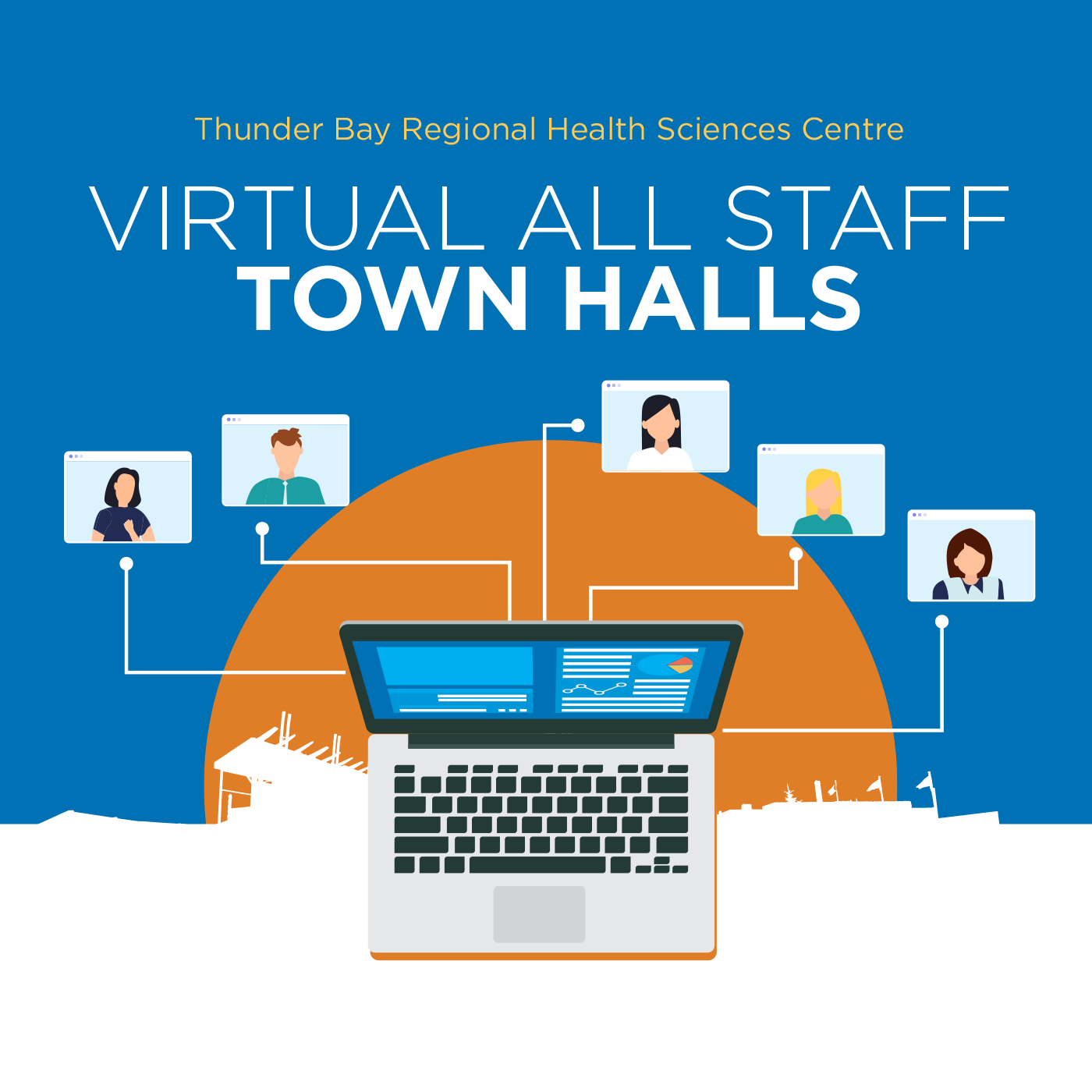
Did you miss the Virtual All Staff Town Hall on September 20th? A recording is now available for viewing here.
The informative session featured a patient story told by Edie Hart, Manager, Critical Care and Respiratory Services, an update on the Hospital’s preparedness for respiratory illness season, the new whistleblower reporting system, the upcoming PFCC Sharing and Caring event, Truth and Reconciliation events and activities, and Q1 results for Strategic Plan 2026.
If you have questions you would like answered, please send them to TBRHSC.GroupNews@tbh.net and we will do our best to address them at a future Virtual All Staff Town Hall. Thank you for your commitment to staying informed and engaged.
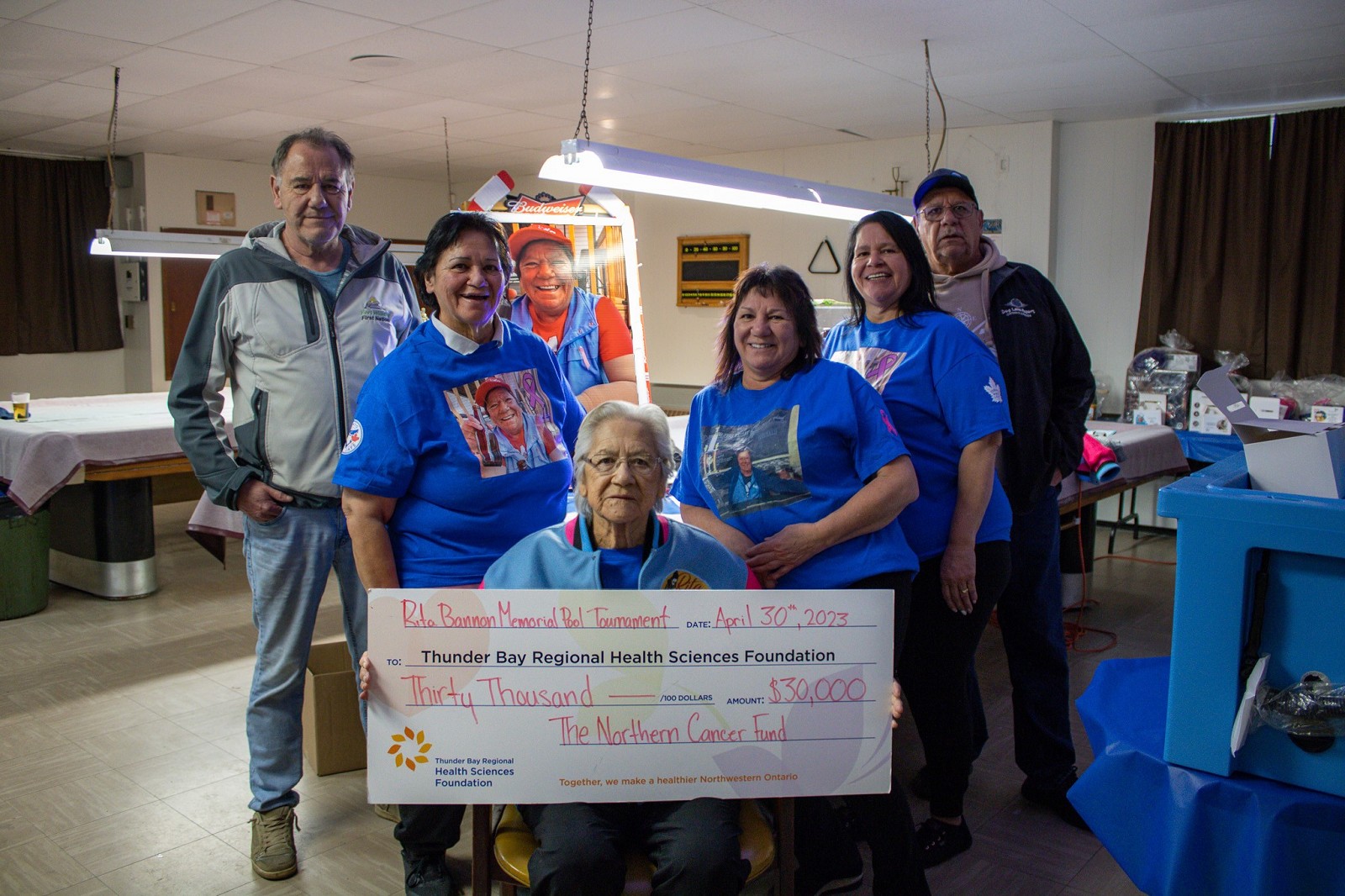
Rita Bannon’s family created her memorial tournament to commemorate Rita’s love for life and fun by gathering people together to do what she loved best – playing pool. Pictured l-r are Rita’s brother Wally Bannon, sister Janice Bannon, Rita (in framed photo), mother Jessie Bannon, sister Wanda Bannon, sister June Gustafson and brother Gerald Ton Bannon.
In year two of the Rita Bannon Memorial Pool Tournament, the organizers almost doubled the size of participants and tripled the event’s donation to the Northern Cancer Fund.
Rita, a breast cancer survivor, was well known in the pool playing circles. She and her sisters enjoyed the sport together, playing in women’s and mixed leagues in halls around Thunder Bay – and even winning trips to Las Vegas to compete in tournaments.
When Rita passed in 2021, her family decided to commemorate her love for life and fun by gathering people together to do what she loved best – and the first pool tournament was held in her honour in 2022.
The organizing committee of Rita’s relatives and her former pool team mates wanted to go beyond what they did in the first year, when they planned the tournament in only one month.
Starting six months ahead this time, the event hosted 112 players/56 teams versus 70 players/32 teams last year – and raised $30,000 in addition to the $11,000 raised in 2022.
“We never expected such an overwhelming response from the players, pool player community and the sponsors,” says Rita’s brother Wally Bannon. “The players seem to gravitate to this event and really like the format we put together.” The event also featured prizes and a dinner/dance. He says the players tell him they want to come back again.
They will be getting their wish because the Bannon family has already started planning next year’s tournament. Says Wally, “We’d like to continue for as long as we can to help with Rita’s cause to raise funds for breast cancer diagnosis and treatment in the Northwest. As long as we’re helping, we’re happy.”
As part of the $11,000 donation from the event last year, the family was able to place a memorial Butterfly for Rita on the Garden of Hope Wall in the Regional Cancer Centre. Together with this year’s donation of $30,000, total donations from this event could grow enough to present her family with the opportunity to name a patient care area in Rita’s honour. “This would be a great privilege for my Mom and sisters because they were tickled pink when we got the butterfly,” says Wally.
The Northern Cancer Fund raises funds that are 100% dedicated to supporting exceptional cancer care in Northwestern Ontario. Your donations make HOPE possible. You can donate online at healthsciencesfoundation.ca/northern-cancer-fund or by calling (807) 345-4673.
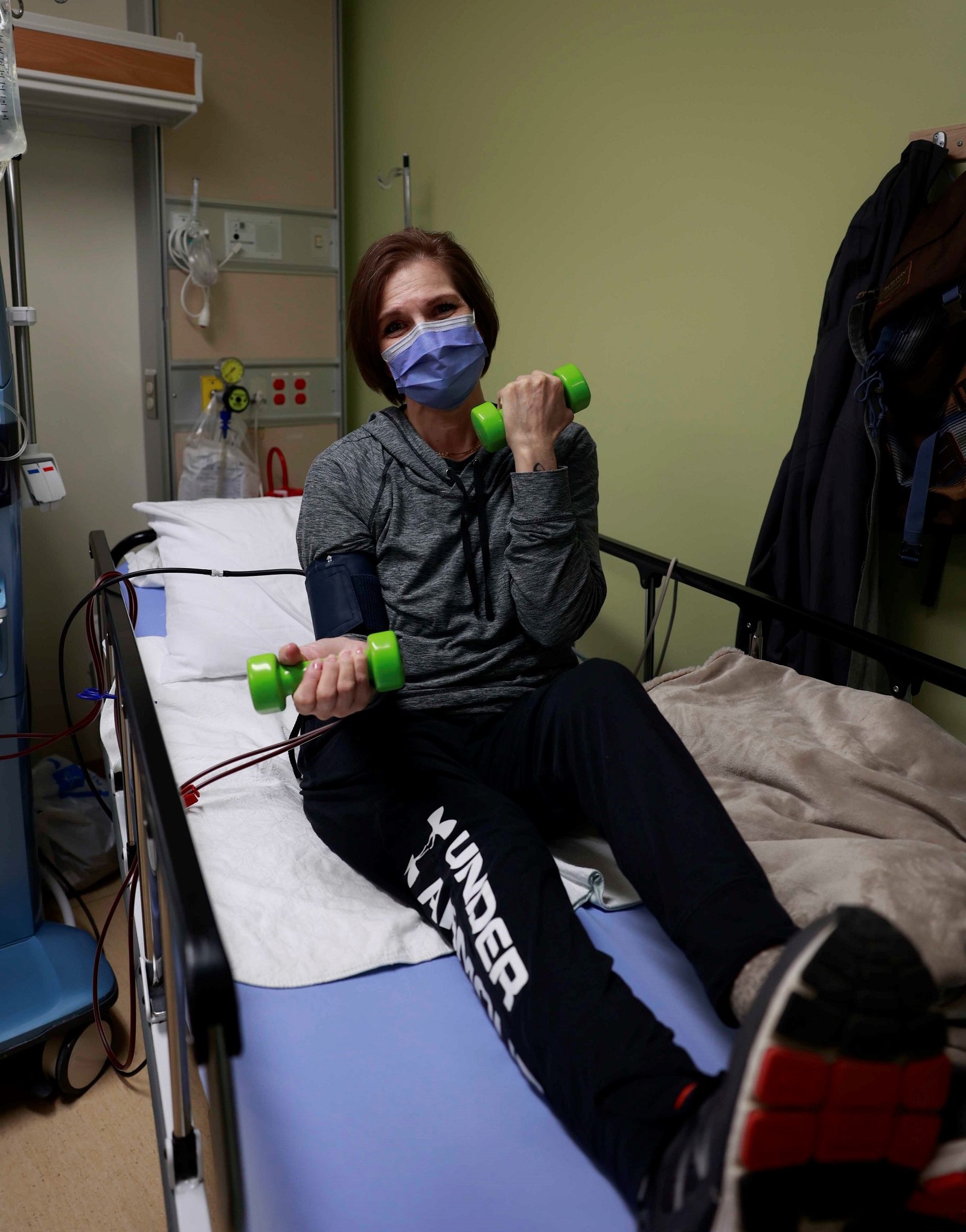
Thanks to the generosity of donors, renal patients like Tracy McEachern have a new weight-based movement program to help during dialysis. Ten sets of hand weights and 10 resistance bands were funded through a Thunder Bay Regional Health Sciences Foundation Family CARE Grant.
“Movement is medicine.” Activity of any kind has long been known to help prevent disease and injury, but we are still learning how important it can be for healing. From getting surgery patients up and moving as soon as possible to exercise programs for those recovering from heart attacks, movement is becoming part of treatment plans more and more.
Now, thanks to a Thunder Bay Regional Health Sciences Foundation Family CARE Grant, renal patients will soon have a new weight-based movement program to help during their dialysis.
Maria Talarico, a clinical nurse in the Renal Services at the Thunder Bay Regional Health Sciences Centre, saw firsthand how exercise helps renal patients. She worked in a dialysis unit in Toronto that developed an exercise program for its patients.
“I thought it was a great idea – it gets them moving, and it gives them something to do while they’re undergoing dialysis treatment,” Talarico said.
She and a team of health professionals including Christina Brassard (social work), Amy Roukema (social work), Laurenne Stuart (social work), and Marina Bruno (nursing) are developing a group exercise program that can be tailored to each renal patient. They consult with other allied health professionals as needed.
“We’re meeting our patients where they are at and trying to compensate for all abilities,” Stuart said. Some patients will be sitting up, some will be sitting down, some are older, some are younger, most have other health conditions including diabetes, and some have had amputations, which are common among renal patients.
That’s why the Family CARE Grant was so important. Renal Services has exercise bikes available, but not everyone can use them. Now, the program can purchase dumbbells and resistance bands for a wider range of options – and to help a wider number of patients.
“By changing weight or resistance, you can make things more or less challenging, depending on their strength and abilities,” Stuart said.
Many renal patients are Indigenous including some from remote First Nations who may not speak English. The team will work closely with its two Indigenous Patient Navigators so that patients understand the purpose of the exercises and to ensure the program is culturally appropriate.
The team is still working out details of the new exercise program to ensure it’s safe and effective for renal patients. There are similar programs popping up across the country, so everyone is developing together. One thing is certain: physicians will be closely integrated for health assessments and to set any necessary exercise limits. After that, the team will develop some exercise routines and measures for success, tweaking as they go.
“Any movement is a good thing,” Brassard said. “We’ll be working together to offer safe exercise programs, first and foremost. But we want to add variety as the program progresses to keep patient interest.”
“It’s a very open unit, so we’re hoping that once patients see others doing the exercise program, they’ll want to get involved, too,” Talarico said.
Once up and running, the team hopes to roll out similar programs at Renal Services’ satellite sites in Northwestern Ontario in the future.
This is one of many programs funded by Family CARE Grants. These grants empower staff to implement their ideas for improving patient care. But we couldn’t do it without generous donors like you. Please help us fund more success stories like this by donating online at https://www.healthsciencesfoundation.ca/donate or calling our Donation Centre at 807-345-4673.
National Day for Truth and Reconciliation (September 30) honours the lost children and survivors of residential schools, their families and communities.
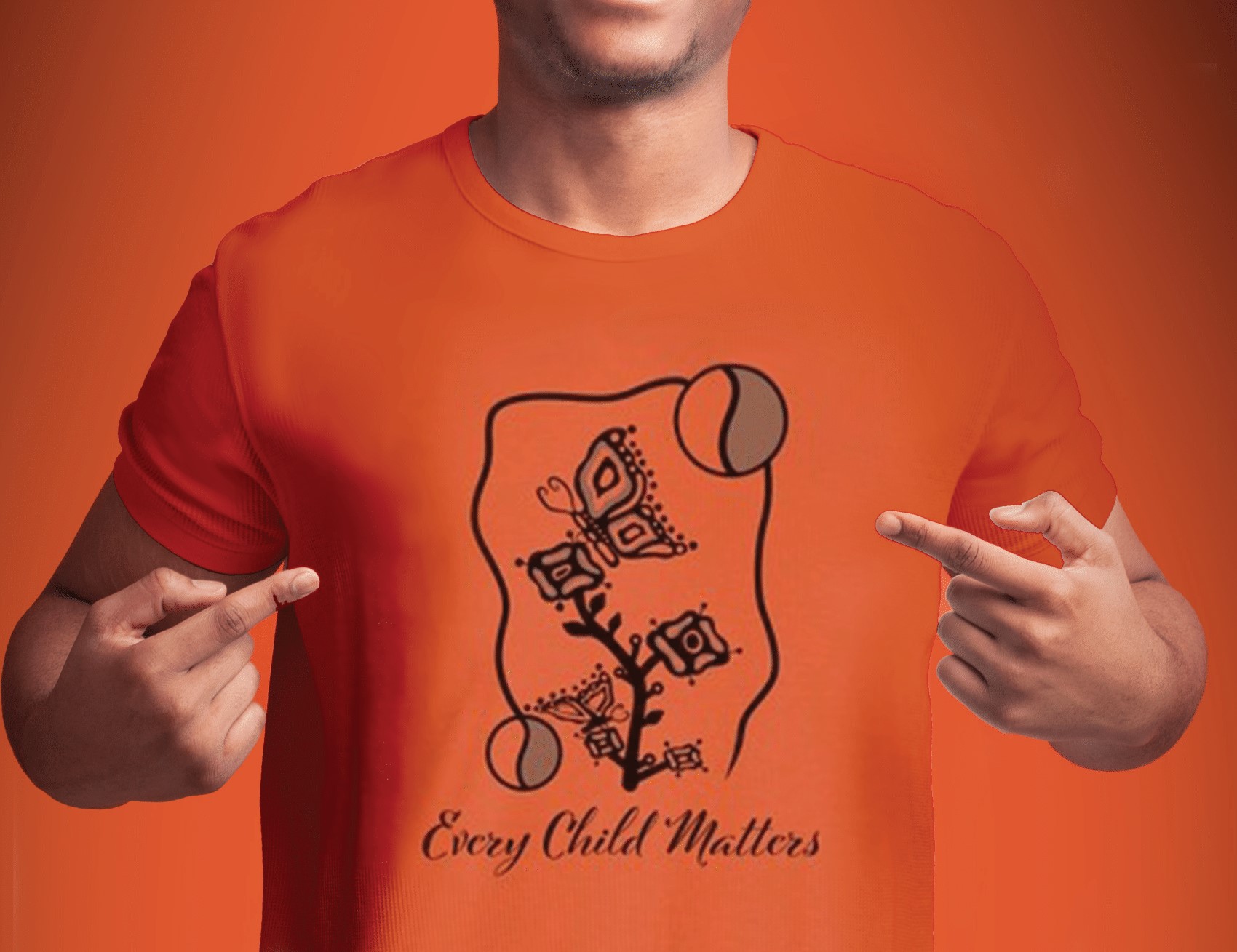
September 30 is also Orange Shirt Day — an Indigenous-led grassroots commemorative day based on the experience of Phyllis Webstad, a Northern Secwpemc (Shuswap) from the Stswecem’c Xgat’tem First Nation. On her first day of school, she arrived dressed in a new orange shirt, which was taken from her. It is now a symbol of the stripping away of culture, freedom and self-esteem experienced by Indigenous children over generations.
You are encouraged to participate by wearing orange shirts. For those who don’t work on Saturday, September 30, please wear orange on Friday, September 29 and take a photo.
Please submit your photos to Communications at tbrhsc.groupnews@tbh.netby end of day October 2, so we can share the pictures in Informed.
Indigenous Craft Market 11:30 a.m. – 5:00 p.m. on September 25 & 26 outside Volunteer Services. Everyone is welcome.
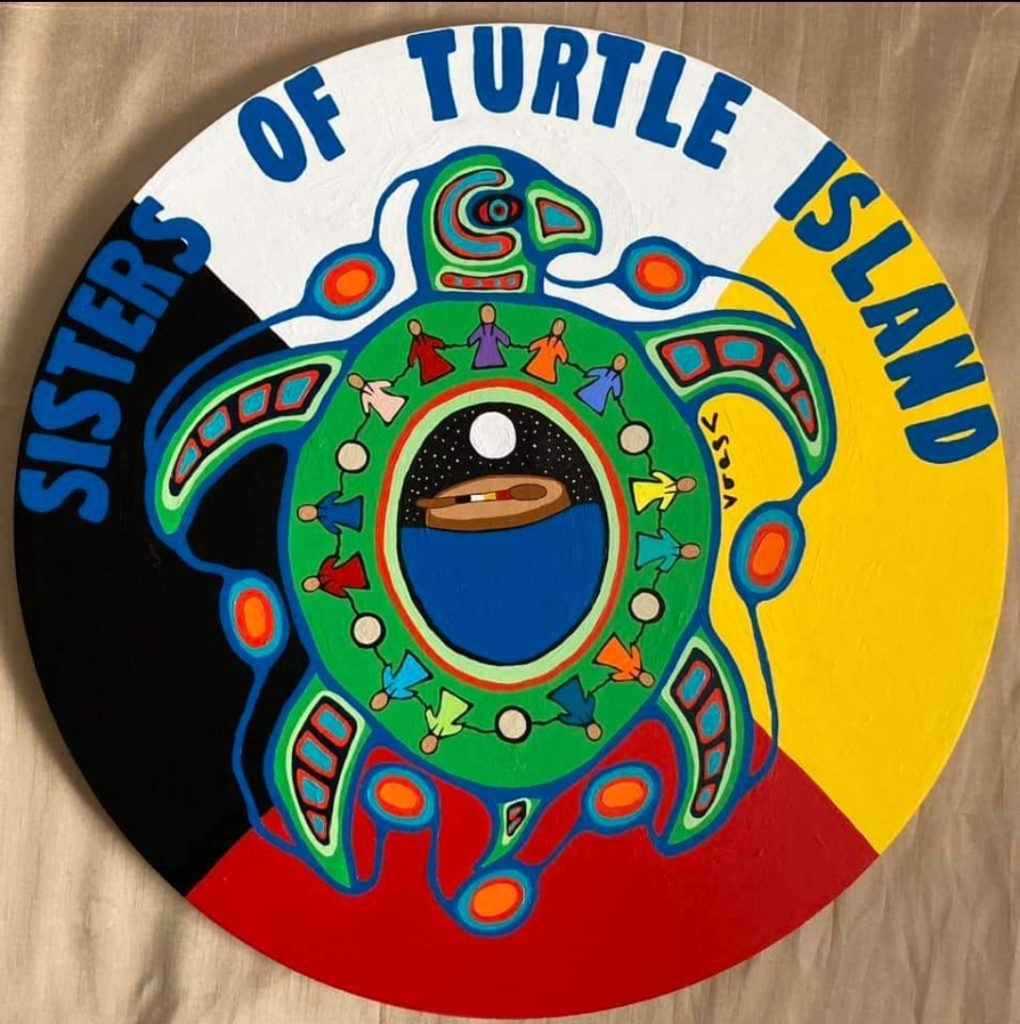
In honour of Truth & Reconciliation Day (September 30th), Indigenous Collaboration, Equity & Inclusion will host various events to honor the Survivors and recognize the strength and resiliency of Indigenous Peoples and communities.
Continuing with our Strategic Plan 2026, we remain dedicated to providing a culturally safe experience for all staff and patients.
Staff are encouraged to attend the events listed below. Please register for the September 6, 13, and 20 events using the Eventbrite links.
Awarded to: Dr. Brianne Wood, Associate Scientist at the Northern Ontario School of Medicine and the Thunder Bay Regional Health Sciences Centre
My research program aims to improve health and health care in northern, rural, and remote settings. Based in Northern Ontario, my team and I accomplish this by generating and applying knowledge that is relevant to our context. Embedding research in a health system to improve outcomes is called a learning health system. We have three main projects:
Understanding how and to what extent a health system is a learning health system and whether it is achieving outcomes that matter in northern, rural, and remote settings.
Studying the impacts of COVID-19 on community health and health services in Northern Ontario.
Testing an educational program to build capacity in learning health system capacities, such as evaluation and analysis.
We use a collaborative research approach to conduct this work. We work closely with health system decision-makers, health professionals, and members of the public to design, implement, and share our findings.
A resilient health care system is one that learns and adapts. The HRF Fellowship in Health Systems Resilience has given me the privilege to support a northern and rural learning health system by supporting rigorous and relevant research for people, communities, and health organizations in Northern Ontario.
Dr. Brianne Wood
We anticipate that our embedded research will result in tangible improvements in how health care is delivered in Northern Ontario because our findings can help local health system leaders prioritize, allocate resources, and make evidence-informed decisions. These projects form a knowledge base of how to build and assess learning health systems in northern, rural, and remote settings, which can benefit health systems across Canada that have similar contextual considerations such as distributed health care organization, chronic workforce challenges, and unique population health. My collaborative research approach also ensures that we have multiple scales of connections, from local to global. As such, my team and I participate on provincial and national committees that support health system decision-making and pragmatic research. These communication opportunities allow us to amplify our research findings, contribute data to systems that often exclude northern, rural, and remote observations, and allocate resources and capacities to traditionally underserved areas.
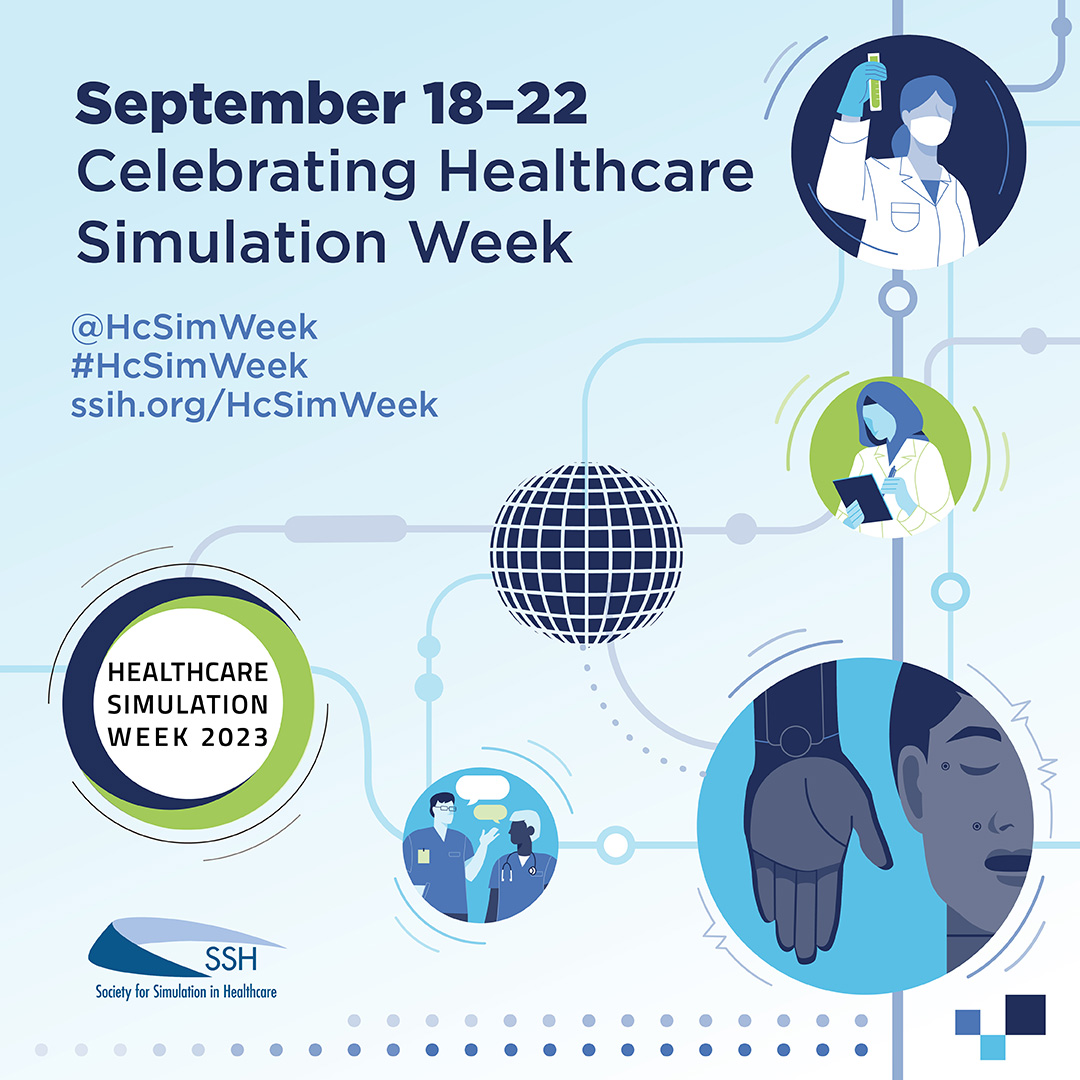
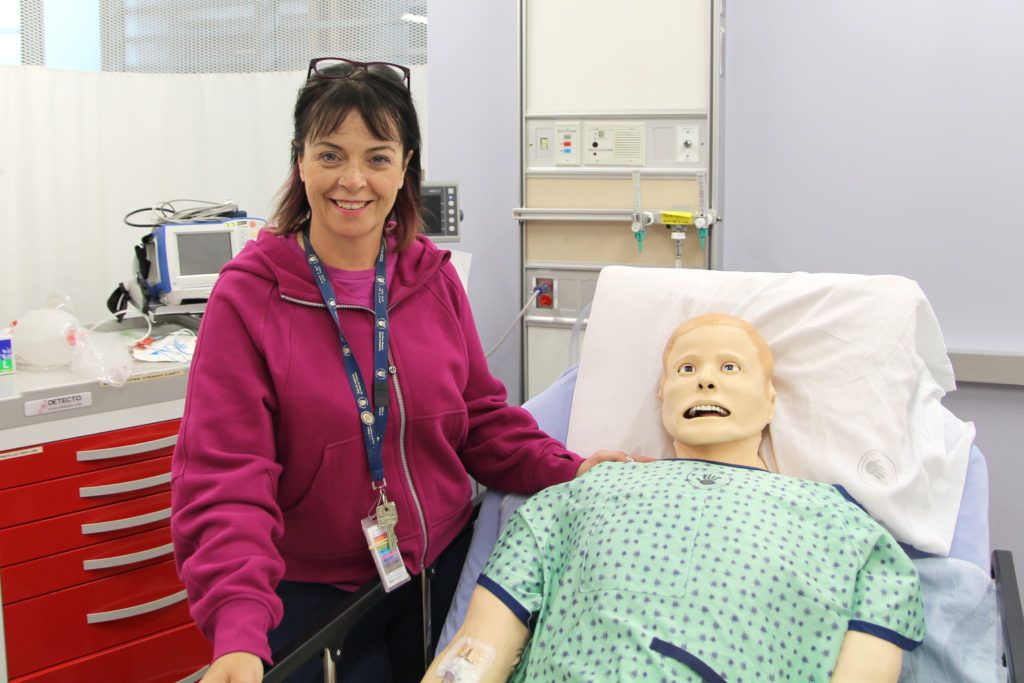
We are celebrating Health Care Simulation Week which takes place September 18-22, 2023.
Celebrate the professionals who improve the safety, effectiveness and efficiency of health care services every day.
The Simulation staff will be set up on Tuesday, September 19 in the cafeteria from 11:00 a.m. to 1:00 p.m. and invite everyone to stop by to meet one of our mannequins and see how we can assist with your simulation needs!