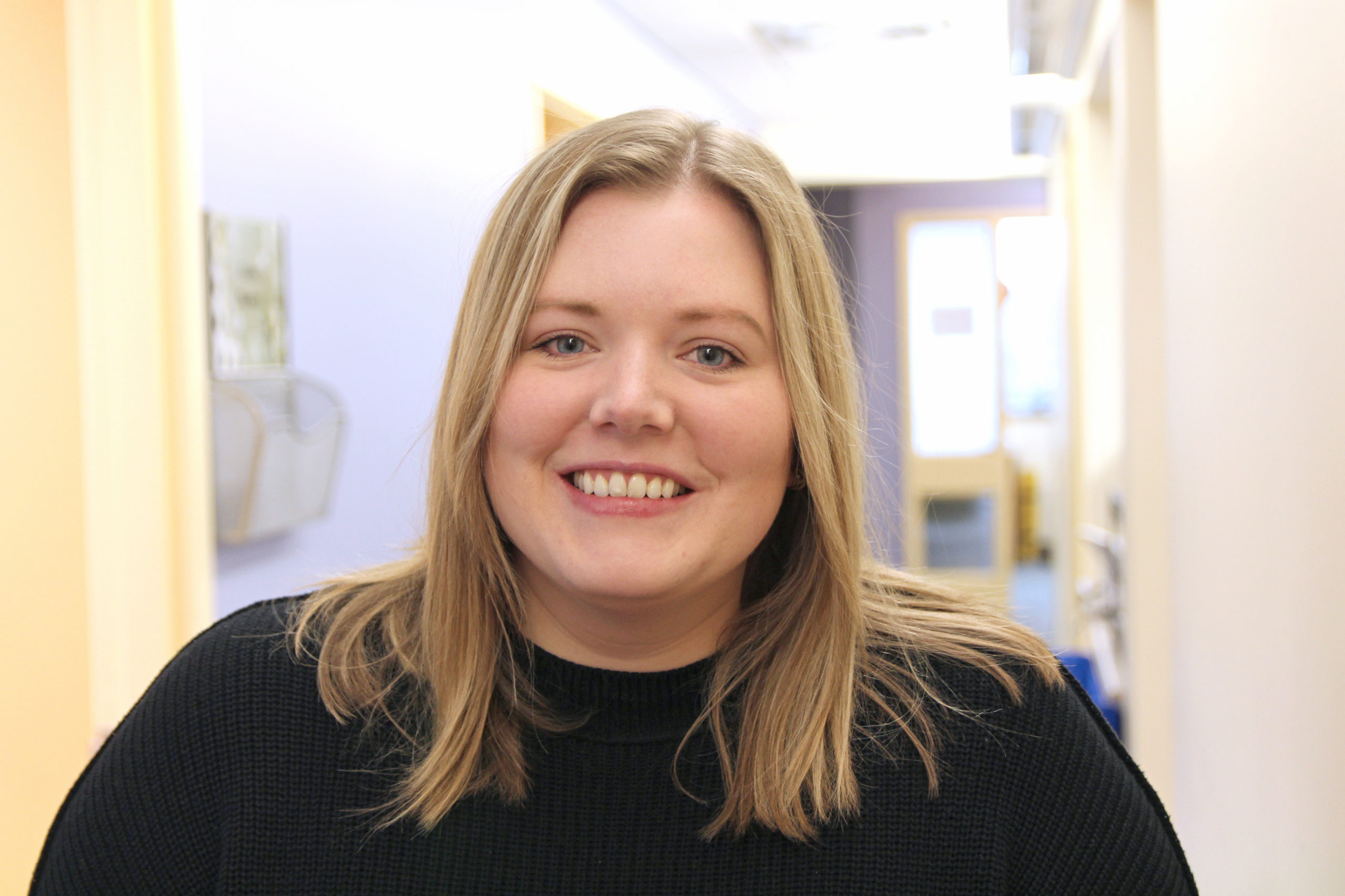
Meet Kristine Kopechanski, Registered Dietitian at the Maternity Centre at Thunder Bay Regional Health Sciences Centre (TBRHSC).
Kristine is available to assist pregnant and postpartum clients by offering individualized consultations to review their current nutrition needs, including:
healthy eating recommendations during pregnancy;
food safety and foods to avoid during pregnancy;
strategies for managing nausea, vomiting, heartburn, and constipation in pregnancy;
meeting increased needs for vitamins and minerals;
postpartum nutrition to support lactation; and
education on introducing solid foods to your baby.
“Nutrition plays an important role in pregnancy and postpartum,” says Kopechanski. “A lot of people are worried about what they’re eating in pregnancy, and I love that I am able to help by providing some guidance and reassurance and meet them where they’re at to create attainable nutrition goals both during pregnancy and postpartum.”
Call the Maternity Centre today for an appointment with the Kristine at 807-684-6452.
No referrals are necessary to access care at the Maternity Centre.
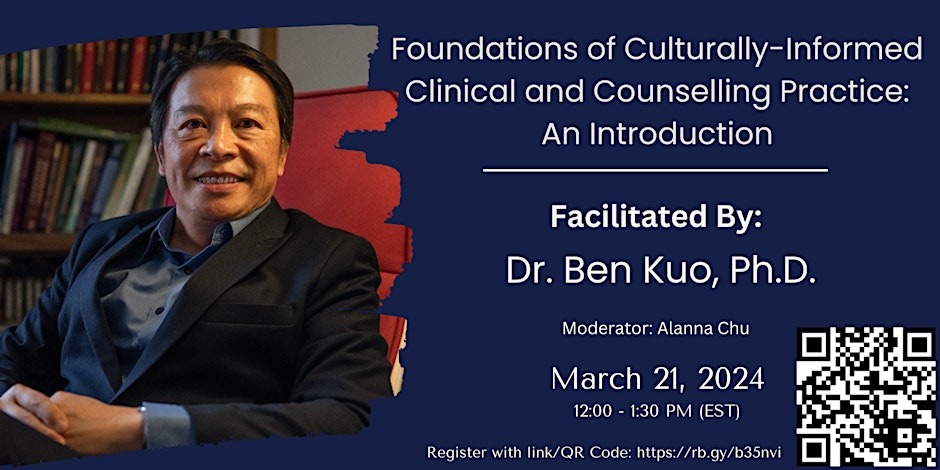
The Foundations of Culturally-Informed Clinical and Counselling Practice: An Introduction, workshop is open to all professionals, students and members of the community. The workshop will cover foundational knowledge, concepts, and issues related to culture, diversity, and clinical practice. Including: Approaching cultural training from a personal growth and professional growth perspective and a social justice framework. Prompting reflection of critical cultural diversity issues within mental health counselling and therapeutic interventions. Discussion of concepts such as multicultural competence, cultural humility, intersectional identity, implicit bias and the ways in which these can be used to promote culturally-informed clinical interventions.
WHEN: Thursday, March 21,2024, 12 -1:30 p.m. EST (11am-12:30pm Saskatchewan time) WHERE: Please register on Eventbrite for the Zoom link (please note the Zoom session will not be recorded).
This workshop will be facilitated by Dr. Ben Kuo and Alanna Chu. Dr. Ben Kuo, is a Full Professor and the Director of Clinical Training for the Canadian Psychological Association (CPA)-Accredited Clinical Psychology Program at the University of Windsor, and a registered and practicing psychologist in Ontario. His research focuses on the intersection between culture and psychology, particularly in the areas of multicultural counselling and training and cross-cultural psychology. Dr. Kuo is an experienced and active clinical supervisor who teaches and supervises clinical psychology graduate students in multicultural psychotherapy courses and practicum with diverse clients, including refugees and immigrants.
Alanna Chu will moderate the event. Alanna is a Clinical Psychology PhD candidate at the University of Ottawa in the Interdisciplinary Psychosocial Oncology Study and Research Laboratory with Dr. Sophie Lebel. She received her Master of Public Health from the University of Toronto in 2019. Alanna’s research focuses on the psychological experiences and supportive care needs of patients with advanced and metastatic lung cancer receiving immunotherapy or targeted therapy.
You may have heard about a labour activity at GreenShield Canada, one of our benefit providers. GreenShield remains optimistic that a settlement can be reached, in the meantime, meeting your needs, as a GreenShield member is their priority.
They’ve activated their contingency plan to ensure essential services continue to be provided to valued members like you, and the vulnerable communities they support, during the strike.
Please note, the call centre is closed, however, online services, where almost 95% of claims are typically submitted, will continue to be available and will not be impacted by the strike.
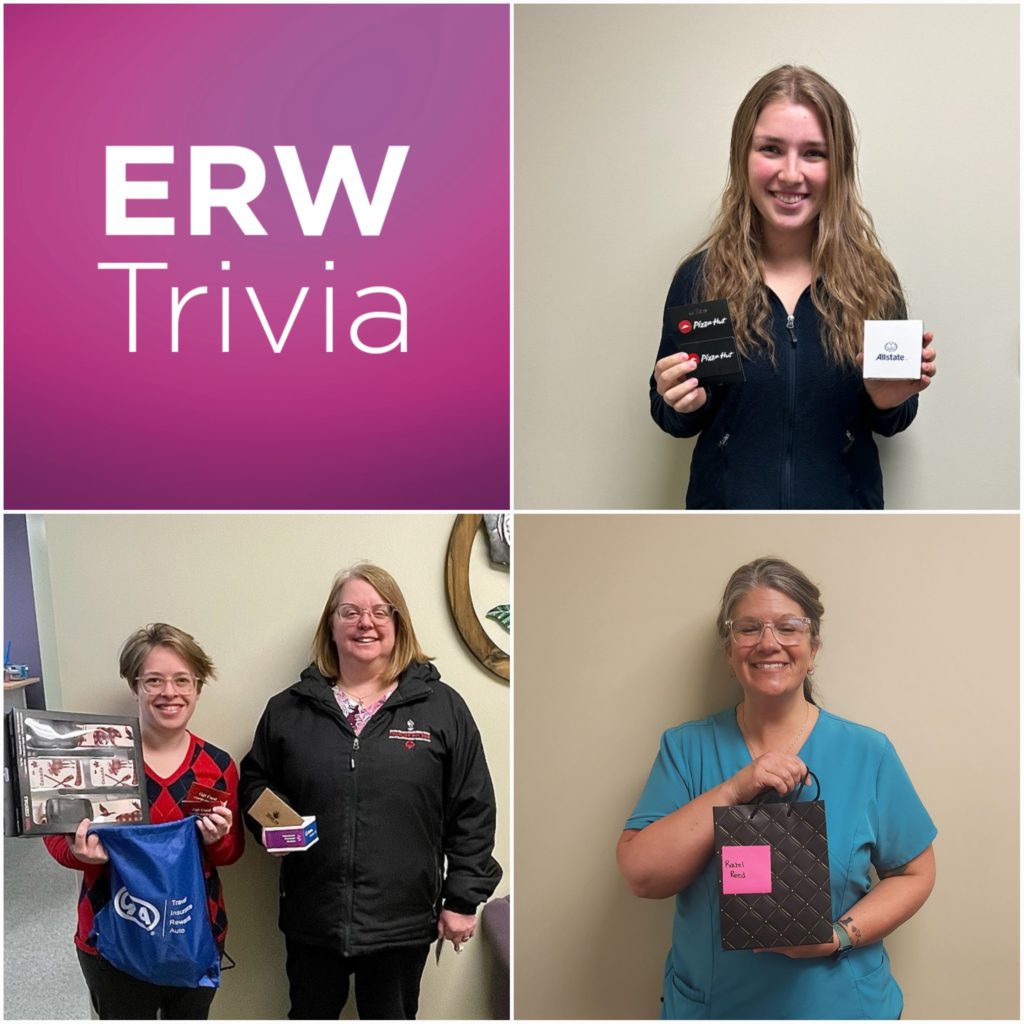
Congratulations to the March 6th Daily Trivia Draw winners for this year’s Employee Recognition Week.
Hospital and Health Research Institute staff are encouraged to keep an eye on the Daily Informed Newsletter for more chances to win!
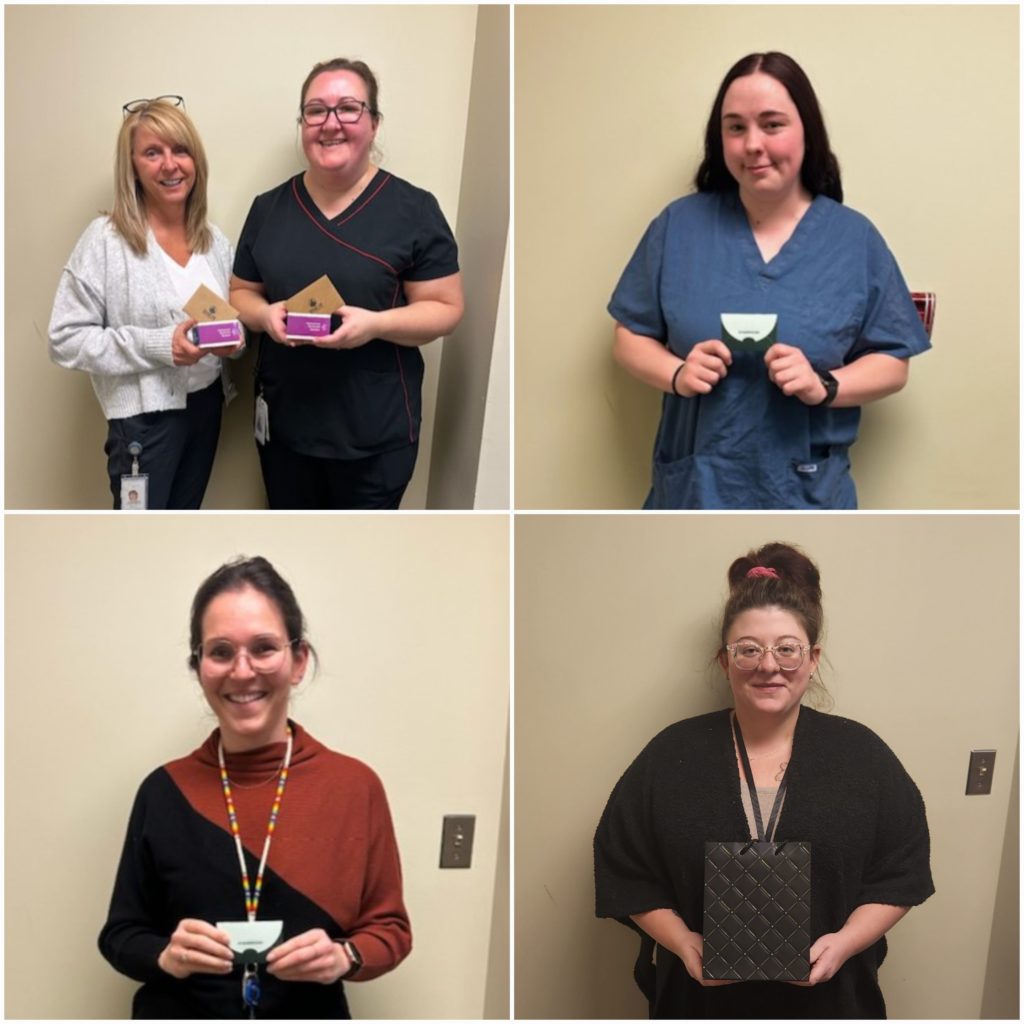
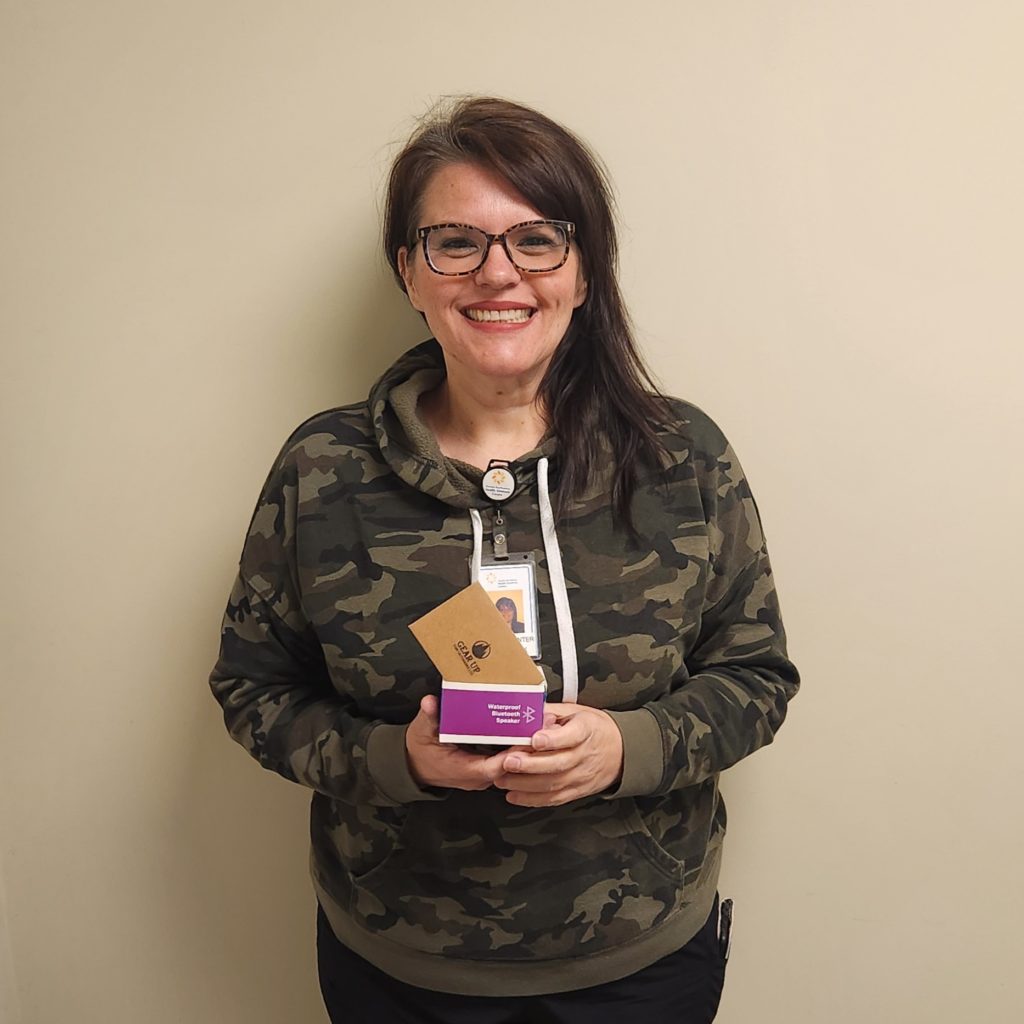
🏆 $100 Cheese Encounter gift card, (Rebecca T.). Donated by the Cheese Encounter. 🏆 $100 Cheese Encounter gift card, (Michelle McKercher). Donated by the Cheese Encounter. 🏆 Free yoga class or sound healing session, water bottle and speaker, (Brenda Voth). Donated by Karen Ebhardt and Allstate. 🏆 Be Natural Pottery garlic plate, and Robin’s gift card, (Nicole L.). 🏆 Be Natural Pottery garlic plate, and Robin’s gift card, (Lorna M.). 🏆 Travel Essentials, Free Boston Pizza, and Robin’s gift card, (Sarah M.). Donated by Boston Pizza and CAA. 🏆 $25 Pizza Hut gift card and Bluetooth speaker, (Laurel Norris). 🏆 $25 Pizza Hut gift card and Bluetooth speaker, (Michelle Richardson). 🏆 $25 Pizza Hut gift card and Bluetooth speaker, (Kirsten B.). 🏆 $25 Cheese Encounter gift card and Bluetooth speaker, (Tannis Blais). 🏆 6 months of free parking at TBRHSC, (Irene P.).
Clockwise: Laurel Norris; Rachel Reed; Sarah Marcotte (left) and Tena Lindsey (right).
Congratulations to the March 5th Daily Trivia Draw winners for this year’s Employee Recognition Week.
Hospital and Health Research Institute staff are encouraged to keep an eye on the Daily Informed Newsletter for more chances to win!
🏆 Yeti and $50 Sportchek gift card, (Ally Parr). Donated by HCP. 🏆 Yoga bag, mat, towel and Airpods, (Kate Martin). Donated by HCP. 🏆 Be Natural Pottery Garlic Plate, Robin’s gift card, (Haley Stolz) 🏆 Be Natural Pottery Garlic Plate, Robin’s gift card, (Stephanie Jean) 🏆 $25 Fresh Air gift card and water bottle, (Jennifer Campbell). 🏆 $25 Gear Up For Outdoors gift card & and Bluetooth speaker, (Selina Holliger) 🏆 $25 Gear Up For Outdoors gift card and Bluetooth speaker, (Shelley Emerick) 🏆 $25 Starbucks gift card, (Alyssa Cuglietta). Donated by HealthHub. 🏆 $25 Starbucks gift card, (Morgan Pientok). Donated by HealthHub. 🏆 Be Natural Pottery Garlic Plate, Robin’s gift card, (Jaime Huston) 🏆 Be Natural Pottery Garlic Plate, Robin’s gift card, (Rachel Reed) 🏆 6 months of Free Parking at TBRHSC, (Sandra Moore)
Clockwise: Shelly Emerick (left) and Selina Holliger (right); Morgan Pientok; Haley Stolz; and Alyssa Cuglietta.
Congratulations to the March 4th Daily Trivia Draw winners for this year’s Employee Recognition Week.
Hospital and Health Research Institute staff are encouraged to keep an eye on the Daily Informed Newsletter for more chances to win!
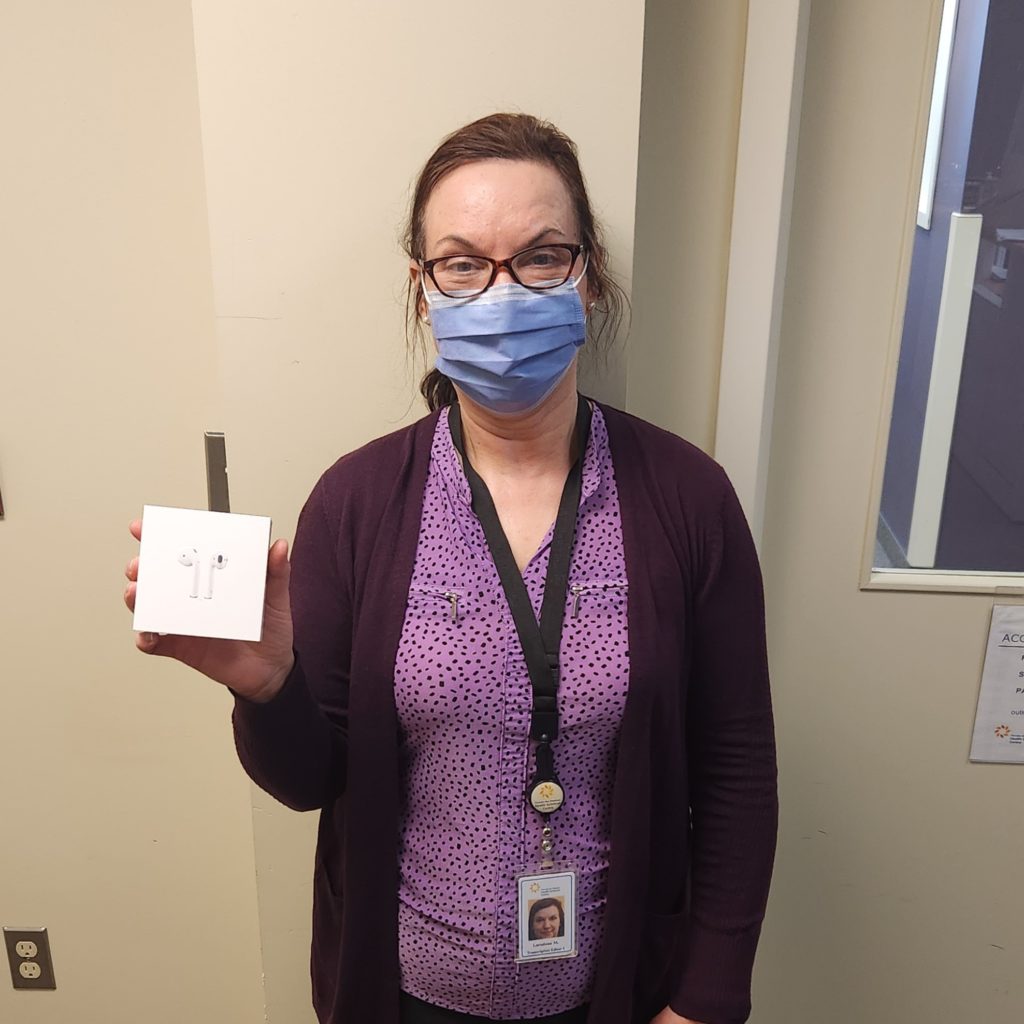
🏆 Apple Airpods, (Loredana Miller). Donated by Cooperators Insurance. 🏆 $25 Fresh Air gift card and water bottle, (Nicole Moffett) 🏆 $25 Fresh Air gift card and water bottle, (Katherine Tuomi) 🏆 $25 Fresh Air gift card and water bottle, (Joanna Coccimiglio) 🏆 $25 Fresh Air gift card and water bottle, (Leslie Kepka) 🏆 $25 Fresh Air gift card and water bottle, (Katherine Hill) 🏆 $25 Gear Up For Outdoors gift card and Bluetooth speaker, (Adam Roos) 🏆 $25 Gear Up For Outdoors gift card and Bluetooth speaker, (Tena Lindsey) 🏆 $25 Starbucks gift card, (Emma Kilby). Donated by HealthHub. 🏆 $25 Starbucks gift card, (Kessa Iddison). Donated by HealthHub. 🏆 $25 Entershine Bookshop gift card, Robin’s gift card, and Lavender Hydro Grow Kit, (Josephine Tucci) 🏆 $25 Entershine Bookshop gift card, Robin’s gift card, and Lavender Hydro Grow Kit, (Andrea Winters)
How do I request support from Communications and Engagement?
Do you need messaging, graphic, promotional or other content creation support for your project? We can help! All requests for Communications and Engagement support must be submitted through the online ticketing system at https://comms.tbrhsc.net/communication-request/. Communications service requests are reviewed by the Communications and Engagement team on a daily basis for priority sequencing.
Each staff member with a tbh.net account can access our ticketing system with their Novell credentials. If you’re having difficulty logging in, please contact a member of the Communications and Engagement team. We’ll help you reset your password or create a new account.
Word (.doc/.docx) is the preferred format for content submissions.
All submissions (e.g. event posters, memos, etc.) must adhere to our corporate branding and style standards. Contact a member of the Communications and Engagement team for assistance.
Whenever possible, please include a high-resolution photo (.jpg) to accompany your item, especially for new hires and retirements (a member of the Communications & Engagement team would be happy to take the photo if needed).
Indicate both the date to start posting and the expiry date.
Please note that community events include any education, information or awareness-raising initiatives and activities happening in the community that support TBRHSC and TBRHRI’s Strategic Plan directions.
Please ensure that content intended for the Daily Informed Newsletter has been approved by your department’s Manager/Director/VP prior to submitting.
Chronicle Journal Article Requirements
Our weekly Health Page in the Chronicle Journal is an excellent opportunity to share health care news and updates with our community. Your article can promote a new initiative or development, highlight an area of interest, or celebrate a recent success. You may choose to simply describe the services offered and how they are access, or feature a team or individual. Articles should be 300-500 words in length and include:
Headline/Title.
Photo with caption.
Author’s name.
A quote from the project/department lead or topic “expert”.
A quote from a patient or family representative (if possible/applicable).
Elements to consider when drafting your article:
What is your article about? Make sure it is clearly stated at the beginning.
Answer the 5 W’s (who, what, when, where, why).
Simplify content as much as possible to make it appropriate and readable for the general public.
How does your article include ‘a call to action’? Provide the message at the end, or a link to where more information can be found (program website, a number to call, etc.).
Once you’ve completed your article draft, Communications and Engagement will happily provide support to finalize the article, including editing services as required.
Websites
TBRHSC’s external website is designed to meet the needs of patients and families in Northwestern Ontario while supporting our Strategic Plan. Features include a strong linkage to our social media channels, a Google-optimized search function, easily accessible and high-demand information (facility maps, parking, accessibility, contacts), and a clean, easy to read design.
TBRHRI’s external website is designed to promote and inform the public on the patient-centred research happening right here in Thunder Bay. Both websites provide users with the flexibility to access the site on multiple platforms (smart phones, tablets, laptops).
We’ll be sharing more in-depth information about our department and the services we provide. Keep an eye on the Daily Informed Newsletter and check out our toolkit for details.
Below is the first of several information bursts regarding the upcoming transition of our scheduling system to UKG Pro Workforce Management.
The topic of this update is: What and Why’s of UKG-One stop shop for your scheduling needs coming March 25, 2024.
Please relay this information to your staff through team huddles and face-to-face interactions as frequently as possible. Thank you for your invaluable support in sharing these important messages.