There is not a day that goes by without our physicians going above and beyond to care for our patients and build a healthier community. In recognition of their commitment to patients and the entire health care system, National Physicians Day is celebrated on May 1st. This designated day for physicians provides an opportunity to recognize the dedicated and compassionate care that physicians provide.
This year on National Physicians’ Day, we reflect on the work and sacrifices made by physicians and express our most sincere appreciation for the care they provide in normal and in extraordinary times. Our physicians demonstrate exceptional skill, professionalism and endless compassion towards others every day. Thank you for your unwavering commitment to care, and your practice. Thank you for saving lives in our community and region; you are truly making a difference every day. Thunder Bay Regional Health Sciences Centre would like to sincerely thank every physician for all that they do and for helping us provide exceptional care for every patient, every time.
April has been a busy month for all of us, and I’m thrilled to share some key updates with you.
Following the recent Town Hall and the Ontario Budget announcement in late March, we are optimistic about potential boosts to our financial situation. These enhancements could significantly support our capital projects, which are crucial for advancing our care and attracting top talent to our Hospital and Health Research Institute. We’re actively engaging with Ministry officials visiting our facilities to discuss our unique community needs. Stay tuned for more developments.
During National Volunteer Week (April 14-20), I had the opportunity to shadow two of our dedicated volunteers at the Cancer Centre. This experience brought a refreshing perspective to the administrative side of my duties and reinforced the critical role of our volunteers. A heartfelt thank you to every volunteer who brightens our patients’ days.
Staff Experience is important to Patient Experience, and both are pillars of our Strategic Plan 2026. I want you to know that when you provide feedback related to your work at our Hospital or Health Research Institute, we are listening. In response to your feedback and engagement surveys as well as our work with the Staff Advisory Committee, I would like to inform you about the organizational level actions that we have been working on to improve your work experience:
Food Services: We’ve broadened food options and extended service hours. Notable changes include extended cafeteria hours for hot meals and salads, Robin’s shifting to 24 hours service and starting May 2024, Robin’s will offer “Grab & Go” options to their 24 hour service. We anticipate positive feedback regarding these changes — please feel free to let us know.
Staff Spaces: Following an audit and survey of our break spaces through our Staff Advisory Committee, we’re standardizing and enhancing these areas. Expect upgraded amenities like kitchen equipment across all breakrooms, maintained as per new policy standards. Additionally, a new / enhanced staff break space will be developed on the 3rd floor by the Sim Lab, with renderings coming soon! Expect this to be completed this fall.
Staffing Enhancements: In response to increased bed capacity, we are boosting our nurse and support staff numbers. This enhancement will improve patient experience and provide better outcomes for both patients and staff. We are also launching new recruitment initiatives for positions where resources can be more difficult to find, like those in our labs and pharmacy.
So, again, please know that we’re listening. Your feedback is invaluable. Keep sharing your thoughts through the Staff Advisory Committee email or directly with your manager.
Finally, I would like to follow up on some comments and questions regarding our in-house security protocols. After seeing a reduction in violent incidents in the Emergency Department this past year we have extended the Thunder Bay Police Service paid duty contract. We know one case of violence is too many and this is why we need to continue to ensure heightened security during peak times. At the same time, we are exploring other opportunities and partnerships to create a more diverse and sustainable model for long term safety solutions both within the Emergency Department and the broader Hospital environment. Thank you for your efforts to support this work. We will keep you updated as to our progress.
As always, I’m open to your thoughts on this blog or any other topic. Contact me at rhonda.ellacott@tbh.net. I look forward to hearing from you.
Thank you for your continuous dedication and hard work.
Province to spend $45 million over three years on the program, upping the hotel accommodation rate and removing a 100-kilometre deductible for mileage reimbursement.
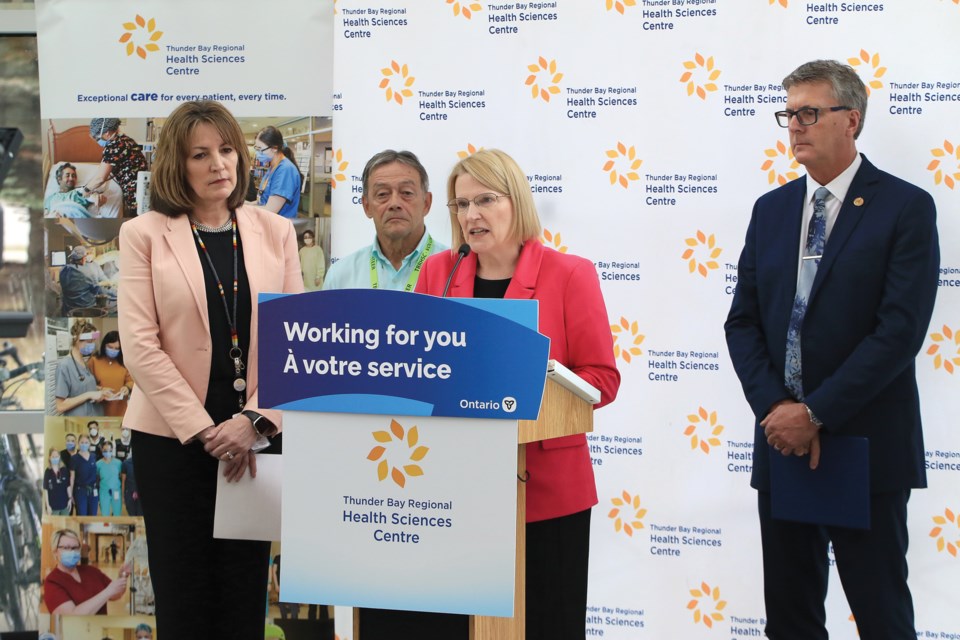
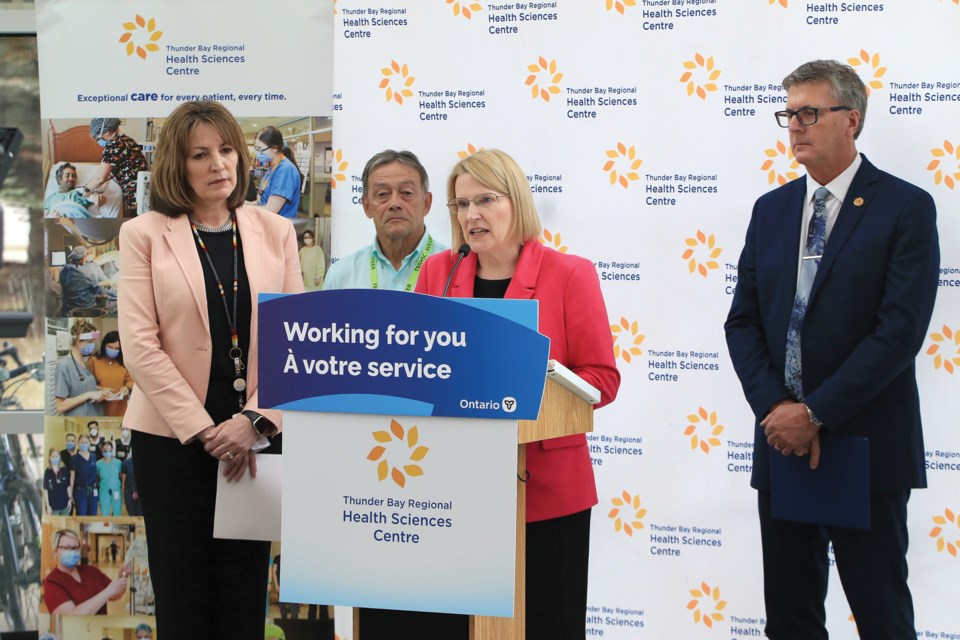
Health Minister Sylvia Jones (centre) speaks on Tuesday, April 30, 2024 at Thunder Bay Regional Health Sciences Centre about changes to the Northern Ontario Health Travel Grant program, as Hospital CEO, Dr. Rhonda Crocker Ellacott and Patient Family Advisor Paul Carr, MPP for Thunder Bay-Atikokan Kevin Holland look on.
Health Minister Sylvia Jones on Tuesday revealed details of the revamped plan at a stop at Thunder Bay Regional Health Sciences Centre, announcing they have increased the overnight accommodation allowance from $100 a night to $175, and from $550 to $1,050 for stays of eight nights or longer.
The government also reduced the travel distance requirements from 200 kilometres round trip to 100 kilometres and have expanded the eligibility to cover costs of medical travel companions accompanying a patient requiring hospitalization.
The province plans to provide $45 million over three years to fund the program.
Jones said the goal is to provide Northern Ontarians with a better health-care experience, acknowledging residents often don’t have access to a full suite of medical services in their home communities, especially in sparsely populated regions in the Northwest.
That shouldn’t mean accessing health care needs to be a financial burden, the minister said, calling it another step toward connecting people in the region to the specialized health care they need.
“These programs provide financial reimbursement that helps cover the medical related costs Northern Ontario residents have incurred while travelling to access OHIP-insured health-care services that are not available within a 100-kilometre radius of where they live,” Jones said.
“The province will begin implementing expansions and needed improvements to the Northern Health Travel Grant program starting this fall.”
The changes will also include a more convenient, online application form, that includes digital receipt submission capabilities, allowing for faster reimbursements and eliminates the need for a signature from a referring physician or health-care provider.
The expansion also adds more health-care partners to the program, as well as community labs, to help more people get reimbursed for their costs.
“(We’ve also) removed the 100-kilometre deductible so people can get reimbursed for every kilometre travelled, to offset higher gas prices. These changes are also increasing reimbursements for overnight trips, to better reflect people’s needs and increased costs,” Jones said.
Paul Carr, a patient advocate at Thunder Bay Regional, said he welcomes the new changes, noting the care needed, including cardiac surgery, isn’t always available close to home.
“Sometimes (patients) face many barriers in terms of accessing care. When you have to travel long distances to attend appointments or receive specialized care or surgeries, it would be great if patients could access the same level of care and services throughout the province, but we know that’s not the case right now,” Carr said.
“Some of our patients have to travel for excess care and this can be a daunting experience. For some it might be the first time they’ve ever travelled to an urban centre.”
Every little bit helps, Carr said.
NDP MPP Lise Vaugeois applauded the changes, calling the move good news for Northern Ontarians, in particular the removal of the 100-kilometre deductible for the gas repayment. However, Vaugeois said the province could have gone further and increased the mileage rate from the current 41 cents a kilometre.
“I think we get roughly 61 cents a kilometre as MPPs,” Vaugeois said. “It’s miles from where it needs to be to cover the cost.”
She added the hotel accommodation rate falls a bit short of the actual cost of rooms, especially in centres like Toronto.
The spending was previously announced in the 2024 Ontario budget.
Stigma is a significant barrier to wellness and good health for people who use substances.
The Canadian Centre on Substance Use and Addiction (CCSA) designed Overcoming Stigma Through Language: A Primer to increase understanding and start conversations around the devastating stigma associated with substance use and addiction and its impact on the well-being of people touched by this health issue.
This Primer was created with support from CCSA’s partners at the Community Addictions Peer Support Association. The goal of this primer is that it will help to recognize the stigmatizing language, attitudes and behaviours that surround people experiencing the harms of substance use.
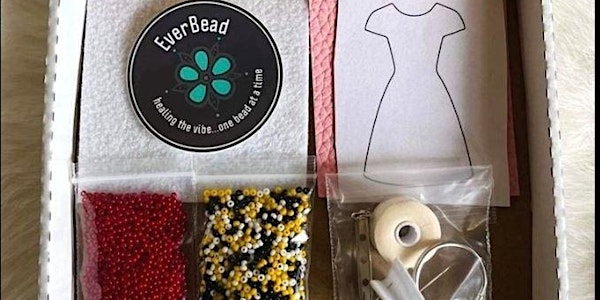
Join us for the MMIW Beading Lunch and Learn event where participants will spend the hour beading, learning, and connecting with each other. This in-person event will be held at Thunder Bay Regional Health Sciences Centre in Volunteer Services (Room 2007). Just bring your lunch, and we’ll provide the beading supplies. Let’s come together to honor and remember missing and murdered Indigenous women, girls, and 2-spirit people. Don’t miss this opportunity to engage in meaningful conversations and create beautiful, beaded pins. We can’t wait to see you there!
Come and stop by our booth and raise awareness for missing and murdered Indigenous women, girls and 2-spirit people (MMIW)
Missing and murdered Indigenous women, girls and 2-spirit people (MMIW) is not just a societal issue, it also has significant implications for healthcare. It is important for healthcare providers and institutions to acknowledge the MMIW crisis and work towards creating a culturally safe and respectful healthcare system that addresses the unique needs of Indigenous peoples.
May 5th is National MMIW (Murdered and Missing Indigenous Women) Day, a day to raise awareness about the crisis of missing and murdered Indigenous women, girls, and 2-Spirit people in Canada. This day is an opportunity to honor the lives of those who have been lost and to support their families and communities. It is also a time to advocate for change and to demand action from governments and institutions to address the root causes of the MMIW crisis.
In an effort to raise awareness of MMIW day, a booth will be displayed on Friday, May 3rd at the bottom of the Grand Staircase from 10:00 a.m. to 12:00 p.m. MMIW items will be available at the booth for staff to take, as well as educational material:
T-shirts
Mugs
Car decals
Stickers
A beading session will also be scheduled for staff to sign up and receive education on MMIW and bead an MMIW pin. Beading is considered a healing practice in Indigenous culture and will allow staff to further their education in Cultural Safety. The beading session will be scheduled on Friday, May 3rd, 12:00 p.m. –to 1:00 p.m.
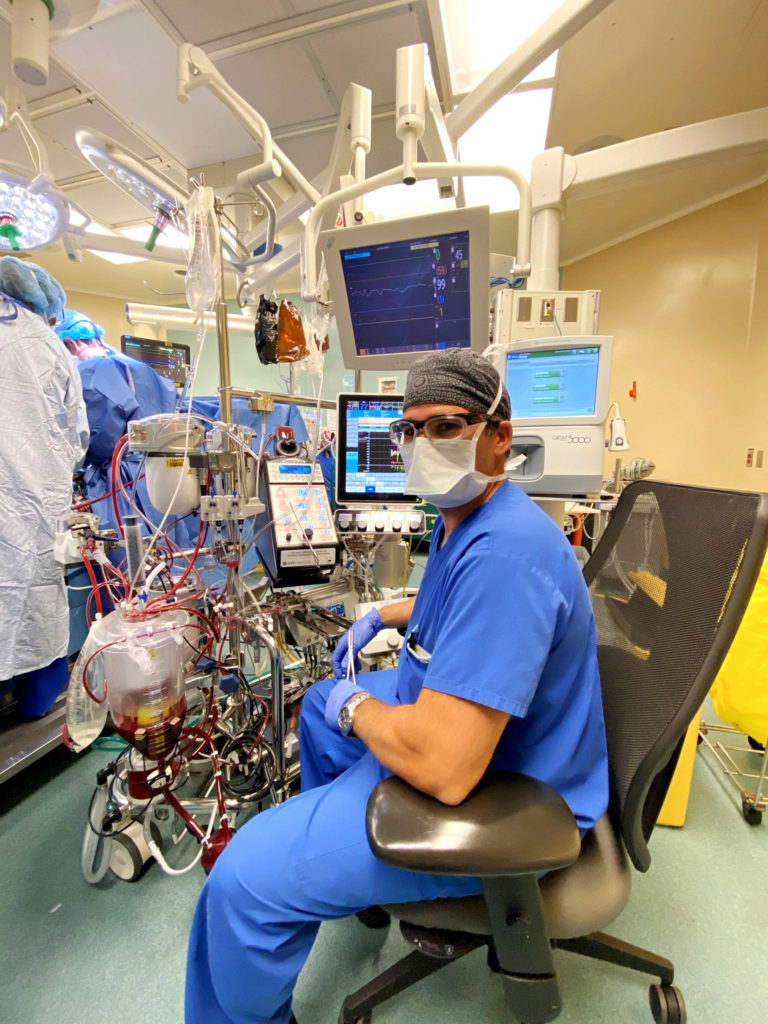
Cardiovascular Perfusionists are an important part of the interprofessional operating room team, working closely with Cardiac Surgeons and Anesthesiologists. They play a critical role in conducting cardiopulmonary bypass utilizing the heart-lung machine and other ancillary equipment in the cardiac operating room.
During National Perfusion Week (April 29 – May 3), we want to recognize three staff members who will serve as Cardiovascular Perfusionists at the Thunder Bay Regional Health Sciences Centre (TBRHSC) with the launch of the Cardiovascular Surgery Program in 2027.
In March of 2018, Scott Longridge completed the Cardiovascular Perfusion Program at the Michener Institute of Education at the University Health Network (UHN). Scott has been a dedicated employee of TBRHSC for a considerable length of time and is currently serving as a perfusionist at the Peter Munk Cardiac Centre (PMCC) at UHN.
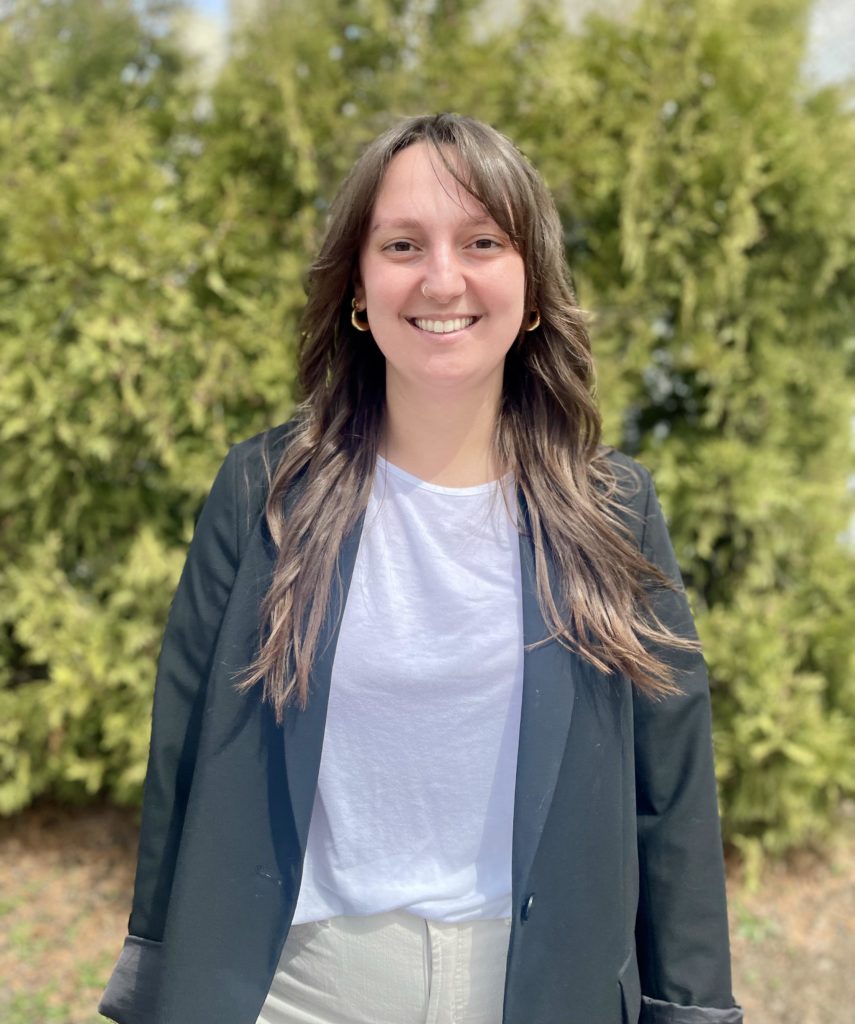
In September of 2023, Amanda Sanche began her two-year Cardiovascular Perfusion studies at the Michener Institute of Education at UHN. Amanda holds a Bachelor of Science in Nursing and a Master of Nursing with a Teaching Focus.
We are pleased to extend our congratulations to Grace Lovis for her recent acceptance into the Michener Institute of Education at UHN for the September 2024 academic year. Upon successful completion of cardiovascular perfusion studies, Grace will be returning to Thunder Bay, accompanied by Amanda Sanche and Scott Longridge, to join our cardiovascular team.
Collectively, their drive for knowledge and expertise, coupled with their demonstrated commitment to delivering safe and comprehensive perfusion therapy, will be an invaluable asset to our organization and the patients we serve. We wish them all the best and look forward to welcoming them to our team upon their return.
As the comprehensive Cardiovascular Surgical Program moves forward, TBRHSC will be seeking to recruit an additional Cardiovascular Perfusionist.
Join us this week in recognizing the essential work that perfusionists do in the operating room.
Learn more about cardiovascular perfusion at these online resources:
As part of our year-long 20th anniversary celebration, we asked the leaders in our Hospital to share their stories and highlight the growth and evolution of their team, program and the services they provide.
This week’s feature: Labour & Delivery and Maternal Newborn
Submitted by Katie Forbes, Manager Labour & Delivery
1. Briefly describe your program/service.
Our Obstetrical program provides the highest level of maternal newborn service in Northwestern Ontario. We have the ability to care for low and moderate risk pregnancies as well as twin and triplet pregnancies that are greater than 32 weeks gestation.
Our Labour & Delivery department has seven large birthing suites, two operating rooms and three outpatient assessment rooms. This highly specialized team works with our families to support their birthing plans and guides them through the journey of childbirth. We also work in collaboration with our Maternity Centre and our care providers to support required prenatal assessments and testing for pregnant people.
Our postpartum unit, Maternal Newborn (1C) has highly trained staff who support our families after the birth of their babies. This qualified team provides education in all aspects of postpartum and newborn care, including breastfeeding and discharge teaching, which supports families in feeling confident to be discharged home. They also coordinate newborn screening, assessments and assist families with arranging post-discharge follow ups.
2. How has your program/service grown or evolved over the past 20 years?
Over the years we have seen relatively consistent numbers of births ranging between 1,400 to 1,500 births per year. We have provided continuous OBGYN and expert obstetrical nurse coverage 24/7 for the region for the last 20 years with no interruptions in service. Over the years we have seen an increase in acuity and complexity in our patient population. We strive to understand the complexities and challenges that many of our clients face, including those from northern and rural communities. Recognizing the diversity of our clients has helped our team provide exceptional care to our culturally diverse patient population.
3. What is your most cherished accomplishment, milestone or memory?
The creation of the Maternity Center in 2006 was a huge milestone for our program. It is a unique program that provides comprehensive obstetrical care without need for a referral and is the only one of its kind in Ontario. The program supports the antenatal needs of pregnant people and has the ability to provide time limited post-partum care especially for those without a primary care provider.
Our program often receives many compliments and gratitude for the patient and family centered care that is provided by our multidisciplinary obstetrical team. Over the last 20 years we have delivered over 20,000 babies!
This year marks the 20th anniversary of Thunder Bay Regional Health Sciences Centre (TBRHSC) opening its doors.
Since welcoming our first patient on February 22, 2004, TBRHSC has expanded in size, as well as its programs and services.
Many of the milestones that have been achieved in the past 20 years would not be possible without the efforts of our dedicated staff, physicians, Patient Family Advisors, and volunteers.
Thank you to everyone who submitted their favourite memories from the last 20 years for a chance to win a $25 gift card from a local vendor. Congratulations to the following randomly selected winners below!
(Winners will be contacted directly to arrange for pick up of their gift cards)
Kristi Judge (winner of a $25 gift card to the Cheese Encounter)
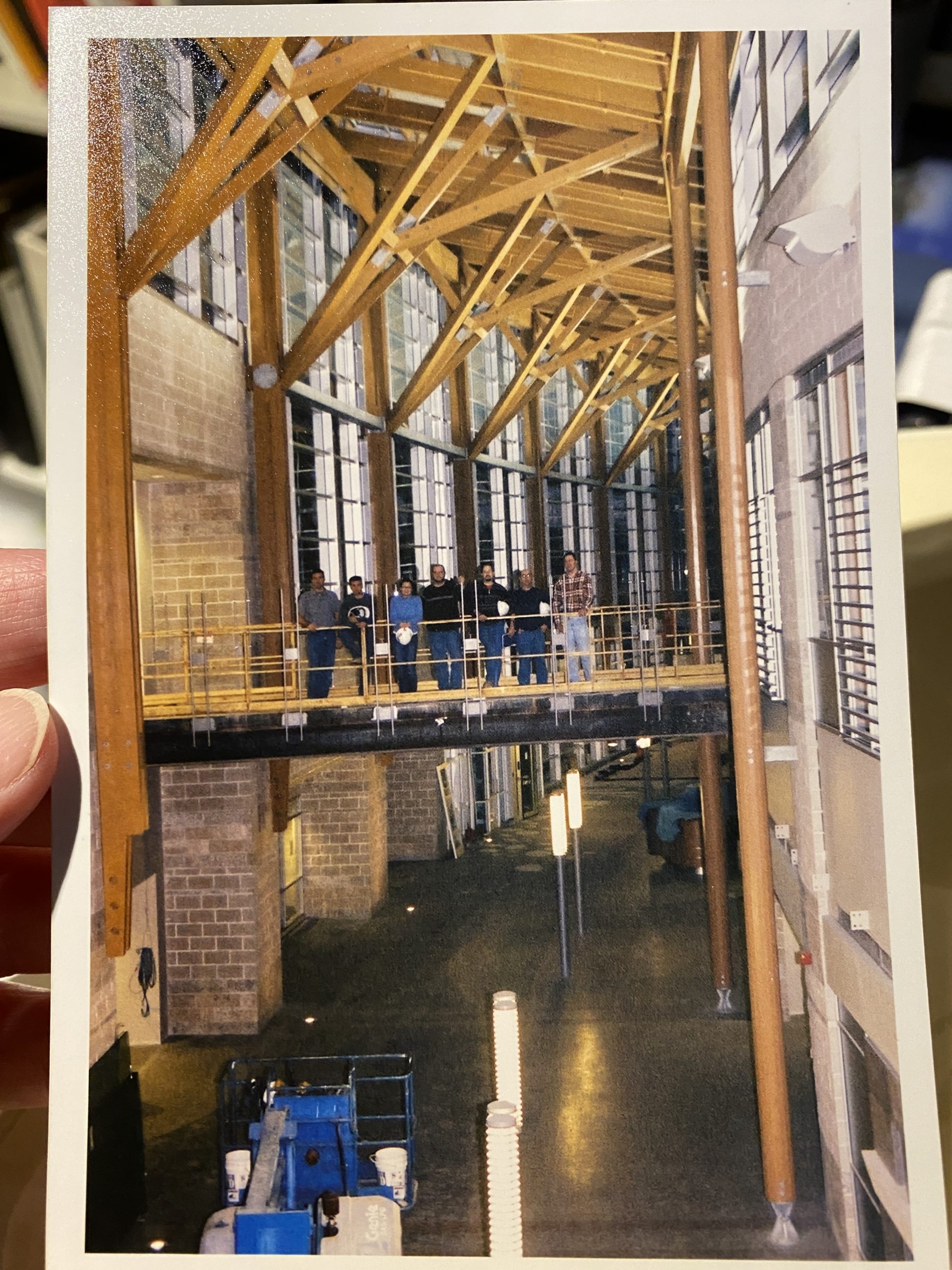
My memories of the new facility go back more than 20 years, to when I started to work for the building architects, Salter Farrow Pilon Architects Inc. In January 2001, I started working for them in their Toronto office and was part of the project team that worked on our Hospital. I was a “CAD monkey” there and also did some 3D modeling of spaces. I also worked closely with the project manager helping with contract admin tasks directly related to construction that had already begun. In July 2001, I moved to Thunder Bay and stayed working for the architects, but now on the Hospital’s construction site. At that time, the Hospital was a partial skeleton only, mainly structural steel and some metal (floor) decking. The steel assembly was not yet complete so the north area where the Cancer Centre and Cafeteria area are, was just “air”. During my years on-site, I had the pleasure of watching the building come to life, literally one wall at a time. Our site offices were job-site trailers but once work on the roads and landscaping started, we were moved inside the building to some of the finishes spaces. We moved a couple times to different areas, but at one point, my office was the President’s office!
Attached is a photo from site a couple months prior to the building opening. This was our consultant team — three of us working for the architects and four for the mechanical and electrical consultants — on the 3rd level bridge in the very recognizable main lobby atrium space.
The day the building opened, was the day we moved off-site, so as the Hospital was moving in the front door, we were sneaking out the back! I had the fun job of moving 120+ bankers boxes full of files (to my house!) and cataloging them and the many rolls of drawings which were produced, before bringing them down to the architect’s Barrie office.
I would not start working directly for the Hospital until 2005, but it’s safe to say that no one has worked in this building longer than I have!
Ann Marie Cline (winner of a $25 gift card to the International House of Tea)
I started working in the building before it was officially open. We were all bringing in thermoses of coffee and bagged lunches, since there were no food services available on site at the time. I don’t think there were any staff rooms or a cafeteria for the first bit either. I was proud to be a part of that first group to help get things underway.
Gordon Jones (winner of a $25 gift card to Central Car Wash)
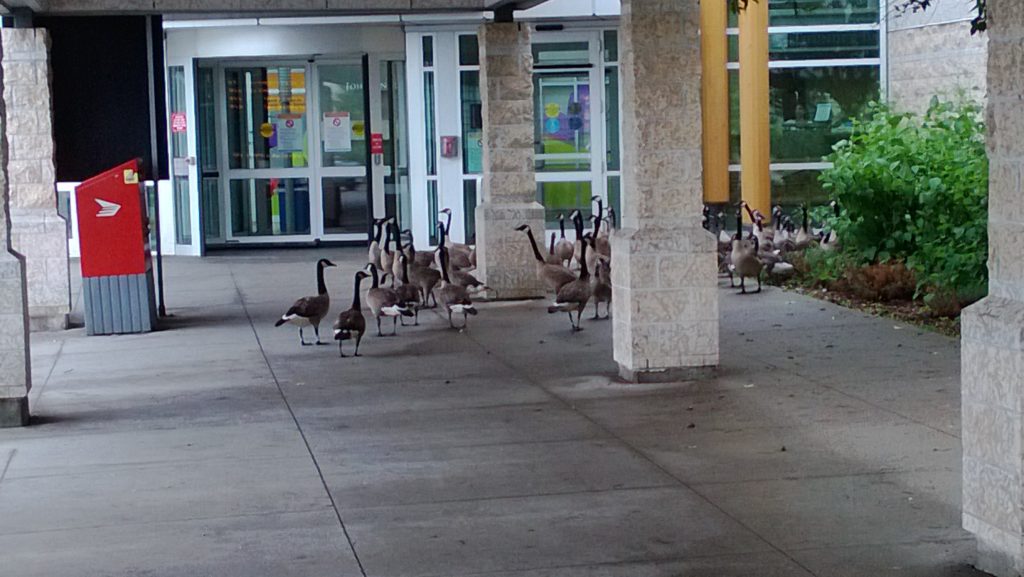
For the 20th anniversary I was wondering if you’d like this funny photo of geese trying to get into the Hospital to visit a friend way back in 2013.
Terry Fode (winner of a $25 gift card to Fresh Air Experience)
This is one of the most exciting things that happened when we were first constructing the Cyclotron and Radiopharmacy facility. Unfortunately due to construction delays, delivery was scheduled for mid-February. The weather couldn’t have been worse! The cranes were positioned outside of 1040 Oliver Road and lowered the heavy, bulky cyclotron equipment carefully into the concrete bunker via a hatch in the roof. This was a long-awaited milestone as it took us one step closer to our goal of manufacturing FDG for our patients and enabling exciting research for the teams at Thunder Bay Regional Health Research Institute and Lakehead University.
Lindsey Rae (winner of a $25 gift card to Robin’s)
I was in my last nursing placement when we moved over to the “new” Hospital. My placement was on 3B. My preceptor was awesome; however, the transition to the new Hospital brought a new scope for RPN’s and the new computer charting. We faced some challenging moments. Thankfully, I stuck it out and wouldn’t have changed a thing. This year marks my 20th year of being a nurse and I have loved every step along the way.
Thank you to the following submissions!
Jasmine Farmer
My favorite memory with TBRHSC started nine years ago, the day I got a phone call from a manager offering me a position at the Hospital. I knew from a young age I wanted to have a role in the healthcare field. When I received the call, I knew this was something exciting; yet I was nervous to accept the position. I soon later accepted the offer with feelings of being nervous and eager. From the first time walking through the doors meeting managers, physicians and staff, to today; all of which I can now call co-workers and friends. The welcome I received was none the less of great and will remain a favourite memory of mine.
Jennifer Svane
I have worked at the Hospital since January 1995. In 1999, I joined the Stores Department. With the amalgamation of Port Arthur General Hospital and McKeller, I had the opportunity to work at both sites. We were so excited to create supply rooms in the patient areas that were going to be a 100% improvement to what we had to work with at the time. It has been nice to see technology make material management more efficient since then. I am not sure where the last 20 years have gone.
Laura Jurimae
A great memory from back in the days when I worked bedside nursing was participating in “The Hippest Party In Town” (held several years back). The 3A staff and leaders organized a night out on the town where attendees could dress up in outfits inspired by the 1980s and dance the night away in order to help raise funds for equipment for our orthopedic patients on 3A. A plaque has been dedicated on 3A outside of 310 in honor of the proceeds raised.
Nella Lawrence
The day we moved our patients from the old sites to the new Hospital was one of the coldest days of the month. Not unlike what we are experiencing now. The enthusiasm we all felt was wonderful. All members of the staff played a part in the relocation and the transition seemed effortless. Any shortcomings were addressed immediately.
The journey to that day was unimaginable. The planning from an infrastructure perspective involved many. Working with the consultants was challenging but the end result was rewarding. The occupancy planning was an exercise in logistics and organization. I recall the many hours of work, the commitment of the staff and the anticipation. Keep in mind that most of the staff were working their regular jobs and any involvement with the capital project was above their normal daily work.
One of the most challenging and upsetting days was when a pipe burst and water was cascading down the grand staircase. Some areas had carpet installed already and needed to be remediated. The Cancer Centre was one area that was impacted.
There were many days full of frustration and many days that were fun, but everyone focused on the outcome and persevered. The patient was always at the forefront. To be able to have a bright, sunny and new environment to provide patient care was the main goal. And it was achieved! Congratulations to all who were involved.
Leanne Baird
I actually have a lot of favourite memories here at TBRHSC but I’ll limit it to two. The first is the opening of the Sim Lab in 2019. While simulation existed previously at TBRHSC, the opening of the Sim Lab really changed the way that we were able to offer learning via simulation in the organization. We have had all sorts of learners through the sim lab including physicians, residents, medical students, nurses, nursing students, RRTs, lab professionals, dialysis aides, housekeeping, dietary aides, paramedics, the military, and high school students. The Sim Lab mannequin family has grown from one adult mannequin to now include a birthing mannequin, newborn babies, premature babies, toddler and child mannequins.
The second is the creation of this award-winning hand hygiene video. I played the roll of the “bad hand washer” and enjoyed working with these children to create the video. I’d love to see them all come back and create an update reel! Maybe some of them are actually working here now.