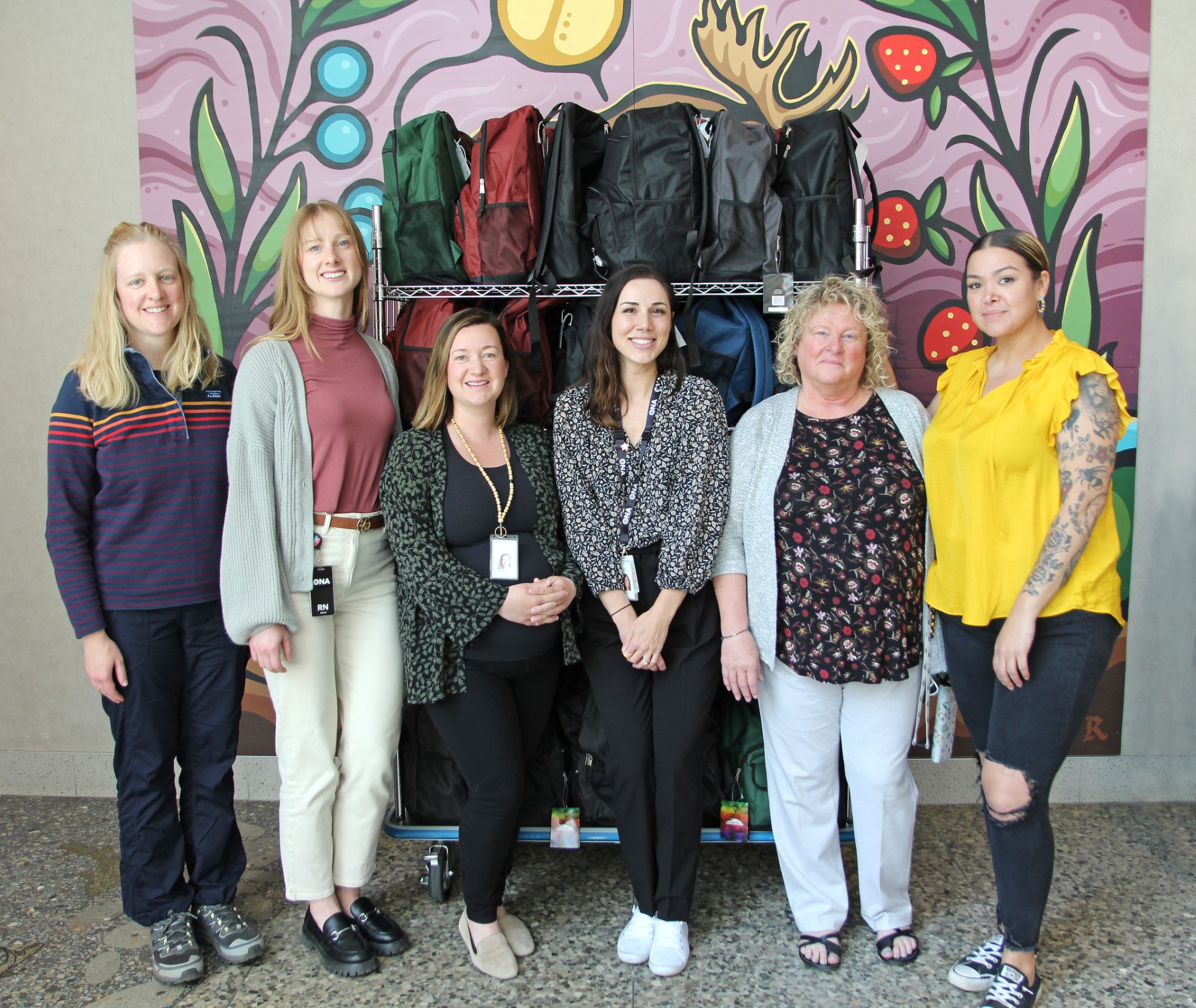
Forensic Mental Health Transitional Rehabilitative Housing Program

Transitional Rehabilitative Housing Program provides supportive services to people at a residential site whose care is being managed by Forensic Mental Health. The services and programming offered are designed to enhance the strengths and skills of the residents in a supported environment as a way of facilitating their transition to independent living in the community.  The program includes a partnership with the John Howard Society as well as the Forensic Supportive Housing team at the Canadian Mental Health Association.

National Indigenous Languages Day (March 31)

There are many other Indigenous languages spoken around the world. Anishinabek (Ojibway), Mushkegowuk (Cree), and Anisininew (Oji-Cree) are three of the Indigenous languages commonly spoken in our area, and throughout Canada. Ojibway, also spelled Ojibwe or Ojibwa, is an Algonquian language spoken by many Ojibwe people in Ontario, Manitoba, and Saskatchewan. Cree is an Algonquian language spoken by many Cree people in Quebec, Ontario, Manitoba, Saskatchewan, and Alberta. Oji-Cree is a hybrid language that combines elements of both languages, and is spoken in Northwestern Ontario and Mideastern Manitoba. These languages each have their own unique vocabulary, grammar, and pronunciation.

An example of a common Anishinabek (Algonquian) word is “miigwech”.

“Miigwech” is commonly used to express gratitude or thanks in the Anishinabek language. It is a way of acknowledging the kindness or help received from someone. The word is often translated to “thank you” in English, but it carries a deeper meaning of appreciation and respect. It can be spelled a number of different ways. Algonquin was not traditionally a written language, so the spellings of Algonquin words in English may vary a lot depending on the dialect and region in which the language is spoken.

Spelling Examples:

  • Miigwech
  • Migwetch
  • Mii gwech
  • Miigwetch
  • Migwech
  • Mii gwech
  • Meegwetch

Map of approximate locations of Algonquian languages, plus Wiyot and Yurok. The map is roughly based on the location of speakers at the time of first contact with Europeans, but since the date of contact varied greatly in different areas, it is unavoidably anachronistic in combining locations from multiple different periods.
Picture source: https://miidashgeget.wordpress.com/2019/01/26/proto-algonquian/

As a Hospital, we help patients who speak Indigenous languages by providing translation services for multiple languages, such as Anishinabek, Anisininew and Mushkegowuk. Providing care that is accessible to patients and their families is central to our mission, and we are committed to ensuring that language barriers do not prevent our patients from receiving the care they need.

CEO’s Blog (March 28, 2024)

Rhonda

Hello, Boozhoo, Bonjour.

Let me begin this month’s blog by briefly addressing the 2024 Ontario Budget, tabled in the Legislature on March 26th as it could have positive implications on us here.

What we know is the Finance Minister announced Ontario is going to spend billions on back pay related to increases associated with the Bill 124 case. The total extra compensation owed so far is reportedly about $6 billion. Here are some other highlights from the budget:

  • 4% increase in base funding, part of $965 million in additional support.
  • $2 billion to expand home and community care over the next three years.
  • $446 million over three years on its primary care expansion strategy.
  • Create 700 new educational spots for medical radiation and imaging technologists, medical laboratory technologists and technicians.
  • $36 billion in hospital capital grants over 10 years.

Again, this is all ‘hot off the press’. We anticipate more detail, context and analysis from the Ontario Hospital Association over the coming days. So, stay tuned. We see this as a positive budget, but I am also acutely aware there is much more needed. We will continue to advocate aggressively with the province.

On that note, we had a special guest last week when we welcomed Dr. Karima Velji, Chief of Nursing and Professional Practice and Assistant Deputy Minister for the Ontario Government. Throughout the visit, we had opportunity to highlight our great staff and the dedication of our health professionals. We also highlighted the need to recognize our region as one where we don’t have the same pool of resources to draw from when it comes to health professionals due to our remoteness and limitations in the academic programs offered. Please know that we continue to be persistent with our advocacy for our Hospital, Health Research Institute and region on the need to have health human resource initiatives that are more tailored to our region. We look forward to continuing the conversation with other Ministry representatives and I’ll ensure to keep you up to date on our progress.

On the COVID-19 front, as you know, the Assessment Centre played a pivotal role in our Hospital’s response to COVID-19 and in supporting our community and region by providing clinical services for testing and treatments.

Now that we have less demand for COVID-19 testing and assessments, and decreased COVID-19 activity, we have received direction to wind down our Centre. I would like to acknowledge and thank the dedicated people who were instrumental in getting this centre up and running in the early days. As well, thank you to the teams that continued to develop new pathways to support the community along the way as the pandemic evolved. Thank you for your dedication and willingness to adapt operations throughout the pandemic. The incredible work leaves us well-positioned to revisit this model of care, should there be a need to respond to future disease needs.

Still with operational matters, the time is finally here as we all transition over from using StaffRight to using UKG Pro Workforce Management as our new scheduling system. As you can imagine, transitioning over 3,500 employees is not an easy task and I am sure we can all agree – change is not always easy. I don’t think there is anyone that has not been affected by this switch over. I would like to thank the team for the work done on this project.

I have to say it was great to see many of you throughout Employee Recognition Week. The week was geared to celebrate all of you and the great work you do to support our community health care needs. The week held many recognition events and I hope you all had opportunity to participate in some way. I recognize that we don’t always connect with everyone through the variety of giveaway events; but please know your work is making a difference and you are appreciated.

As I conclude, I would like to share a testimonial that comes straight from a patient. We get many of these each month from areas across the entire Hospital (because you are all amazing!) and I normally share these in my Board report, but I do think it’s worth repeating here for you.

“Having been a patient at TBRHSC’s Emergency Department several times over the years I have no hesitation in saying that everyone there is talented and hard working. A world class team!”
~ Patient via TBRHSC’s Instagram page (Feb. 2024)

As always, your feedback on these blogs or any other matter is always welcome and valued. You can reach me at: rhonda.ellacott@tbh.net.

Planned Overhead Paging System and Fire System Outage (April 4)

Sent on behalf of Ryan Sears, Director, Capital & Facility Services


Please be advised the Thunder Bay Regional Health Sciences Centre (at the 980 Oliver Road location only) will execute a planned impairment of its entire Overhead Paging System and Fire System on Thursday, April 4, 2024 for approximately eight (8) hours – starting at 11:00 p.m. to facilitate a planned fire system device installation.

Our Facilities and Security teams will be enacting and overseeing our Fire System Impairment and Fire Watch procedures, as included in the Fire Plan for our site.

During this impairment, no Hot Work will be authorized. Further, any high risk work that could result in an elevated risk of fire, heat, or smoke should not be planned – please review this within your department and plan to discontinue high-risk activities (i.e. construction, repairs, hot showers, etc.). Should you observe activities that may be of concern during the impairment, contact your Supervisor or Manager to discuss.

While the Hospital’s Overhead Paging System is out of service, alternate measures will be applied to notify the organization of Emergency Codes and Alerts. Staff will continue to activate all Codes using extension 55. Please see the attached policy for guidance.

Key things to remember during an outage:

1. Regularly monitor email for emergency code and alert notices issued by Switchboard.
2. Respond to emergency codes and alerts through alternate communication measures, e.g., paging, radios, emails, runners, etc., as appropriate – and activate response as required.
3. Be vigilant in reviewing department activities during the period of fire system impairment.
4. Clinical leads are encouraged to collaborate with their teams to consider alternatives to paging patients back to units, such as collecting Patients’ mobile phone numbers.

Further, in event of fire during this impairment, please execute all steps as outlined in Code Red Policy (EMER-30) and your area sub plan. Should you discover a fire – “REACT”:

R – Remove persons in immediate danger.
E – Ensure doors are closed to confine fire or smoke.
A – Activate the fire alarm by pulling the nearest pull station.
C – Call Switchboard at Ext 55 to report the location of the fire.
T – Try to extinguish the fire if trained to do so or continue to evacuate.

The contractor for the fire system work is Troy Life & Fire Safety. The Building System Operator is onsite and reachable at cell number 629-7005. Further support will be provided by Security (684-6509) and the on call Facility Manager (cell number 629-3119) as required.

If you have any questions or concerns regarding the above, please contact Ryan Sears (ryan.sears@tbh.net)

In the News: Thunder Bay hospital launches anti-stigma campaign

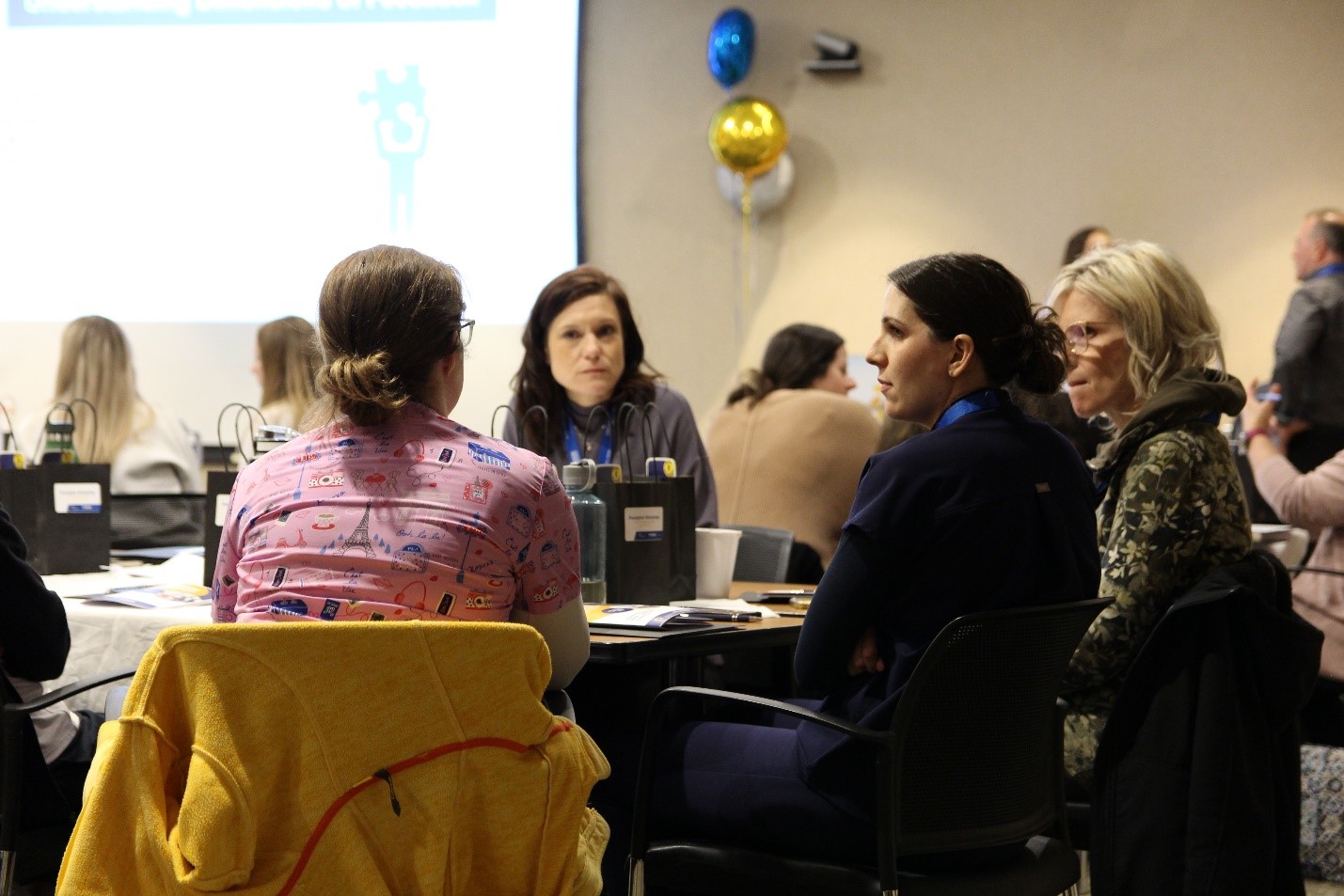
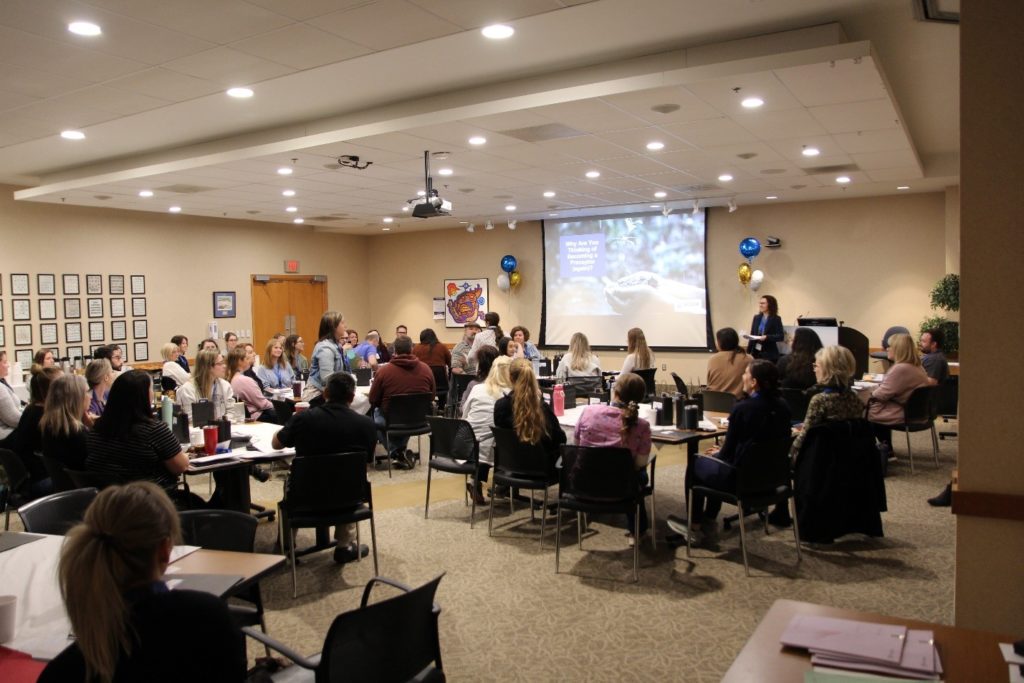
TBRHSC staff are asked to sign a pledge to combat stigma associated with substance use and addiction. (via TBnewswatch.com)

“We know there’s stigma in the community. We know there’s stigma in our hospital. So we want to start talking about it,” said Joelle Macey, manager for adult mental health programs at Thunder Bay Regional Health Sciences Centre.

Macey was speaking Tuesday at the launch of the hospital’s new campaign aimed at bringing awareness to and breaking down the stigma associated with substance use and addiction.

Hospital officials plan to define what stigma is within the institution and to provide education on the appropriate tools and strategies to help staff care for patients with mental health and addictions issues.

Staff members were given the opportunity to attend the announcement of the project.

“We’ve invited all our staff to come out. The big issue, we know, is that stigma is preventing people from accessing care in the hospital. We know it isolates families.  At times, it can also be a reason why patients decide to leave the hospital. So we are concerned about that, because if people are leaving the hospital, they may not be getting the care that they’ve come here for,” Macey said in an interview.

She said TBRHSC wants to ensure it provides a welcoming environment.

“All individuals with addictions and substance use disorder deserve to be treated with dignity and respect,” said Adam Vinet, vice-president of patient experience and chief nursing executive. 

“Our words and actions matter. Outdated language around addictions and substance abuse continues to be used in conversations, and this can be a barrier to breaking down stigma. It is our responsibility to advocate for change.”

Kyle Arnold, a harm reduction support worker with NorWest Community Health Centres, participated in the launch.

“Having faced two decades of stigma, I’ve seen its harm up close,” Arnold said. “But through my journey, I’ve learned a powerful truth: no one is beyond help, and everyone deserves compassion.”

The campaign kickoff is taking place over the next three days, with project members visiting in-patient units to provide education on approaches to reduce stigma, as well as an opportunity to sign a pledge to work toward using “person-first” language.

Giulia Daniele, a clinical nurse specialist in addictions medicine and mental health, said that means referring to patients as people with a substance use disorder rather than using the word “addicts” or other derogatory terms.

“Substance use and addiction is a medical condition. This isn’t a moral failing, and this isn’t a choice for people,” she said. 

The hospital will roll out the campaign with different initiatives throughout the coming year, including educational videos and posters as learning tools for staff.

UKG Mobile App Update

Many staff were unable to access the “Punch Tile” on the UKG Pro mobile application. This issue is now resolved, by updating the app in the Apple or Google store. In addition, there is a new URL, that will bring staff directly to the TBRHSC login page, eliminating one step in the mobile sign-in process.

  • Staff can download the mobile app on their personal devices, should they choose, but this is not mandatory.
  • Although the original URL provided will still work, the new URL will make the sign-in process easier: https://thunderbay-sso.prd.mykronos.com/. Staff can un-install and re-install the app to re-enter this new URL should they choose. This URL only needs to be entered into the app once.
  • If staff choose to use their personal devices to punch in and out, they will need to enable location services for the UKG Pro app.
  • Mobile punch will only work while at the main hospital site or at any of the satellite locations within the city and region.
  • Staff can also punch in/out with their ID badge at any of the 23 timeclocks located throughout the main hospital, 984 Medical Building, and at 1040 Oliver Rd. This is the fastest and easiest method.
  • The punch tile is also available via the UKG Pro HSC icon on a hospital workstation while on-site or via Citrix, if applicable.

SP2026: Substance Use and Addictions Strategy

As part of our commitment to keeping staff engaged and informed on the Strategic Plan 2026, Strategy and Performance is sharing updates in alignment with the identified priorities: Equity, Diversity & Inclusion, Patient Experience, Staff Experience and Research, Innovation, & Learning.

The March 27th Operational Updates and Strategic Planning Meeting covered our Hospital’s Substance Use and Addictions Strategy and was presented by Chad Johnson, Director, Trauma & Pre-Hospital Programs, Critical Care, Emergency, Respiratory Services, and Nurse Led Outreach Team (NLOT) and Crystal Edwards, Director, Women and Children’s Program and Adult and Forensic Mental Health.

Visit the Strategic Plan 2026 page on the Hospital’s corporate intranet, where these presentations, along with other resources can be found.

>