Shared on behalf of Chris Kroker, Coordinator: Regional Paediatrics and Transport
We are pleased to announce that Noah Di Franco has accepted the temporary position of Lead for the Regional Paediatrics Program effective August 26, 2024.
Noah will report to the Coordinator of Regional Paediatrics and Transport.
In his new role as Lead, Noah will be responsible for developing and implementing the Regional Paediatrics Program to support regional providers in the care and management of paediatric patients in Northwestern Ontario. The Regional Paediatric Program Lead will sustain partnerships with regional hospitals working collaboratively to provide education that meets identified needs and promotes best practices.
Noah brings 4 years of Emergency Nursing experience at TBRHSC and Paediatric Emergency Nursing experience through travel nursing opportunities in Texas, Oregon and Minnesota. With his Masters in Business Administration he is eager to share this knowledge and experience with the team.
Wake the Giant Indigenous Culture and Inclusivity Training is a one-time completion Corporate Mandatory course. When you complete the training, you will automatically receive a discount code for 15% off of one general admissions ticket for this year’s Wake the Giant Music Festival.
By completing this mandatory learning, you will be marked compliant for THIS learning year!
The training module is available through Dual Code LMS or by scanning the QR code on the poster below.
Wake the Giant is a cultural awareness project aimed at creating a more welcoming and inclusive city for Indigenous Peoples, youth, and their communities. The project includes an annual music festival that welcomes students to Thunder Bay at the start of the school year in September, as well as a decal program in which organizations and businesses display a Wake the Giant decal to indicate that they are a welcoming and safe space for Indigenous youth.
The Wake the Giant Indigenous Culture and Inclusivity Training provides an online learning experience to support businesses, companies and organizations in creating more inclusive spaces, free of racism, where Indigenous People are welcome. This training is intended to present the realities of First Nations students having to leave their home community to attend high school in Thunder Bay and was developed in direct response to the recommendations in the Seven Youth Inquest.
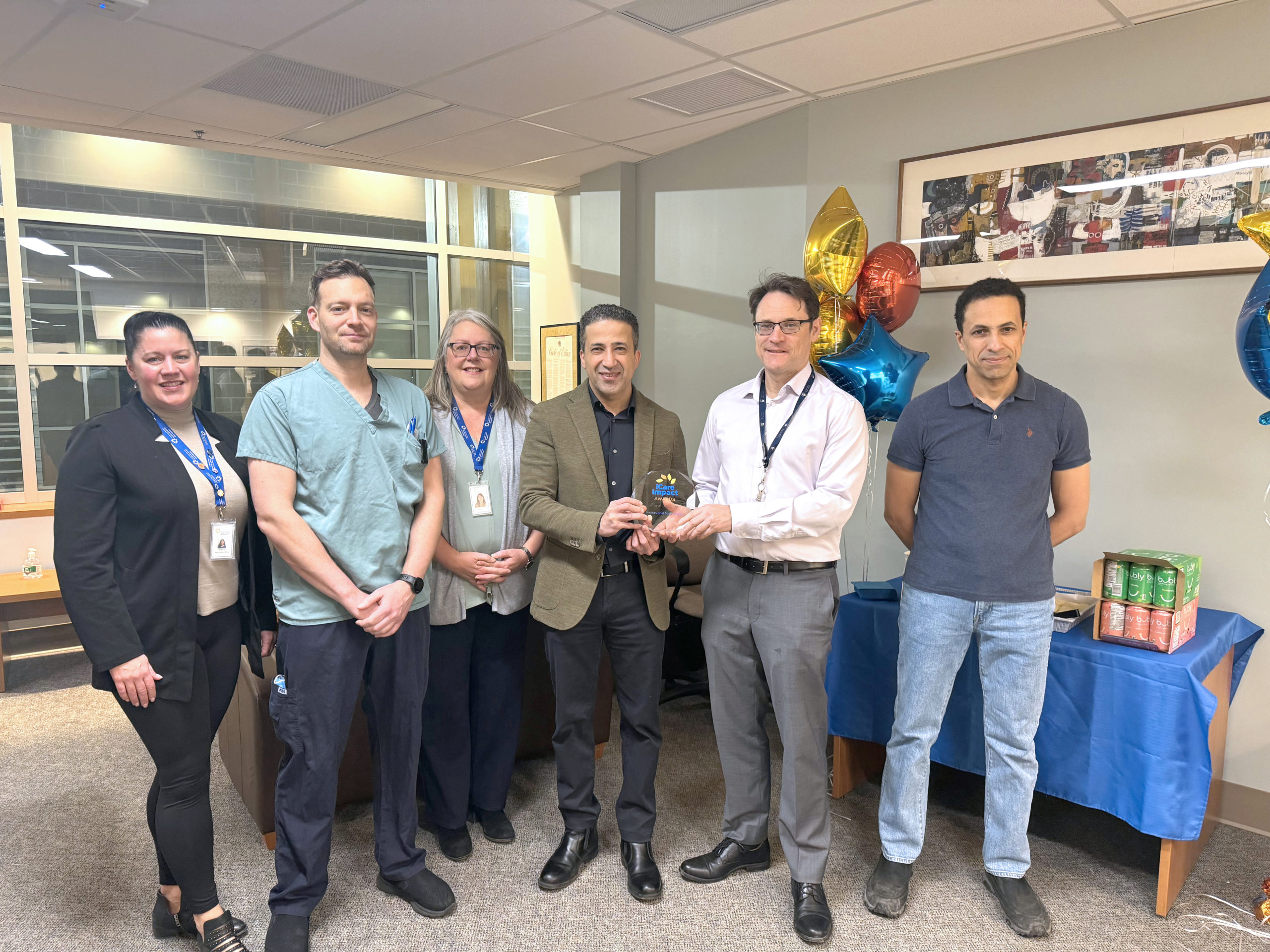
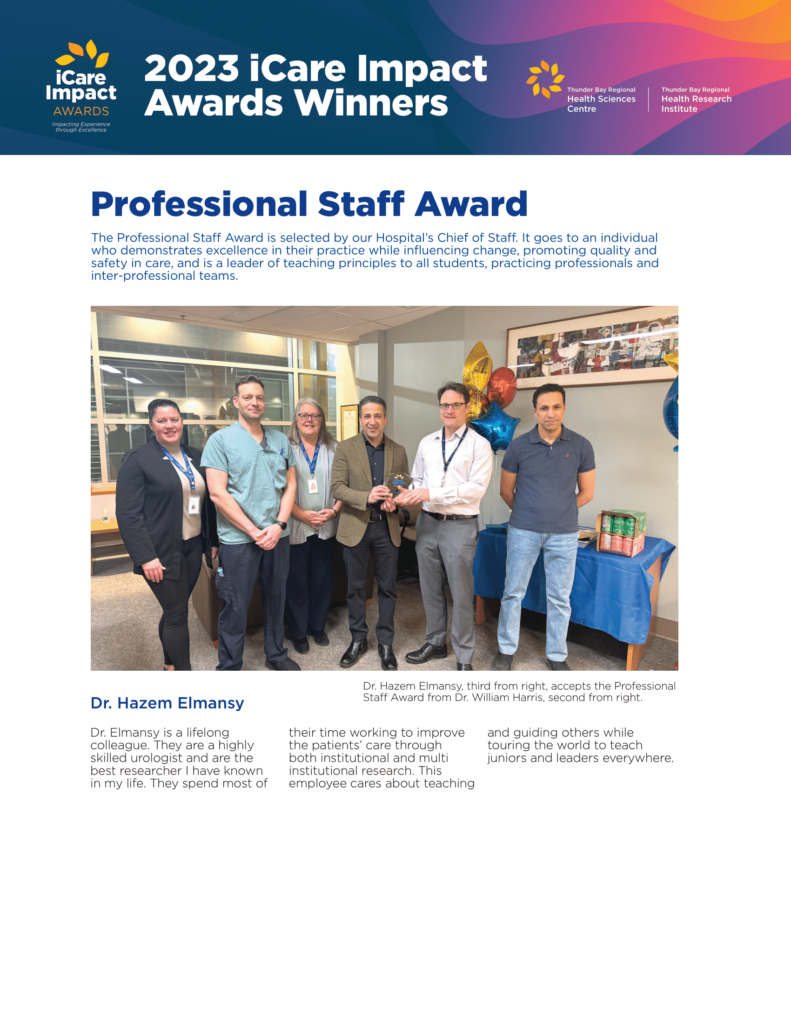
The iCare Impact Awards program is open to all employees, professional staff, Patient Family Advisors, and volunteers of Thunder Bay Regional Health Sciences Centre and Thunder Bay Regional Health Research Institute. It provides a forum for peer-to-peer recognition of positive impacts on our patients and their families.
Nominate now for 2024 to recognize a peer and for a chance to win exciting monthly participation prizes! https://icare-awards.tbrhsc.net/.
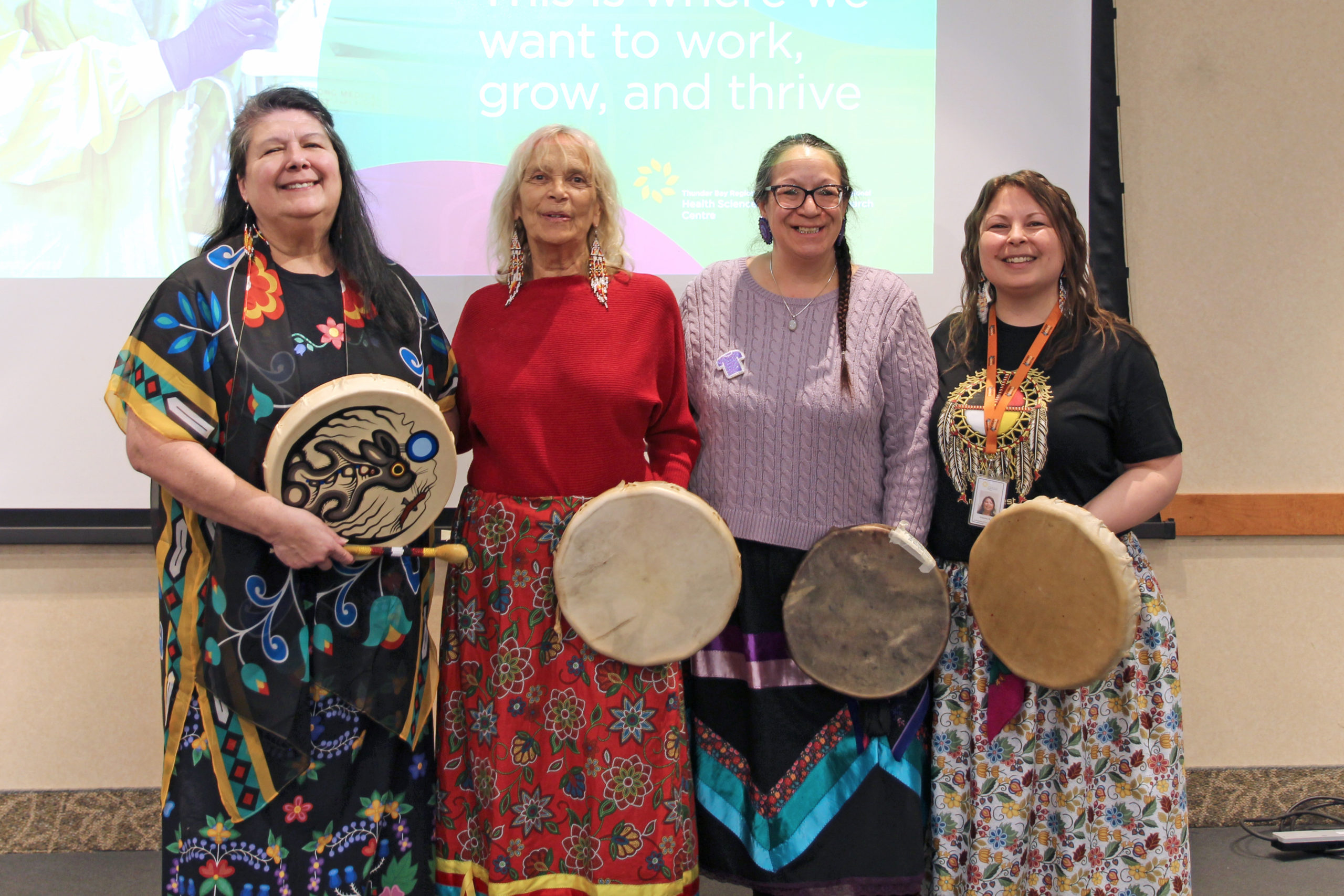
(L-R) Charlene Bourdeau Waboose, Celina Reitberger, Natalie Hache and Annette Klement (Cultural Safety Educator, TBRHSC) of the All My Relations Drum Group.
Summer in Thunder Bay is a great time to be outdoors and enjoy the beauty of Northwestern Ontario with our friends and family. Events are happening throughout the summer that cater to everyone from food enthusiasts to music lovers. You might encounter people drumming at these events. The strong, captivating beat of the drum fills the air with positivity and attracts people, sometimes even giving you goosebumps.
Drumming is a sacred practice in Indigenous culture, tradition, and teachings. According to teachings passed down through Drum Carriers, each drum, like humans, has its own voice and spirit. While songs and teachings about the drum vary across Turtle Island, the significance of the drum remains constant. It serves as a means to connect with our Ancestors and acts as a bridge between the Spirit and Earth worlds. Drumming provides a tool for us to send out our prayers.
The drum symbolizes the heartbeat of Mother Earth and serves as a reminder of our responsibility to preserve and care for Mother Earth. Our attraction to the beat of the drum stems from the fact that the first sound we hear in our mother’s womb is her heartbeat.
Drums are created by stretching an animal hide over a wooden frame that can be held by an individual or be large enough to accommodate a six-member host drum. The shape of the drum holds symbolism; in many Indigenous teachings, the circle represents life, the cycle of the seasons, as well as the sun and moon. The circle is often used to represent balance, equality, and connection in drum teachings.
In many communities, the drum is treated as if it were alive. It is seen as a sacred item and to give a drum its voice, it may need to be “birthed” in a sacred ceremony. If practicing this ceremony, a drum should not be used until this has takes place. During this ceremony, the drum is connected to the drummer’s voice.
Drumming holds a significant presence in a variety of situations. Drums are used to commence important work, to start a safe journey for those travelling and hunting, and even to give strength during a hard time. Some songs are meant to welcome the public, while others are more private and only sung by the owner.
The rhythm that comes from the drum aids in promoting healing and aligning our physical, spiritual, mental, and emotional well-being. The beautiful sound of the drum can increase energy levels and help release tension. Individuals who partake in drumming, whether that be by listening, dancing, or singing along to the songs, can find a sense of emotional relief and center themselves.
One thing to remember, while enjoying drumming, it is important to understand and respect the practice. According to teachings, individuals can only touch or use another person’s drum if they are given permission to do so.
Thunder Bay Regional Health Sciences Centre (TBRHSC) is committed to creating a more culturally safe and compassionate health care environment — to ensure equity for all throughout our Hospital. Many patients, their families, and caregivers who access care at the TBRHSC practice traditional ceremonies, including drumming, as a part of the healing process. Drumming is available to patients, families and staff at TBRHSC. “Drumming is very healing and we are very happy to be able to provide this traditional medicine to our patients,” said Annette Klement, Cultural Safety Educator at TBRHSC.
Patients can request drumming as apart of their healing journey through the Indigenous Care Coordinators, Spiritual Care or the Cultural Safety Educator.
Shared on behalf of Chris Kroker, Coordinator, Regional Paediatrics and Transport
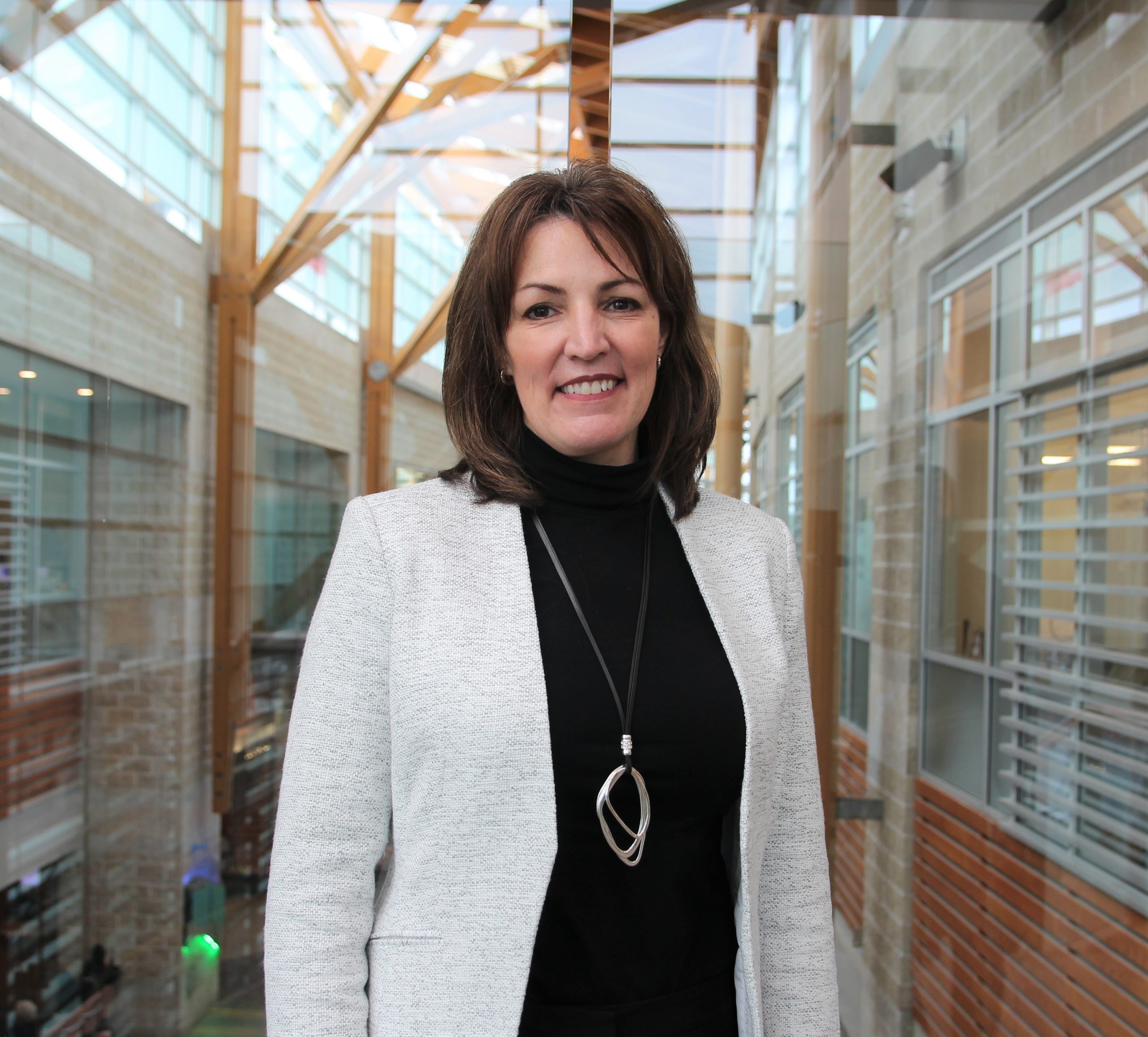
We are pleased to announce that Marta Nesti has accepted the position of Educator and Quality Lead, Regional Paediatrics and Transport effective July 29th, 2024.
Marta will report to the Coordinator of Regional Paediatrics and Transport.
In her new role as Educator and Quality Lead, Marta will be responsible for developing and implementing education in relation to inter-facility transport, as well as supporting remote and regional communities throughout Northwestern Ontario.
Marta brings over 18 years of experience within the Women and Children’s program. She has worked primarily in the Neonatal Intensive Care Unit as well as the Paediatric Inpatient and Outpatient Departments. Marta, as a Transport RN Champion, has contributed significantly to the ongoing development of the Paediatric Emergency Transport Team.
Please join us in welcoming Marta to her new role.
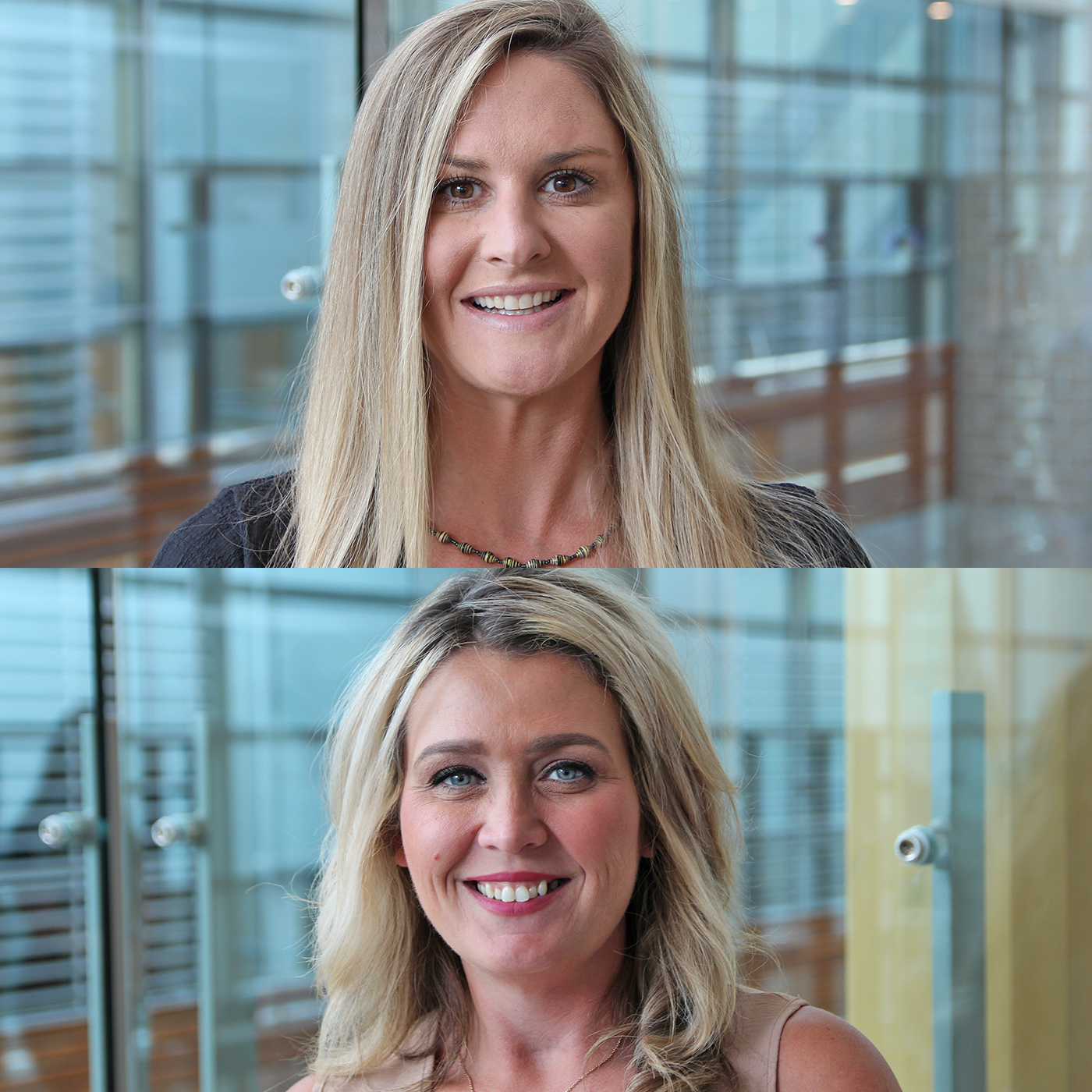
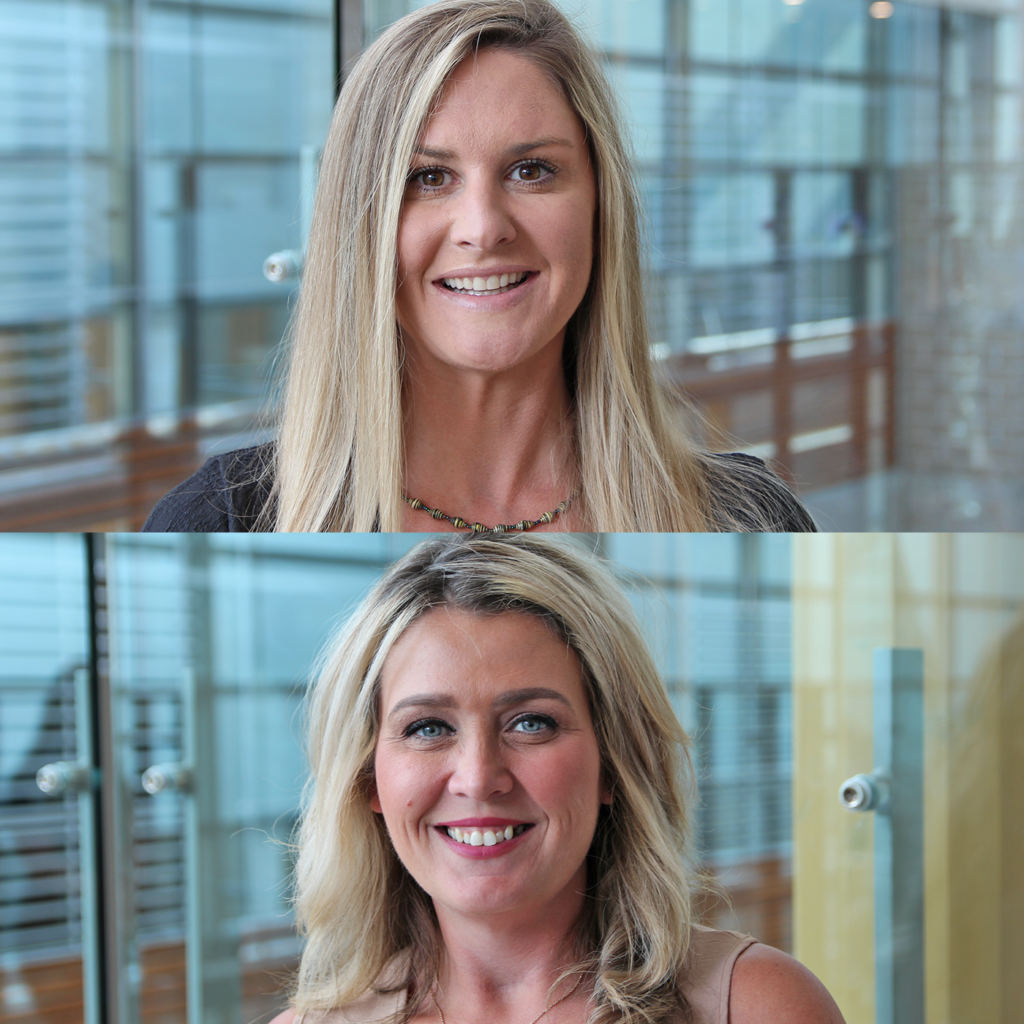
After many years of working in most clinical areas of the Thunder Bay Regional Health Sciences Centre, Terah and Victoria eagerly transitioned to the Patient Advocate role. They are both driven by a commitment to guide clinical decisions with respect for individual patient and family preferences, needs, and values. They focus on creating a caring environment and providing holistic care, continually enhancing their practice. By collaborating with patients, families, and all interdisciplinary teams, they strive to achieve the best outcomes while assisting their patients and families in navigating the health care system. They are dedicated to ensuring exceptional care for every patient, every time.
Background
Patient advocates at TBRHSC have a background in Nursing. They bring experience from nursing and health care administration, which equips them to understand the complexities of patient care in our region and to effectively communicate with health care providers, patients and families.
Role Description
The Patient Advocate acts as a liaison between patients, their families, and the health care team. They help navigate the health care system, address concerns, and ensure that patients’ voices are heard. Their goal is to enhance patient satisfaction and improve the overall patient experience.
Typical Day/Week
A typical day for a Patient Advocate may involve:
Meeting with patients and families to discuss their concerns and needs
Collaborating with health care teams to resolve issues and improve care
Educating patients and families about their rights and available resources
Assisting with the coordination of care and discharge planning
Documenting patient interactions and follow-up actions
Throughout the week, the Advocate may attend departmental meetings, participate in quality improvement initiatives, and engage in ongoing training to stay current with best practices in patient advocacy.
Importance of the Role
The Patient Advocate’s role is vital in ensuring that patient care is patient- and family-centered. For example, if a patient is experiencing difficulty understanding their treatment plan, the Advocate can intervene to clarify information and facilitate communication between the patient and health care providers. This can lead to improved patient outcomes and higher satisfaction levels.
Example of Impact
A Patient Advocate successfully helped a family understand the complexities of their loved one’s diagnosis and treatment options, resulting in the patient feeling more comfortable and confident in their care plan. This intervention not only improved the patient’s experience but also enhanced the trust and communication between the family and health care team.
PFCC Core Concept Exemplification
This role exemplifies the Patient and Family Centered Care (PFCC) core concept of Dignity and Respect. By actively listening to and addressing patient and family concerns, the Patient Advocate ensures that their values, preferences, and needs are respected and integrated into the care plan.
Contact Information
Patient Advocate Office Phone: 807-684-6211 Email addresses: terah.white@tbh.net and Victoria.marks@tbh.net
Accessing the Resource
Staff can refer patients and families to the Patient Advocate by contacting the office directly via phone or email. Additionally, information about the Patient Advocate service is available on the TBRHSC website and through internal communications channels.
Shared on behalf of Jennifer Wintermans, VP, Quality and Corporate Affairs on behalf of the Patient Safety and Quality of Care Committee of the Board of Directors – Thunder Bay Regional Health Sciences Centre (TBRHSC)
The Patient Safety and Quality of Care Committee is currently recruiting one new member.
The new member must work at TBRHSC and be a regulated licensed professional but not a member of the College of Physicians and Surgeons or the College of Nurses.
The member must be willing to serve a two-year term on the Committee, with an option for renewal on recommendation of the Committee.
Additional Criteria is as follows:
Effective communication skills
Ability to work independently and as a part of a team
Endorse Mission, Vision, and Values as part of Strategic Plan 2026
Keen interest in quality improvement and safety
Proven patient and family centred care advocate
Ability to view organization from an operational and strategic perspective
Demonstrates knowledge of quality improvement
Proven critical thinking skills
Signed confidentiality agreement
Ability to attend five meetings per year between September 2024 to May 2026
Ability to contribute constructively to process improvement
Member of a program or service
Please submit any questions or a letter outlining your interest and qualifications, including attestation that your Manager or Direct Supervisor is aware of your interest to Sheila.Brown@tbh.net by end of day August 30, 2024.
Successful candidates will be contacted for an interview.
Role of the Committee
To ensure that quality of care is an integral component of governance, and in accordance with the Excellent Care for All Act, 2010 (ECFAA), Thunder Bay Regional Health Sciences Centre’s (TBRHSC) Patient Safety and Quality of Care Committee (PSQCC) is designated as the quality committee of the Board of Directors to oversee and advocate for excellence in patient care and safety consistent with its mandate as an academic health sciences centre.
Thanks for taking a moment out of your day to read this blog and keep updated on what is happening within our Hospital and Health Research Institute community.
Over the past few months, we have kept you updated on the Environmental Refresh that continues with the in-patient rooms. To date, we have made considerable progress with completing about 20% of the wall repairs, painting, and deep clean on Level 3. As well, we are actively sourcing materials for the wall application, patient privacy curtains, and window blinds. To minimize the impact on you and clinical operations, rooms will be revisited to apply final accents as material arrives.
As you can imagine, the logistics in completing this revitalization project is an immense undertaking and would not be possible without the exceptional teamwork and efforts from many departments. I want to acknowledge and thank the teams from Maintenance, Housekeeping, Capital Planning, Infection Prevention and Control, Patient Flow, Admitting, and Procurement for their seamless cooperation and dedication to moving this project forward. Additionally, I extend my heartfelt gratitude to the clinical staff in 3C for their continued support and understanding during the ongoing renovation. Your patience and adaptability are greatly appreciated as we work towards rejuvenating our Hospital.
Last month, we celebrated National Indigenous History Month and National Indigenous Peoples Day on June 21. We are grateful for the activities that occurred throughout the month to recognize and thank those involved in bringing awareness and keeping us engaged. To continue to learn more about the rich history, heritage, and incredible diversity of Indigenous Peoples, I would like to invite you to take part in the “Repairing the Sacred Circle”, which will provide further insight and pave the way for cross-cultural discussions as we continue to work towards improving the care experience for Indigenous Peoples needing culturally safe and quality care.
We all know how much language matters and this is even more important when providing healthcare to those in need. I encourage you to find out more about the power of words and outdated language related to substance use and addictions and the campaign to change this. You can take the Anti-Stigma Pledge (via the Hospital’s Dual Code LMS) this summer and be part of the change!
Over the past 20 years, we have certainly made significant progress in our health care services – so many milestones when reflecting – and they keep coming. Another more recent milestone is the approval of our next phase of the Cardiovascular Surgery Program project. This is a significant step as we move forward to the final stages with the next stage being the tendering of the project publicly to prequalified general contractors. We are getting close to initiating the build and it is going to be a monumental step towards our vision. We are so grateful for the many partnerships that have been instrumental in making this dream a reality. The dedication and work of the Health Sciences Foundation has been a key partner in this project and their support of the cabinet of the Our Hearts at Home Campaign. We are grateful for all the amazing work done and the donors who have given so generously – thank you for being part of this breakthrough in care for Northwestern Ontario. I look forward to keeping you up to date on the next steps as we continue to make strides.
Before I wrap up this month’s blog, please know that your dedication and hard work is inspiring and meaningful to the patients and families that seek care at our Hospital. I hear stories all the time about the great people we have here and how you have touched so many lives in our communities. It is rewarding to hear and I am sincerely proud of the work that goes on in our Hospital and Health Research Institute community. Together we will continue to improve and progress towards our Strategic Plan 2026.
I do hope you get the opportunity for some downtime to enjoy these summer months with your family and friends. As always, I invite you to provide me with your feedback on these blogs or on any other matter. You can contact me at: rhonda.ellacott@tbh.net. I look forward to hearing from you.