The HIROC Foundation Safety Grants Program was created in 2018 and supports HIROC Subscribers’ innovative safety solutions. The program aims to support Subscribers with safety and risk initiatives and provide opportunities to share learnings.
Since 2018, the HIROC Foundation has awarded 135 Grants for a total of $2 million to Subscriber organizations!
As TBRHSC is a Subscriber, we are encouraged to apply. There are two types of grants:
HIROC Cultivate Safety Grant – one-year Grant of $13,000 with option to apply for an additional $7,000 for a total of up to $20,000.
HIROC Collaborate Safety Grant – two-year Grant, up to $40,000
Please take note of three dates of interest. A Safety Grant Workshop will take place on August 13 from 11:00am – 1:00pm ET and a Safety Grants Q&A Session is scheduled for a week later on August 20 11:00am – 1:00pm ET.
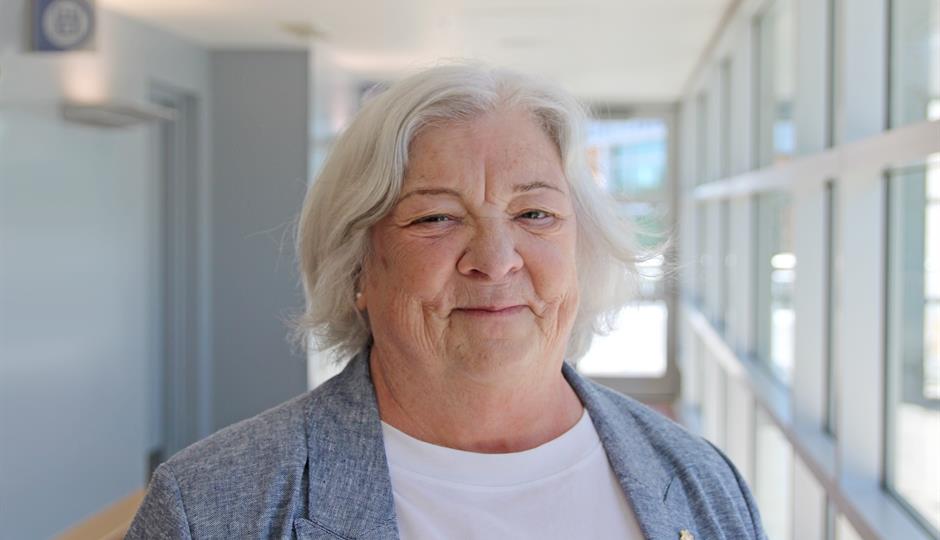
Christine Bates, Board Chair at Thunder Bay Regional Health Sciences Centre, has been a volunteer on the Board of Directors for five years.
A dedicated group of community volunteers at Thunder Bay Regional Health Sciences Centre (TBRHSC) are working to ensure the Hospital continues to meet the evolving needs of patients across Northwestern Ontario.
TBRHSC’s Board consists of volunteers who bring a wide range of professional expertise and lived experience to their role. As a skills-based Board, they provide strategic oversight, shape the Hospital’s long-term direction and ensure decisions reflect the needs of the communities TBRHSC serves.
For Board Chair Christine Bates, volunteering was a natural next chapter after retirement. Before joining, she intentionally gained experience on other community boards, recognizing the complexity and responsibility of hospital governance.
“This is a sophisticated board,” she explains. “Every member brings a specific set of skills.”
That intentional approach to recruitment based on specific competencies is one of the Board’s greatest strengths. Directors are selected to create a balance of expertise, including finance, law, human resources, patient safety and quality, equity, diversity and inclusion, Indigenous and Francophone perspectives, and regional representation. As board members complete their terms, recruitment efforts focus on filling vacancies with skills and experience to better reflect the communities the Hospital serves.
“We’re always asking ourselves, ‘Who is missing from the table?'” Bates says. “The more diverse our perspectives, the better our decisions.”
Serving patients from across Northwestern Ontario means board members need to understand the unique realities of rural, remote and Indigenous communities, where access to care often looks very different than it does in urban centres.
“It’s hard to imagine governance from a distance,” Bates says. “How could people sitting hundreds of kilometres away fully understand what access to care means for someone living in Sioux Lookout or on the North Shore? Some of our board and committee members live in those communities. They experience those challenges firsthand, and that perspective matters.”
Much of the Board’s work happens through committees focused on governance, finance, human resources, audit, and patient safety and quality. Each of these committees includes an elected Community member who, together with Board members, examine issues in depth before recommendations come forward to the full Board for discussion and decision-making.
“Our governance role is often described as ‘fingers out, noses in,'” Bates explains. “To work effectively, we ask questions. We provide oversight. But we don’t manage the day-to-day operations.”
One of the Board’s primary responsibilities is developing the Hospital’s strategic plan. Through extensive consultation with patients and families, staff, physicians, researchers, community partners and government leaders, the Board identifies emerging health care trends and determines where the Hospital should focus its efforts over the next several years.
“It’s about asking, ‘What’s next?'” Bates says. “We gather information about where health care is headed, and then we ask what we need to do now to prepare.”
Progress is monitored through measurable goals and performance indicators that allow the Board to track results while remaining accountable to the community. Bates is particularly proud of the advancements made with two areas where the Board has supported bold organizational leadership.
The first is the Hospital’s commitment to equity, diversity and inclusion. The Equity, Diversity, and Inclusion Framework aims to dismantle systemic and structural discrimination in health care and is embedded into all levels and supported by the Board.
“The amount of work that’s been done, and how quickly staff embraced it, has been remarkable,” she says.
She also points to the Hospital’s innovative approaches to health human resources.
While many hospitals turned to agency nurses during province-wide staffing shortages, TBRHSC chose a different path.
Through creative recruitment, retention and workforce planning strategies, the organization avoided relying on agency nursing while continuing to strengthen its permanent workforce.
“It took tremendous creativity and foresight,” Bates says. “It’s something our entire organization should be proud of.”
Although governance focuses on strategy rather than daily operations, board members are continually reminded of the impact those decisions have on patients.
“People stop us to tell us about the nurses, the support staff, the housekeeping staff, the people who made an incredibly difficult experience a little easier,” Bates says.
Those experiences reinforce why volunteer governance matters.
Ultimately, the Board’s goal is simple. “Everything we do comes back to making Northwestern Ontario healthier,” Bates says. “We want people to receive the care they need, when they need it, as close to home as possible.”
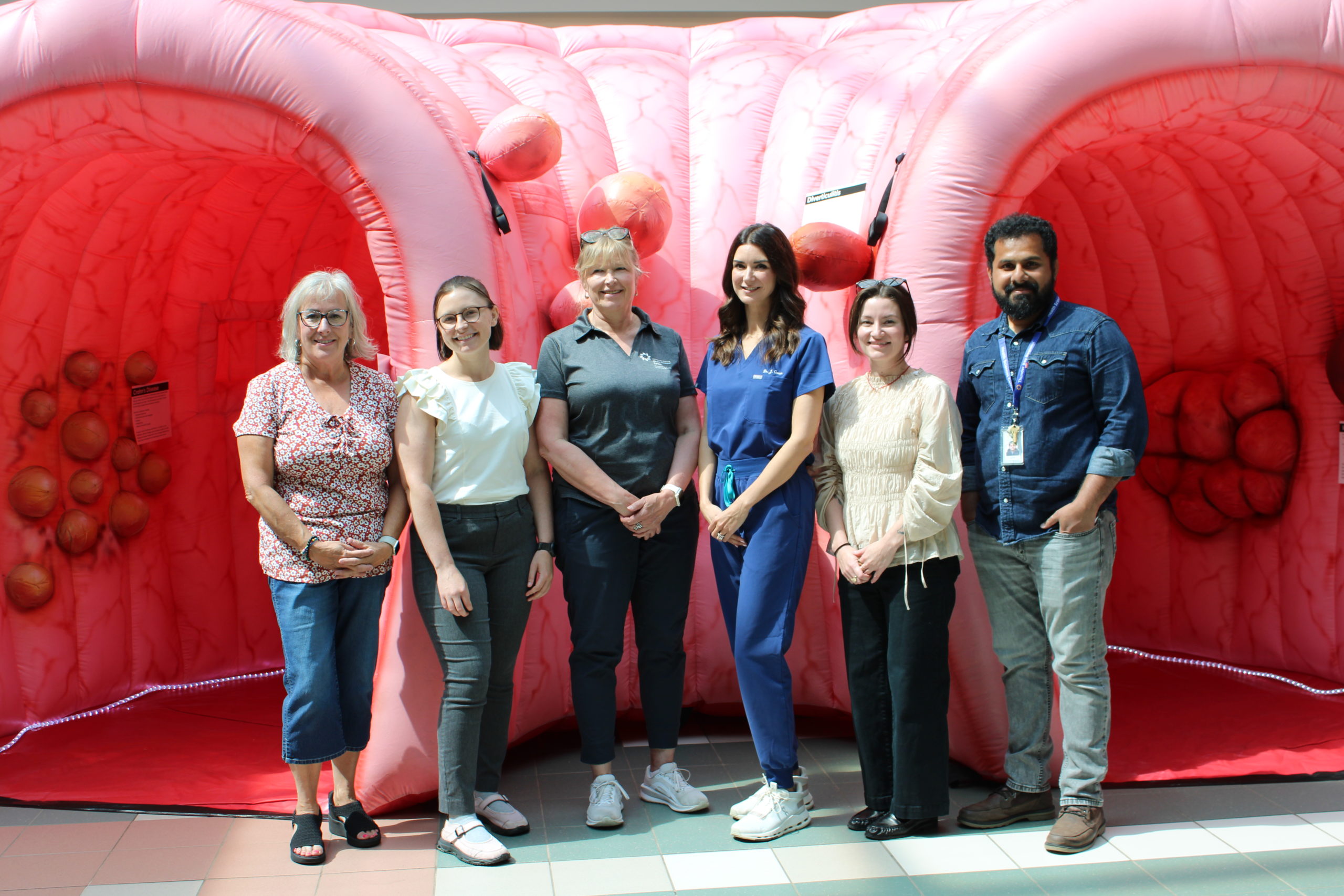
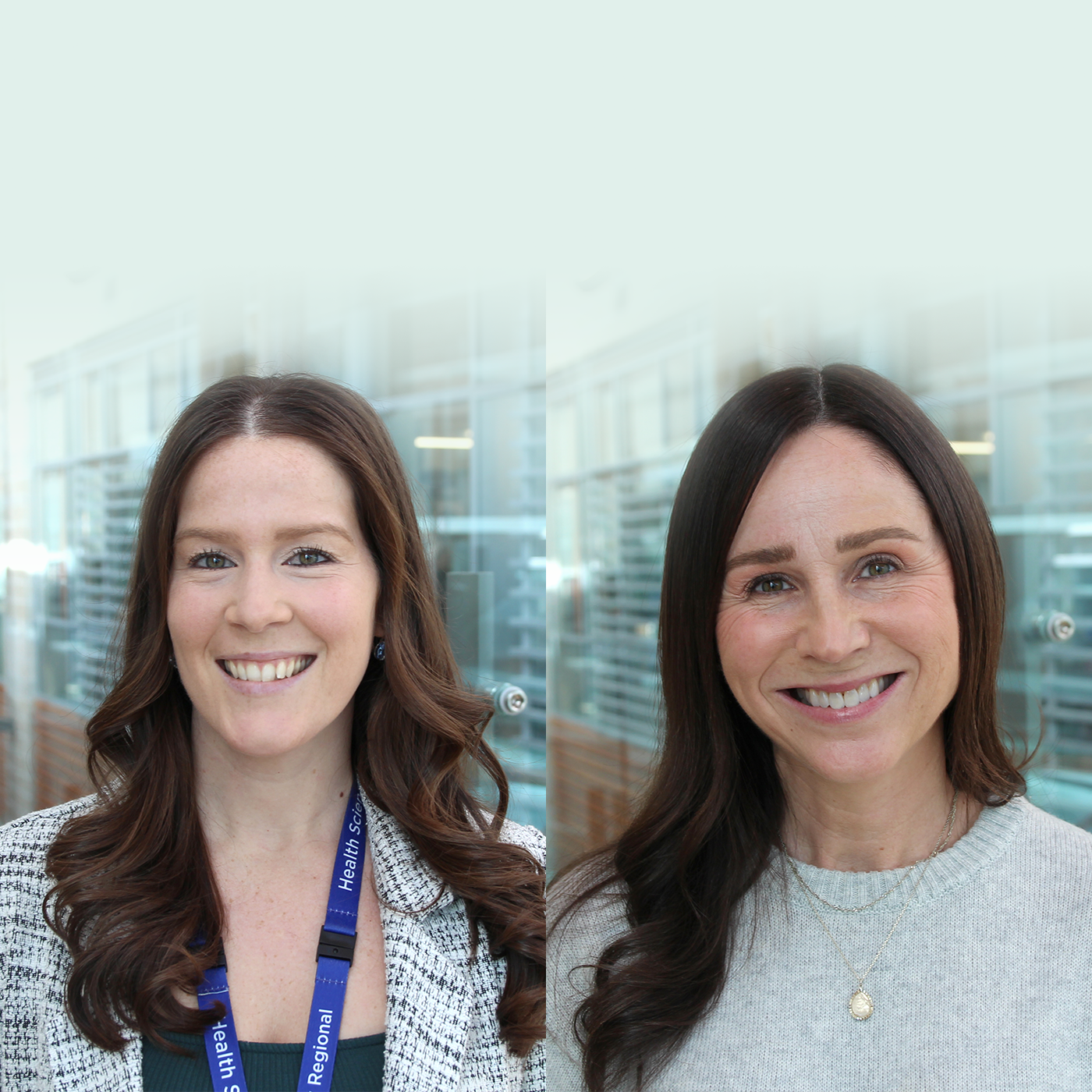
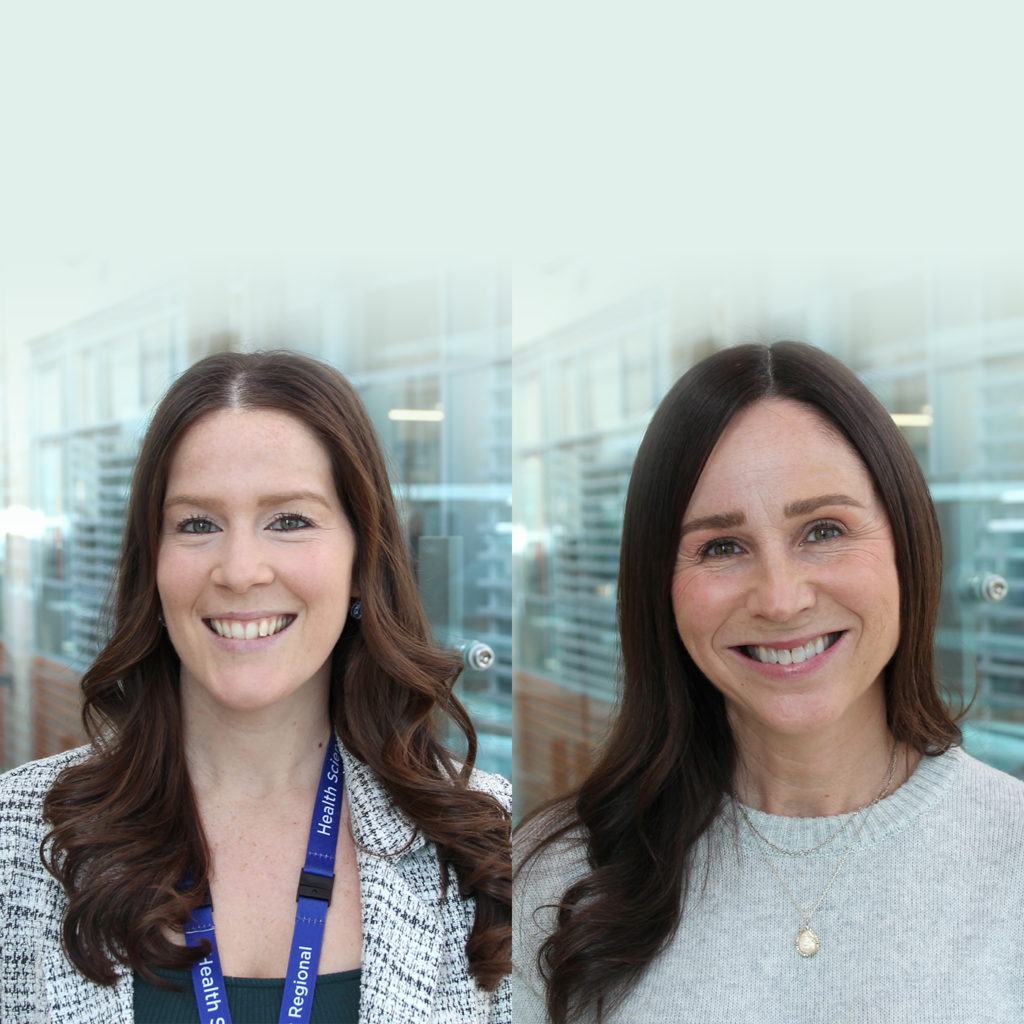
(L to R): Tarja Heiskanen, Manager of Prevention and Screening at TBRHSC and Dr. Jordan Green, Regional Colorectal Screening and GI Endoscopy Lead for Ontario Health – Cancer Care Ontario at TBRHSC.
More adults in Northwestern Ontario are now eligible for routine colon cancer screening, and Thunder Bay Regional Health Sciences Centre (TBRHSC) is bringing a larger-than-life experience to Intercity Shopping Centre to help spread the word.
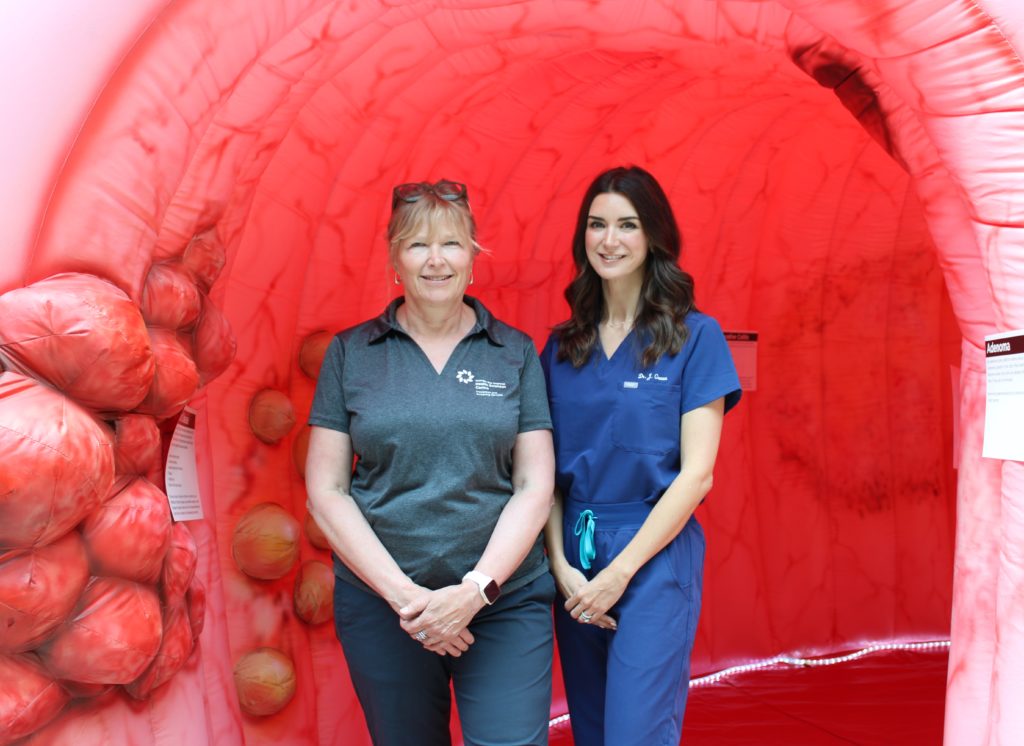
From August 7 to 16, visitors can walk through an interactive Giant Colon to explore colon health, cancer prevention, and the importance of screening. The Giant Colon experience supports a recent change to Ontario’s ColonCancerCheck program, which lowered the recommended age to begin screening for those at average risk from 50 to 45, effective July 1, 2026.
“Colon cancer often develops without symptoms in its early stages, which is why screening is so important,” says Dr. Jordan Green, Regional Colorectal Screening and GI Endoscopy Lead for Ontario Health – Cancer Care Ontario at TBRHSC. “By lowering the screening age to 45, more people have the opportunity to detect colon cancer earlier when treatment is often simpler and more successful. We hope the Giant Colon sparks conversations and encourages people to learn whether they’re eligible for screening.”
Colon cancer is the fourth most common cancer in Ontario and one of the leading causes of cancer-related death in the province for both men and women. When found early, nine out of 10 people with the disease can be cured.
“People don’t often think about their colon health until something is wrong, but the best time to screen is when you feel perfectly healthy,” says Tarja Heiskanen, Manager of Prevention and Screening Clinical Services at TBRHSC. “The Giant Colon gives us a unique opportunity to bring screening information to life and have conversations about colon cancer in a way that feels more approachable. We hope everyone leaves with a better understanding of their risk and the steps they can take to protect their health.”
(L to R): Tarja Heiskanen, Manager of Prevention and Screening at TBRHSC and Dr. Jordan Green, Regional Colorectal Screening and GI Endoscopy Lead for Ontario Health – Cancer Care Ontario at TBRHSC.
The Giant Colon will be open during regular Intercity Shopping Centre hours from August 7 to 16. Prevention and Screening Clinical Services staff will be on-site throughout the week to answer questions about screening eligibility, the at-home fecal immunochemical test (FIT), family history, and ways to reduce the risk of colon cancer. Admission is free.
People aged 45 to 74 who are at average risk of colon cancer are now recommended to get screened with an at-home FIT every two years. People with a first-degree relative diagnosed with colon cancer before age 60, or two or more first-degree relatives diagnosed at any age, are considered at increased risk and should speak with their primary care provider.
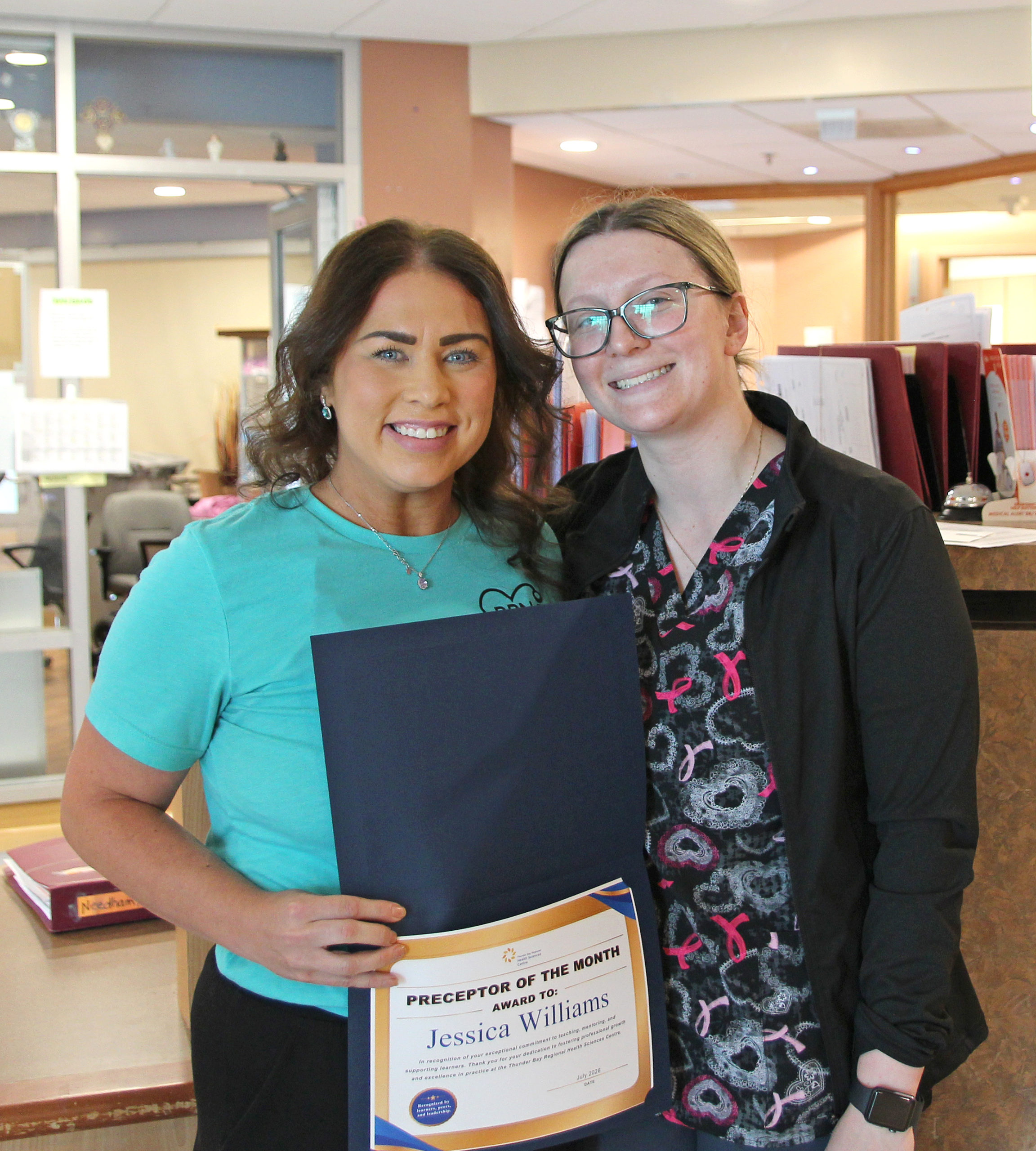
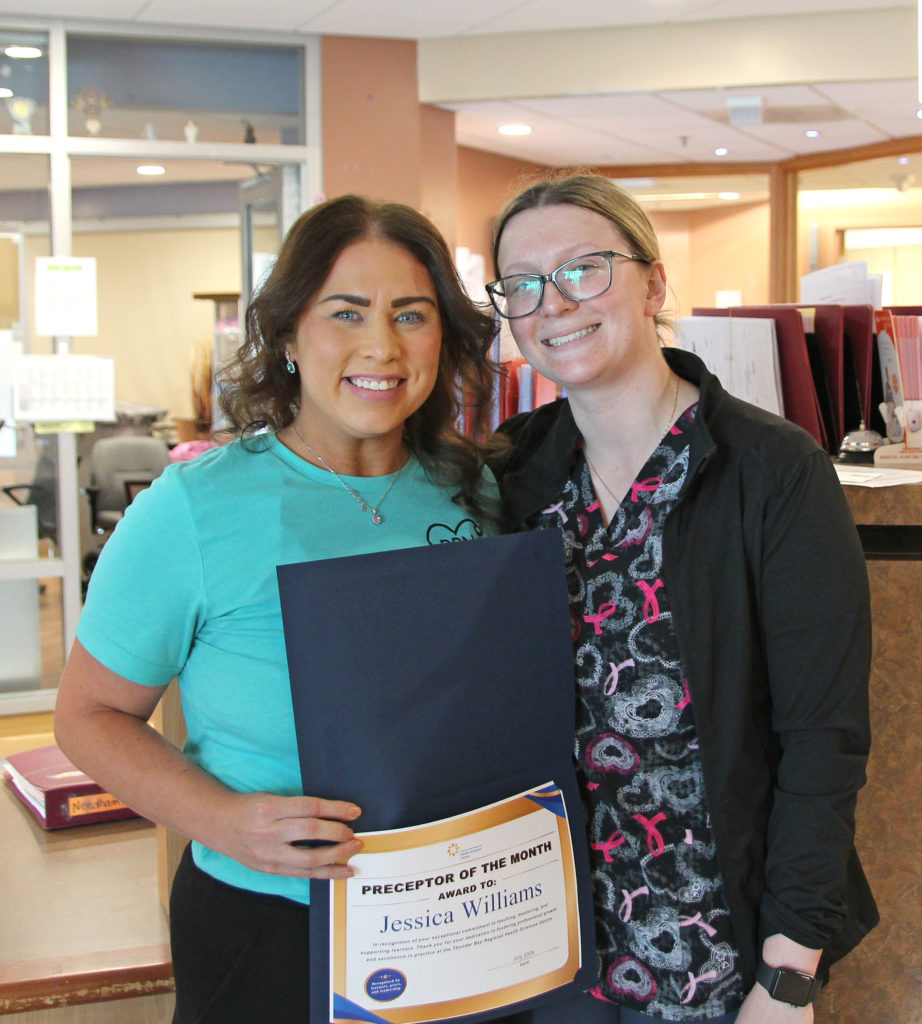
Congratulations to our Preceptor of the Month, Jessica Williams
(L to R: Jessica Williams, Michaela Brown)
July’s Preceptor of the Month is Jessica Williams, nominated by her colleague and former preceptee, Michaela Brown.
With more than 10 years of experience precepting new nurses, Jessica was recognized for her dedication to creating a supportive and encouraging learning environment for new nurses. Her professionalism, patience, and genuine investment in learners make her an outstanding role model.She fosters a culture where new staff feel comfortable asking questions, building confidence, and developing independence. By explaining clinical concepts, demonstrating skills, and sharing the reasoning behind her decisions, Jessica helps learners strengthen their critical thinking and clinical judgment. Jessica’s kindness, teamwork, and commitment to helping others grow exemplify the qualities of an exceptional preceptor.
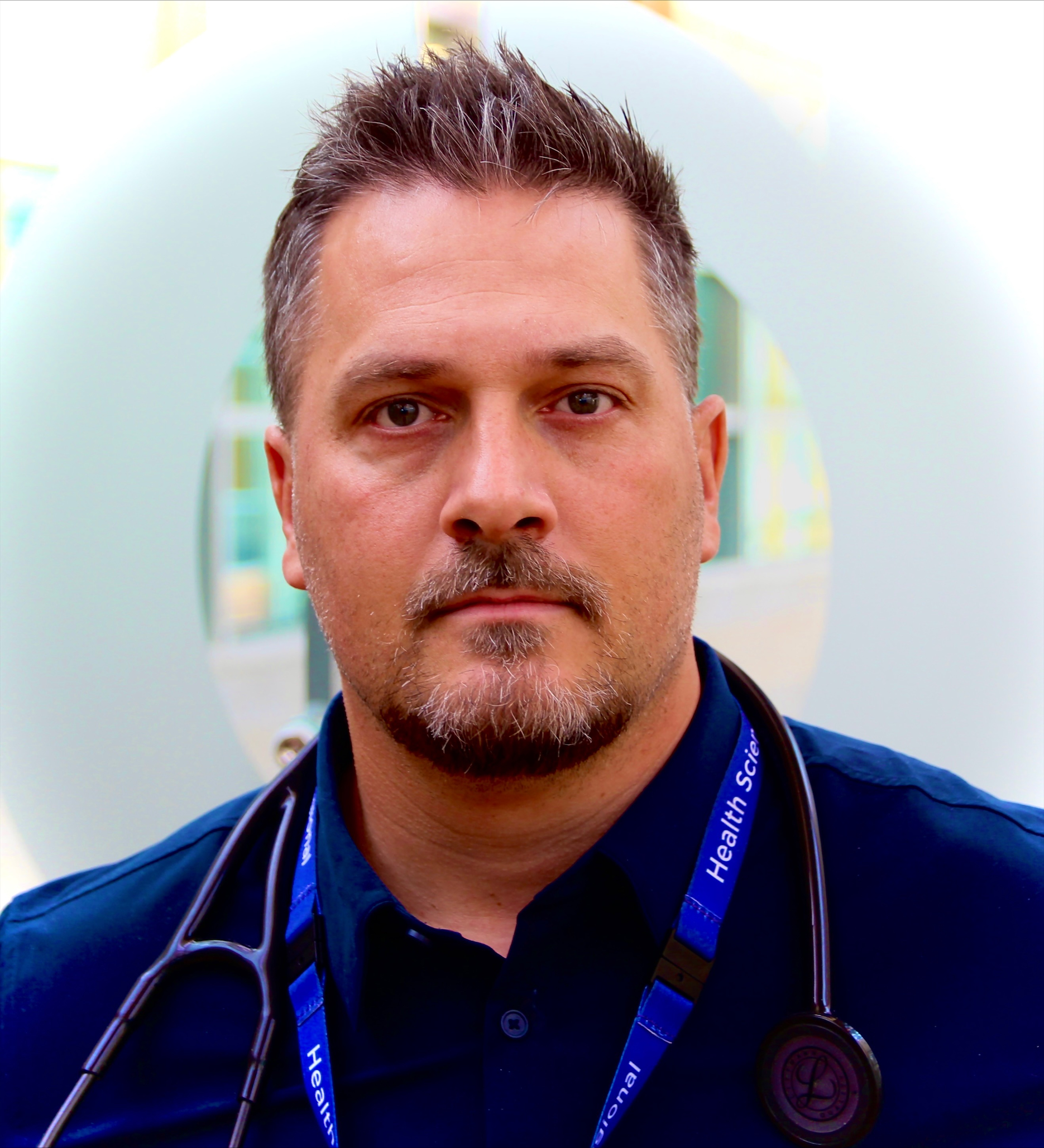
Medical Affairs is pleased to announce that Dr. Kyle Lansdell has been appointed to the role of Acting Medical Director, Emergency Medicine effective July 18, 2026 to March 31, 2027.
Dr. Lansdell has been an Emergency Medicine physician at Thunder Bay Regional Health Sciences Centre since 2013. As Acting Medical Director, Dr. Lansdell will provide clinical leadership in partnership with administrative and physician leaders to advance the strategic direction of Emergency Medicine. He will support quality improvement initiatives, evidence-informed practice, patient flow, and program innovation, helping to ensure emergency services continue to meet the evolving needs of our patients and region while aligning with the Hospital’s strategic priorities.
Please join us in congratulating Dr. Lansdell on his appointment as Acting Medical Director, Emergency Medicine.
Shared on behalf of Blake Rathje, Director, Support Services
I am pleased to announce that David Rinn has accepted the position of Manager, Strategic Sourcing & Distribution, effective August 10, 2026.
David is a procurement and supply chain professional, with over 25 years of progressive experience in health care, strategic sourcing, purchasing, warehousing, inventory management, and materials distribution. His leadership style is grounded in accountability, communication and collaboration. He is committed to leading operational improvements while maintaining regulatory compliance and focusing on organizational priorities.
David has worked as a Contract Procurement Specialist at TBRHSC since 2018, where he has successfully led interdisciplinary teams through many complex strategic sourcing initiatives that have contributed to patient care and staff experience at our hospital. He has developed strong relationships internally and with Group Purchasing Organizations, community partners and the vendor community. David has a keen eye for detail and makes evidence based decisions. I am confident that these qualities will allow him to continue to make valuable contributions as a leader in our organization.
Please join me in congratulating David in his new leadership role.
Congratulations to members of our Bartiatic Care Centre, Olivia Zanette, Registered Dietitian and Julie Riendeau, Psychologist, who are recipients of the 2026 Canadian Foundation for Dietetic Research Grant. Their work explores how diet culture and nutrition misinformation influence engagement with dietitian-led nutrition counselling among adults receiving bariatric, cardiac rehabilitation, and diabetes care in Northwestern Ontario. By listening to patient experiences through surveys and interviews, the research will help identify practical ways dietitians can support confidence, trust, and sustainable healthy eating habits.
The Canadian Foundation for Dietetic Research, invests in research as the future of dietetic practice and the health of Canadians. Each year, their research grant competition supports innovative, practice-informed projects that advance nutrition knowledge and strengthen evidence-based care across the country.
The grant competition is a rigorous, two-stage process. Researchers first submit a research proposal registration, after which invited applicants develop a full research proposal. Each proposal undergoes an independent scientific review, where projects are evaluated for scientific merit, relevance to dietetic practice, innovation, and potential impact. Successful projects receive funding of up to $20,000 and have up to two years to complete their research.
Congratulations, Olivia and Julie. Thank you for the remarkable difference you make each and every day. We celebrate your achievement and are grateful to have you as valued members of the Thunder Bay Regional Health Sciences Centre team.
Shared on behalf of Occupational Health and Safety
As construction continues in the MDRD area, staff are reminded that the hallway adjacent to IPAC and MRI Research is restricted to personnel who work in those areas only.
To support safety, minimize congestion, and maintain a secure construction environment, this corridor is not to be used as a throughfare.
Please use designated alternate routes when travelling through the hospital. Thank you for your cooperation in helping keep everyone safe during this project.
Medical Affairs is pleased to announce that Dr. Kent Dunn has joined the Thunder Bay Regional Health Sciences Centre as a Psychiatrist with the Department of Psychiatry.
Dr. Kent Dunn earned his Doctor of Medicine from the University of Western Ontario after completing both an Honours Bachelor of Science in Biology and a Bachelor of Arts in Anthropology at McMaster University. He completed his Psychiatry Residency at McMaster University and subsequently pursued specialized fellowship training in Electroconvulsive Therapy (ECT) at both the Western Psychiatric Institute in Pittsburgh and Columbia University. Throughout his career, Dr. Dunn has developed extensive expertise in general adult psychiatry, electroconvulsive therapy, addiction and dual diagnosis care, geriatric psychiatry, and rural and remote mental health, with clinical experience spanning Ontario and British Columbia.
In addition to his clinical practice, Dr. Dunn has demonstrated a longstanding commitment to medical education, physician leadership, and quality improvement. He has served as Medical Staff Association President at Waypoint Centre for Mental Health Care, held numerous leadership and committee roles, and has contributed extensively to undergraduate and postgraduate medical education as an Assistant Professor and Clinical Instructor. Dr. Dunn has also authored peer-reviewed publications, presented research nationally and internationally, and has been recognized throughout his career for his contributions to psychiatry, research, and collaborative patient care.
Please join us in extending a warm welcome to Dr. Kent Dunn as he joins Thunder Bay Regional Health Sciences Centre. We look forward to the experience, leadership, and compassionate approach he will bring to our organization and to the patients and families we serve.