
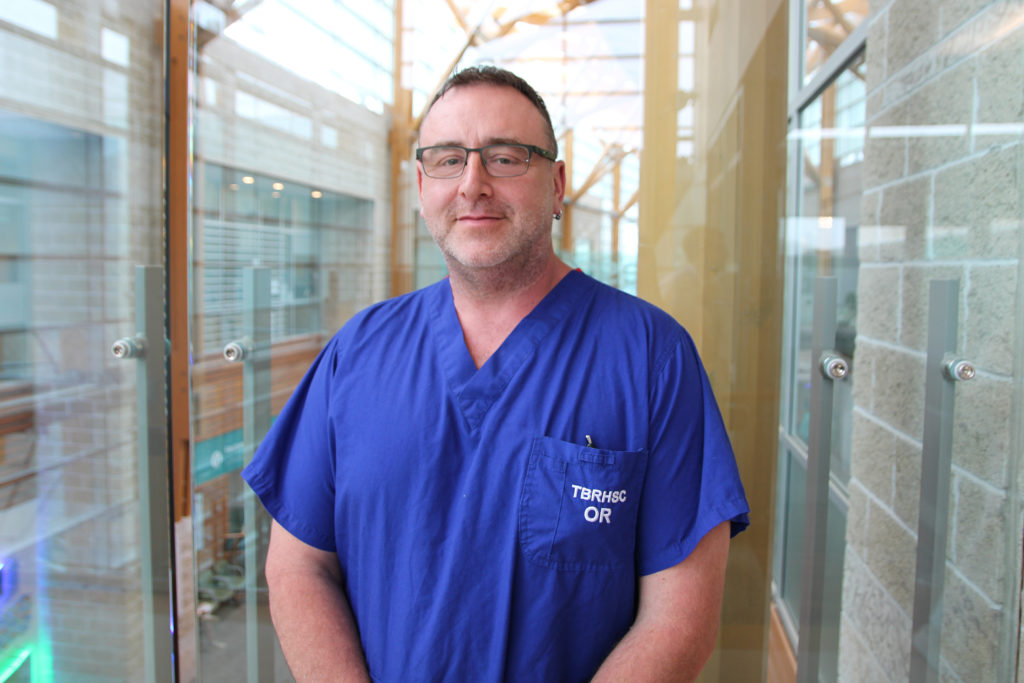
In partnership with the University Health Network’s Peter Munk Cardiac Centre (PMCC), Thunder Bay Regional Health Sciences Centre (TBRHSC) is preparing for the 2028 launch of its new Cardiovascular Surgery Program. This initiative will bring life-saving cardiac care closer to home for patients across Northwestern Ontario. As part of this effort, a phased staffing and training strategy has begun.
“We are building a highly skilled and sustainable cardiovascular surgery team that will be ready to safely support patients when the program launches,” said Ron Garon, Manager, Perioperative Services at TBRHSC.
As part of the preparation process, staff from various departments will attend PMCC for hands-on training. This includes (but not limited to) operating room-trained nurses, a Registered Nurse First Assistant and an Anaesthesia Assistant.
Additionally, through a proactive “grow your own” staff model, cardiovascular perfusion team members will complete the two year Cardiovascular Perfusion Program at the Michener Institute of Education followed by a transition into clinical practice at PMCC, where they gain hands-on clinical experience, at a high-volume cardiac centre, before returning home to Thunder Bay to support the program’s launch. Currently, two of TBRHSC’s cardiovascular perfusionists are working at PMCC, with a third starting this summer. The fourth team member is starting her first year of studies at the Michener Institute of Education in the Cardiovascular Perfusion program.
Once trained, these staff members will take a lead role in educating and onboarding of future cardiac surgery personnel in collaboration with TBRHSC’s Clinical Nurse Specialists, helping to ensure the program’s long-term sustainability.
To support both the new cardiac surgery service and broader needs, the Clinical Nurse Specialist offers a perioperative training course for staff working in the operating room. Recruitment efforts align with anticipated staffing demands while also considering existing vacancies, retirements, maternity leaves, and sick leave coverage.
“The investment in both people and infrastructure will significantly improve access to care for patients who currently must travel long distances for complex cardiac procedures,” stated Garon.
For Garon, the importance of local access to cardiac surgery is deeply personal.
“My father has a complex medical history and required an aortic valve replacement that could only be performed at PMCC,” he shared. “The care he received was exceptional. However, because we do not have family in Toronto and because of the restrictions in place at the time, he had to spend five days recovering alone in hospital.”
Garon recalled waiting in a nearby hotel throughout his recovery in case an urgent issue arose.
“When he was discharged, we had to travel home on a commercial flight. He was in pain, exhausted, cold, and generally unwell. If he could have had this procedure at home, there would have been family support throughout his recovery and only a short 10-minute drive home afterward instead of the long journey from Toronto back to Thunder Bay.”
The upcoming Cardiovascular Surgery Program is expected to transform care for patients and families throughout Northwestern Ontario by reducing travel burdens and allowing more residents to recover closer to home and loved ones.
“Our community members are extremely fortunate to soon be able to receive this care closer to home,” Garon stated.