In February, we celebrate the International Day of Women and Girls in Science. This Day is a reminder that women and girls play a critical role in science and technology communities and that their participation should be strengthened.
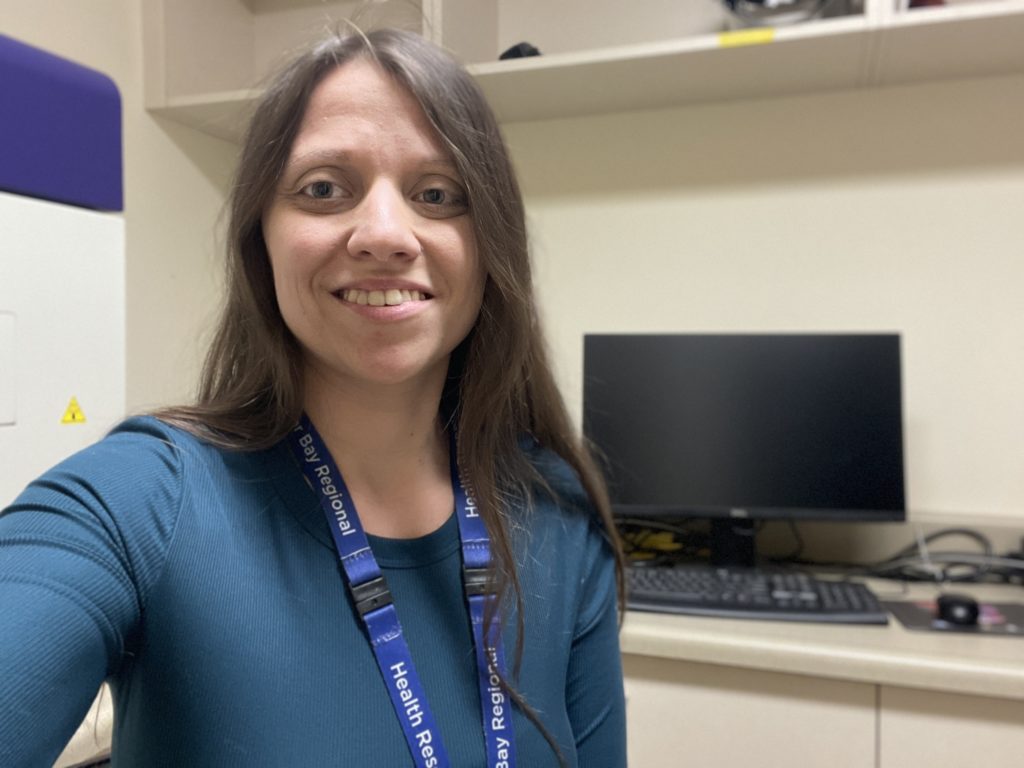
This year, we connected with Viktoriia Batarchuk, Associate Scientist at Thunder Bay Regional Health Research Institute (TBRHRI) and an Adjunct Professor at Lakehead University, for an informal Q&A.
Viktoriia’s research focuses on an interdisciplinary intersection of medical imaging, health sciences, and AI-driven data analysis.
Why did you decide to get into science?
I didn’t exactly decide to become a scientist. It was that one mechanical clock that I fixed as a kid with a teaspoon and curiosity and there was no way back for me since. Jokes aside, for me it’s been a sequence of choices shaped by what I enjoyed most and what mattered to me through school and my career. From early on, I was fascinated by how things work, and I was also drawn to nature. I’ve always had a special fondness for animals, and I spent a lot of time trying to understand how nature functions as this incredibly complex, well-designed system—one I still don’t even at a first proximity of comprehension. In my early teens, I realized there was another “language” behind how our world works – the laws of physics. And I completely fell in love with it. Step by step, that led me to medical physics and to an algorithmic way of thinking as my foundation. Today, I work on interdisciplinary projects that usually combine health science, computer science and physics.
Tell us about your research — what are you currently working on?
My research sits at a highly interdisciplinary intersection of medical imaging, health sciences, and AI-driven data analysis. My current research program aims to establish an iPSC-derived organoid platform, with an emphasis on cerebral organoids (“brain-in-a-dish”). iPSCs (induced pluripotent stem cells) provide a unique opportunity to basically grow any human-relevant tissue models in vitro. My focus is cerebral organoids, which allow us to track neurodevelopmental trajectories and emerging neural function in real time, including maturation, network activity, and circuit dynamics. Leveraging my expertise in AI and network analysis, I aim to develop non-invasive, quantitative approaches to test hypotheses by modeling disease mechanisms and evaluating drug responses under controlled, ethical, and reproducible conditions. As this platform matures, we aim to become the first site in Northwestern Ontario able to generate and study these organoids, strengthening regional research capacity and enabling closer collaboration with local clinicians on translational priorities such as drug screening and patient-relevant disease analysis. In parallel, with colleagues at TBRHRI and Lakehead University, we are developing biosensors for earlier breast cancer detection and an intelligent molecular imaging platform to non-invasively monitor dynamic microenvironments over time. I also want to acknowledge my former and current supervisors, mentors, and collaborators—especially Dr. Albert and Dr. Sudakov—for their support and for providing the environment that enabled me to establish myself as an independent researcher.
What is the most challenging part of your job?
One of the most challenging aspects for me as an early-career researcher is navigating the combination of limited funding opportunities and career uncertainty before reaching stable, long-term positions such as tenure-track roles. That instability can create significant pressure and, at times, make it harder to focus fully on the research itself. This is exactly why initiatives like TBRHSC/RI Research Seed Funding are so valuable, as they provide support and strengthen the foundation needed to build sustainable research programs, especially for young scientists.
What is the most rewarding part of your job?
My trainees’ successes are the most rewarding part—seeing them grow into confident professionals and earn the positions they’ve worked so hard for. At the same time, I care deeply about ensuring our research produces solutions that genuinely serve patients and end users. Working with people has reinforced for me that our most valuable resource is talent, and it’s a privilege to help cultivate it locally in the community.
Any advice for other women/girls considering a career in science?
Test your hypothesis before drawing conclusions. This idea goes beyond research—it applies to everyday decisions as well. I’ve seen many people assume they won’t get the scholarship, stipend, job, or opportunity, and that assumption becomes the barrier. In my own experience, many doors opened simply because I tried—I sent the email, asked the question, and applied even when the outcome was uncertain.
Learn more about the International Day of Women and Girls in Science at un.org/en/observances/women-and-girls-in-science-day.