Are you interested in learning more about French Language Services at Thunder Bay Regional Health Sciences Centre? Please stop by our information booth on Friday, September 26 from 12:00 p.m. to 2:00 p.m.
Information will be available about:
French language interpretation services for patients and healthcare providers
French language reimbursement program for staff
Services from L’Accueil francophone de Thunder Bay
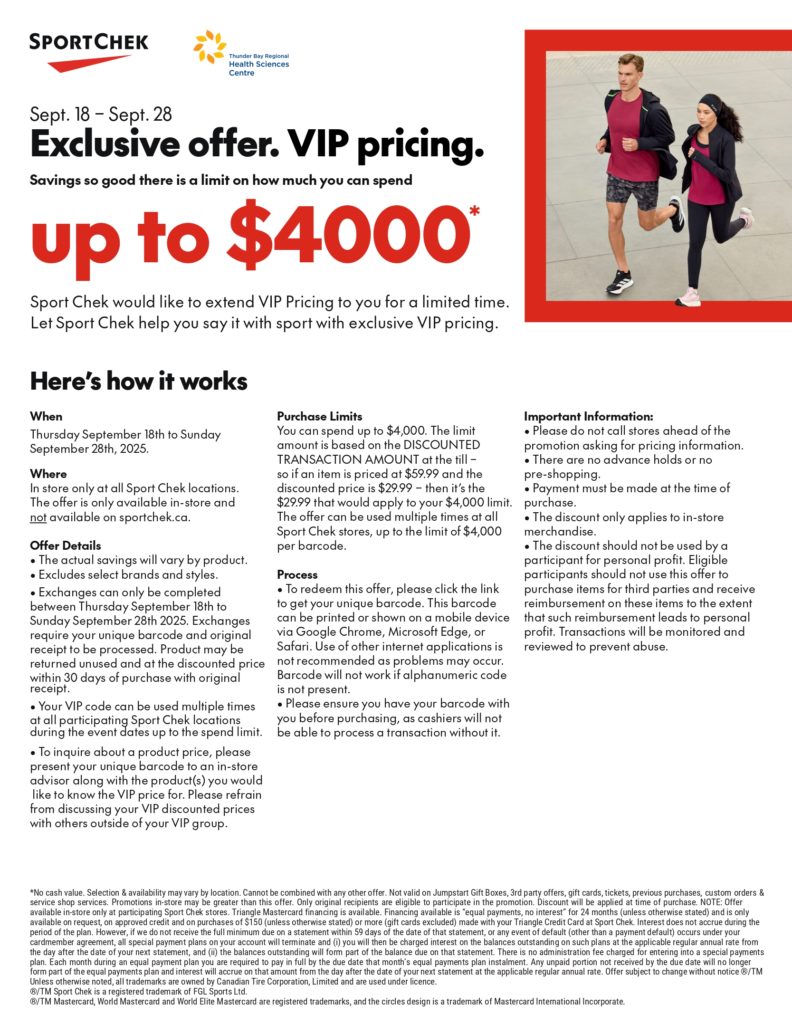
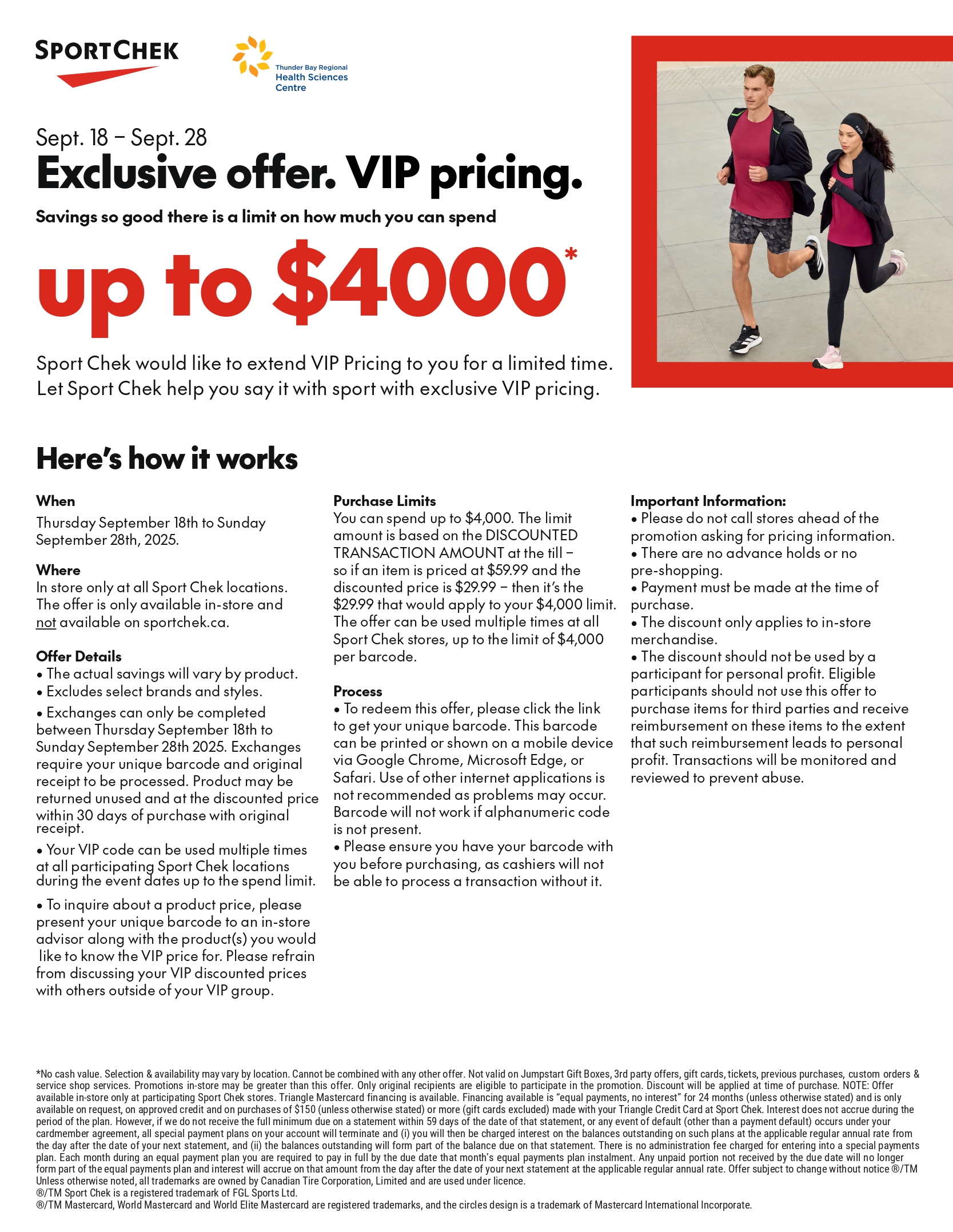
Thunder Bay Regional Health Sciences Centre greatly values your efforts in providing exceptional care to our community. To show our appreciation, we’ve partnered with Sport Chek to offer you an exclusive employee discount on your purchases.
When: This is a limited time offer from September 18-28, 2025 (in store) for VIP Pricing.
Where: In store only at all Sport Chek locations. The offer is only available in-store and not available on sportchek.ca.
To get your code:
All TBRHSC staff will be sent a discount code directly to their TBRHSC email accounts.
Professional staff must email TBRHSC.HumanResources@tbh.net before September 26, 2025, to receive their codes.
Volunteers must contact Megan Valente at Megan.Valente@tbh.net before September 26, 2025, to receive their codes.
Shared on behalf of the Thunder Bay Regional Health Sciences Foundation.
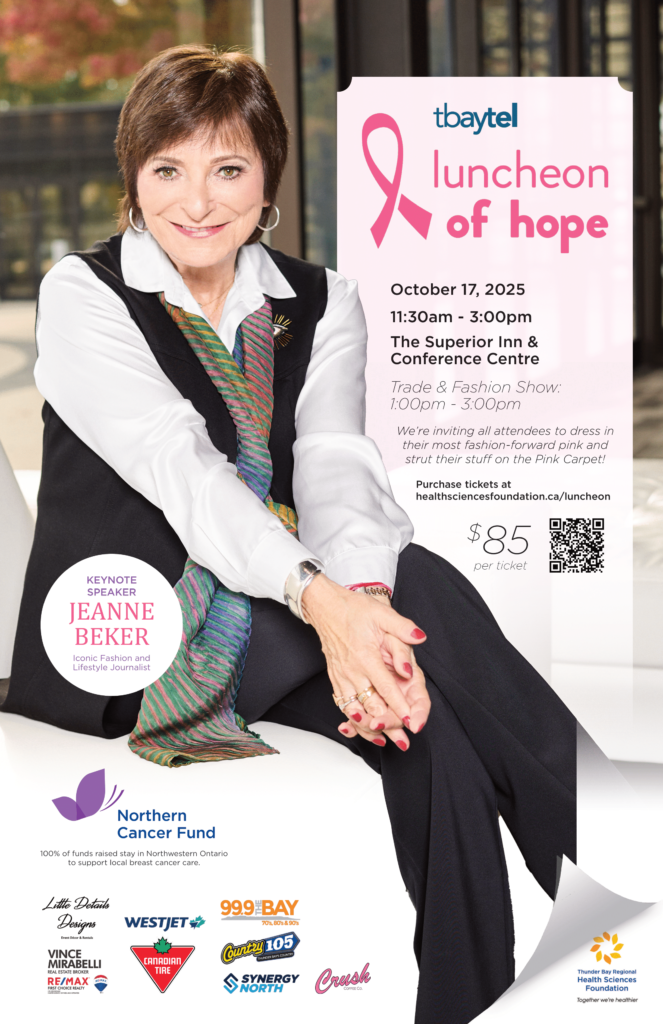
Hey all you Hospital friends! Get ready for an unforgettable and moving experience with the one and only Jeanne Beker! Join us October 17 at the Superior Inn Hotel for the Tbaytel Luncheon of Hope, right in the heart of Breast Cancer Awareness Month.
Jeanne Beker, the ICONIC Canadian fashion and lifestyle journalist, will be taking the stage to share her powerful journey of resilience with a keynote speech, followed by an intimate fireside chat. And here’s the best part, if you grab your ticket, you get a chance to submit a question and be part of this meaningful conversation.
From rocking the screen on Fashion Television for 27 years (seen in 130 countries!) to being a trailblazer in arts and culture, Jeanne’s story is one you won’t want to miss. She’s a breast cancer survivor, bestselling author, style editor at The Shopping Channel, and even has a star on Canada’s Walk of Fame. Talk about a powerhouse!
The event promises to be a hit and will feature Travel Blitz sponsored by Westjet and a Bling Blitz sponsored by Vince Mirabelli plus the incredible penny auction and vendor show. Crush Coffee will be on-site this year doing a pop-up coffee bar and the Breastie Bags will be available once again! Visit the event’s Facebook page or the Foundation’s website for more information and to get your tickets.
Medical Affairs is thrilled to announce that Dr. Andrea Nelsen has joined Thunder Bay Regional Health Sciences Centre as a full-time Psychiatrist with the Department of Psychiatry.
Dr. Nelsen earned her Doctor of Medicine from Weill Cornell Medical College in New York and went on to complete a General Psychiatry Residency at Baylor College of Medicine, where she pursued both the Research and Clinician Educator tracks. She subsequently completed an Aerospace Medicine Fellowship at the Mayo Clinic in Rochester, Minnesota, and holds certification in Psychiatry and Neurology from the American Board of Psychiatry and Neurology. In addition, she obtained a Master of Public Health from the University of Minnesota and is a Fellow of the Academy of Wilderness Medicine.
Her diverse professional experience spans private aviation and forensic psychiatry, inpatient and outpatient psychiatric care, and emergency psychiatry at Level 1 trauma centres. Dr. Nelsen has evaluated pilots and air traffic controllers for aviation authorities, she serves as an aviation medical examiner (AME) for the Federal Aviation Agency (FAA), provided forensic psychiatric consultation in both civil and criminal cases, and delivered psychiatric care across rural, community, and tertiary settings in the United States.
An active researcher and educator, Dr. Nelsen has published in peer-reviewed journals such as the Journal of the American Academy of Psychiatry and the Law, HIV Medicine, and AIDS Patient Care and STDs. She has presented her work internationally, contributed to WHO clinical protocols, and has held numerous leadership and committee roles in psychiatry associations.
Please join us in welcoming Dr. Nelsen to our Hospital and to the Thunder Bay community. Her extensive experience and dedication to advancing psychiatry will contribute to the continued growth of our programs and the excellence of care delivered at TBRHSC.
Medical Affairs is excited to announce that Dr. Sulaiman Alrashidi has joined Thunder Bay Regional Health Sciences Centre as a full-time Interventional Cardiologist with the Department of Internal Medicine.
Dr. Alrashidi completed his Medical Degree at the Royal College of Surgeons in Ireland before pursuing extensive postgraduate training at McMaster University. His training included Internal Medicine and Cardiology residencies, followed by advanced fellowships in Interventional Cardiology, Chronic Total Occlusion (CTO) and Patent Foramen Ovale (PFO) closure, Transcatheter Aortic Valve Replacement (TAVR), and Cardiac CT–Structural Interventional Cardiology. He is board certified in Internal Medicine, Cardiology, and Interventional Cardiology by both the Royal College of Physicians and Surgeons of Canada and the American Board of Internal Medicine.
His research and academic work have contributed to high-impact publications in journals such as JAMA, EuroIntervention, and JSCAI, particularly in the areas of ultrasound-guided vascular access, coronary interventions, and cardiac imaging. He has also presented at international conferences, including EuroPCR in Paris (2024), and co-authored educational resources for trainees in invasive and interventional cardiology.
Throughout his career, Dr. Alrashidi has demonstrated strong leadership, serving as Chief Interventional Cardiology Fellow at McMaster University, leading patient safety and quality initiatives, and actively contributing to medical education as a lecturer, OSCE examiner, and preceptor.
Please join us in welcoming Dr. Alrashidi to our Hospital and to the Thunder Bay community. His dedication to advancing heart health, combined with his leadership in education and research, will play a vital role in enhancing patient care and supporting the growth of cardiovascular services in our region.
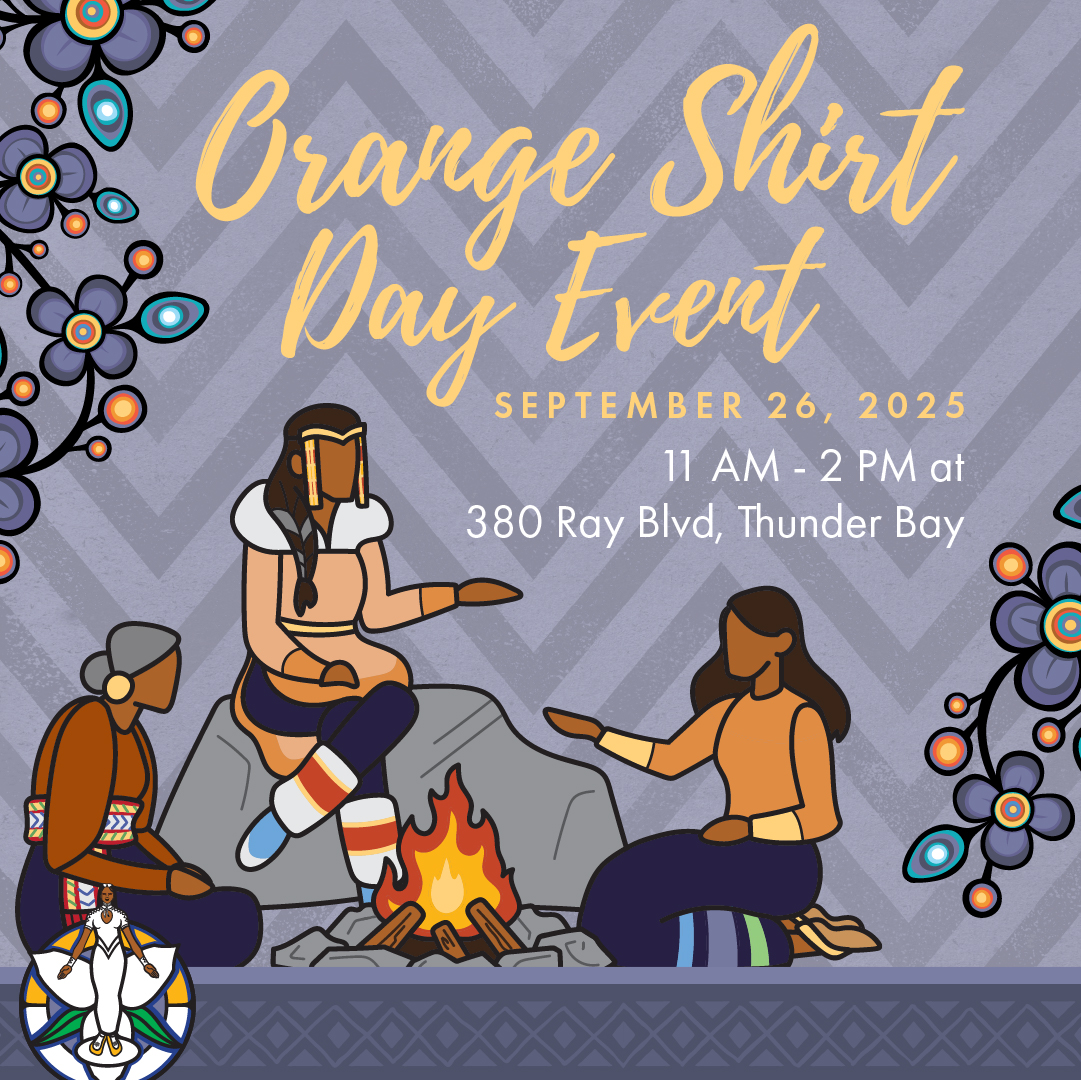
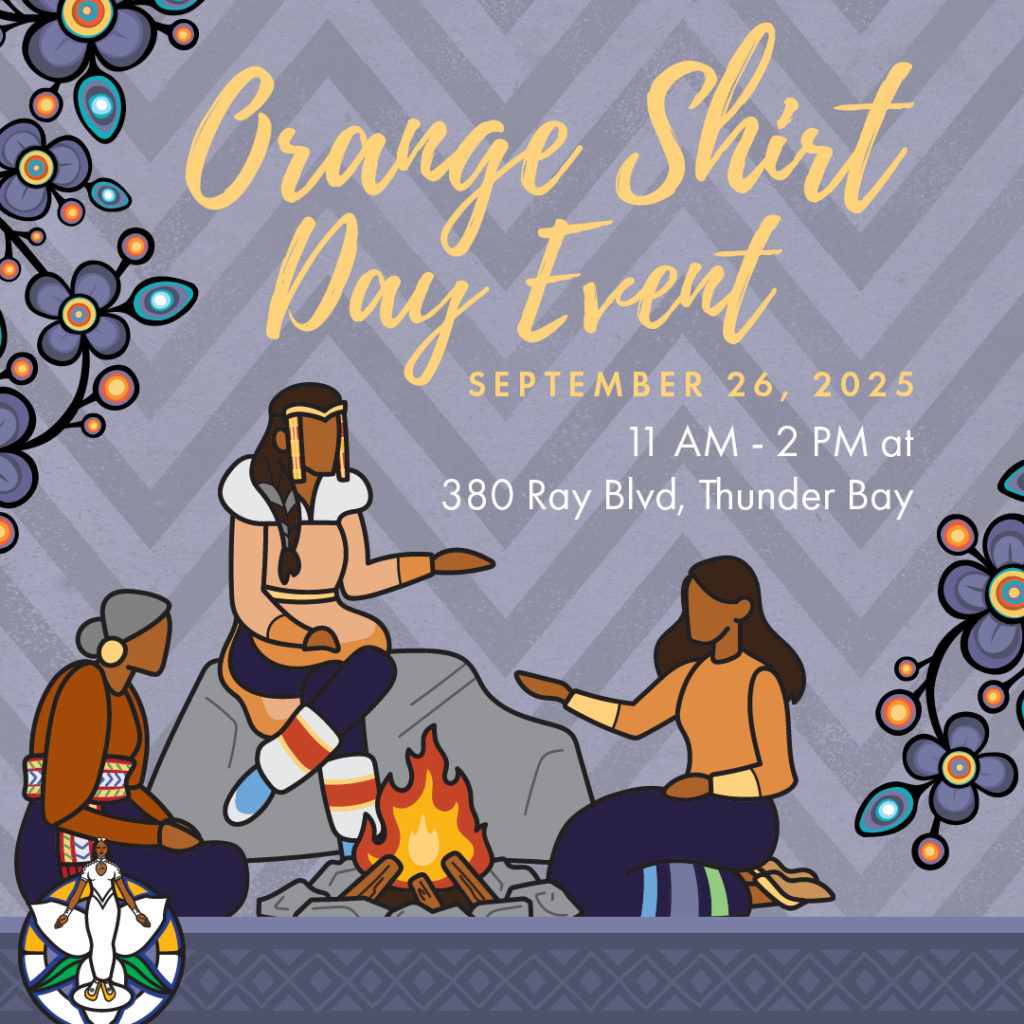
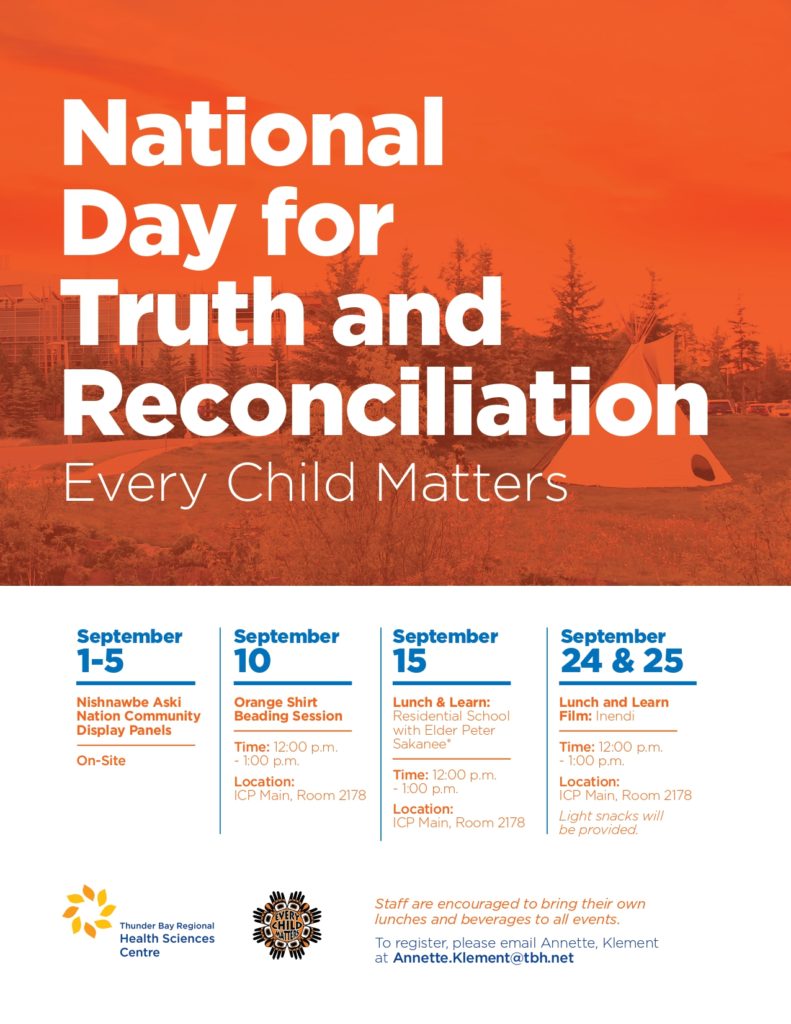
Join the Ontario Native Women’s Association on September 26 to support Truth and Reconciliation Day (Orange Shirt Day). ONWA is hosting a sacred fire to honor all survivors, family members, and friends. The event will include Cedar Tea, Bannock, drumming, and land games. This is a family-friendly gathering with a special focus on honouring our children and youth. There will be activities and games for children throughout the day, creating space for healing, joy, and community togetherness.
This is a family-friendly gathering with a special focus on honouring our children and youth. There will be activities and games for children throughout the day, creating space for healing, joy, and community togetherness. Lunch will be provided.
Shared on behalf of Dr. Bradley Jacobson, Chief of Staff, Thunder Bay Regional Health Sciences Centre
It is with great sadness that I share the news of the passing of our colleague, Dr. Jacqueline Edwards, Family Physician.
Dr. Edwards was an extraordinary and inspiring individual who lived life with passion and courage. Known for her fearless spirit, she often embraced adventure and challenge, both in her personal life and in her professional career.
As a graduate of NOSM (NOSM University) and a dedicated family physician in Thunder Bay, Dr. Edwards was deeply committed to her patients and to the profession. She will be remembered as a compassionate clinician who listened with care, advocated fiercely, and left a meaningful impact on all those she served.
Although her time with us was far too short, Dr. Edwards leaves behind a legacy of compassion, courage, and wholehearted living. She will be deeply missed by her patients, colleagues, friends, and loved ones.
On behalf of Medical Affairs and the entire leadership team, I extend our heartfelt condolences to Dr. Edward’s family, friends, and all who had the privilege of knowing her. May we honour her memory by carrying forward the same passion, courage, and dedication that she so fully embodied.
Prize winners are asked to contact: Elke Cullis at extension 7223, to claim their tickets.
Congratulations to the winners of Wake the Giant Music Festival tickets:
Chelsey Enders, Mammography Techonologist
Yolanda Karpowich, Administrative Assitant
Annamae Lauro, MDR Operator
Cassy Tavares, MLA Technician
Shania Horvath, RN
These individuals have completed their Wake the Giant Indigenous Culture and Inclusivity Training and won tickets to the event on Saturday, September 6.
Wake the Giant Indigenous Culture and Inclusivity Training provides an online learning experience to support businesses, companies and organizations in creating more inclusive spaces, free of racism, where Indigenous Peoples are welcome.
The training module is available through Dual Code LMS.