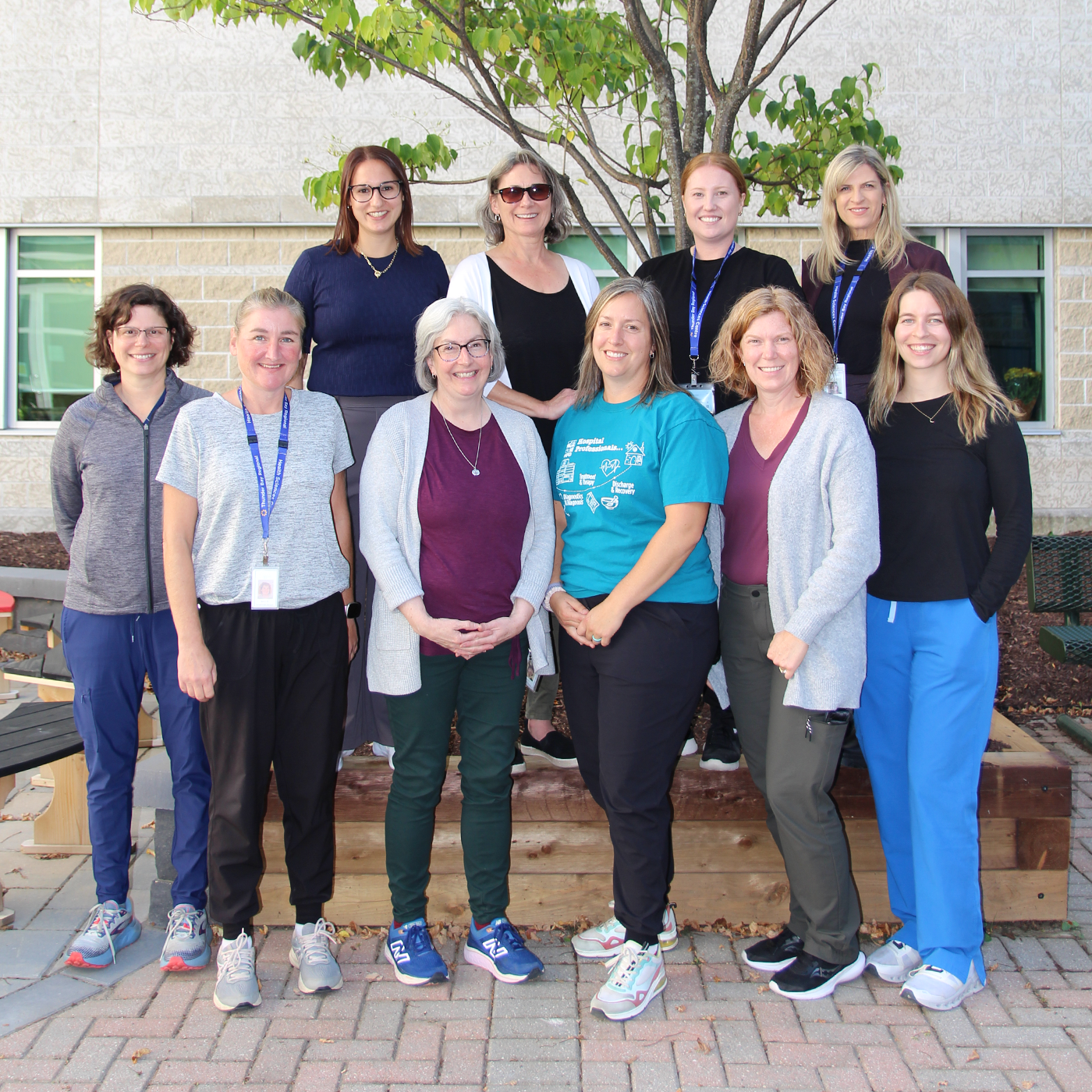
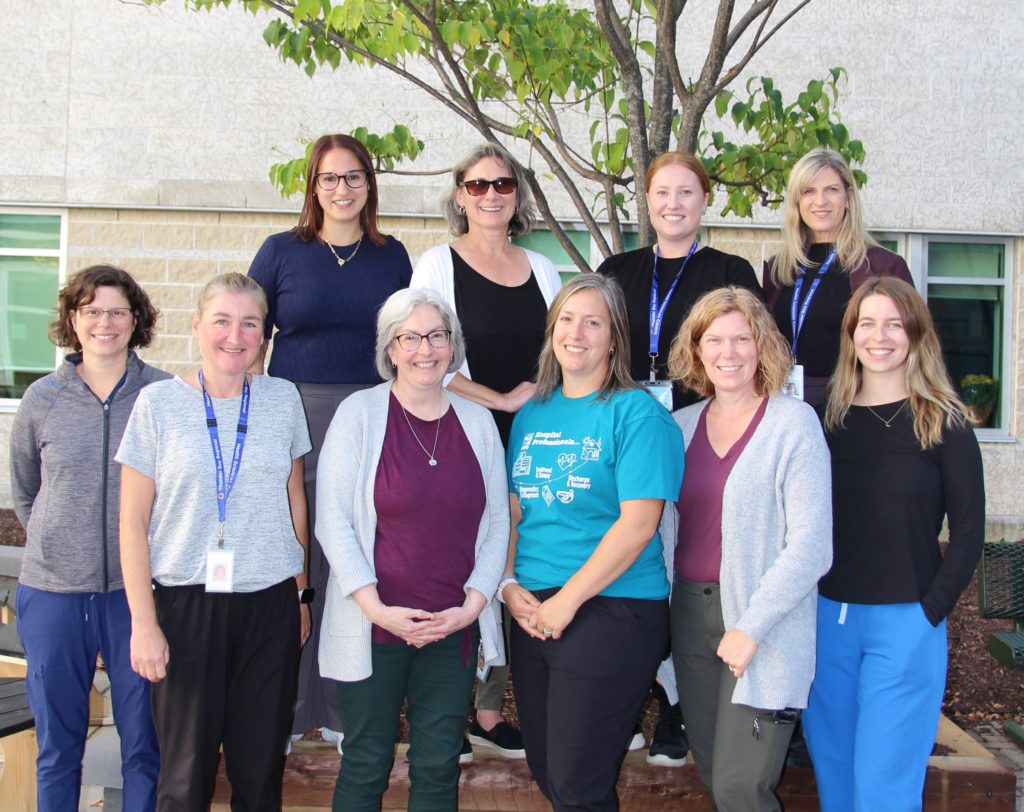
Occupational Therapists (OTs) at Thunder Bay Regional Health Sciences Centre. Back row (L-R): Andraya Bergson, Denette Egeberg, Celia Barry, Roxane Siddall Front row (L-R): Julie Colbourn, Kerry Brosseau, Laura Swancar, Ginette Antoniak, Lindsay Johnson, Kate Adams. Not pictured: Jane Horiguchi and Val Walser.
October is Occupational Therapy Month in Canada.
Occupational therapy is a health profession that empowers people of all ages to overcome barriers in their everyday lives so they can do more and live better.
Occupational therapists (OTs) provide personalized solutions to help people of all ages and abilities recover from an injury or illness, participate in day-to-day activities, and experience life to the fullest. By working with patients, their family members, and health care teams, OTs identify and address any barriers the patient may have with everyday activities. Together, the patient and their OT find solutions that will enable the patient to maintain function, regain skills, develop new skills, and much more.
Please take a moment this month to express gratitude to all the amazing occupational therapists at Thunder Bay Regional Health Sciences Centre, St. Joseph’s Care Group, and other health care organizations across the country for their contributions to patient care.
To learn more about Occupational Therapy, visit the Canadian Association of Occupational Therapists website at https://www.caot.ca. To reach an OT at TBRHSC, please call ext. 6271.
Encounters in Bioethics 2025-2026 is offering a free webinar “Violence and Vulnerability: Ethical Decision Making in Health Care Settings” on Thursday, October 23, 2025, 12:00 p.m. to 1:00 p.m. ET.
Presenter: Jennifer Dunsford, RN, PhD, Assistant Professor, College of Nursing, Helen Glass Centre for Nursing, University of Manitoba, Winnipeg, Manitoba. Connect via Zoom: https://lakeheadu.zoom.us/j/96892511708 Certificate of Attendance available upon request to chce@lakeheadu.ca
Shared on behalf of Dr. Bradley Jacobson, Chief of Staff
On behalf of Thunder Bay Regional Health Sciences Centre Medical Advisory Committee, I am pleased to announce that Dr. Bruce Pynn has accepted a one year extension to his role as Chief of Dentistry.
Dr. Pynn has been Chief of Dentistry since 2016 and has been a respected member of the Department of Dentistry for 30 years. Dr. Pynn brings a wealth of experience in health care delivery and a strong commitment to advancing quality patient care. In this position he will continue to provide strategic oversight, foster cross-departmental collaboration and support key quality care initiatives.
Please join me in recognizing Dr. Pynn on serving an additional year in this leadership position and his dedication to patient experience.
Shared on behalf of Dr. Bradley Jacobson, Chief of Staff
I am pleased to announce that Dr. Christian van der Pol has been appointed as the Chief of Diagnostic Imaging at Thunder Bay Regional Health Sciences Centre effective October 1, 2025, after covering the role since August.
Dr. van der Pol has been a respected member of the Department of Diagnostic Imaging since 2020, bringing a wealth of leadership, clinical and academic experience. His roles have included Site Chief at Hamilton Health Sciences, Assistant Professor at NOSM University, Associate Professor at McMaster University, Chief Resident and investigator on multiple research projects. Already in his short time covering the position, he has made positive process improvements.
Shared on behalf of Dr. Bradley Jacobson, Chief of Staff
I am pleased to announce that Dr. Linda Bakovic has been re-appointed for another three year term as the Chief of Paediatrics at Thunder Bay Regional Health Sciences Centre.
Dr. Bakovic has served as Chief of Paediatrics since 2022 and has been respected member of the Department of Paediatrics since 2014. Throughout her tenure, Dr. Bakovic has demonstrated a strong commitment to excellence in clinical practice, academic leadership, and the advancement of patient care.
During her first term, Dr. Bakovic has been proud to successfully advocate for increased FTE positions with the Ministry, helping to strengthen the team’s capacity. She played a key role in launching the Paediatric Emergency Transport Team, effectively managed the unexpected pediatric viral surges of 2022 and 2023, and led the successful effort to have our Hospital join the Paediatric Oncology Group of Ontario. These achievements reflect his dedication to improving patient outcomes, supporting staff, and enhancing the Hospital’s collaborative partnerships.
Please join me in congratulating Dr. Bakovic on her re-appointment and thank her for her ongoing leadership and commitment to quality care.
“Before my cancer diagnosis in early 2025, I had no symptoms and no family history of breast cancer. The reason I decided to schedule a mammogram was almost by chance. My husband Mike is a physician and mentioned that the screening eligibility for mammograms had expanded to include women in their 40s in the fall of 2024 and he suggested I get one,” says the 40-year-old dietitian and mom of four from Kincardine, Ontario.
Launched in 1990, the Ontario Breast Screening Program is Ontario’s province-wide screening program that aims to reduce breast cancer deaths through regular screening. People ages 50 to 74 at average risk of breast cancer were eligible to self-refer for a mammogram every two years. People ages 40 to 49 at average risk were able to access mammograms but required a referral from a health care provider.
This October marks the first anniversary of the program’s expansion, when eligibility was broadened for people age 40 to 49 at average risk of breast cancer to self-refer for a mammogram every two years without a healthcare provider’s referral.
Since its expansion last fall, 155,000 people ages 40 to 49 have accessed breast cancer screening through the program.
“I booked my appointment through the OBSP, thinking I was just doing my due diligence. I did not expect anything to come of it,” says Nicole.
However, she received a call back that same day referring her for further imaging. A biopsy later confirmed non-invasive Grade 3 ductal carcinoma in situ, or DCIS breast cancer. If left untreated, DCIS can become invasive and metastasize, but Nicole says her mammogram identified the cancer when it was considered ‘stage 0’.
Following a successful surgery, there was no need for radiation or chemotherapy afterwards.
Nicole credits her care team for their help and support throughout her cancer journey. But she says what truly made the biggest difference in her story is how the Ontario Breast Screening Program made early diagnosis and treatment possible.
“Without the guideline change last fall, I wouldn’t have gotten a mammogram for another 10 years based on my age. By then, if my cancer hadn’t already turned invasive, my prognosis and treatment plan would have been very different. The expansion of OBSP gave me access to early detection, and that may have saved my life. OBSP connected me to a system that worked quickly, compassionately and collaboratively.”
Individuals are encouraged to speak with their doctor or nurse practitioner, or call Health811 to have a conversation about their risk of cancer, the potential benefits and potential harms of breast cancer screening, and their preferences and values for screening to determine if it is right for them.
“I’m sharing my story to highlight the difference early detection can make,” says Nicole. “I want women to feel empowered to take that first step and know that the system will be there for them throughout their journey, whatever it may look like.”
Building Strong, Resilient Learners: Rethinking the School Day for Healthy Development with Dr. Christopher Mushquash
Date: October 23, 2025 Time: 12:00 PM – 1:00 PM EST Format/Location: Virtual. Free and open to all.
Explore how daily school routines can support, or sometimes conflict with, healthy child development. Dr. Mushquash will guide participants in reflecting on their own contexts, strengthening skills like self-regulation and collaboration, and discovering practical strategies to nurture resilient, capable learners.
Don’t miss this opportunity to learn from one of Canada’s leading voices in Indigenous mental health and child development!
This session will be recorded and uploaded to the KEB Virtual Learning Environment for later viewing.
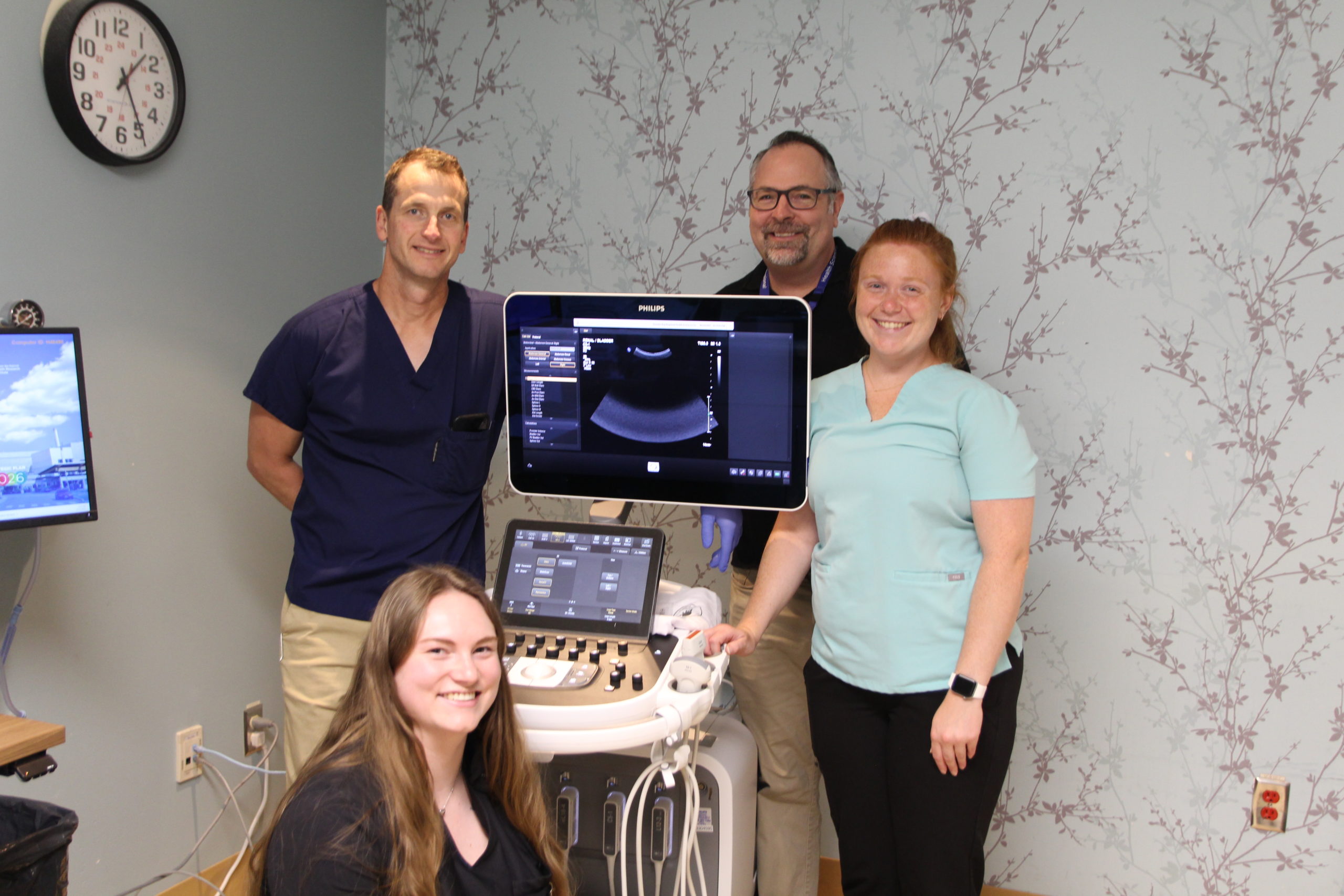
Sonography Week (October 6-10) is an opportunity to recognize the profession of Diagnostic Medical Sonography (ultrasound) which plays a vital role in the care and treatment of community members of all ages.
A sonographer uses an instrument called a transducer (or probe) on a patient over the area of the body under investigation. Sound waves are emitted and received and the ultrasound machine determines the size, shape and consistency of soft tissues which is then relayed in real-time to a computer screen producing an image.
Sonographers are medical detectives. They use their ultrasound training, technical skills, and understanding of the human body and its systems to decide if structures are normal or abnormal and adapt their investigation as they find clues throughout an examination. They also use patient history, lab work and previous studies in their role. The imaging information they obtain is then used by doctors to determine the necessary treatment or next steps for the patient.
The quality of an ultrasound exam is very dependent on the skills of the sonographer who completed the scan. As such, sonography is a growing profession and sonographers are in demand in hospitals, medical imaging clinics and tertiary healthcare facilities. Sonographers can also be employed as educators, researchers or application specialists.
At TBRHSC, sonographers are employed in the Diagnostic Imaging department and perform numerous general, vascular and cardiac ultrasounds.