Each June, Canadians recognize National Indigenous History Month, a time to honour the histories, cultures, contributions, and resilience of First Nations, Inuit, and Métis Peoples.
In health care, this month also offers an important opportunity to reflect on the history of Indigenous health in Canada and the lasting impacts of colonization on Indigenous communities. Understanding this history helps health care organizations move toward reconciliation, cultural safety, and equitable care.
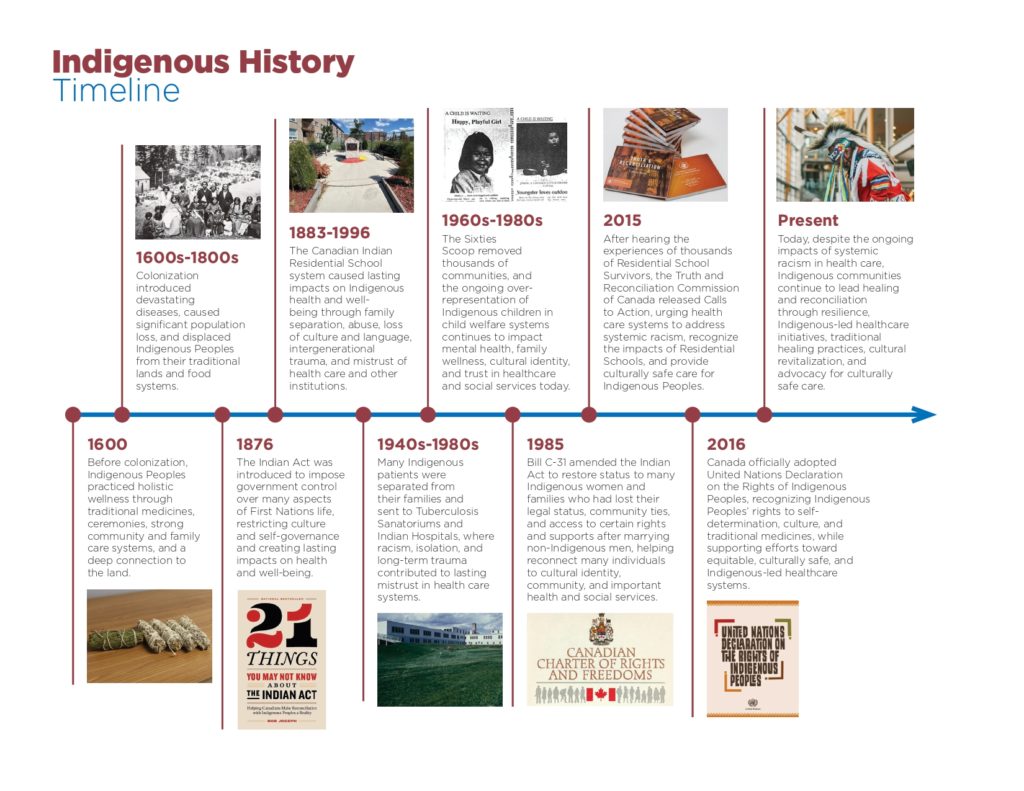
Prior to colonization, Indigenous Peoples had strong and sophisticated systems of wellness rooted in community, spirituality, land, traditional medicines, and holistic healing practices. Health was understood as a balance between physical, emotional, mental, and spiritual wellbeing.
However, colonization brought devastating changes. European diseases such as smallpox, influenza, and tuberculosis caused widespread loss of life among Indigenous communities. Government policies later disrupted traditional ways of living, restricted cultural practices, displaced communities from their lands, and created long-term barriers to health and wellness.
The passing of the Indian Act in 1876 gave the federal government extensive control over many aspects of First Nations life. These policies contributed to systemic inequities that continue to affect Indigenous Peoples today.
From 1883 to 1996, the Canadian Indian Residential School system forcibly removed Indigenous children from their families and communities. Many children experienced abuse, neglect, malnutrition, loss of language, and cultural disconnection. The impacts of Residential Schools continue to influence mental health, family systems, and trust in institutions, including health care.
During the mid-1900s, many Indigenous patients were also separated from their families for tuberculosis treatment in distant Indian Hospitals. Some children never returned home, and many families received little information about their loved ones. These experiences contributed to intergenerational trauma and mistrust of health care systems.
Despite these harms, Indigenous communities have continually demonstrated resilience, strength, and leadership. Across Canada, Indigenous Peoples continue to revitalize traditional healing practices, advocate for culturally safe care, and lead Indigenous-focused health services and wellness initiatives.
In 2015, the Truth and Reconciliation Commission of Canada released its Calls to Action, including several focused specifically on health care. These Calls urge health care organizations and professionals to recognize the impacts of residential schools, address systemic racism, and support culturally safe and trauma-informed care.
TBRHSC Response to Truth and Reconciliation Commission’s Calls to Action
Released annually, this report shows the work Thunder Bay Regional Health Sciences Centre (TBRHSC) has done to date through Strategic Plan 2026 and highlights our efforts to address the Truth and Reconciliation Commission’s 94 Calls to Action. TBRHSC will continue to apply the 94 Calls to Action as a lens to every decision we make as an institution, to ensure we deliver the highest level of compassion and inclusion to every patient, every time. The report focuses on the work that has been done at TBRHSC on five of the 94 Calls to Action (18, 20, 22, 23 and 24) related to health care. In addition, it highlights the work done through partnerships and a timeline of the Indigenous health initiatives to date. To view the most recent report, click here.
Today, reconciliation in health care involves more than awareness. It requires meaningful action:
- listening to Indigenous voices and lived experiences,
- recognizing the ongoing impacts of colonial policies,
- supporting Indigenous-led approaches to wellness;
- and creating healthcare environments that are respectful, safe, and inclusive.
As we recognize National Indigenous History Month, we honour both the truths of the past and the strength, knowledge, and resilience Indigenous communities continue to carry forward.
For more information, visit: