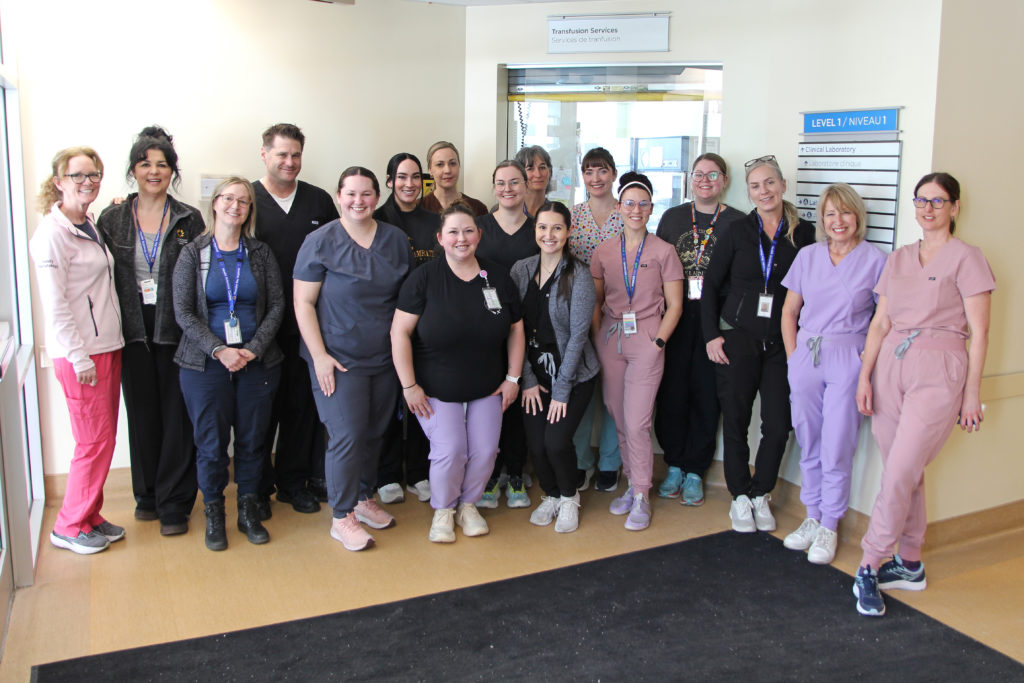
Join us in celebrating Medical Laboratory Week (April 12-18).
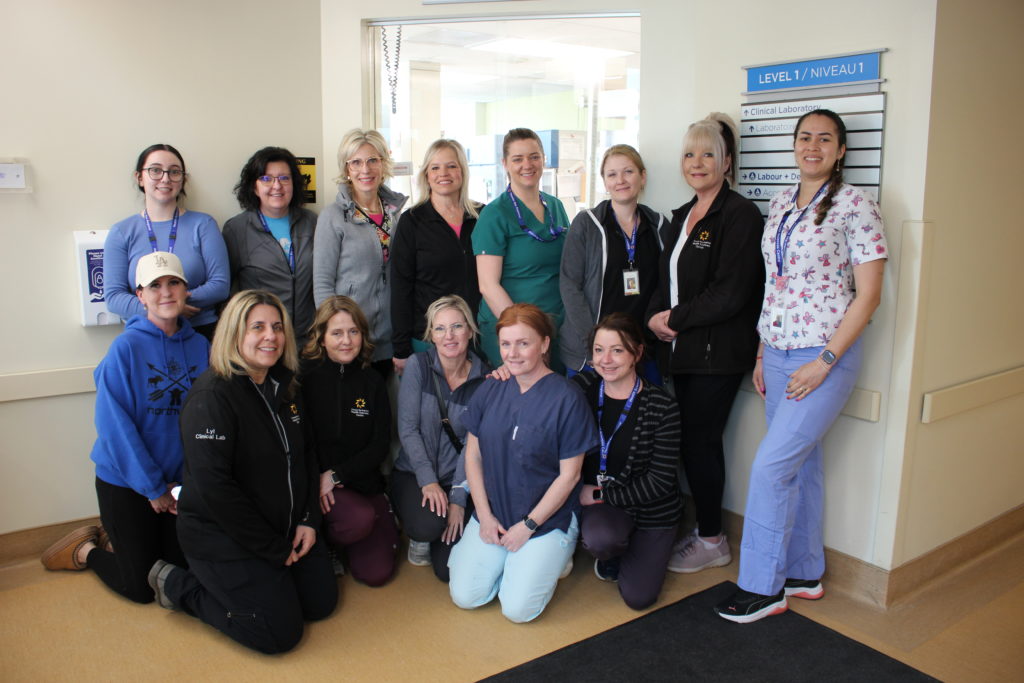
Medical laboratory professionals at Thunder Bay Regional Health Sciences Centre (TBRHSC) work tirelessly to support our Hospital’s programs and services by providing quality results for timely diagnosis and treatment. Caring for patients and families of Northwestern Ontario is their number one priority. This team is comprised of Pathologists, Medical Laboratory Technologists (MLTs – regulated), Medical Laboratory Assistants (MLAs – includes Phlebotomists), Diagnostic Cytotechnologists (DCTs), Pathologist’s Assistants (PAs), leadership staff and clerical staff. All play a vital role in patient care.
Did you Know?
- Diagnosis and treatment decisions are based on laboratory results.
- TBRHSC’s Lab performs 7,300 tests per day.
- TBRHSC has approximately 170 laboratory staff.
- TBRHSC’s Lab has over 3,000 individual document-controlled policies and procedures.
- TBRHSC’s Lab has 10 major department specializations:
- Biochemistry (Clinical Chemistry): Large array of tests involving the measurement of chemical constituents in blood and body fluids to evaluate organ function, toxicology, therapeutic drug monitoring, and to detect chemicals, endocrinology and other special tests.
- Haematology: Study of cells e.g. red blood cells, white blood cells and platelets as well as bleeding disorders/coagulation.
- Flow Cytometry: The study of bone marrows, lymph node/tissue specimens for lymphoma and leukemia.
- Transfusion Services: The testing for blood types, antibody detection, and compatibility testing (perinatal/neonatal and blood components). Also called Immunohaematology or Blood Banking.
- Microbiology: The study of microorganisms, including bacteria, fungi, viruses, and parasites.
- Histology: The preparation and study of tissue specimens.
- Cytology: The study of ‘free’ cells, their origin, structure, function, and pathology.
- Point of Care Testing (POCT): Oversight of bedside testing i.e., glucometer, etc.
- Specimen Procurement & Dispatch: Blood collection and reference testing.
- Quality & Safety: Licensing, accreditation, Biosecurity Containment Level II (Biosafety) classification, etc.