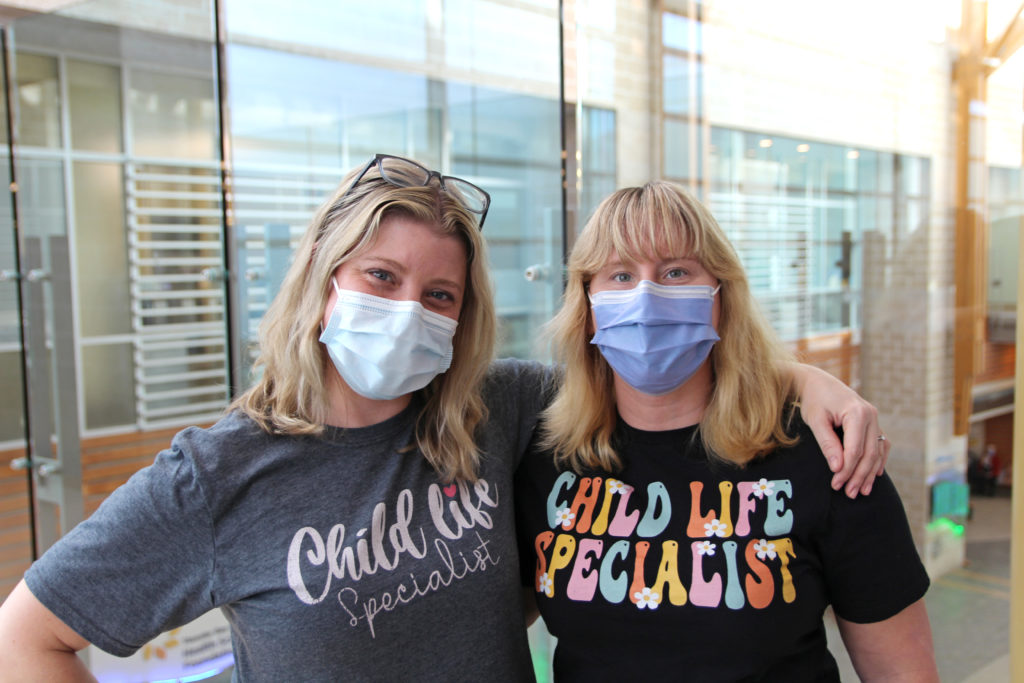
March is Child Life Month, a month where hospitals have the opportunity to celebrate Child Life Specialists through education and raising awareness.
Children today confront a wide variety of stressful and potentially traumatic events that may overwhelm their natural ability to cope and heal. Difficult or unexpected experiences, such as chronic illness, hospitalization, the death of a loved one, or the aftermath of violent acts or natural disasters are upsetting for everyone involved. Children are particularly vulnerable, and parents or other responsible adults may feel unsure of their ability to help children to successfully understand and manage these experiences.
Because children process information from the world around them much differently than adults, they have distinct needs for managing the effects of stress and trauma. Without the assistance of a professional who understands their unique perspective, children of all ages may experience emotions such as fear, shame, confusion and loneliness, which can inhibit their natural development, and have lasting negative effects on their wellbeing.
Child Life Specialists are trained professionals with expertise in helping children and their families overcome life’s most challenging events, and the importance of their services has been well documented.
Child Life Services are associated with improved quality, outcomes, and patient and family experiences as well as decreased costs in paediatric care. There is evidence that child life services help to contain costs by reducing the length of stay, decreasing the need for sedation and analgesics, and increasing patient satisfaction ratings.
Our Hospital currently has two Child Life Specialists who work with children and families Monday to Friday throughout the organization. The areas that these services are widely available are the Paediatric Inpatient Unit, the Paediatric Outpatient Clinic, Maternal Newborn, NICU, ICU, the Emergency Department, Diagnostic Imaging and the Operating Room.
The Child Life Specialists help support children and families by forming a positive therapeutic relationship and providing developmentally appropriate interventions that promote coping and help to reduce fear and anxiety in the hospital. Examples of these interventions include:
- Preparing and educating children and families about surgeries, procedures and scans which helps to reduce the need for sedation
- Providing developmentally appropriate diagnosis education
- Providing distraction during procedures
- Grief and bereavement support
- Provide opportunities for medical and therapeutic play
- Provide opportunities to normalize the hospital environment
- Educate children and families about different coping strategies (guided imagery, grounding strategies, deep breathing)
- Sibling support